Wuthering Heights Budget
 DramaRomance1h 45m
Updated
Synopsis
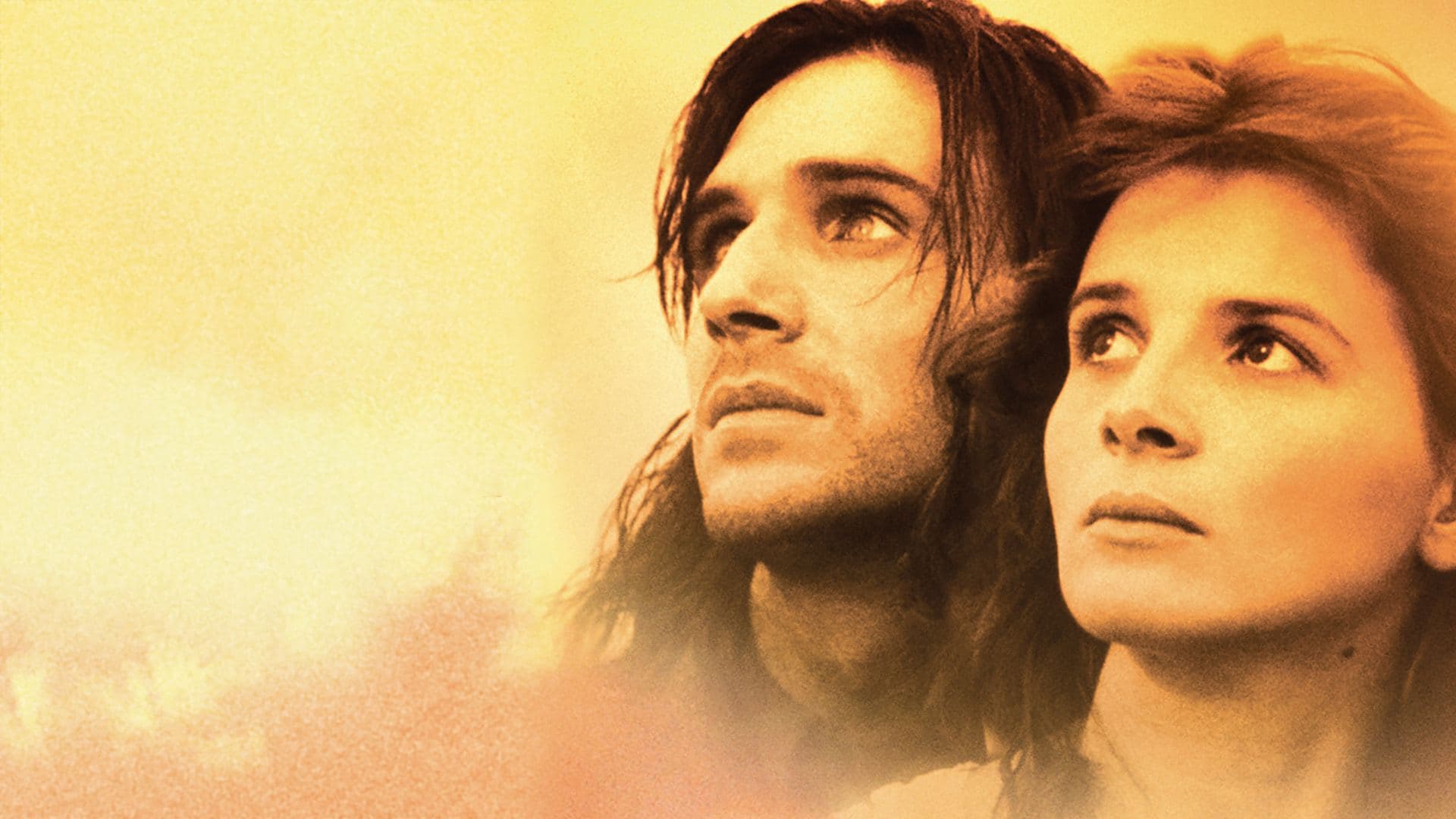
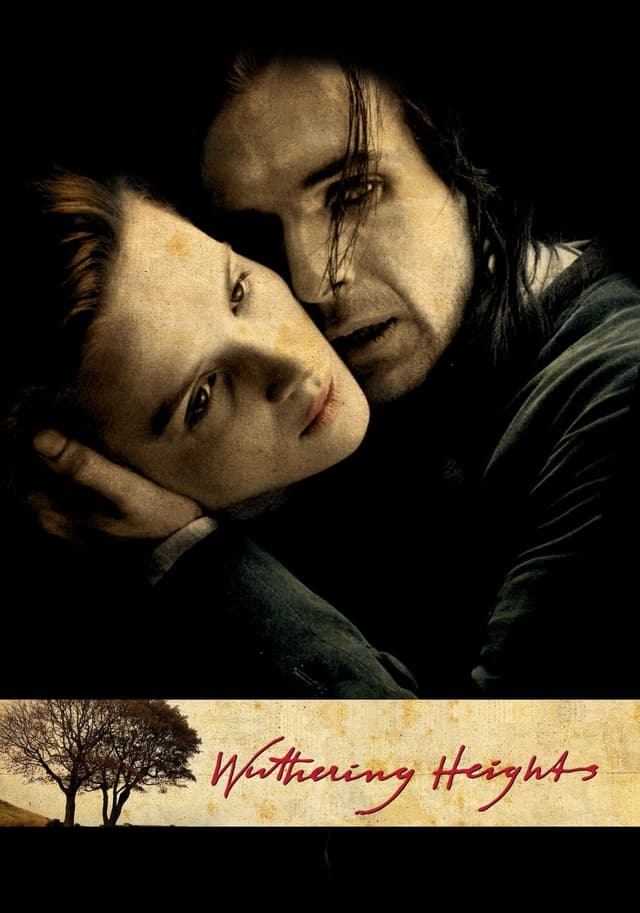
Peter Kosminsky's adaptation of Emily Brontë's novel chronicles the all-consuming love between orphan Heathcliff (Ralph Fiennes, in his feature-film debut) and Catherine Earnshaw (Juliette Binoche), set against the windswept Yorkshire moors of the early nineteenth century. Spanning two generations and the destructive aftermath of a broken promise, the film attempts the first English-language screen version to dramatize the novel in its entirety, including the often-omitted second-generation storyline.
What Is the Budget of Wuthering Heights (1992)?
Wuthering Heights (1992), directed by Peter Kosminsky and distributed by Paramount Pictures, was produced on a reported budget of approximately $15,000,000, a mid-range figure for early-1990s British literary adaptations. The film was financed by Paramount alongside the British end-credit producers, with Mary Selway serving as casting director and casting Ralph Fiennes in his feature-film debut as Heathcliff opposite Juliette Binoche's Catherine Earnshaw.
The economic model relied on the enduring commercial appeal of the Emily Brontë source material, period-romance interest from international audiences (the Merchant Ivory and Working Title prestige period-drama wave was at its mid-1990s peak), and a strategic dual-language casting bet that aligned French superstar Binoche with the unknown but classically trained Fiennes. The budget accommodated period costumes, Yorkshire moor location work, and the construction of the dual Heights and Thrushcross Grange estate sets.
Key Budget Allocation Categories
Wuthering Heights allocated its $15,000,000 budget across the categories typical of an early-1990s British literary adaptation:
- Above-the-Line Talent: Juliette Binoche, post-Damage (1992) and ahead of The English Patient (1996), commanded a leading-lady rate at the upper end of European art-house pricing. Ralph Fiennes, in his feature-film debut after extensive Royal Shakespeare Company work, came in at a debut-feature rate, an economic factor that helped the financing model. Janet McTeer, Sophie Ward, Simon Shepherd, and Jeremy Northam (also making his feature debut) filled out the supporting ensemble.
- Yorkshire Moor Location Shoot: Principal photography took place across the Yorkshire moors of West and North Yorkshire, including Penistone Hill Country Park near Haworth (the Brontës' actual home village). Location fees, weather-contingent scheduling, and unit moves across the moorland landscape represented a significant budget line.
- Period Costumes and Production Design: Costume designer James Acheson, fresh from The Last Emperor (1987) Oscar work, supervised period-accurate costumes for the early-nineteenth-century setting. Production designer Brian Morris built and dressed the Heights and Thrushcross Grange interiors, with their dark wood, stone fireplaces, and rough-hewn texture defining the film's visual contrast.
- Cinematography: DP Mike Southon shot on 35mm with extensive use of natural light across the moor exteriors. The location-heavy schedule and weather contingencies inflated the camera and lighting line items relative to a comparable stage-bound production.
- Score and Music: Ryuichi Sakamoto composed the score, his first major British literary adaptation following his Oscar-winning work on The Last Emperor (1987). Sakamoto's orchestral score, including the recurring theme that anchors the Heathcliff-Catherine relationship, occupies a substantial budget line, with full orchestra recording in London.
- Visual Effects and Period Atmospherics: The film leans on practical period atmospherics (moor weather, candle and firelight, period horse and carriage units) rather than digital effects, but the practical-effects allocation across weather contingencies and the dual-timeline framing added meaningful cost.
How Does Wuthering Heights's Budget Compare to Similar Films?
At a reported $15,000,000, Wuthering Heights (1992) sits squarely within the mid-range of early-1990s British literary adaptations. The comparison set:
- Pride and Prejudice (2005): Budget $28,000,000 | Worldwide $121,633,047. Joe Wright's later-cycle Austen adaptation cost almost twice as much and was a substantial commercial hit, demonstrating how the British literary adaptation tier scaled up as the genre matured into a major studio franchise category.
- Little Women (2019): Budget $40,000,000 | Worldwide $218,873,031. Greta Gerwig's later-cycle Louisa May Alcott adaptation cost more than double and earned 5x its budget worldwide, illustrating the upper-end commercial ceiling for literary period drama with awards-tier talent.
- The Imitation Game (2014): Budget $14,000,000 | Worldwide $233,555,708. Though a period biopic rather than a literary adaptation, Morten Tyldum's film offers a near-identical budget comparison and earned more than fifteen times its budget worldwide, the kind of breakout that defines what mid-tier British prestige can achieve with awards momentum.
- Crash (2005): Budget $6,500,000 | Worldwide $98,410,061. Though not a period drama, Paul Haggis's contemporaneous Best Picture winner offers a useful budget-tier comparison and demonstrates the kind of commercial breakthrough mid-budget prestige can achieve.
Wuthering Heights Box Office Performance
Wuthering Heights opened in limited US release on October 16, 1992, distributed by Paramount Pictures, before expanding to additional markets through late 1992 and early 1993. The film grossed approximately $7,000,000 domestically and an undisclosed but estimated $5,000,000 to $8,000,000 internationally. The film never broke out into a wide release and underperformed against its budget in the US theatrical market.
Against a reported production budget of $15,000,000, the film needed approximately $35,000,000 to $40,000,000 in worldwide gross to break even after marketing and print costs. Here is the financial breakdown:
Box Office Breakdown
Wuthering Heights

Wuthering Heights returned approximately $0.40 to $0.60 in theatrical revenue for every $1 invested when measured against total estimated production and marketing spend, a substantial theatrical underperformance partially offset by long-term home video, television licensing, and academic-curriculum value over the three decades that followed.
The economic verdict has shifted over time. The film's launching of Ralph Fiennes's screen career (he received his Oscar nomination for Schindler's List the following year and his BAFTA win for the same role) and its subsequent home-video and cable presence have generated meaningful ancillary value. Paramount's catalog has continued to license the film into academic and streaming distribution windows, and the cultural footprint exceeds its theatrical performance.
Wuthering Heights Production History
Development on the project began in earnest at Paramount in 1990, with screenwriter Anne Devlin commissioned to write an adaptation that would dramatize Emily Brontë's novel in its full structure, including the often-omitted second-generation storyline that William Wyler's 1939 version had famously cut. Peter Kosminsky, a documentary filmmaker stepping into narrative feature work for the first time, was attached to direct on the strength of his television docu-drama background, and Mary Selway led the casting search.
Casting Ralph Fiennes as Heathcliff in 1991 was the production's most consequential decision. Fiennes had built a major reputation in classical theater at the Royal Shakespeare Company but had no feature-film credits. Mary Selway's pitch to Paramount was that an unknown but classically trained Heathcliff would refresh the role for a contemporary audience. Juliette Binoche, recently emerged as a major continental star with The Unbearable Lightness of Being (1988), played Catherine Earnshaw in her first English-language lead. Principal photography took place across Yorkshire in early 1992, including extensive location work in the United Kingdom's actual Brontë country.
Post-production ran through summer 1992, with Ryuichi Sakamoto composing the score in London and the film mixing at Pinewood. Paramount platformed the release for awards-season positioning in October 1992, hoping for traction that ultimately did not materialize in a year dominated by Howards End, The Crying Game, and Unforgiven. The film's most lasting production legacy is its launch of Ralph Fiennes's screen career, with his Schindler's List Oscar nomination following just one year later.
Awards and Recognition
Wuthering Heights (1992) received modest awards recognition. The film picked up British Society of Cinematographers and BAFTA Television Craft nominations for cinematography and costume design, with James Acheson's costume work receiving particular attention from the British craft guilds. Ryuichi Sakamoto's score received scattered nominations from the international film-music circuit but did not break through to a major ceremony.
Neither Ralph Fiennes nor Juliette Binoche received major awards traction for their work in the film, an outcome partly explained by the crowded 1992 acting field (Emma Thompson, Susan Sarandon, Gene Hackman, Al Pacino, and Denzel Washington occupied much of the season's oxygen). The film's lasting awards-cycle reputation rests on its role as Ralph Fiennes's screen launch, with his subsequent Oscar nomination for Schindler's List (1993) often credited to the casting visibility that Wuthering Heights established. The film's adapted-screenplay and craft work have continued to be referenced in academic and adaptation-studies literature.
Critical Reception
Wuthering Heights received mixed reviews. The film holds a 56% approval rating on Rotten Tomatoes based on legacy critical aggregation, and contemporary 1992 reviews were broadly divided between admirers of Ralph Fiennes's intense screen debut and detractors who found the adaptation overly compressed despite its full-novel ambition. The film did not register a CinemaScore.
Critics universally praised Ralph Fiennes's performance as the film's central revelation. The New York Times's Janet Maslin wrote that Fiennes "emerges as a Heathcliff of unmistakable presence," and The Hollywood Reporter described his work as "the kind of debut that reorganizes an actor's future." Juliette Binoche received warmer notices for her Catherine, with Time's Richard Schickel praising her ability to convey the character's contradictions across the dual-timeline framing. Roger Ebert awarded the film three stars and praised the location work and Sakamoto's score while flagging the structural difficulty of compressing Brontë's full novel into a feature-length runtime.
Detractors centered on the screenplay's pacing and the second-generation storyline, which several critics found rushed despite being a primary selling point of the adaptation. The Washington Post's Hal Hinson called the film "a faithful but airless rendering," and The Times of London's reviewer wrote that the production design and score outpaced the storytelling. The mixed reception did not prevent the film from becoming a touchstone for subsequent Brontë adaptations, particularly Andrea Arnold's 2011 version, which deliberately took an anti-classical approach in conversation with Kosminsky's film. The 1992 Wuthering Heights remains one of the most-screened literary-adaptation comparisons in academic study of the Brontë canon.
Frequently Asked Questions
How much did it cost to make Wuthering Heights (1992)?
The reported production budget was approximately $15,000,000, a mid-range figure for early-1990s British literary adaptations. Paramount Pictures financed the film alongside the British end-credit producers, with Mary Selway producing and casting. The budget accommodated period costumes, Yorkshire moor location work, and the construction of the dual Heights and Thrushcross Grange estate sets.
Who plays Heathcliff in Wuthering Heights (1992)?
Ralph Fiennes plays Heathcliff in his feature-film debut. Fiennes had built a major reputation in classical theater at the Royal Shakespeare Company but had no feature credits before being cast by Mary Selway. His performance launched his screen career, and he received his first Oscar nomination one year later for Schindler's List (1993).
Who plays Catherine in Wuthering Heights (1992)?
Juliette Binoche plays Catherine Earnshaw and her daughter Cathy Linton in a dual role across the two generations the film dramatizes. Binoche had recently emerged as a major continental star with The Unbearable Lightness of Being (1988) and Damage (1992), and Wuthering Heights was her first English-language lead role.
Where was Wuthering Heights (1992) filmed?
Principal photography took place across the Yorkshire moors of West and North Yorkshire in early 1992, including extensive location work at Penistone Hill Country Park near Haworth (the Brontës' actual home village). The production also utilized constructed interiors for the Heights and Thrushcross Grange estate sets, with cinematographer Mike Southon shooting on 35mm with extensive use of natural light.
Who directed the 1992 Wuthering Heights?
Peter Kosminsky directed the film, his narrative-feature debut after a substantial career in television docu-drama. The screenplay was written by Anne Devlin, who adapted Emily Brontë's novel including the often-omitted second-generation storyline that William Wyler's 1939 version had famously cut.
How does Wuthering Heights (1992) differ from previous adaptations?
The 1992 version is notable for being the first English-language screen adaptation to dramatize Brontë's novel in its full structure, including the second-generation storyline featuring Cathy Linton, Linton Heathcliff, and Hareton Earnshaw. William Wyler's 1939 version starring Laurence Olivier ended at Catherine's death and omitted the second half entirely.
Was Wuthering Heights (1992) a box office success?
No. The film grossed approximately $7,000,000 domestically and an estimated $5,000,000 to $8,000,000 internationally, for a worldwide total of approximately $12,000,000 to $15,000,000 against a $15,000,000 production budget. It underperformed against Paramount's break-even target, though home video and academic-curriculum revenue has generated meaningful ancillary value over the three decades since.
Who composed the music for Wuthering Heights (1992)?
Ryuichi Sakamoto composed the orchestral score, his first major British literary adaptation following his Oscar-winning work on Bernardo Bertolucci's The Last Emperor (1987). Sakamoto's recurring theme anchors the Heathcliff-Catherine relationship across the film's dual-timeline framing, with full orchestra recording in London.
What did critics think of Wuthering Heights (1992)?
The film received mixed reviews, with a 56% Rotten Tomatoes score based on legacy critical aggregation. Critics universally praised Ralph Fiennes's screen debut and Juliette Binoche's dual-role performance. Roger Ebert gave the film three stars, praising the location work and Sakamoto's score while flagging the structural difficulty of compressing the full novel into a feature-length runtime.
Is Wuthering Heights (1992) the Ralph Fiennes movie?
Yes. This is the 1992 Paramount Pictures film directed by Peter Kosminsky in which Ralph Fiennes made his feature-film debut as Heathcliff. The film is sometimes confused with the 1939 William Wyler version starring Laurence Olivier or Andrea Arnold's 2011 adaptation starring James Howson, which took a deliberately anti-classical approach in conversation with the 1992 film.
Filmmakers
Wuthering Heights

Official Trailer
Build budgets like this one in Saturation
Start from an industry-standard feature film template, import the schedule and rates you already have, and let the cost report keep itself current as you spend. Real-time collaboration, no spreadsheets.