World of Tomorrow Budget
Updated
Synopsis
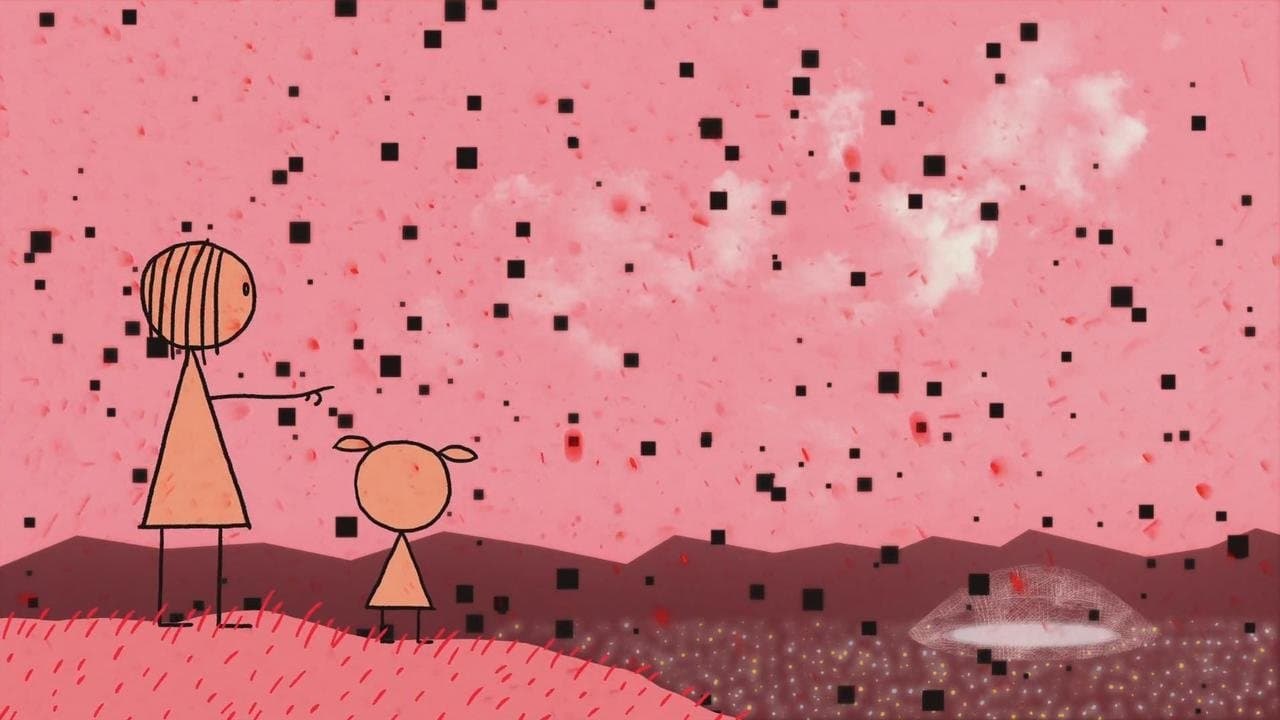
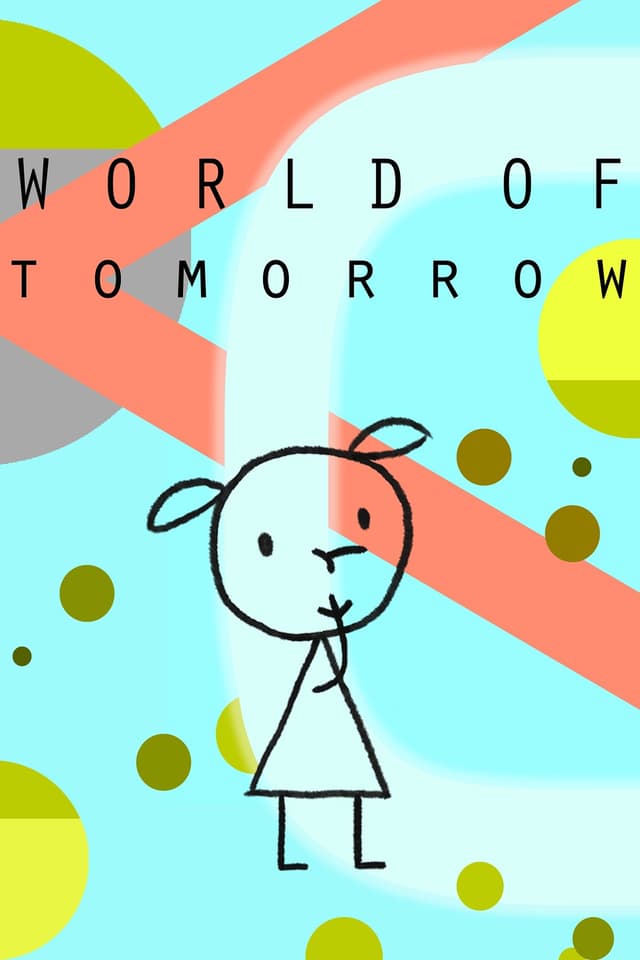
A four-year-old girl named Emily Prime is contacted across time by a third-generation clone of her future self, who pulls her into a guided tour of the distant future and the gradually decaying world Emily Prime will inherit. The clone's confessional monologue about love, memory, and an Outernet of failed time travelers becomes one of the most acclaimed animated shorts of the 21st century.
What Is the Budget of World of Tomorrow (2015)?
World of Tomorrow (2015), written, directed, animated, and self-distributed by Don Hertzfeldt, was produced on a budget estimated at under $10,000 over a roughly one-year solo production cycle from 2014 to early 2015. Hertzfeldt has never published an official budget figure but has discussed the film's economics in multiple interviews, framing it as a deliberate experiment in funding original short animation through Vimeo On Demand digital sales rather than traditional festival-and-distribution patronage.
Hertzfeldt financed the project entirely from the residual revenue of his earlier shorts (Rejected, It's Such a Beautiful Day, the previous fully self-distributed feature combination) sold through Vimeo and his own bittersweet animations storefront. The under-$10,000 estimate covers software (Adobe After Effects, sound design tools), hardware refreshes, voice-actor compensation (his four-year-old niece Winona Mae plus collaborator Julia Pott), and the per-print costs of the limited theatrical festival run. The film is widely regarded as the highest-acclaim-per-dollar animated production in recent independent cinema.
Key Budget Allocation Categories
The under-$10,000 estimated budget covered a deliberately minimal set of cost categories for a solo-animator production:
- Director, Animator, and Editor Time: Don Hertzfeldt served as writer, director, animator, designer, editor, and producer. The single-person creative cost is the largest hidden budget input, with Hertzfeldt working full-time on the project for approximately a year. The figure is not captured in cash outlay because the labor was self-financed.
- Voice Recording: Winona Mae, Don Hertzfeldt's four-year-old niece, voices Emily Prime. Her dialogue was recorded informally with a handheld microphone over phone calls and casual conversations rather than in a studio booth, then edited into the script. Julia Pott voices the adult clone version of Emily, with a more conventional studio recording session.
- Software and Hardware: Adobe After Effects subscription, Adobe Audition for sound editing, a Mac Pro workstation, and Cintiq drawing tablet covered the entire production toolchain. The 2D vector-based animation style minimized the need for expensive 3D rendering hardware or animation-pipeline software.
- Music Licensing: The film uses a curated selection of classical and electronic tracks including pieces by Eric Whitacre, Eluvium, William Basinski, and others. Most licenses were negotiated directly by Hertzfeldt with the composers or labels under festival-and-VOD rates, keeping music costs unusually low for the breadth of compositions used.
- Festival and Theatrical Distribution: Hertzfeldt self-distributed the film through Vimeo On Demand and a limited theatrical run accompanying his prior films at festivals including Sundance and Annecy. The per-print and shipping costs for the limited DCP theatrical run added a few thousand dollars to the total.
How Does World of Tomorrow's Budget Compare to Similar Films?
At an estimated under $10,000, World of Tomorrow sits at the absolute low end of recognized animated short production. The comparison set illustrates how dramatically Hertzfeldt undercut both indie and studio short-animation budgets:
- Piper (2016): Budget undisclosed (estimated $1,000,000+) | Worldwide Pixar theatrical short. Alan Barillaro's Oscar-winning Pixar short was produced at the studio's standard short-production budget, conservatively estimated at over 100 times the World of Tomorrow figure.
- Sanjay's Super Team (2015): Budget undisclosed (estimated $1,000,000+) | Worldwide Pixar theatrical short. The Pixar short Hertzfeldt's film was nominated against at the 2016 Oscars represents the same studio-short tier as Piper.
- Hair Love (2019): Budget under $150,000 (estimated via Kickstarter) | Oscar-winning crowdfunded short. Matthew A. Cherry's independent short was crowdfunded through Kickstarter at approximately fifteen times the World of Tomorrow estimate and won the 2020 Academy Award for Best Animated Short.
- Madame Tutli-Putli (2007): Budget approximately $700,000 | Oscar-nominated NFB stop-motion short. Chris Lavis and Maciek Szczerbowski's National Film Board of Canada short represented the high-end indie animation short budget tier in the same Oscar category.
- It's Such a Beautiful Day (2012): Budget under $5,000 | Vimeo On Demand independent feature. Don Hertzfeldt's own preceding feature-length compilation was produced on a comparable solo budget and established the self-distribution and solo-animation economic model that World of Tomorrow extended.
World of Tomorrow Box Office Performance
World of Tomorrow did not have a conventional theatrical release. The film premiered at the Sundance Film Festival in January 2015, won the festival's Short Film Grand Jury Prize for Animation, and then ran in a limited theatrical festival circuit through 2015 alongside Don Hertzfeldt's prior shorts. Hertzfeldt subsequently released the film for purchase on Vimeo On Demand and a curated rotation on Netflix.
Because the film was self-distributed primarily through digital sales rather than ticketed theatrical exhibition, conventional box office accounting does not apply. The estimated financial picture is as follows:
Box Office Breakdown
World of Tomorrow

Don Hertzfeldt has not publicly disclosed Vimeo On Demand sales figures for World of Tomorrow. In subsequent interviews, he has indicated that the film generated sufficient revenue to fund his next short, World of Tomorrow Episode Two: The Burden of Other People's Thoughts (2017), and the third installment in the trilogy, both also financed entirely through digital direct sales without studio or grant support.
From an industry perspective, the film is widely cited as the highest-impact independent animated short of the streaming-era release window, demonstrating that solo-animator direct-distribution economics could sustain Oscar-nomination-tier work without festival-grant or studio-patronage funding.
World of Tomorrow Production History
Don Hertzfeldt began work on World of Tomorrow in early 2014, immediately following the festival distribution of his prior feature compilation It's Such a Beautiful Day (2012). Hertzfeldt had moved away from his earlier hand-drawn pencil-and-paper animation style toward fully digital After Effects-based vector animation, a transition he had begun on his preceding short The Meaning of Life (2005) and It's Such a Beautiful Day.
The screenplay grew out of a long-standing personal interest in posthuman science fiction and clone narratives, with Hertzfeldt drawing on Edgar Allan Poe, David Lynch, Ray Bradbury, and his own preoccupation with childhood memory. The decision to use four-year-old Winona Mae for Emily Prime's dialogue was creative as well as economic: Hertzfeldt recorded her unscripted conversations and then built the screenplay around her phrasing and reactions rather than directing her to read a fixed script.
Hertzfeldt completed the animation over approximately a year of full-time solo work, primarily at his Austin, Texas home studio. The film was finished in late 2014 and premiered at the Sundance Film Festival in January 2015. It won the Sundance Short Film Grand Jury Prize for Animation in January 2015, was selected for the official Annecy International Animated Film Festival competition in June 2015, and went on to win or be nominated at over forty international festival ceremonies before its Academy Award nomination.
In 2017, Hertzfeldt released World of Tomorrow Episode Two: The Burden of Other People's Thoughts, expanding the project into a planned trilogy. World of Tomorrow Episode Three: The Absent Destinations of David Prime followed in 2020. All three installments were self-financed and self-distributed under the same solo-animator model.
Awards and Recognition
World of Tomorrow received the most extensive awards recognition of any animated short of its decade. The film was nominated for the Academy Award for Best Animated Short Film at the 88th Academy Awards in 2016, losing to Gabriel Osorio's Bear Story.
Prior to the Oscar nomination, World of Tomorrow won the Sundance Short Film Grand Jury Prize for Animation in January 2015, the Annecy International Animated Film Festival Cristal for a Short Film in June 2015, and the Ottawa International Animation Festival Grand Prize for Short Animation. The film also won the British Animation Award, the Holland Animation Film Festival Audience Award, the Slamdance Audience Award, and the FlickerFest Best International Animation Award.
In the years since release, World of Tomorrow has been included on multiple authoritative best-of-decade lists, including The Atlantic's 100 Best Films of the 2010s, IndieWire's 100 Best Films of the Decade, and Sight & Sound's decade overview. The film is widely regarded as the most acclaimed animated short of the 2010s.
Critical Reception
World of Tomorrow received nearly unanimous critical acclaim. The film holds a 100% approval rating on Rotten Tomatoes based on 36 critic reviews, one of the highest tallies for any animated short with substantial critical coverage. Critics broadly described the film as one of the most ambitious works of contemporary animation.
IndieWire's Eric Kohn called it "the most ambitious animated short ever produced on a desktop computer," while The Hollywood Reporter's John DeFore wrote that the film "achieves more in seventeen minutes than most features manage in two hours." The A.V. Club praised Hertzfeldt for delivering "a melancholy science-fiction parable about memory, love, and time that doubles as a one-man manifesto for what independent animation can be."
A.O. Scott's essay in The New York Times described the film as "a small marvel of imagination and feeling," and Roger Ebert's Brian Tallerico called it "one of the most powerful pieces of cinema you'll see this year," at any runtime. The critical consensus treated the film not merely as a successful short but as a major creative work in its own right, and the basis for an ongoing trilogy that further extended Hertzfeldt's solo-animator practice.
Frequently Asked Questions
How much did it cost to make World of Tomorrow (2015)?
Don Hertzfeldt has not publicly disclosed an official budget. Interview-based estimates place the production cost at under $10,000, financed entirely from the residual Vimeo On Demand revenue of Hertzfeldt's earlier shorts. The figure does not capture the one-year solo-animation labor input, which was self-financed.
How long is World of Tomorrow?
The film runs 17 minutes. It was followed by World of Tomorrow Episode Two: The Burden of Other People's Thoughts (2017, 22 minutes) and World of Tomorrow Episode Three: The Absent Destinations of David Prime (2020, 34 minutes), all written, directed, and self-distributed by Don Hertzfeldt.
Who directed World of Tomorrow?
Don Hertzfeldt wrote, directed, animated, edited, and self-distributed the film as a solo production. Hertzfeldt is also known for the earlier shorts Rejected (2000), Billy's Balloon (1998), and the feature-length compilation It's Such a Beautiful Day (2012).
Who voices Emily Prime in World of Tomorrow?
Winona Mae, Don Hertzfeldt's four-year-old niece, voices Emily Prime. Her dialogue was recorded informally with a handheld microphone over phone calls and casual conversations rather than in a studio booth, then edited into the script. Julia Pott voices the adult clone version of Emily.
Was World of Tomorrow nominated for an Oscar?
Yes. World of Tomorrow was nominated for the Academy Award for Best Animated Short Film at the 88th Academy Awards in 2016, losing to Gabriel Osorio's Bear Story. It is widely regarded as the most acclaimed animated short of the 2010s.
Where can I watch World of Tomorrow?
World of Tomorrow is available for purchase on Vimeo On Demand and was previously available on Netflix. Don Hertzfeldt sells the entire World of Tomorrow trilogy directly through his Bitter Films storefront alongside his other shorts and the feature compilation It's Such a Beautiful Day.
What software was World of Tomorrow made with?
Hertzfeldt animated the film entirely in Adobe After Effects on a Mac Pro workstation, using a vector-based 2D approach rather than hand-drawn pencil-and-paper animation. Sound design was completed in Adobe Audition.
How did World of Tomorrow perform commercially?
Hertzfeldt has not publicly disclosed Vimeo On Demand sales figures, but he has indicated in interviews that the film generated sufficient revenue to fund the next two shorts in the World of Tomorrow trilogy without studio or grant support. The film is widely cited as the highest-impact independent animated short of the streaming-era release window.
What did critics think of World of Tomorrow?
The film received nearly unanimous critical acclaim, with a 100% approval rating on Rotten Tomatoes based on 36 critic reviews. IndieWire called it "the most ambitious animated short ever produced on a desktop computer," and The New York Times described it as "a small marvel of imagination and feeling."
Is World of Tomorrow part of a trilogy?
Yes. The film is the first installment of a planned trilogy. World of Tomorrow Episode Two: The Burden of Other People's Thoughts (2017) and World of Tomorrow Episode Three: The Absent Destinations of David Prime (2020) followed under the same solo-animator self-distribution model.
Filmmakers
World of Tomorrow

Official Trailer
Build budgets like this one in Saturation
Start from an industry-standard feature film template, import the schedule and rates you already have, and let the cost report keep itself current as you spend. Real-time collaboration, no spreadsheets.