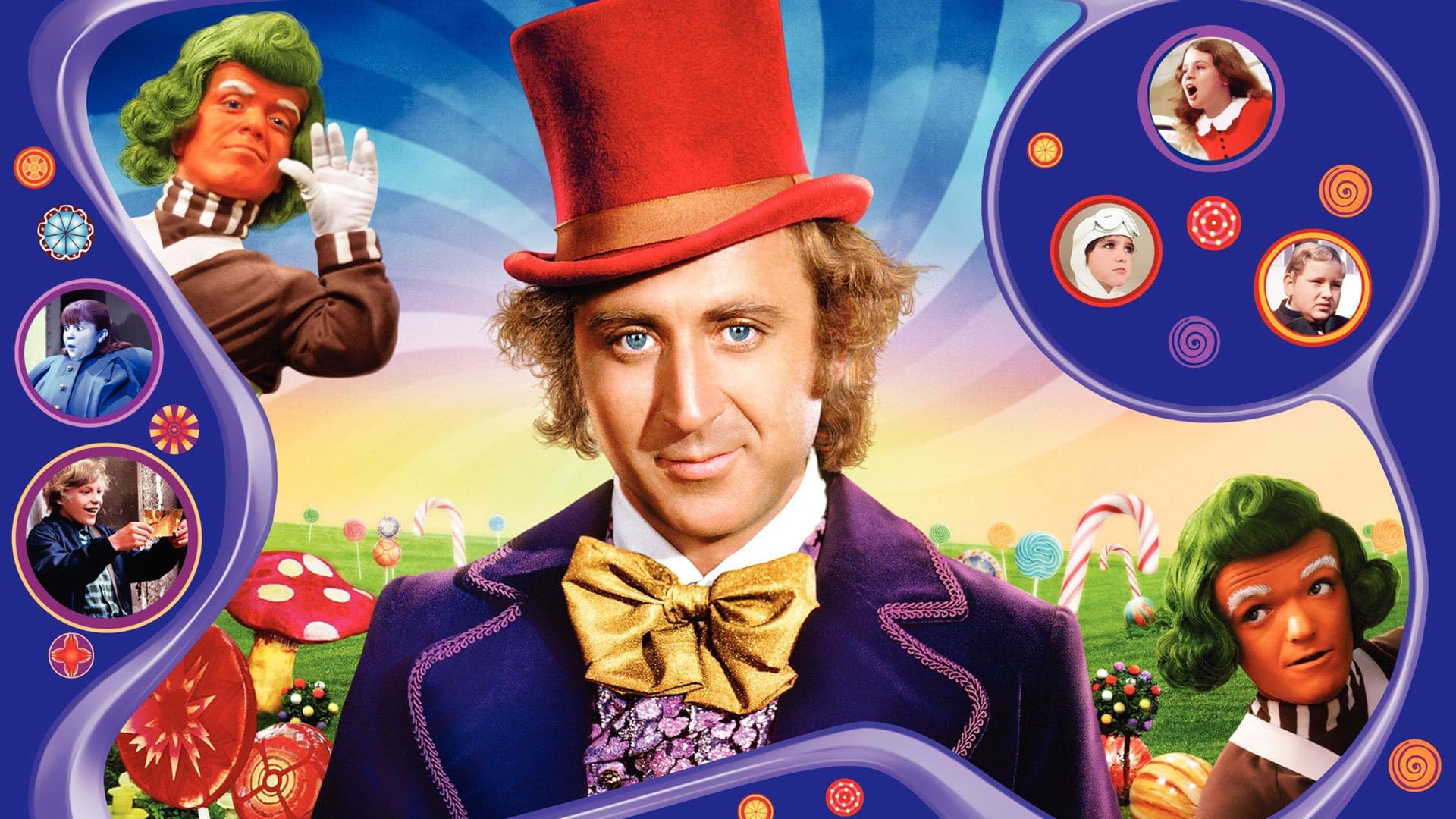
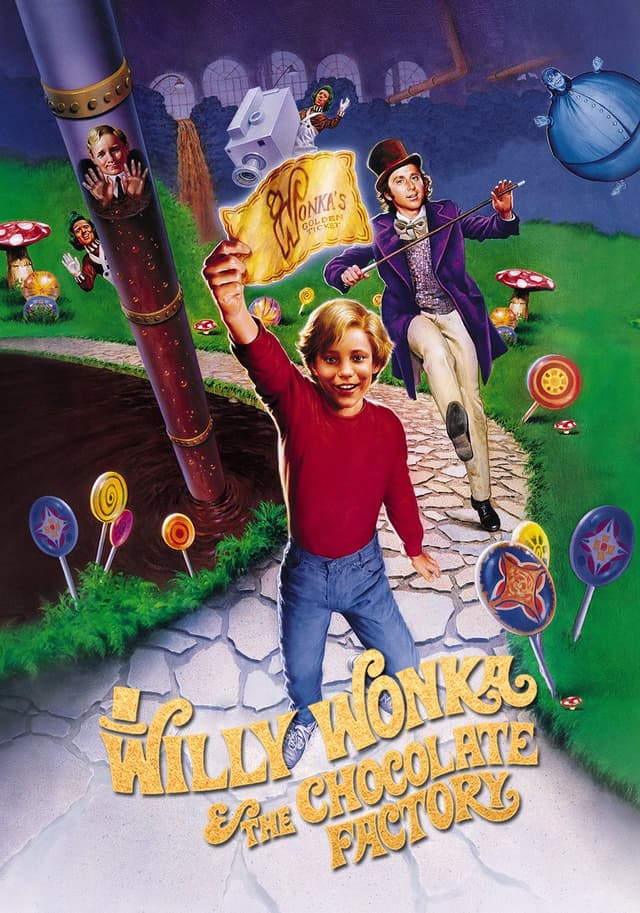
Willy Wonka & the Chocolate Factory Budget
 FamilyFantasyComedy1h 40m
Updated
Synopsis
When eccentric candy man Willy Wonka promises a lifetime supply of sweets and a tour of his chocolate factory to five lucky kids, penniless Charlie Bucket seeks the golden ticket that will make him a winner.
What Is the Budget of Willy Wonka & the Chocolate Factory?
Willy Wonka & the Chocolate Factory was produced on a budget of approximately $3 million, an unusually lean sum even by 1971 standards for a musical fantasy with elaborate set construction. The financing arrangement was singular in Hollywood history: the Quaker Oats Company co-produced the film specifically to serve as a marketing vehicle for a new candy product, the Wonka Bar, planned for simultaneous release with the film. This corporate co-financing gave producer David L. Wolper the capital to build the production's centerpiece, the chocolate factory interior, while keeping the overall budget constrained.
The production relocated to Bavaria Film Studios in Munich, West Germany, largely to take advantage of lower studio costs than would have been available in the United States. The decision to film abroad saved money on below-the-line labor and facilities while providing access to the studio infrastructure needed to build the film's largest sets. Germany's cooperation made the budget workable; without that geography, the film as conceived would have required significantly more capital.
Key Budget Allocation Categories
- Above-the-Line Talent: Gene Wilder was cast as Willy Wonka at his own insistence, after he read the script and told producer David Wolper he would only take the role if he could play the character with an initial limp that would be revealed as an act. Jack Albertson, a Tony and Emmy winner, played Grandpa Joe. Peter Ostrum, a complete unknown who had never acted professionally, was cast as Charlie Bucket. The restrained above-the-line costs, reflecting Wilder's then-supporting-player status, were likely $500,000 to $1 million.
- Bavaria Film Studio Construction: The chocolate factory interior, including the edible chocolate room with its grass, flowers, and chocolate river, was built at Bavaria Film Studios in Munich at significant expense for a $3 million production. The "Pure Imagination" sequence required a fully constructed fantasy environment with practical food items. Art director Harper Goff's chocolate factory sets consumed a substantial portion of the below-the-line budget.
- Songs and Score: Songwriters Leslie Bricusse and Anthony Newley wrote the film's original songs, including "Pure Imagination," "The Candy Man," "Oompa Loompa," and "I've Got a Golden Ticket." Walter Scharf composed the orchestral score. A full set of original songs plus orchestral score for a 100-minute musical was a significant music budget item on a $3 million total.
- Quaker Oats Co-Financing: The Quaker Oats Company's investment in the production was a marketing expense rather than a traditional studio investment, directed toward building brand awareness for the Wonka candy line. This unusual structure gave Wolper additional capital without the typical studio cost-sharing arrangement, while effectively making Quaker Oats a co-financier with no creative control.
How Does Willy Wonka's Budget Compare to Similar Films?
Willy Wonka & the Chocolate Factory was produced at the lean end of the early-1970s studio spectrum, with its legacy ultimately independent of its original box office performance. These comparisons put its budget tier in context.
- Charlie and the Chocolate Factory (2005): Budget $150M | Worldwide $474.9M | Tim Burton's remake with Johnny Depp cost 50 times more than the 1971 original. The comparison illustrates how dramatically production costs escalated over 35 years, and how the 1971 film's enduring reputation was built on performance and craft rather than production scale.
- Bedknobs and Broomsticks (1971): Budget $10M | Worldwide $17.1M | Disney's fantasy musical released the same year cost more than three times Willy Wonka's budget, reflecting the premium Disney paid for its elaborate visual effects and Angela Lansbury's star power. The comparison shows how economically Wolper and Stuart operated.
- The Wizard of Oz (1939): Budget $2.8M | Worldwide $21M (original release) | MGM's classic fantasy musical cost roughly the same as Willy Wonka in nominal dollars 32 years earlier, underscoring how lean the 1971 production was even for its era. Both films eventually outperformed their theatrical runs through broadcast and home entertainment.
- Chitty Chitty Bang Bang (1968): Budget $10M | Worldwide $7.6M | The Ian Fleming-authored British musical fantasy with Dick Van Dyke cost more than three times Willy Wonka's budget and performed modestly at the box office, providing a cautionary comparison that made Wolper's budget discipline look prescient in retrospect.
Willy Wonka & the Chocolate Factory Box Office Performance
Willy Wonka & the Chocolate Factory opened on June 30, 1971, distributed by Warner Bros. in the United States. The film earned approximately $4 million in its initial theatrical run, a modest return that did not immediately suggest the cultural significance the film would later acquire. Critical reception was mixed at release, with some reviewers finding the film too dark for children and others praising Wilder's performance.
On a $3 million production budget and an estimated $3.5 million in prints and advertising, the film's first theatrical run was effectively breakeven at the studio level. The return on the original theatrical investment was modest. What transformed Willy Wonka into a lasting commercial and cultural entity was its television broadcast history beginning in the mid-1970s and its early home video releases, which built the audience that made it a touchstone for a generation of viewers who never saw it in theaters.
Box Office Breakdown
Willy Wonka & the Chocolate Factory

The original theatrical run represented only the beginning of Willy Wonka's commercial life. CBS broadcast the film annually starting in 1975, establishing the holiday broadcast tradition that made it a family classic. Home video, DVD, digital, and streaming releases have generated revenue far exceeding the original theatrical gross across five decades.
Willy Wonka & the Chocolate Factory Production History
The project originated with producer David L. Wolper, who acquired the rights to Roald Dahl's 1964 novel Charlie and the Chocolate Factory in the late 1960s. Wolper brought in the Quaker Oats Company as a co-financier, securing Quaker's investment by promising a film that would serve as marketing for the Wonka Bar candy product Quaker planned to launch. The deal was unusual in Hollywood: a consumer packaged goods company funding a studio film as a brand-building exercise.
Roald Dahl was hired to write the screenplay, adapting his own novel. Dahl introduced new material, including the subplot involving rival candy maker Arthur Slugworth attempting to steal the Everlasting Gobstopper formula. Director Mel Stuart was brought on as a reliable craftsman capable of managing the film's mix of fantasy spectacle and musical performance. Stuart had worked extensively in documentary and television, which made him an unconventional choice for a children's musical.
Gene Wilder's casting as Willy Wonka came with a condition: Wilder would only accept the role if Wonka was allowed to appear with a limp in his first entrance, then reveal it was a performance. Stuart and Wolper agreed. The child cast was assembled from open calls, with Peter Ostrum, a 12-year-old from Cleveland who had never acted, cast as Charlie. The production relocated to Bavaria Film Studios in Munich in late 1970, where the elaborate chocolate factory interior was constructed.
The film was completed and released by Warner Bros. on June 30, 1971. Dahl subsequently disowned the film, objecting to changes made during production including alterations to his screenplay and what he felt was an overemphasis on Wilder's character at the expense of Charlie. The Wonka Bar candy product that had partly financed the film was delayed and never achieved the commercial success Quaker had planned. The film's reputation grew slowly and steadily through television broadcasts before becoming the classic it is considered today.
Awards and Recognition
Willy Wonka & the Chocolate Factory received one Academy Award nomination at the 44th Academy Awards (1972): Best Scoring Adaptation and Original Song Score for Leslie Bricusse and Anthony Newley. The film did not win. The song "Pure Imagination," written by Bricusse and Newley, has since been recognized as one of the defining compositions of the era, covered by hundreds of artists and used in dozens of films and advertising campaigns in the decades since its release.
In 2014, the United States Library of Congress selected Willy Wonka & the Chocolate Factory for preservation in the National Film Registry, citing it as "culturally, historically, or aesthetically significant." The film's influence is difficult to overstate in retrospect: it shaped the visual language of children's fantasy cinema, made Gene Wilder's Wonka one of the most recognizable character performances in American film, and established the source material as a permanent part of popular culture.
Critical Reception
Initial critical reception to Willy Wonka & the Chocolate Factory was mixed. Some reviewers at the time found the film too intense for its young target audience, particularly the hallucinatory tunnel sequence. Others praised Wilder's performance and the film's imagination while noting unevenness in tone and pacing.
Over the following decades, critical reassessment moved strongly in the film's favor. Gene Wilder's performance is now almost universally regarded as one of the great character turns in American cinema: a performance of enormous precision, blending warmth and menace in equal measure. The film holds a 90 percent approval rating on Rotten Tomatoes based on its accumulated critical consensus, and appears on numerous lists of the greatest children's films and the greatest films of the 1970s.
The 2005 Tim Burton remake, while successful commercially, generated renewed appreciation for the 1971 original among critics and audiences who felt Burton's version could not match Wilder's singular approach to the character. The 2005 film's existence has served, paradoxically, to cement the 1971 film's status as the definitive adaptation of Roald Dahl's novel.
Frequently Asked Questions
How much did Willy Wonka and the Chocolate Factory cost to make?
The production budget was $3,000,000. Paramount Pictures distributed the film through a co-financing arrangement with the Quaker Oats Company, which funded the production specifically to promote a planned Wonka Bar candy product.
Why did Quaker Oats finance Willy Wonka?
Quaker Oats financed the film as a marketing vehicle for a new Wonka Bar candy line developed by its Breaker Confections subsidiary. The candy bar formulation suffered melting problems and was pulled from initial distribution, although Wonka-branded candy was successfully launched in subsequent years and remains in production under the Nestle brand.
How much did Willy Wonka earn at the box office?
The film grossed approximately $4,000,000 in its initial 1971 theatrical run, considered a disappointment relative to expectations. Subsequent re-releases and the film's television syndication on CBS through the 1980s established it as a cult classic and significantly extended cumulative revenue.
Who directed Willy Wonka?
Mel Stuart directed the film. Stuart had previously directed the documentaries Four Days in November (1964) and If It's Tuesday, This Must Be Belgium (1969). Willy Wonka was his most enduring commercial credit despite a long career in television documentary work.
Did Roald Dahl approve of the film?
No. Roald Dahl famously disapproved of the film, objecting to the screenplay changes made by David Seltzer that shifted focus toward Willy Wonka and away from Charlie Bucket. Dahl also objected to Gene Wilder's interpretation, although Wilder's performance has become one of the most celebrated of the era.
Where was Willy Wonka filmed?
Principal photography took place at the Bavaria Film Studios in Munich, West Germany. The German shooting location was selected for its tax advantages and the availability of large soundstages required for the Chocolate Room and Inventing Room sets.
What did critics think of Willy Wonka at release?
Reviews at release were mixed, with Roger Ebert and Gene Siskel praising the film while others objected to dark tonal choices including the Tunnel of Terror sequence. The film's critical reputation has grown substantially in subsequent decades, with Rotten Tomatoes recording a 91% approval rating reflecting its modern reassessment.
Did Willy Wonka win any awards?
The film received one Academy Award nomination at the 44th Academy Awards: Best Original Score for Leslie Bricusse, Anthony Newley, and Walter Scharf. It lost to Fiddler on the Roof but the songs The Candy Man and Pure Imagination have become standards.
How does Willy Wonka (1971) compare to the 2005 Tim Burton remake?
The 2005 remake Charlie and the Chocolate Factory ($150,000,000 budget, $474,900,000 worldwide) significantly outgrossed the original on a contemporary release basis but failed to match the cultural longevity of the 1971 film, which continues to dominate streaming and home-video metrics for the property.
Where can I watch Willy Wonka and the Chocolate Factory?
The film is available for digital rental and purchase on Amazon Prime Video, Apple TV, and Google Play through the Warner Bros. library deal that absorbed Paramount's original distribution rights. It periodically rotates onto Max and Hulu through licensing windows.
Build budgets like this one in Saturation
Start from an industry-standard feature film template, import the schedule and rates you already have, and let the cost report keep itself current as you spend. Real-time collaboration, no spreadsheets.