Willard Budget
 Horror
Updated
Synopsis
A lonely, downtrodden young man living in his domineering mother's decaying mansion discovers an unusual talent for befriending and commanding rats. As his cruel employer and oppressive home environment push him further from human connection, his bond with the rats deepens into something far more sinister.
What Is the Budget of Willard (2003)?
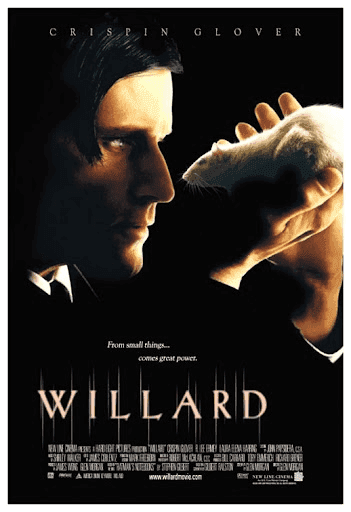
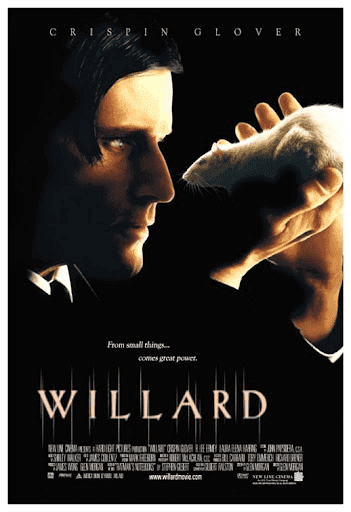
Willard (2003), directed by Glen Morgan and distributed by New Line Cinema, was produced on a reported budget of approximately $22,000,000. The film served as a remake of Daniel Mann's 1971 horror feature of the same name, with Crispin Glover anchoring the title role in what would become one of the defining cult performances of his career. Hard Eight Pictures, Morgan's production company with longtime writing partner James Wong, co-produced with New Line.
The budget reflected an early-2000s mid-budget horror remake scale. The bulk of the spend went to Crispin Glover's star compensation, the extensive animal handling required for the rat-action sequences, the period production design of the Willard family mansion interior, and the practical and digital effects required for the climactic rat-swarm sequences. New Line positioned the film as a mid-March 2003 theatrical release counter-programming the wider horror market.
Key Budget Allocation Categories
Willard's reported $22,000,000 budget was distributed across the following core production areas:
- Above-the-Line Talent: Crispin Glover commanded a star fee in the mid-six-figure range plus extensive backend participation. R. Lee Ermey played the domineering employer Frank Martin, Laura Elena Harring played the supportive co-worker Cathryn, and Jackie Burroughs voiced the elderly mother. Director Glen Morgan was paid at a first-time-feature director rate, having previously worked extensively as a writer-producer on The X-Files and Final Destination.
- Animal Handling and Wrangling: The film required extensive rat handling and training across more than 500 individual animals, with American Humane Association supervision and dedicated wrangler crews. Bart the giant rat (the one used for the principal "Ben" character) required individual training and bonding sessions with Crispin Glover across pre-production and principal photography.
- Production Design: Production designer Mark Freeborn recreated the dilapidated Edwardian-era Willard family mansion with detailed attention to the period furnishings, wallpaper, and architectural details that establish the film's Gothic atmosphere. The Edward Furnishings and the office sequences also required period-appropriate set dressing across multiple stages.
- Visual Effects and Practical Animatronics: Cyber FX and other vendor houses handled the climactic rat-swarm sequences, with practical animatronic rats supplemented by digital composite work. The rat-attack sequences required extensive choreography between live animals, animatronic stand-ins, and digital fill, with safety protocols across all live-animal interactions.
- British Columbia Location Shoot: Principal photography took place across British Columbia, with Vancouver and surrounding regions doubling for the unnamed American small-town setting. The Canadian production tax credit and the favorable exchange rate against the U.S. dollar in 2002-2003 offset substantial line-item costs across the moderate-length shoot.
- Score and Music: Composer Shirley Walker, the longtime Joe Dante and X-Files collaborator, delivered an orchestral horror score with discordant strings and atmospheric piano work. The score incorporated a haunting reinterpretation of "Ben's Song," the Michael Jackson hit originally written for the 1972 sequel Ben, performed in the film by Crispin Glover himself.
How Does Willard's Budget Compare to Similar Films?
At a reported $22,000,000, Willard sits in the mid-range of early-2000s studio horror remakes and adaptations. The comparison set illustrates how its commercial outcome compared with budgetary peers:
- Final Destination (2000): Budget $23,000,000 | Worldwide $112,880,294. Glen Morgan's previous New Line collaboration (which he co-wrote) cost effectively the same as Willard and earned more than 13 times the worldwide gross, illustrating the gap between the horror brand New Line had built and the cult-horror format Willard pursued.
- The Texas Chain Saw Massacre (2003): Budget $9,500,000 | Worldwide $107,071,655. The other 2003 New Line horror remake cost less than half of Willard and earned more than 12 times the worldwide, illustrating how the Platinum Dunes-led horror remake cycle dramatically outperformed the cult-character revival format.
- Cabin Fever (2002): Budget $1,500,000 | Worldwide $33,602,217. Eli Roth's debut horror feature, also distributed by Lionsgate-affiliated entities, cost a fraction of Willard and earned roughly four times the worldwide, illustrating the cost-efficiency advantage of low-budget independent horror over studio remakes.
- Identity (2003): Budget $28,000,000 | Worldwide $90,259,083. The James Mangold horror thriller released the same year as Willard cost a quarter more and earned more than 10 times the worldwide, illustrating the commercial gap between psychological-thriller horror and creature-feature horror in early-2000s theatrical.
- Willard (1971): Budget $1,000,000 | Worldwide $14,440,000. The original Bruce Davison version, which the 2003 remake was based on, cost less than 5 percent of the remake budget and earned 68 percent more worldwide, illustrating the diminishing return on the property in the early-2000s remake era.
Willard Box Office Performance
Willard opened on March 14, 2003, finishing sixth at the U.S. box office with $4,099,055 over its three-day opening weekend, well below pre-release tracking that had pegged the film for an opening in the $7,000,000 to $10,000,000 range. The film closed its domestic run at $6,872,432 and added $1,710,108 internationally, for a worldwide total of $8,582,540.
Against a reported production budget of $22,000,000, the film fell well short of theatrical break-even. Here is the financial breakdown:
Box Office Breakdown
Willard (2003)

Willard returned approximately $0.18 to $0.23 in worldwide theatrical gross for every $1 invested in production and marketing, placing it among the clearer commercial misses of the 2003 spring horror slate. Home video sales, cult-classic fandom, and steady cable airings have closed only a modest share of the theatrical loss over time, but the initial theatrical recoupment was minimal.
The 80/20 domestic-to-international split was unusual for a horror release and reflected the muted international theatrical strategy, with New Line opting for direct-to-home-video release in most non-English-language territories. The commercial failure killed any plans for a Ben sequel that would have followed the 1972 original's sequel pattern.
Willard Production History
Development began at New Line Cinema in 2001 as a project for Glen Morgan and James Wong, the writer-producer team that had already delivered Final Destination (2000) for the studio. Morgan and Wong had long admired the original 1971 Willard, particularly Bruce Davison's lead performance, and pitched a remake that would preserve the original's emphasis on character psychology over jump-scare horror conventions.
Crispin Glover attached to the title role in 2002, with Morgan and Wong specifically writing the part with Glover in mind. The casting represented a return to leading-man work for Glover, who had spent much of the 1990s in supporting and character-actor roles after Back to the Future. R. Lee Ermey was cast as the domineering employer Frank Martin, and Jackie Burroughs voiced the elderly mother in a role that drew on her established character-acting career.
Principal photography ran from late 2002 to early 2003 across British Columbia, with Vancouver and surrounding regions doubling for the unnamed American small-town setting. The Canadian production tax credit and the favorable exchange rate against the U.S. dollar offset substantial line-item costs, and the rat-handling infrastructure was built up from scratch across pre-production with American Humane Association supervision and dedicated wrangler crews.
Post-production ran through the spring of 2003 ahead of the March 14 theatrical release. Editor James Coblentz cut the film for a 100-minute runtime, with the visual effects work supervised by Cyber FX. Crispin Glover recorded a haunting reinterpretation of "Ben's Song" for the film's end-credits sequence, drawing on the Michael Jackson hit originally written for the 1972 sequel Ben.
Awards and Recognition
Willard received modest genre awards recognition. The film earned a nomination at the Saturn Awards for Best Horror Film in 2004 and a nomination for Best Performance by a Younger Actor for Crispin Glover. Glover also received a Fangoria Chainsaw Award nomination for Best Actor.
The film did not register at the major industry ceremonies, including the Academy Awards, the Golden Globes, the BAFTAs, or the SAG Awards. Its legacy within awards conversation has been limited to genre-specific recognition, although Glover's performance has been widely cited in retrospectives of cult-horror lead performances.
Critical Reception
Willard received mixed reviews. The film holds a 56 percent approval rating on Rotten Tomatoes based on 134 critic reviews, with a critical consensus that called it "an effective character study and a stylish horror film that benefits enormously from Crispin Glover's strange, committed performance." On Metacritic, the film scored 56 out of 100, indicating mixed or average reviews. Audiences surveyed by CinemaScore gave the film a C+, indicating the film failed to fully connect with its intended horror audience.
Roger Ebert gave the film three out of four stars and wrote that "Crispin Glover plays Willard, and brings to the role a kind of demented sympathy that is unique to him." Manohla Dargis of The New York Times praised the "carefully calibrated cult performance" and called the film "a stylish remake that respects the original while making its own choices." Variety's Robert Koehler wrote that "the picture's ability to engage feels almost entirely tied to Glover's magnetic strangeness."
The film has settled into the early-2000s cult-horror canon as a representative example of the Crispin Glover lead-performance format, frequently cited alongside Bartleby (2001) and Hot Tub Time Machine (2010) as showcases for Glover's peculiar charisma. The remake is now widely regarded as more thematically rich than its commercial performance suggested, with critical reassessment in the years since release elevating its standing in the modern horror canon.
Frequently Asked Questions
How much did it cost to make Willard (2003)?
The reported production budget was approximately $22,000,000. New Line Cinema distributed the film and co-produced with Glen Morgan and James Wong's Hard Eight Pictures. The British Columbia production tax credit offset substantial line-item costs across the Vancouver-based shoot.
How much did Willard (2003) earn at the box office?
The film grossed $6,872,432 domestically and $1,710,108 internationally, for a worldwide total of $8,582,540. It opened to $4,099,055 in the United States, finishing sixth on its March 14, 2003 opening weekend, well below pre-release tracking that projected a $7,000,000 to $10,000,000 opening.
Was Willard (2003) profitable?
No. Against a $22,000,000 production budget and an estimated $15,000,000 to $25,000,000 in marketing spend, the film returned approximately $0.18 to $0.23 in worldwide gross for every $1 invested. The theatrical run produced an estimated $28,000,000 to $38,000,000 loss, killing any plans for a Ben sequel.
Who directed Willard (2003)?
Glen Morgan directed the film, his feature directorial debut. Morgan had previously worked extensively as a writer-producer on The X-Files (with longtime partner James Wong) and as a writer on Final Destination (2000). Willard remained his only directed feature, with subsequent work returning primarily to writing and producing.
Is Willard (2003) a remake?
Yes. The film is a remake of Daniel Mann's 1971 Willard, which itself was based on Stephen Gilbert's 1968 novel Ratman's Notebooks. The original 1971 film starred Bruce Davison in the title role and earned $14,440,000 worldwide on a $1,000,000 budget. The 2003 remake preserved the original's emphasis on character psychology over conventional horror beats.
Who stars in Willard (2003)?
Crispin Glover stars as Willard Stiles, with R. Lee Ermey as the domineering employer Frank Martin, Laura Elena Harring as the supportive co-worker Cathryn, and Jackie Burroughs voicing the elderly Mrs. Stiles. The cast also includes Ashlyn Gere, Kimberly Patton, and various ensemble players in the office and home sequences.
Where was Willard (2003) filmed?
Principal photography ran from late 2002 to early 2003 across British Columbia, with Vancouver and surrounding regions doubling for the unnamed American small-town setting. The Canadian production tax credit and the favorable exchange rate against the U.S. dollar offset substantial line-item costs, and the rat-handling infrastructure was built up from scratch with American Humane Association supervision.
Did Crispin Glover sing in Willard?
Yes. Crispin Glover performed a haunting reinterpretation of "Ben's Song" for the film's end-credits sequence. The song was originally written for the 1972 sequel Ben, where it was performed by Michael Jackson, who took it to number one on the Billboard Hot 100. Glover's version preserves the original lyrics while transforming the arrangement.
What did critics think of Willard (2003)?
The film received mixed reviews, with a 56 percent approval rating on Rotten Tomatoes (134 critics) and a 56 out of 100 score on Metacritic. Audiences gave it a C+ CinemaScore. Roger Ebert gave the film three out of four stars and called Crispin Glover's performance "a kind of demented sympathy that is unique to him."
Did Willard (2003) win any awards?
The film received modest genre awards recognition. It earned Saturn Award nominations for Best Horror Film (2004) and Best Performance by a Younger Actor (Crispin Glover), and Glover received a Fangoria Chainsaw Award nomination for Best Actor. The film did not register at the major industry ceremonies.
Filmmakers
Willard (2003)

Build budgets like this one in Saturation
Start from an industry-standard feature film template, import the schedule and rates you already have, and let the cost report keep itself current as you spend. Real-time collaboration, no spreadsheets.