The Relic Budget
 Horror
Updated
Synopsis
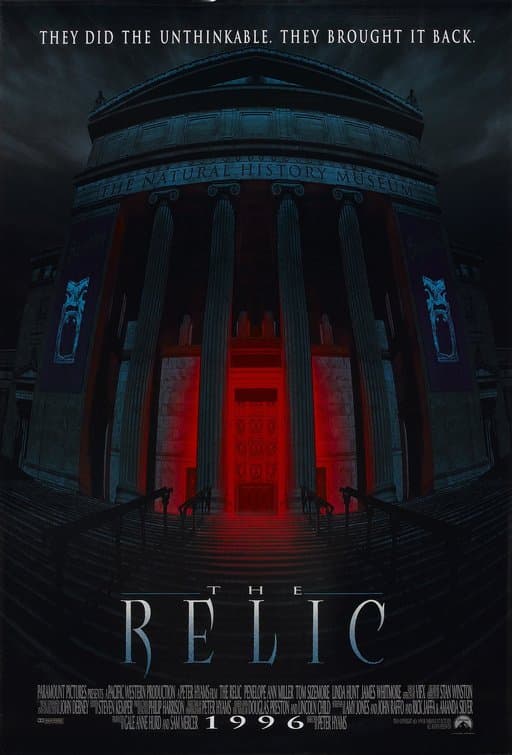
When a mysterious crate of South American artifacts arrives at the Chicago Field Museum, a series of grisly murders erupts the night of a major gala. Evolutionary biologist Margo Green and police lieutenant Vincent D'Agosta race to identify the creature stalking the museum's corridors before the black-tie crowd becomes the next victims.
What Is the Budget of The Relic (1997)?
The Relic (1997), directed by Peter Hyams and distributed by Paramount Pictures, was produced on a reported budget of $40,000,000. The creature-feature thriller, adapted from the 1995 novel by Douglas Preston and Lincoln Child, was financed by Paramount in partnership with Polygram Filmed Entertainment, BBC Films, and Cloud Nine Entertainment, with regional rights split internationally. The $40,000,000 commitment reflected a mid-tier studio horror tentpole positioned for a January 1997 wide release, with substantial effects spending to bring the Stan Winston Studio creature design to the screen.
The financial structure was built around recognized horror and thriller talent without superstar lead salaries. Penelope Ann Miller, Tom Sizemore, and Linda Hunt headlined a working ensemble, with director Peter Hyams (Outland, Capricorn One, Timecop) doubling as cinematographer, a cost-saving consolidation he had used on his previous films. The bulk of the budget went to physical creature effects by Stan Winston Studio, dressing and lighting the Field Museum of Natural History interiors for night photography, and a Jerry Goldsmith orchestral score recorded at Sony Pictures Studios.
Key Budget Allocation Categories
The $40,000,000 budget for The Relic was distributed across several core production areas:
- Above-the-Line Talent: Director and cinematographer Peter Hyams commanded a feature rate appropriate to a studio-backed thriller. Penelope Ann Miller, coming off The Shadow and Carlito's Way, led the cast as Dr. Margo Green, with Tom Sizemore (Heat, Saving Private Ryan in development) as Lieutenant Vincent D'Agosta and Academy Award winner Linda Hunt as the museum director.
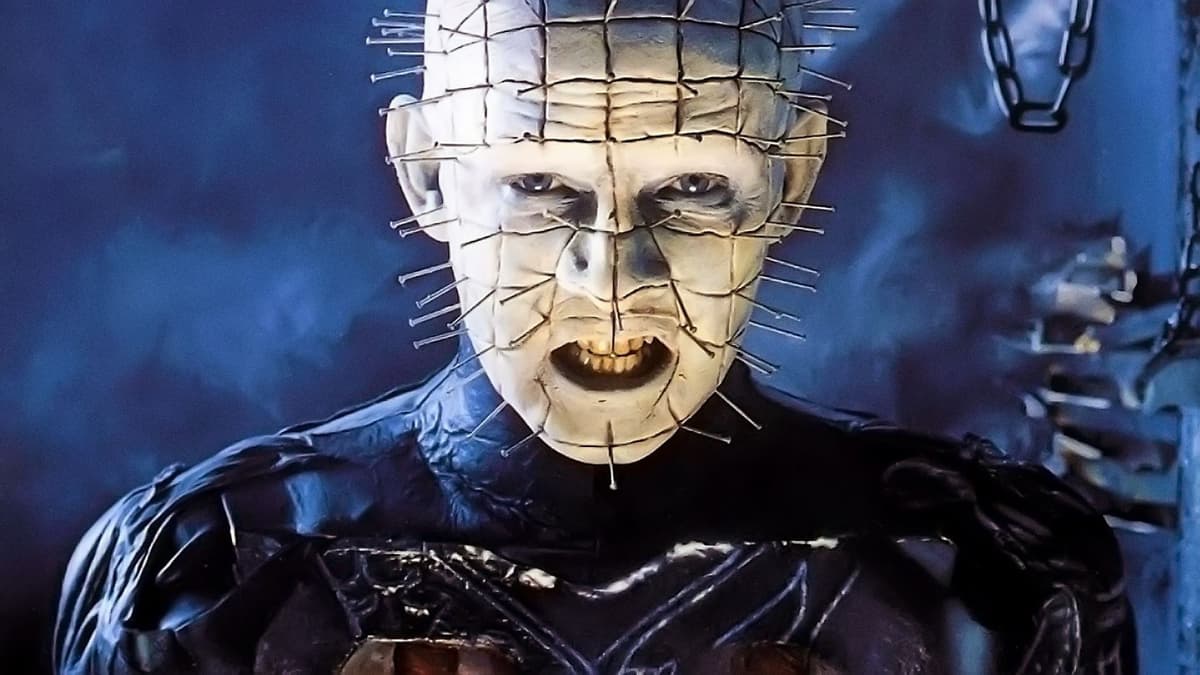
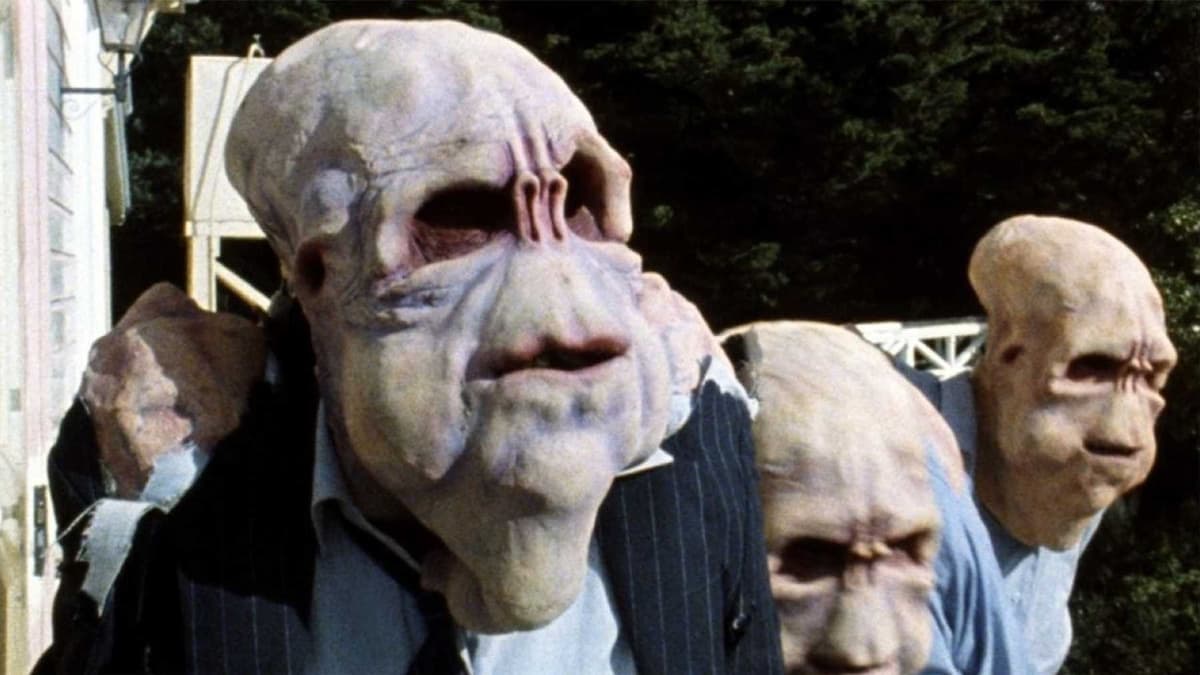
- Stan Winston Studio Creature Effects: The Kothoga creature, a hybrid lizard-human design at the heart of the film, was built and operated by Stan Winston Studio. The work covered full animatronic puppetry, prosthetic appliances for partial reveals, miniature models, and a six-month design and fabrication window before principal photography began.
- Field Museum Set Construction: While exteriors were shot at the actual Field Museum of Natural History in Chicago, the bulk of interior photography was filmed on full-scale soundstage replicas of the museum's Stanley Hall, basement boiler rooms, and exhibition galleries. The set build was a substantial below-the-line line item.
- Visual Effects: While the creature work was primarily practical, the film required digital compositing for sequences involving multiple creature reveals, the underwater finale, and the climactic fire. VCE Effects and other vendors handled the digital element.
- Jerry Goldsmith Score: Composer Jerry Goldsmith, a frequent Hyams collaborator, scored the film with a full orchestral recording session. The Goldsmith score was a recognizable selling point in the marketing and a substantial music-budget commitment.
- Marketing and Theatrical Release: Paramount opened the film wide on January 10, 1997 on 2,310 screens, with an estimated prints and advertising spend in the $20,000,000 to $25,000,000 range to support the post-holiday horror window where The Relic competed against Beverly Hills Ninja and the second weekend of Jerry Maguire.
How Does The Relic's Budget Compare to Similar Films?
At $40,000,000, The Relic sits in the mid-range of mid-1990s creature features and studio horror. The comparison set illustrates how its commercial result compared with its peers:
- Anaconda (1997): Budget $45,000,000 | Worldwide $136,885,767. Columbia's creature feature, released three months after The Relic, cost slightly more and grossed roughly four times worldwide, demonstrating the value of broad international marketing and a more recognizable B-movie hook.
- Mimic (1997): Budget $25,000,000 | Worldwide $25,480,490. Guillermo del Toro's Miramax creature feature cost less than The Relic and grossed roughly the same domestically, illustrating the soft commercial ceiling for the late-1990s creature-feature category.
- Deep Rising (1998): Budget $45,000,000 | Worldwide $11,203,026. Disney's Stephen Sommers creature feature was The Relic's closest analogue and performed considerably worse, with the same set-bound creature-stalking premise drawing diminishing audience returns.
- Species (1995): Budget $35,000,000 | Worldwide $113,374,103. MGM's creature feature with Natasha Henstridge cost less and grossed almost four times worldwide, illustrating what better marketing and an ensemble approach could deliver.
- Lake Placid (1999): Budget $35,000,000 | Worldwide $56,870,414. Fox's tonal lighter creature feature with Bridget Fonda cost less than The Relic and outgrossed it worldwide, showing how a horror-comedy hybrid could extend the genre's appeal.
The Relic Box Office Performance
The Relic opened wide on January 10, 1997 on 2,310 screens, earning $9,061,267 in its opening weekend and finishing third at the domestic box office behind Beverly Hills Ninja and Jerry Maguire. The post-holiday January slot delivered a soft but acceptable opening for a creature feature, and the film held reasonably well through its theatrical run.
Against a $40,000,000 production budget, the film needed approximately $90,000,000 worldwide to reach profitability after marketing. Here is the financial breakdown:
Box Office Breakdown
The Relic

The Relic returned approximately $0.52 in worldwide theatrical revenue for every $1 invested when measured against total estimated production and marketing spend, making it a clear theatrical loss for Paramount. The domestic share was $33,956,608, with international reporting essentially absent in the available Box Office Mojo data, a gap reflecting the regional rights split that left no single distributor with a comprehensive international ledger.
The film did recoup substantially through home video and pay-television licensing through the late 1990s, becoming a steady library catalog title for Paramount on VHS and DVD, but the theatrical run alone left the studio short of the break-even line by a meaningful margin.
The Relic Production History
Development began at Paramount in 1995 immediately after the publication of the Douglas Preston and Lincoln Child novel, which had become a bestseller on the strength of its museum-set premise and Special Agent Pendergast character. Producer Gale Anne Hurd (The Terminator, Aliens) optioned the property and brought the project to director Peter Hyams, who had just completed Sudden Death for Universal. The screenplay, credited to Amy Holden Jones, John Raffo, Rick Jaffa, and Amanda Silver, simplified the novel's plot, eliminated the Pendergast character entirely, and shifted the protagonist focus to museum scientist Margo Green.
Casting Penelope Ann Miller as Margo Green and Tom Sizemore as Lieutenant D'Agosta anchored the project in early 1996. Linda Hunt joined as museum director Dr. Ann Cuthbert, with James Whitmore as the elderly maintenance worker Frock and Audra Lindley as a senior curator. The Kothoga creature was designed and built by Stan Winston Studio over a six-month pre-production window, with creature performers in full body suits and a partial animatronic puppet handling the close-up reveals.
Principal photography ran from April to August 1996, primarily at sound stages in Vancouver and Los Angeles, with exterior plates and limited interior establishing shots filmed at the Field Museum of Natural History in Chicago. Director Peter Hyams handled cinematography himself, as he had on previous films, allowing him to control the heavy chiaroscuro lighting that defined the creature reveals. Jerry Goldsmith recorded the orchestral score in late summer 1996, and visual effects work continued through the fall.
The film was released on January 10, 1997, with a marketing campaign emphasizing the museum-after-dark setting and the Stan Winston creature design. Reviews were mixed and the box office soft, although the film found a more enduring audience on home video through the late 1990s.
Awards and Recognition
The Relic received no major awards nominations. The film was not recognized at the Academy Awards, Golden Globes, BAFTA Awards, or Saturn Awards for genre filmmaking. Stan Winston Studio's creature work, while generally praised by horror press, did not generate a Saturn Award nomination for Best Make-Up that year.
Jerry Goldsmith's score earned no major industry recognition for this assignment, although Goldsmith remained one of the most decorated composers of his era. The Kothoga creature has retained a modest following among practical-effects enthusiasts and is referenced in retrospectives of Stan Winston Studio's 1990s work, but the film itself never built the cult following that several of its contemporaries achieved.
Critical Reception
The Relic received mixed reviews. The film holds a 35% approval rating on Rotten Tomatoes based on 31 critic reviews, with a critical consensus that called the creature design effective but the storytelling formulaic. On Metacritic, the film scored 51 out of 100, indicating mixed or average reviews. Audiences generally responded better than critics, with the film earning solid B-grade word-of-mouth scores in CinemaScore exit polling.
Critics broadly praised the Stan Winston creature work, Peter Hyams's atmospheric cinematography, and Jerry Goldsmith's score, but objected to the underdeveloped Margo Green character, the predictable structure of the museum-stalking sequences, and Tom Sizemore's underused supporting role. The New York Times' Janet Maslin called it "a clever B-picture that knows exactly what it is," while Roger Ebert in the Chicago Sun-Times gave it 2.5 stars and wrote that "the creature is impressively designed, but it has nothing very interesting to do."
Genre-press reaction was more favorable. Fangoria praised the Stan Winston design and the film's commitment to physical effects in an industry that was rapidly transitioning to CGI. The mixed reception combined with the soft commercial performance has positioned The Relic as a competent but unmemorable entry in the late-1990s creature-feature category, overshadowed by Anaconda and Species in the same window.
Frequently Asked Questions
How much did The Relic (1997) cost to make?
The reported production budget was $40,000,000. Paramount Pictures financed the film in partnership with Polygram Filmed Entertainment, BBC Films, and Cloud Nine Entertainment, with the bulk of the spending going to Stan Winston Studio creature effects and full-scale interior replicas of the Field Museum of Natural History.
How much did The Relic earn at the box office?
The film grossed $33,956,608 domestically. Comprehensive international box office figures were not consolidated by a single distributor due to the regional rights split, and Box Office Mojo lists the worldwide gross at the same domestic figure. The film opened to $9,061,267 in the United States, finishing third on its January 10, 1997 opening weekend.
Was The Relic a box office success?
No. Against a $40,000,000 production budget and an estimated $20,000,000 to $25,000,000 in marketing spend, the film returned approximately $0.52 in worldwide gross for every $1 invested. Paramount absorbed an estimated theatrical loss of around $30,000,000, although home video and pay-television licensing recouped substantial revenue over the following years.
Who directed The Relic?
Peter Hyams directed and served as the cinematographer, a cost-saving consolidation he had used on his previous films Capricorn One, Outland, and Timecop. The screenplay was credited to Amy Holden Jones, John Raffo, Rick Jaffa, and Amanda Silver, based on the 1995 novel by Douglas Preston and Lincoln Child.
Where was The Relic filmed?
Principal photography took place from April to August 1996, primarily on soundstages in Vancouver, British Columbia and Los Angeles, with exterior plates and limited interior establishing shots filmed at the actual Field Museum of Natural History in Chicago. The bulk of the museum interiors were full-scale soundstage replicas to allow controlled lighting and creature performer access.
Who designed the creature in The Relic?
The Kothoga creature was designed and built by Stan Winston Studio, the practical effects house behind the Terminator endoskeleton, the Aliens queen, and the Jurassic Park animatronics. The film was one of the late-1990s benchmarks for full-creature animatronic and suit work before CGI fully dominated the category.
Is The Relic based on a book?
Yes. The film is adapted from the 1995 novel of the same name by Douglas Preston and Lincoln Child, which became a bestseller and launched the long-running Special Agent Pendergast series. The film adaptation eliminated the Pendergast character entirely and shifted the protagonist focus to museum scientist Margo Green.
Who scored The Relic?
Jerry Goldsmith, a frequent Peter Hyams collaborator and an Academy Award winning composer for The Omen, scored the film with a full orchestral recording session. The score was one of the more recognizable selling points in the marketing campaign.
What did critics think of The Relic?
The film received mixed reviews, with a 35% approval rating on Rotten Tomatoes and a 51 out of 100 score on Metacritic. Critics praised the Stan Winston creature design, Peter Hyams's atmospheric cinematography, and Jerry Goldsmith's score but objected to the underdeveloped character work and the predictable structure of the museum-stalking sequences.
Did The Relic spawn any sequels?
No. Despite the Preston and Child novels expanding into a long-running series featuring Special Agent Pendergast, no theatrical sequels were produced. The soft box office and the film's creative decision to eliminate Pendergast made a direct sequel difficult to build, and Paramount did not pursue the property further.
Filmmakers
The Relic

Build budgets like this one in Saturation
Start from an industry-standard feature film template, import the schedule and rates you already have, and let the cost report keep itself current as you spend. Real-time collaboration, no spreadsheets.