Wicked For Good Budget
 FantasyAdventureRomance2h 17m
Updated
Synopsis
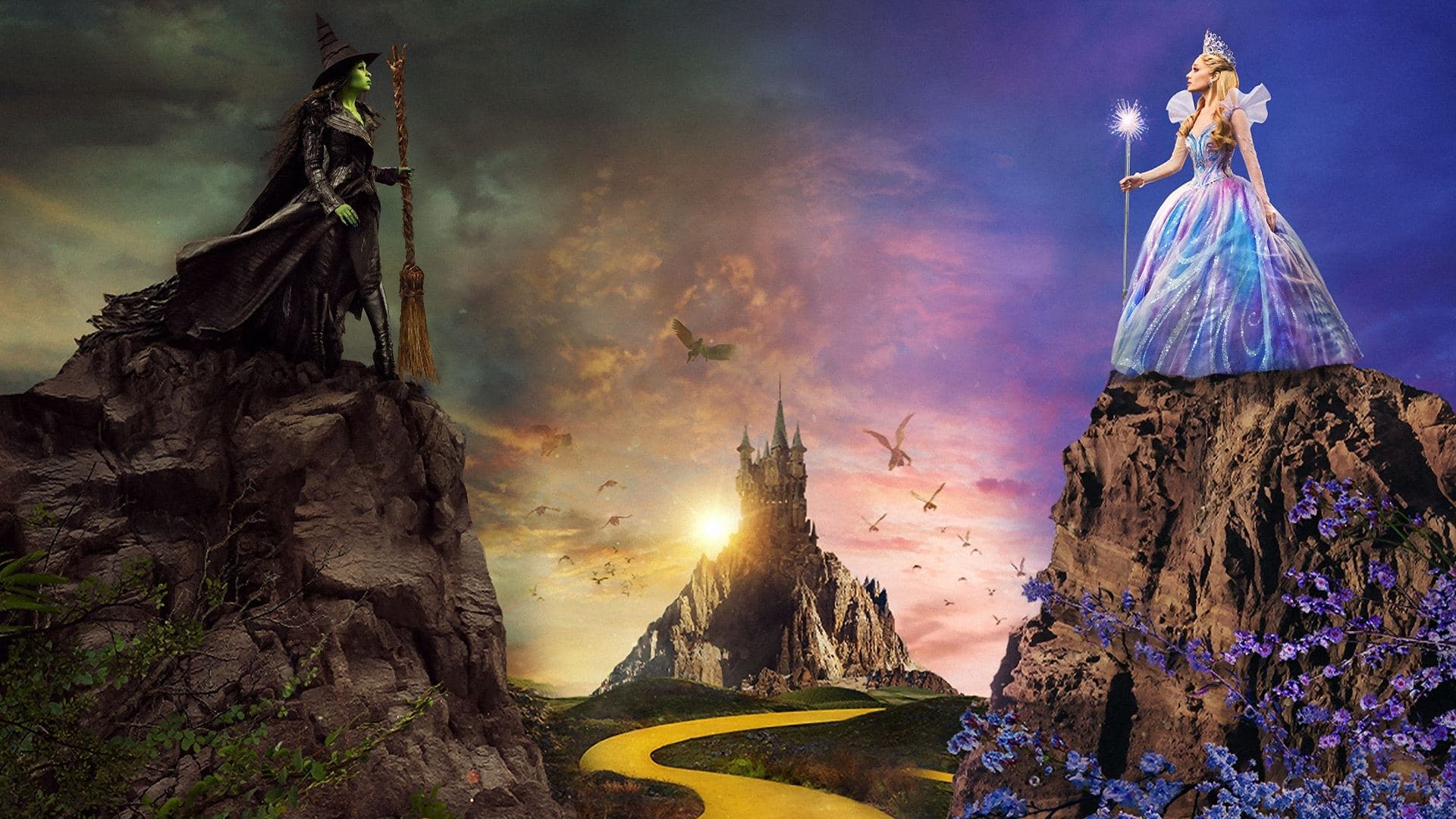
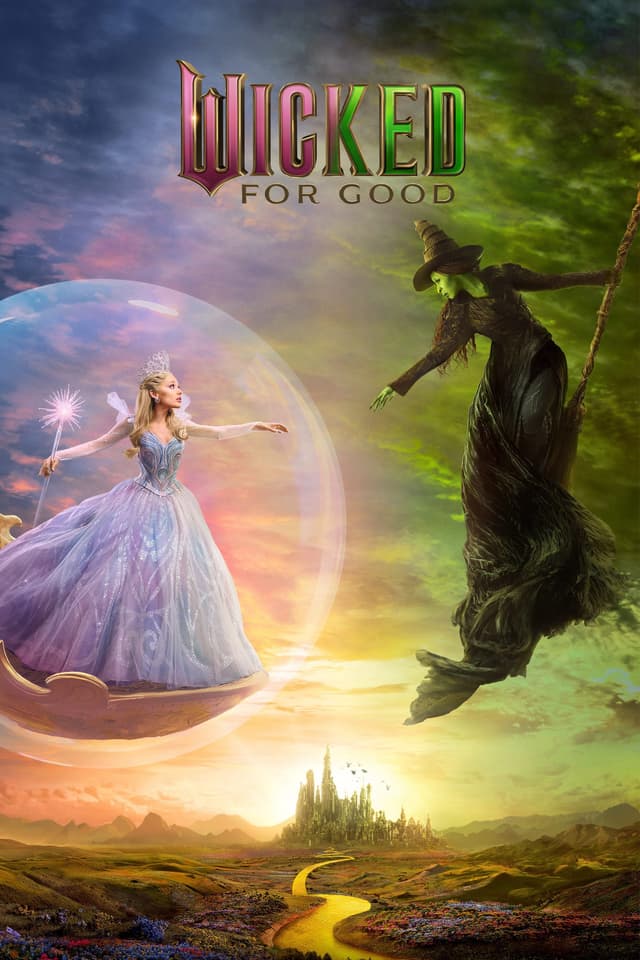
Years after Elphaba Thropp has been branded the Wicked Witch of the West and forced into hiding, Glinda the Good has become the public face of the Wizard's regime in Oz. As Dorothy's arrival from Kansas sets off events that will define both witches' legacies, Elphaba and Glinda must confront the choices that pulled them apart and decide what their friendship and their consciences will demand of them in the face of a corrupt political order.
What Is the Budget of Wicked: For Good (2025)?
Wicked: For Good (2025), directed by Jon M. Chu and released by Universal Pictures, was produced on a budget of $150,000,000. The film is the second installment of a two-part adaptation of the long-running Broadway musical, covering Act Two of the stage show and concluding the story of Elphaba (Cynthia Erivo) and Glinda (Ariana Grande) that began in the November 2024 release Wicked. Universal greenlit the back-to-back production strategy in early 2022, allowing both films to share crew, sets, costumes, and post-production infrastructure across a single extended shoot.
The $150,000,000 figure represents the second film's allocated portion of a combined production cost reported in industry trades as approximately $300,000,000 across both pictures. By splitting the musical into two features, Universal absorbed the duplicated marketing spend in exchange for two full theatrical windows, two soundtrack release cycles, and two awards campaigns. The budget covered a long shoot at Sky Studios Elstree in Hertfordshire, England, vast practical Munchkinland and Emerald City sets, principal photography returns for the entire Wicked Part 1 ensemble, two new Stephen Schwartz original songs added for the screen, and a John Powell orchestral score recorded with a large symphonic ensemble.
Key Budget Allocation Categories
The $150,000,000 budget was distributed across several major production areas:
- Above-the-Line Cast Compensation: Cynthia Erivo and Ariana Grande returned at compensation levels reflecting both their Wicked Part 1 success and the international franchise breakout the first film delivered. Jonathan Bailey returned as Fiyero off the back of Bridgerton and Heartstopper visibility, with Michelle Yeoh (Madame Morrible), Jeff Goldblum (the Wizard), Marissa Bode (Nessarose), Ethan Slater (Boq), Bowen Yang, and Colman Domingo (voice of the Cowardly Lion) all reprising their roles. The ensemble carried significant above-the-line cost on top of director Jon M. Chu's fee.
- UK Studio and Practical Set Build: Production based itself at Sky Studios Elstree in Hertfordshire, with practical Munchkinland, Emerald City, Kiamo Ko, and Shiz University environments standing on multiple soundstages. Production designer Nathan Crowley's team built physical sets at a scale rarely attempted in modern blockbuster filmmaking, including the multi-acre Munchkinland exterior planted with roughly nine million tulips. Maintaining these standing sets across the back-to-back schedule represented a significant fixed cost.
- Costume, Makeup, and Hair: Costume designer Paul Tazewell's wardrobe for the ensemble required hundreds of bespoke garments, including formal Emerald City court attire, the iconic Glinda bubble dress and Elphaba black hat-and-cloak silhouettes, and full Munchkin and Animal character builds. Cynthia Erivo's daily green makeup process and the prosthetic and wig work across the cast added a substantial line item over the extended shoot.
- Songs, Score, and Music Production: Stephen Schwartz wrote two new original songs for the film, "No Place Like Home" and "The Girl in the Bubble," recorded with the principal cast singing live on set in the same approach used for Wicked Part 1. John Powell composed the orchestral score, expanding on his Part 1 themes and recording with a large symphonic ensemble at AIR Studios in London. Music licensing, song clearance, and orchestra costs were significant.
- Visual Effects: Framestore handled the bulk of the visual effects work, including the Animal characters that populate the Oz political plot, environmental extensions of the practical sets, the climactic Wizard's balloon sequence, and the dragon clock animatronic augmentation. The musical sequences required complex VFX cleanup to integrate practical wirework for the flying choreography. Several thousand finished VFX shots crossed multiple vendors.
- Choreography, Rehearsal, and Live Vocals: Christopher Scott's choreography required months of pre-production rehearsal before cameras rolled, with the principal cast working with vocal coaches and dance captains. The decision to record live vocals on set rather than lip-sync to pre-recorded tracks added technical complexity in sound recording, foldback monitoring, and post-production mixing.
- Marketing and Tentpole Positioning: Universal's estimated $125,000,000 to $150,000,000 marketing spend included a global trailer campaign, soundtrack-driven radio and streaming promotion, retail partnerships including Mattel, Target, and Starbucks, and the Thanksgiving holiday corridor positioning. Marketing costs sit alongside the production budget rather than inside it but materially affect break-even math.
How Does Wicked: For Good's Budget Compare to Similar Films?
At $150,000,000, Wicked: For Good occupies the upper tier of musical adaptations and sits alongside other contemporary tentpole sequels. The comparison set illustrates the genre and franchise context:
- Wicked (2024): Budget $150,000,000 | Worldwide $755,000,000. The first installment, shot back-to-back with For Good and released exactly one year earlier, opened to $114,000,000 domestically and ultimately delivered the highest worldwide gross ever for a film adaptation of a Broadway musical. For Good inherited that audience but converted a smaller share of it.
- Les Miserables (2012): Budget $61,000,000 | Worldwide $441,800,000. Tom Hooper's adaptation of the Cameron Mackintosh musical cost less than half of For Good and grossed about $99,000,000 less. Both films share the live-on-set vocal approach and won or were nominated for major craft awards, though Les Mis converted its musical theater audience into broader Best Picture-tier recognition.
- Crazy Rich Asians (2018): Budget $30,000,000 | Worldwide $239,100,000. Jon M. Chu's prior commercial breakthrough cost a fifth of For Good and grossed less than half, but launched Chu's tentpole career and established him as a filmmaker capable of delivering crowd-pleasing romantic spectacle at scale.
- In the Heights (2021): Budget $55,000,000 | Worldwide $43,900,000. Chu's previous musical adaptation, released during the pandemic with a simultaneous HBO Max debut, lost money theatrically. The contrast with the Wicked films illustrates how dramatically theatrical economics for musicals can swing on release window, IP recognition, and exhibition health.
- Cats (2019): Budget $95,000,000 | Worldwide $75,500,000. The cautionary example for big-budget musical adaptations. Tom Hooper's Andrew Lloyd Webber adaptation lost approximately $114,000,000 on its theatrical run and made the Wicked films' commercial success look even more decisive by contrast.
- The Greatest Showman (2017): Budget $84,000,000 | Worldwide $459,000,000. Hugh Jackman's original-musical hit cost barely more than half of For Good and grossed in the same league, largely through unprecedented soundtrack and back-half theatrical legs, illustrating how musical word-of-mouth can carry a film for months when the songbook lands.
Wicked: For Good Box Office Performance
Wicked: For Good opened in the United States on November 21, 2025, after a São Paulo world premiere on November 4. The film earned $147,004,640 in its domestic opening weekend, the largest opening ever for a film adaptation of a Broadway musical, surpassing Wicked Part 1's $114,000,000 opening from exactly one year earlier. International markets opened day-and-date and contributed $223,000,000 across the launch frame.
The full financial breakdown:
Box Office Breakdown
Wicked For Good

Wicked: For Good returned approximately $3.60 in worldwide gross for every $1 invested in production, a strong return that nonetheless came in below Wicked Part 1's trajectory. The domestic gross of $342,915,090 against an international gross of $197,799,267 represents a 63/37 split heavily weighted toward North America, an unusually domestic-skewed pattern for a $500,000,000-plus blockbuster and a continuation of Wicked Part 1's identical bias.
The shortfall against Part 1 reflects several factors: musical sequels historically convert smaller audiences than their originating films, the second-act story material is more tragic and less broadly accessible than Part 1's coming-of-age beats, and the one-year gap between releases gave casual fans time to disengage. The film still cleared its estimated $275,000,000 to $300,000,000 total investment by a comfortable margin and will recoup further from home video, premium video-on-demand, the Peacock streaming window, soundtrack sales, and ongoing retail merchandising.
Wicked: For Good Production History
Universal Pictures and producers Marc Platt and David Stone first set a single-film Wicked screen adaptation into development in 2003, the same year the stage musical opened on Broadway. The project cycled through directors and screenplay drafts for nearly two decades, with Stephen Daldry, Ryan Murphy, and J.J. Abrams all attached at various points. Jon M. Chu joined as director in February 2021 and within a year had successfully argued to Universal that the source material was too rich to be compressed into a single theatrical feature.
In April 2022 Universal officially announced that Wicked would be split into two films, with Act One of the stage musical becoming Wicked (November 2024) and Act Two becoming Wicked: For Good (November 2025). Original Broadway book writer Winnie Holzman returned to co-write the screenplays with Dana Fox, working closely with stage composer-lyricist Stephen Schwartz to expand the musical material for the screen. Schwartz wrote two new songs for the second film, "No Place Like Home" for Elphaba and "The Girl in the Bubble" for Glinda, both designed to add interiority that the stage version conveys through staging rather than song.
Principal photography on both films ran simultaneously from December 2022 through January 2024 at Sky Studios Elstree in Hertfordshire, England, with the production taking advantage of UK film tax relief and the local crew base. The shoot was interrupted in mid-2023 by the SAG-AFTRA strike, which idled the production for several months and contributed to the extended schedule. Production designer Nathan Crowley's team built practical Munchkinland exteriors covering multiple acres, planting roughly nine million tulips of varying colors to create the storybook landscape. Sky Studios Elstree's adjacent sound stages housed the Emerald City, Kiamo Ko, and Shiz University standing sets, with the same locations dressed differently for the two films' separate timeline points.
Cinematographer Alice Brooks shot both films back-to-back, building on her prior collaborations with Jon M. Chu on In the Heights. The principal cast recorded vocals live on set rather than lip-syncing to pre-recorded tracks, an approach pioneered for screen musicals by Tom Hooper on Les Miserables. Christopher Scott served as choreographer, with months of pre-production rehearsal preceding camera. Post-production on Part 2 began in early 2024 and continued through the summer of 2025, with Framestore handling the bulk of visual effects work. John Powell's score was recorded with a large orchestral ensemble at AIR Studios in London, expanding the musical vocabulary he established for Part 1.
The marketing campaign launched with a teaser trailer in late 2024 attached to Wicked Part 1's theatrical run, followed by a full trailer cycle through the spring and summer of 2025. Retail partnerships with Mattel (a full Wicked toy line), Target, and Starbucks (a "Glinda Pink" and "Elphaba Green" drink program) mirrored the Part 1 playbook, and Universal positioned the November 21, 2025 release in the same Thanksgiving corridor that had served Part 1 so well a year earlier.
Awards and Recognition
Wicked: For Good received five Golden Globe nominations: Best Actress in a Musical or Comedy (Cynthia Erivo), Best Supporting Actress (Ariana Grande), Best Cinematic and Box Office Achievement, and Best Original Song for both "No Place Like Home" and "The Girl in the Bubble." The film notably missed Best Picture (Musical or Comedy) and Best Director, a significant contrast with Wicked Part 1, which won the Cinematic and Box Office Achievement award the prior year.
At the BAFTA Awards the film received two nominations in craft categories. The National Board of Review and the American Film Institute both included Wicked: For Good in their year-end top-ten film selections. The Saturn Awards, recognizing genre filmmaking, named the film Best Fantasy Film of the year.
Below-the-line guilds nominated the film for awards in production design, costume design (Paul Tazewell), makeup, sound, original score (John Powell), and original song. The Visual Effects Society recognized Framestore's creature and environment work. The film did not match Part 1's Academy Award presence, with the second installment expected to draw a narrower craft-category nomination set rather than the Best Picture berth Part 1 earned.
Critical Reception
Wicked: For Good received generally mixed reviews from critics, earning a 66% approval rating on Rotten Tomatoes based on 350 critic reviews and a 58 out of 100 score on Metacritic, indicating mixed or average critical response. Audiences responded much more enthusiastically, awarding the film an A CinemaScore and a 92% positive rating on PostTrak exit polling, a sharp gap between critical and audience reception that mirrored Part 1's pattern.
Critics broadly praised the lead performances. Cynthia Erivo's Elphaba was singled out as the film's emotional anchor, with reviewers noting her vocal performance on the new song "No Place Like Home" as a highlight. Ariana Grande drew particular attention for her dramatic range in Act Two, where Glinda's arc darkens considerably from the comedic register of Part 1. Jonathan Bailey's Fiyero received warm notices, and Marissa Bode's Nessarose was praised for adding emotional weight to a tragic supporting arc. The production design, costume work, and orchestrations were widely admired.
Critical reservations centered on pacing. Variety, IndieWire, and The Hollywood Reporter all noted that the 137-minute runtime felt long given the comparatively thin Act Two material, with extended sequences that seemed designed to justify the split rather than serve the story. Some reviewers found the two new Schwartz songs functional rather than essential. The New Yorker's Justin Chang wrote that Jon M. Chu "stages the spectacle with conviction but cannot fully overcome the fact that Act Two of Wicked has always been the show's weaker half." Audiences, by contrast, embraced the closure the film provided to the Elphaba and Glinda friendship, with the A CinemaScore reflecting a fanbase that had already committed emotionally to the story's resolution.
Frequently Asked Questions
How much did it cost to make Wicked: For Good (2025)?
Wicked: For Good had a production budget of $150,000,000. The film is the second installment of a back-to-back two-part adaptation of the Broadway musical, and the budget represents its allocated share of a combined production cost reported at approximately $300,000,000 across both films. Costs were driven by the ensemble cast, the extended UK studio shoot at Sky Studios Elstree, vast practical Munchkinland and Emerald City sets, two new Stephen Schwartz original songs, John Powell's orchestral score, and Framestore's extensive visual effects work.
How much did Wicked: For Good earn at the box office?
The film grossed $342,915,090 domestically and $197,799,267 internationally for a worldwide total of $540,714,357. It opened to $147,004,640 in the United States on its November 21, 2025 opening weekend, the largest opening ever for a film adaptation of a Broadway musical.
Was Wicked: For Good a box office success?
Yes. Against a $150,000,000 production budget, the film delivered approximately a 260% return on investment on production cost alone, and cleared its estimated $275,000,000 to $300,000,000 total investment (including marketing) by a comfortable margin. It earned about $214,000,000 less worldwide than Wicked Part 1, however, reflecting the historical pattern of musical sequels converting smaller audiences than their originating films.
How does Wicked: For Good compare to Wicked Part 1?
Wicked Part 1 grossed $755,000,000 worldwide against the same $150,000,000 production budget. For Good's $540,700,000 worldwide gross is approximately 72% of Part 1's total. The opening weekend pattern was similar, with For Good opening to $147,000,000 against Part 1's $114,000,000, but the back-half multiplier declined, leaving the final total below Part 1.
Who directed Wicked: For Good?
Jon M. Chu directed both Wicked films, joining the project in February 2021. Chu previously directed Crazy Rich Asians (2018), In the Heights (2021), and the Step Up sequels, building a reputation for crowd-pleasing musicals and spectacle filmmaking that made him a natural fit for the Wicked adaptation.
Where was Wicked: For Good filmed?
Both Wicked films were shot at Sky Studios Elstree in Hertfordshire, England, from December 2022 through January 2024. The production used the UK film tax relief and constructed a multi-acre practical Munchkinland exterior including roughly nine million planted tulips. Standing sets for Emerald City, Kiamo Ko, and Shiz University occupied multiple adjacent soundstages across the back-to-back shoot.
Are there new songs in Wicked: For Good?
Yes. Stephen Schwartz wrote two new original songs for the film: "No Place Like Home" for Elphaba (Cynthia Erivo) and "The Girl in the Bubble" for Glinda (Ariana Grande). Both songs were nominated for Best Original Song at the Golden Globe Awards. John Powell composed the orchestral score, expanding on his Wicked Part 1 themes.
Did the SAG-AFTRA strike affect the production?
Yes. The mid-2023 SAG-AFTRA strike idled the back-to-back Wicked production for several months, contributing to the extended shooting schedule that ran from December 2022 through January 2024. The interruption did not push back the November 2025 release date for Part 2, as Universal had built schedule contingency into the post-production timeline.
What awards did Wicked: For Good receive?
The film received five Golden Globe nominations: Best Actress in a Musical or Comedy (Cynthia Erivo), Best Supporting Actress (Ariana Grande), Best Cinematic and Box Office Achievement, and Best Original Song for both new songs. It received two BAFTA nominations, was named in the National Board of Review and American Film Institute top-ten lists, and won the Saturn Award for Best Fantasy Film. It notably missed Golden Globe nominations for Best Picture and Best Director, in contrast to Part 1.
What did critics and audiences think of Wicked: For Good?
Critics gave the film mixed reviews, with a 66% approval rating on Rotten Tomatoes and 58 out of 100 on Metacritic. Audiences responded much more enthusiastically, awarding it an A CinemaScore and 92% positive on PostTrak exit polling. Critics praised the lead performances and production design while flagging pacing issues and the inherent challenge of Act Two's less broadly accessible material.
Filmmakers
Wicked For Good

Official Trailer
Build budgets like this one in Saturation
Start from an industry-standard feature film template, import the schedule and rates you already have, and let the cost report keep itself current as you spend. Real-time collaboration, no spreadsheets.