Les Misérables Budget
 HistoryDrama2h 38m
Updated
Synopsis
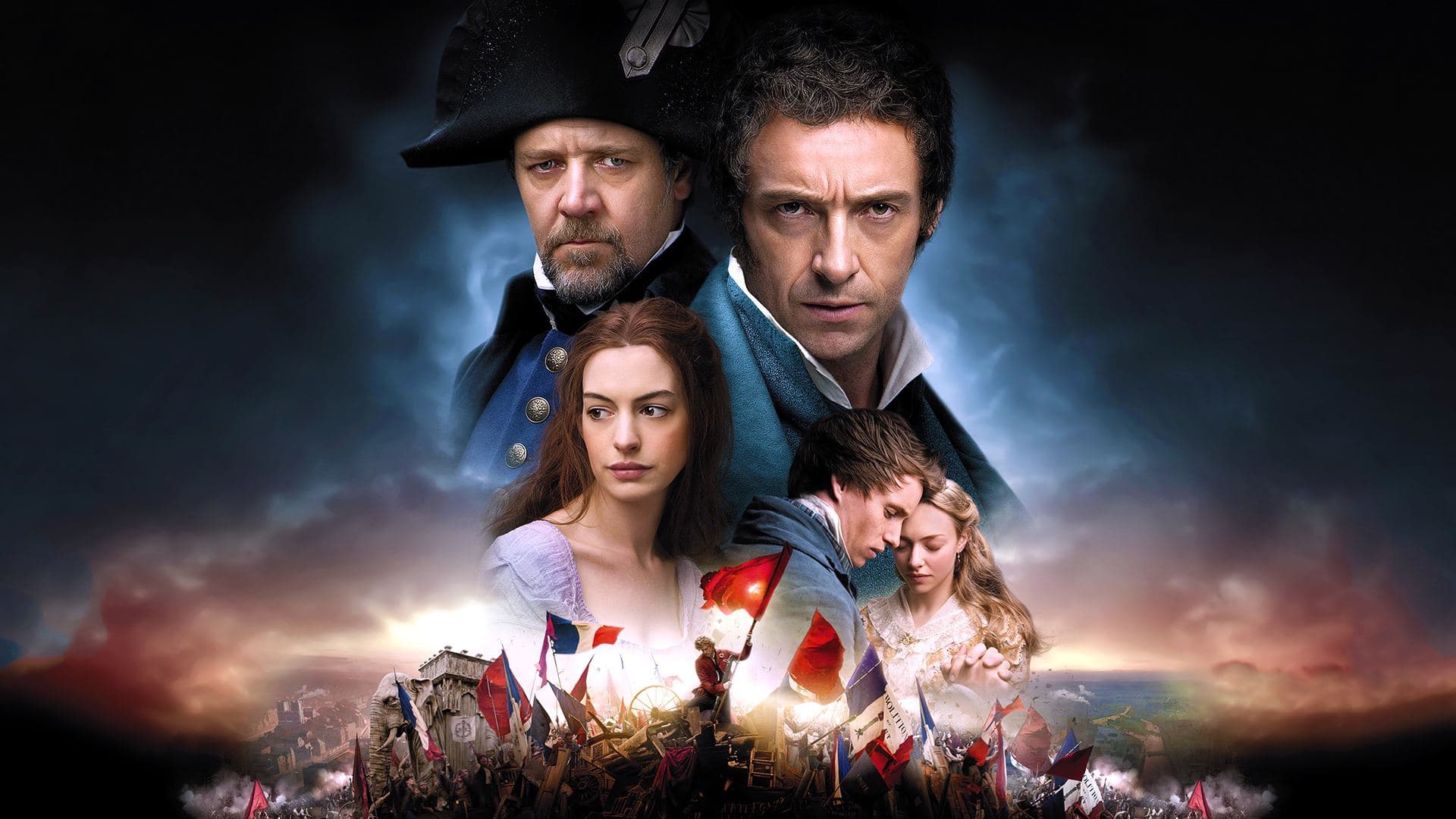
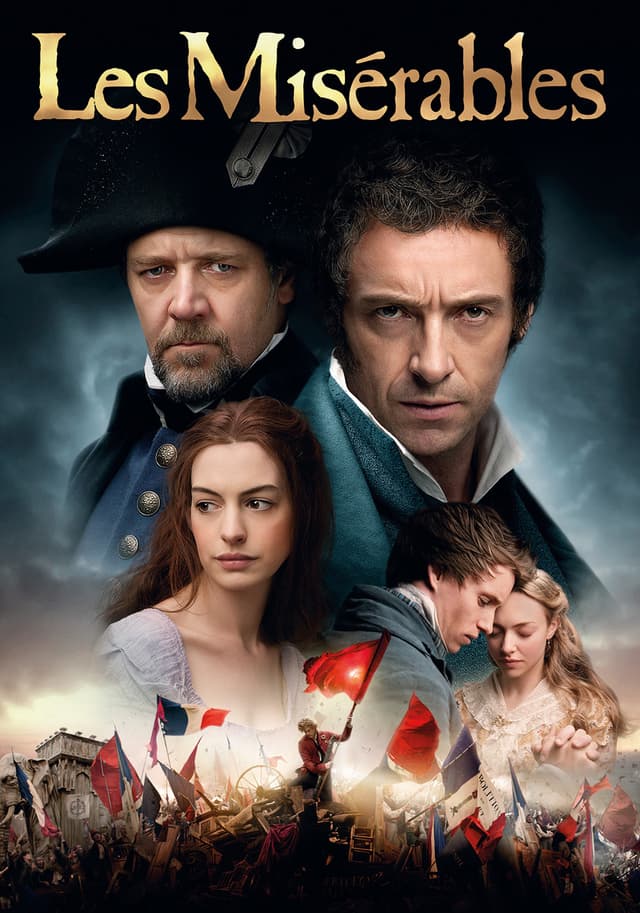
Jean Valjean, known as Prisoner 24601, is released from prison and breaks parole to create a new life for himself while evading the grip of the persistent Inspector Javert. Set in post-revolutionary France, the story reaches resolution against the background of the June Rebellion.
What Is the Budget of Les Misérables?
Les Misérables was produced on a budget of approximately $61 million, a deliberately modest figure given the scope of the production and the combined star power of its ensemble cast. The film was co-financed by Working Title Films and Cameron Mackintosh Ltd., the company of the legendary stage producer who had shepherded the original 1985 West End musical from workshop to global phenomenon. Mackintosh's involvement was not merely financial: his access to the stage show's creative team, licensed materials, and decades of institutional knowledge helped the production avoid the rights complications and creative missteps that had derailed previous adaptation attempts.
Universal Pictures handled worldwide distribution and contributed to the financing package. The $61 million figure was tight for a film of this ambition, but director Tom Hooper and his producers made deliberate choices that kept costs contained without sacrificing the production's scale. Hooper's decision to record all singing live on set, rather than using the standard pre-recorded playback method, was both the film's defining artistic choice and a significant logistical challenge that added complexity to the shooting schedule but ultimately gave the performances a rawness and immediacy that conventional production technique could not have achieved.
Key Budget Allocation Categories
- Ensemble Above-the-Line Talent: Hugh Jackman anchored the cast as Jean Valjean and received the largest fee, a role he had long sought after successfully lobbying Hooper for the part. Russell Crowe (Javert), Anne Hathaway (Fantine), Amanda Seyfried (Cosette), Helena Bonham Carter (Madame Thénardier), Sacha Baron Cohen (Thénardier), Eddie Redmayne (Marius), and Aaron Tveit (Enjolras) together made this one of the most star-dense film musicals in decades. Samantha Barks, who reprised her West End and Broadway role as Éponine, was paid a fraction of her co-stars but her casting served as a vital bridge between the theatrical fanbase and the film audience.
- Live-On-Set Recording Technology: Tom Hooper's insistence that every actor sing live on camera, with no lip-syncing to pre-recorded tracks, was unprecedented at this scale in modern film musicals. Each performer wore a near-invisible earpiece through which a piano played accompaniment at the correct tempo, while bespoke microphones were concealed within costumes. This approach required specialized audio engineering, months of additional vocal rehearsal, and a shooting methodology that prioritized emotional truth over technical precision. The result was performances that felt raw and immediate rather than polished, particularly in close-up sequences like Anne Hathaway's unbroken "I Dreamed a Dream."
- Anne Hathaway's Preparation and Single-Take Sequences: Hathaway's physical and vocal transformation into Fantine required extended pre-production work with a dialect coach, physical trainer, and singing teacher. She lost 25 pounds over several weeks and had her head shaved on camera in a scene filmed in real time. Her performance of "I Dreamed a Dream" was captured in a single unbroken close-up take of several minutes, a sequence that required multiple days of setup and preparation for what appears in the finished film as one continuous, devastating shot.
- Pinewood Studios and UK Location Production: The production built major interior and exterior sets at Pinewood Studios in Buckinghamshire, including a full-scale recreation of the Paris barricade. Location work took place across England: Winchester Cathedral stood in for French ecclesiastical architecture, Greenwich provided period streetscapes, and Boughton House in Northamptonshire served as the exterior for the Thénardier's inn. French exterior scenes were also captured on location in Paris. Cinematographer Danny Cohen, who had worked with Hooper on The King's Speech, brought the same handheld intimacy to the material, often shooting on wide-angle lenses at unusually close distances to the actors' faces.
- Awards Campaign and Marketing: Universal mounted a significant awards campaign from the film's Christmas Day 2012 release through the March 2013 Oscar ceremony. Anne Hathaway's Best Supporting Actress campaign was particularly intensive, running concurrent with Hugh Jackman's Best Actor campaign. The combined marketing and P&A spend is estimated at approximately $40 million, standard for a studio release with serious awards aspirations.
How Does Les Misérables's Budget Compare to Similar Films?
At $61 million, Les Misérables sits in the upper-middle tier of film musical budgets, larger than most adult-oriented stage adaptations but well below the production costs of animated or franchise-driven musicals. Its worldwide gross of $441.8 million made it one of the most profitable film musicals of the post-Chicago era.
- Mamma Mia! (2008): Budget $52M | Worldwide $609M. The other major Working Title film musical of the same era, at a comparable budget but significantly higher commercial ceiling. Mamma Mia!'s ABBA catalog had broader popular recognition and a lighter tone that drove repeat viewings, giving it a worldwide gross Les Misérables could not match despite stronger critical and awards traction.
- Chicago (2002): Budget $45M | Worldwide $306M. The Best Picture-winning film musical that Les Misérables was inevitably measured against. Chicago proved a serious stage musical could succeed as a prestige film and set the commercial template; Les Misérables surpassed it on both budget and worldwide gross while matching its awards ambition.
- The Phantom of the Opera (2004): Budget $70M | Worldwide $154M. The other beloved Andrew Lloyd Webber stage adaptation, at a larger budget but dramatically lower returns. Phantom's relative commercial disappointment made studios cautious about big-budget stage musical adaptations for nearly a decade, making Les Misérables's success at a controlled $61M all the more strategically significant.
- Cats (2019): Budget $95M | Worldwide $73M. The cautionary tale that followed, demonstrating how steeply the film musical market can fall when a production loses creative control of its source material. Les Misérables's disciplined budget and Hooper's specific artistic vision stand in sharp contrast to the franchise overreach that produced Cats.
Les Misérables Box Office Performance
Les Misérables was released by Universal Pictures in limited engagement on December 25, 2012, expanding to wide release on December 28. Its Christmas Day opening set a record for a film musical, earning $27.3 million in its first weekend of limited release. The film held exceptionally well through January 2013, driven by awards attention and word of mouth among the devoted theatrical fanbase. It earned $148,809,770 domestically and $293 million internationally, for a worldwide total of $441,809,770, making it one of the highest-grossing film musicals ever produced.
Against a $61 million production budget and estimated $40 million in marketing and distribution costs, the film's total investment was approximately $101 million. With theaters typically retaining around 50% of box office gross, Universal's studio share of the worldwide gross was approximately $220.9 million. The film cleared its break-even threshold comfortably by February 2013 and became a significant profit center for Universal, demonstrating that adult-oriented prestige film musicals could still command theatrical audiences at scale.
Box Office Breakdown
Les Misérables

For every dollar invested in production, Les Misérables returned roughly $7.24 in worldwide gross. After accounting for the estimated P&A spend and the theatrical revenue split, the actual profitability was lower, but the film still represented a substantial return on investment for Universal and Working Title, particularly when ancillary revenue from home video, streaming licensing, and soundtrack sales are factored in.
Les Misérables Production History
The stage musical Les Misérables, with music by Claude-Michel Schönberg and lyrics by Alain Boublil, opened at the Barbican Theatre in London in 1985 and transferred to the West End that same year, where it ran continuously until 2004. By the time Tom Hooper was approached to direct a film adaptation, the property had been the subject of multiple stalled Hollywood attempts spanning nearly two decades. Cameron Mackintosh, who had produced the original stage production and its subsequent global rollout, retained significant creative control over any screen adaptation. His direct involvement as a producer on the film ensured access to the original creative team and resolved the rights complexities that had blocked earlier efforts.
Tom Hooper was selected as director on the strength of The King's Speech (2010), which had demonstrated his ability to combine intimate, performance-driven storytelling with period production values. Hooper's controversial decision to have all actors sing live on set, rather than recording vocals in advance and lip-syncing on camera, became the defining creative and logistical challenge of the production. The approach required each actor to wear a small earpiece through which a piano played accompaniment at the correct tempo, while on-set audio engineers captured the live performance through microphones concealed in period costumes. The technique demanded far more rehearsal time than standard film musical production but delivered performances with an immediacy that pre-recorded playback cannot reproduce.
Casting prioritized actors with genuine vocal ability over pure stage experience, with one notable exception: Samantha Barks, who had played Éponine both in the West End revival and on Broadway, was cast in the same role for the film. Principal photography ran from April through July 2012. Interior sequences and major set pieces were filmed at Pinewood Studios in Buckinghamshire, where the production built a full-scale Paris barricade set and several period interior environments. UK location work included Winchester Cathedral, Greenwich, and Boughton House in Northamptonshire. A portion of the French exterior scenes were shot on location in Paris. Cinematographer Danny Cohen shot extensively on wide-angle lenses at close distances to the actors' faces, giving the film a visually unconventional quality that drew both admiration and criticism.
The film premiered at the Odeon Leicester Square in London on December 5, 2012, and opened in the United States on Christmas Day. Universal pursued an aggressive awards strategy, positioning Anne Hathaway's performance of "I Dreamed a Dream" as the centerpiece of her Supporting Actress campaign from the earliest screenings. The campaign proved successful: Hathaway won every major precursor award before the 85th Academy Awards ceremony in February 2013.
Awards and Recognition
Les Misérables received eight Academy Award nominations at the 85th Academy Awards ceremony on February 24, 2013, winning three. Anne Hathaway's win for Best Supporting Actress was among the most anticipated in recent Oscar history: she had won every major precursor award that season, including the Golden Globe, Screen Actors Guild Award, BAFTA, and Critics Choice Award, making her victory one of the most comprehensive supporting actress campaigns of the decade. The film also won Best Sound Mixing, reflecting the extraordinary technical achievement of recording all performances live on set, and Best Makeup and Hairstyling.
The five additional nominations were Best Picture, Best Actor for Hugh Jackman, Best Costume Design, Best Original Song for "Suddenly" (written by Schönberg and Boublil for the film), and Best Production Design. The Best Picture nomination confirmed the film's standing as a serious awards contender, though it lost in that category to Argo. At the Golden Globes, the film won Best Motion Picture Musical or Comedy and Best Actress in a Motion Picture Musical or Comedy for Hathaway, which was folded into her supporting actress campaign at the Oscars. The film's total awards haul across the season made it one of the most decorated productions of the 2012-2013 awards cycle.
Critical Reception
Les Misérables received a more divided critical response than its awards dominance might suggest, landing at approximately 70% on Rotten Tomatoes with a significantly higher audience score. The film polarized critics along several fault lines. Hooper's visual style, particularly his use of extreme close-ups and unconventional wide-angle lens choices, was described by some critics as claustrophobic and disorienting, stranding the film's inherently theatrical scope within intimate frames that worked brilliantly in individual scenes but could feel relentless over a nearly three-hour runtime.
Russell Crowe's vocal performance as Javert was the most publicly debated element of the film. Critics broadly found his voice undersized for the role's operatic demands, and several reviews devoted significant attention to the gap between his performance and the standard set by the stage musical's original cast recordings. The live-singing innovation, which drew universal praise in the context of Hathaway's "I Dreamed a Dream," worked less consistently across the full ensemble, and some critics found the rawness of certain performances more distracting than revelatory.
Hugh Jackman and Anne Hathaway received unqualified critical praise. Jackman's physical and vocal commitment to Jean Valjean was recognized as one of the most demanding lead performances in a film musical in years, and Hathaway's "I Dreamed a Dream" was described by multiple critics as one of the great single scenes in recent cinema. Audience response was substantially more positive than the critical consensus: the film earned an A CinemaScore, driven by the large and devoted fanbase of the original stage musical, whose enthusiasm for the live-singing approach and star casting sustained the film's theatrical run well into January 2013.
Frequently Asked Questions
How much did Les Miserables (2012) cost to make?
The production budget was $61,000,000. Universal Pictures and Working Title Films financed the adaptation, with co-production support from Relativity Media. The musical adaptation came in below the cost of comparable scale prestige musicals due to disciplined budgeting by producer Cameron Mackintosh.
How much did Les Miserables earn at the box office?
The film grossed $148,809,770 domestically and $292,300,000 internationally, for a worldwide total of approximately $441,000,000. It opened to $27,281,000 on December 25, 2012, taking the Christmas Day top spot ahead of Django Unchained.
Who directed Les Miserables (2012)?
Tom Hooper directed the film, his follow-up to the Best Picture Oscar winner The King's Speech (2010, $15,000,000 budget, $427,400,000 worldwide). Hooper insisted on recording all vocals live on set rather than dubbing in post-production, a notable departure from standard musical filmmaking practice.
Who stars in Les Miserables (2012)?
Hugh Jackman stars as Jean Valjean and Russell Crowe plays Inspector Javert. Anne Hathaway plays Fantine, Amanda Seyfried plays Cosette, Eddie Redmayne plays Marius, Sacha Baron Cohen and Helena Bonham Carter play the Thenardiers, with Aaron Tveit as Enjolras and Samantha Barks as Eponine.
Did Les Miserables (2012) win any Oscars?
Yes. The film won three Academy Awards at the 85th Oscars: Best Supporting Actress for Anne Hathaway, Best Makeup and Hairstyling, and Best Sound Mixing. It received eight total nominations, including Best Picture, Best Actor for Hugh Jackman, and Best Original Song for Suddenly.
Was the singing recorded live on set?
Yes. Tom Hooper required cast members to sing live during filming, with a pianist providing a click track through earpieces. The technique allowed for greater emotional flexibility from the actors but increased shooting days and post-production complexity. Anne Hathaway's I Dreamed a Dream was performed live in a single take used in the final cut.
Where was Les Miserables filmed?
Principal photography took place at Pinewood Studios in England, with location work in Greenwich, Portsmouth, Winchester Cathedral, and Boughton House. The Paris barricade sequences were constructed as massive Pinewood backlot sets rather than shot on location.
What did critics think of Les Miserables?
Reviews were mixed-to-positive, with a 70% approval rating on Rotten Tomatoes and a 63 out of 100 score on Metacritic. Critics praised Anne Hathaway and Hugh Jackman while objecting to Russell Crowe's singing voice and Tom Hooper's frequent extreme close-ups during musical numbers.
How does Les Miserables compare to other movie musicals?
Les Miserables outperformed Chicago (2002, $45,000,000 budget, $306,800,000 worldwide) and Mamma Mia! (2008, $52,000,000 budget, $611,300,000 worldwide) on a per-budget basis. Its $441,000,000 worldwide gross made it the second-highest-grossing movie musical of 2012, behind only Disney's animated Brave.
How much did Anne Hathaway lose for the role?
Anne Hathaway lost approximately 25 pounds for the role, surviving on roughly 500 calories per day during the lead-up to filming the Fantine sequences. She also had her hair cut on camera in a single take for the I Dreamed a Dream lead-in, with no possibility of reshooting if the take failed.
Build budgets like this one in Saturation
Start from an industry-standard feature film template, import the schedule and rates you already have, and let the cost report keep itself current as you spend. Real-time collaboration, no spreadsheets.