Nights of Cabiria Budget
Updated
Synopsis
In Rome, the irrepressible streetwalker Cabiria endures a series of romantic and material betrayals while clinging to her cottage on the city outskirts and her belief in a better life. A pilgrimage, an encounter with a film star, and a hypnotism session culminate in a final, devastating offer of love.
What Is the Budget of Nights of Cabiria (1957)?
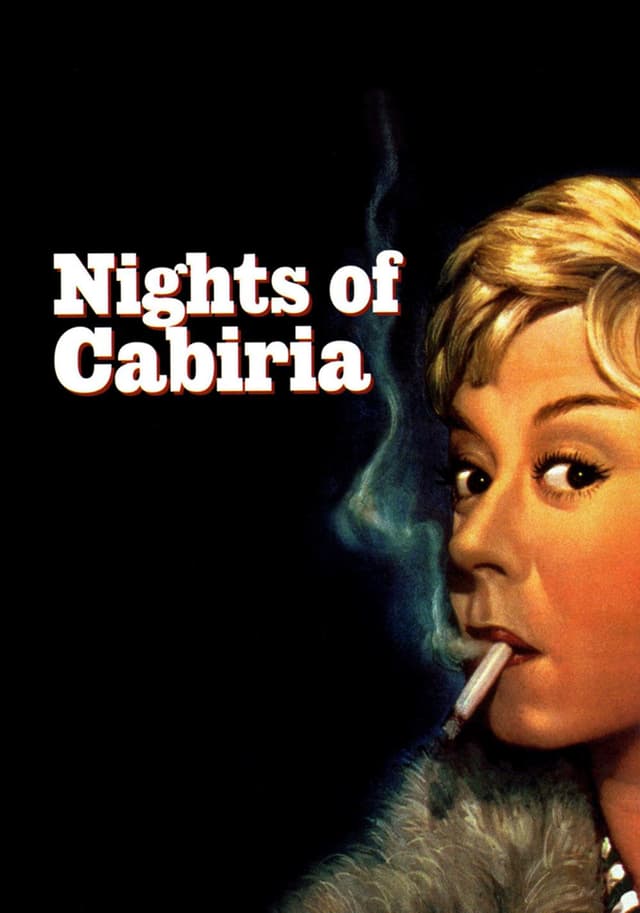
Nights of Cabiria (1957), directed by Federico Fellini and distributed internationally by Lopert Pictures Corporation and Cineriz, was produced on a budget of approximately 350,000,000 Italian lire, equivalent to roughly $560,000 at 1957 exchange rates or approximately $6,000,000 to $7,000,000 in inflation-adjusted 2025 dollars. The film was financed by Dino De Laurentiis Cinematografica with co-production support from Les Films Marceau, with Fellini directing his sixth feature following the international success of La Strada (1954) and Il Bidone (1955).
The budget reflected the mid-tier Italian production model of the mid-1950s, with Fellini's working relationships at De Laurentiis providing stable financing for a director whose international standing had grown steadily since La Strada. Giulietta Masina, Fellini's wife and longtime collaborator, anchored the cast at rates reflecting her post-La Strada international visibility, with the supporting cast filled by Italian theatrical and screen performers at appropriate Italian-industry compensation.
Key Budget Allocation Categories
Nights of Cabiria's budget was distributed across these production areas:
- Above-the-Line Talent: Giulietta Masina, Fellini's wife and the lead of La Strada, anchored the cast as Cabiria. François Périer, Amedeo Nazzari, and Franca Marzi filled supporting roles at Italian-industry rates, with significant theatrical and screen credibility but compensation below Hollywood scale.
- Roman Production Base: Principal photography took place primarily in Rome and the surrounding Lazio region, with location work at the Passeggiata Archeologica, the Via Veneto, the city outskirts where Cabiria lives, and various Roman streets. The location-shoot approach reflected Italian neorealist heritage adapted to Fellini's emerging poetic register.
- Director and Writer Fees: Federico Fellini co-wrote with Tullio Pinelli, Ennio Flaiano, Pier Paolo Pasolini, and Brunello Rondi, with Pasolini specifically credited for Roman street dialect work. The collaborative writing team reflected the Italian art-cinema model and the relationships Fellini had built across the 1950s.
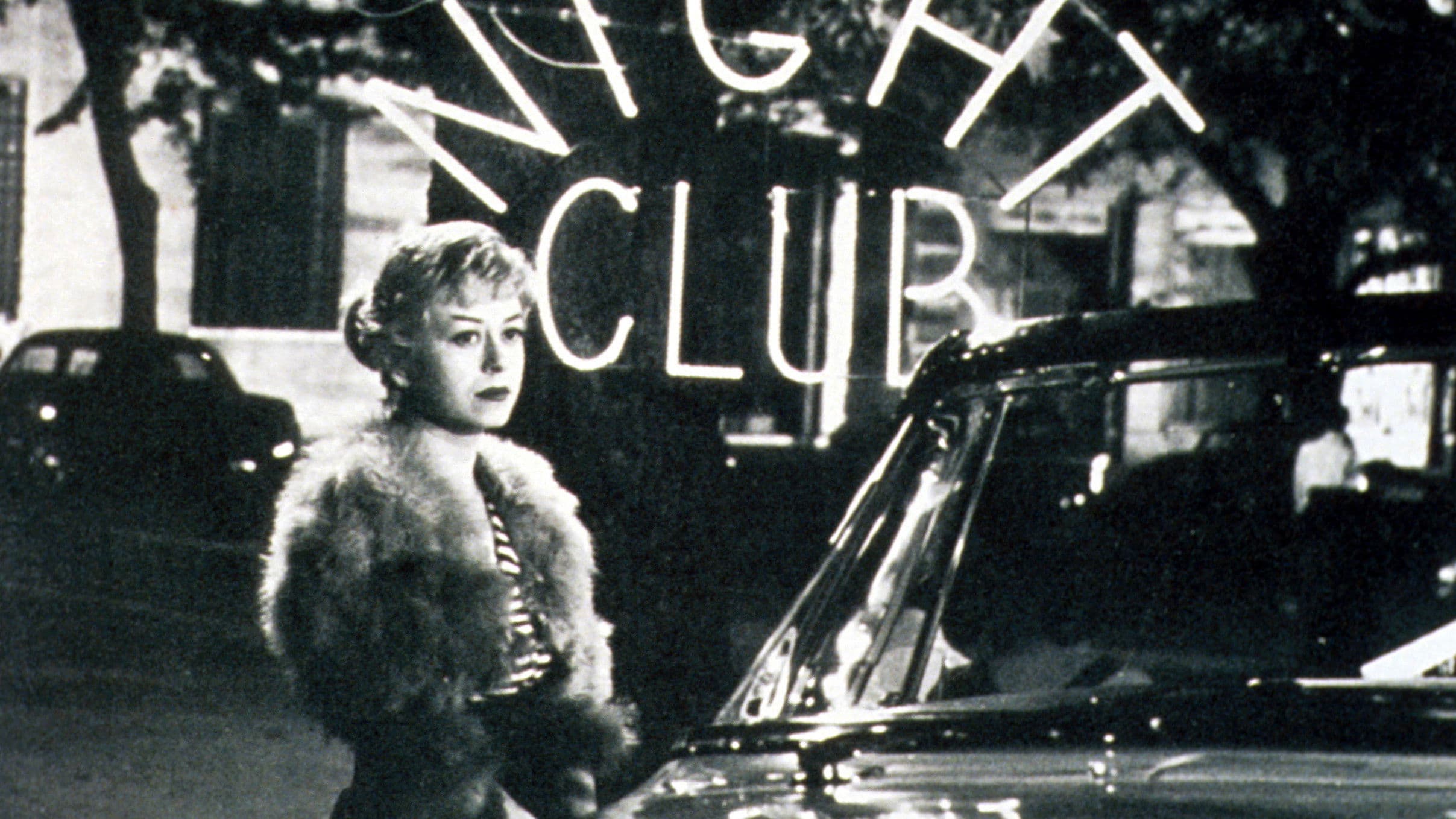
- Cinematography: Cinematographer Aldo Tonti shot the film in black-and-white, with the night-shot Roman locations driving significant lighting and equipment costs. Tonti's work supported the film's combination of neorealist immediacy and Fellini's emerging interior-poetic visual register.
- Score and Music: Composer Nino Rota, Fellini's longtime collaborator, scored the film with the period popular-music palette appropriate to mid-1950s Rome. Rota would continue scoring Fellini's features through the director's career.
- Costume and Production Design: Costume designer Piero Gherardi and production designer Piero Gherardi (the same artist serving both roles) delivered the lived-in mid-1950s Roman period work that anchored the film's setting.
How Does Nights of Cabiria's Budget Compare to Similar Films?
Nights of Cabiria sits in the mid-tier of mid-1950s Italian art cinema:
- La Strada (1954): Budget approximately $850,000 (inflation-adjusted from period lire) | Worldwide N/A. Fellini's breakthrough Oscar winner cost less than Cabiria and earned the Academy Award for Best Foreign Language Film.
- Il Bidone (1955): Budget approximately $500,000 | Worldwide N/A. Fellini's immediately preceding feature operated at comparable scale with weaker commercial outcomes.
- La Dolce Vita (1960): Budget approximately $1,500,000 | Worldwide $19,500,000. Fellini's immediately succeeding feature cost roughly three times as much and earned substantially more worldwide.
- 8½ (1963): Budget approximately $1,800,000 | Worldwide $1,800,000 (US theatrical). Fellini's subsequent Oscar winner operated at substantially higher scale.
- Rocco and His Brothers (1960): Budget approximately $1,200,000 | Worldwide N/A. Luchino Visconti's contemporaneous Italian feature offers a comparable directorial-cinema scale.
Nights of Cabiria Box Office Performance
Nights of Cabiria premiered in competition at the 1957 Cannes Film Festival, where Giulietta Masina won the Best Actress prize. The film opened in Italy in October 1957 and rolled out internationally across the following year, with the Lopert Pictures US release in October 1957 supporting a sustained Academy Awards campaign that culminated in the Oscar for Best Foreign Language Film.
Against the inflation-adjusted budget, the financial breakdown reflects the mid-1950s Italian art-cinema distribution model:
Box Office Breakdown
Nights of Cabiria

The film's commercial story is dominated by its long-tail value through restoration and Criterion Collection release. The 1957 Best Foreign Language Film Oscar drove substantial US art-house exhibition across 1957 and 1958, with the Cannes Best Actress prize for Masina providing additional international press momentum. Subsequent restorations and home video releases have sustained the film's commercial value across seven decades.
Nights of Cabiria is now widely regarded as one of the greatest Italian films of the 1950s, with the 2012 Sight & Sound Critics' Poll ranking it among the highest-placing Italian films of its decade. The film's cultural standing has compounded steadily through subsequent retrospectives, the 1969 Broadway musical Sweet Charity adaptation by Bob Fosse and Neil Simon, and the 1969 Sweet Charity film starring Shirley MacLaine.
Nights of Cabiria Production History
Federico Fellini developed the project across 1955 and 1956 with his core writing collaborators Tullio Pinelli and Ennio Flaiano, drawing on his ongoing fascination with marginal Roman life that would deepen across La Dolce Vita and beyond. Pier Paolo Pasolini, who had not yet directed his first feature, was brought in specifically to write the Roman street dialect for the prostitutes and pimps who surround Cabiria, with his contribution adding documentary specificity to Fellini's more poetic approach.
Principal photography took place primarily in Rome and the surrounding Lazio region of Italy across 1956, with location work at the Passeggiata Archeologica, the Via Veneto, the city outskirts where Cabiria lives, and various Roman streets. The location-shoot approach reflected Italian neorealist heritage adapted to Fellini's emerging poetic register.
Post-production unfolded across late 1956 and early 1957, with the Cannes 1957 premiere coinciding with the Italian and international theatrical rollout. The Catholic Church initially objected to several sequences, particularly the pilgrimage scene depicting religious commerce, with Vatican pressure leading to the cutting of a sequence depicting a sack of religious tracts being thrown into the Tiber. The cut sequence was eventually restored in subsequent restorations.
Awards and Recognition
Nights of Cabiria won the 1958 Academy Award for Best Foreign Language Film, Federico Fellini's second consecutive Oscar in the category following La Strada. The film received the Best Actress prize for Giulietta Masina at the 1957 Cannes Film Festival, with the OCIC Award and the Golden Globe Award for Best Foreign Language Film additionally recognizing the film.
Beyond the initial awards run, Nights of Cabiria has been the subject of extensive critical retrospectives. The 1969 Broadway musical Sweet Charity and the 1969 film adaptation, both freely adapted from the screenplay, extended the film's cultural footprint through subsequent decades. The Criterion Collection released a comprehensive Blu-ray edition following the restoration that included the long-cut religious-pilgrimage sequence.
Critical Reception
Nights of Cabiria has received nearly universal critical acclaim since its 1957 release. The film holds a 97% approval rating on Rotten Tomatoes based on 75 critic reviews collected across decades of retrospective coverage, with a critical consensus that called it a heartbreaking and ultimately transcendent portrait of an indomitable spirit. The film has appeared on virtually every major critic's greatest-films list across the 2000s, 2010s, and 2020s.
Critics have praised Federico Fellini's direction, Giulietta Masina's Cannes-winning lead performance, Nino Rota's score, and what The New York Times' Bosley Crowther called at the time "a phenomenally beautiful and moving piece of cinema." The film's final image, Masina's tear-streaked smile as she walks among singing teenagers, is among the most-cited closing shots in the history of cinema.
Academic and critical retrospectives have positioned Nights of Cabiria as a key bridge between Italian neorealism and Fellini's subsequent poetic-personal style, with the film's combination of street-level documentary detail and inward-looking emotional poetry treated as a defining transition in the director's career. The film remains a staple of film studies curricula and a touchstone of post-war Italian cinema.
Frequently Asked Questions
How much did it cost to make Nights of Cabiria (1957)?
The production budget was approximately 350,000,000 Italian lire in 1957, equivalent to roughly $560,000 at period exchange rates or approximately $6,000,000 to $7,000,000 in inflation-adjusted 2025 dollars. The film was financed by Dino De Laurentiis Cinematografica with co-production support from Les Films Marceau.
Did Nights of Cabiria win an Oscar?
Yes. The film won the Academy Award for Best Foreign Language Film at the 1958 ceremony, Federico Fellini's second consecutive Oscar in the category following La Strada (1954). Giulietta Masina also won the Best Actress prize at the 1957 Cannes Film Festival.
Who directed Nights of Cabiria?
Federico Fellini directed the film and co-wrote the screenplay with Tullio Pinelli, Ennio Flaiano, Pier Paolo Pasolini, and Brunello Rondi. Pasolini was specifically credited for Roman street dialect work in scenes involving the prostitutes and pimps who surround Cabiria.
Who plays Cabiria in Nights of Cabiria?
Giulietta Masina, Federico Fellini's wife and longtime collaborator, plays Cabiria. Masina had previously starred in Fellini's La Strada (1954) and continued to anchor his work through Juliet of the Spirits (1965) and Ginger and Fred (1986).
Is Sweet Charity based on Nights of Cabiria?
Yes. The 1969 Broadway musical Sweet Charity, with music by Cy Coleman, lyrics by Dorothy Fields, and book by Neil Simon, was freely adapted from the Nights of Cabiria screenplay. The 1969 film adaptation, directed by Bob Fosse and starring Shirley MacLaine, continued the adaptation lineage.
Where was Nights of Cabiria filmed?
Principal photography took place primarily in Rome and the surrounding Lazio region of Italy across 1956, with location work at the Passeggiata Archeologica, the Via Veneto, the city outskirts where Cabiria lives, and various Roman streets. The location-shoot approach reflected Italian neorealist heritage adapted to Fellini's emerging poetic register.
Why was a scene cut from Nights of Cabiria?
The Catholic Church objected to several sequences, particularly a pilgrimage scene depicting religious commerce. Vatican pressure led to the cutting of a sequence depicting a sack of religious tracts being thrown into the Tiber. The cut sequence was eventually restored in subsequent restorations and is included in the Criterion Collection release.
How long is Nights of Cabiria?
The definitive cut runs 117 minutes (one hour and 57 minutes). The original theatrical release was shorter following Vatican-influenced cuts, with subsequent restorations adding back the cut religious-pilgrimage sequence to reach the current standard runtime.
Is Nights of Cabiria on the Criterion Collection?
Yes. The Criterion Collection released a comprehensive home-video edition with extensive supplementary material on the film's production and historical context, including the restored religious-pilgrimage sequence that had been cut from the original theatrical release.
What did critics think of Nights of Cabiria?
The film has received consistently extraordinary critical praise since its 1957 release, with a 97% approval rating on Rotten Tomatoes based on 75 critics collected across decades of retrospective coverage. Critics have praised Fellini's direction, Giulietta Masina's Cannes-winning lead performance, Nino Rota's score, and the film's closing image, which is among the most-cited closing shots in the history of cinema.
Filmmakers
Nights of Cabiria

Official Trailer
Build budgets like this one in Saturation
Start from an industry-standard feature film template, import the schedule and rates you already have, and let the cost report keep itself current as you spend. Real-time collaboration, no spreadsheets.