White Heat Budget
Updated
Synopsis
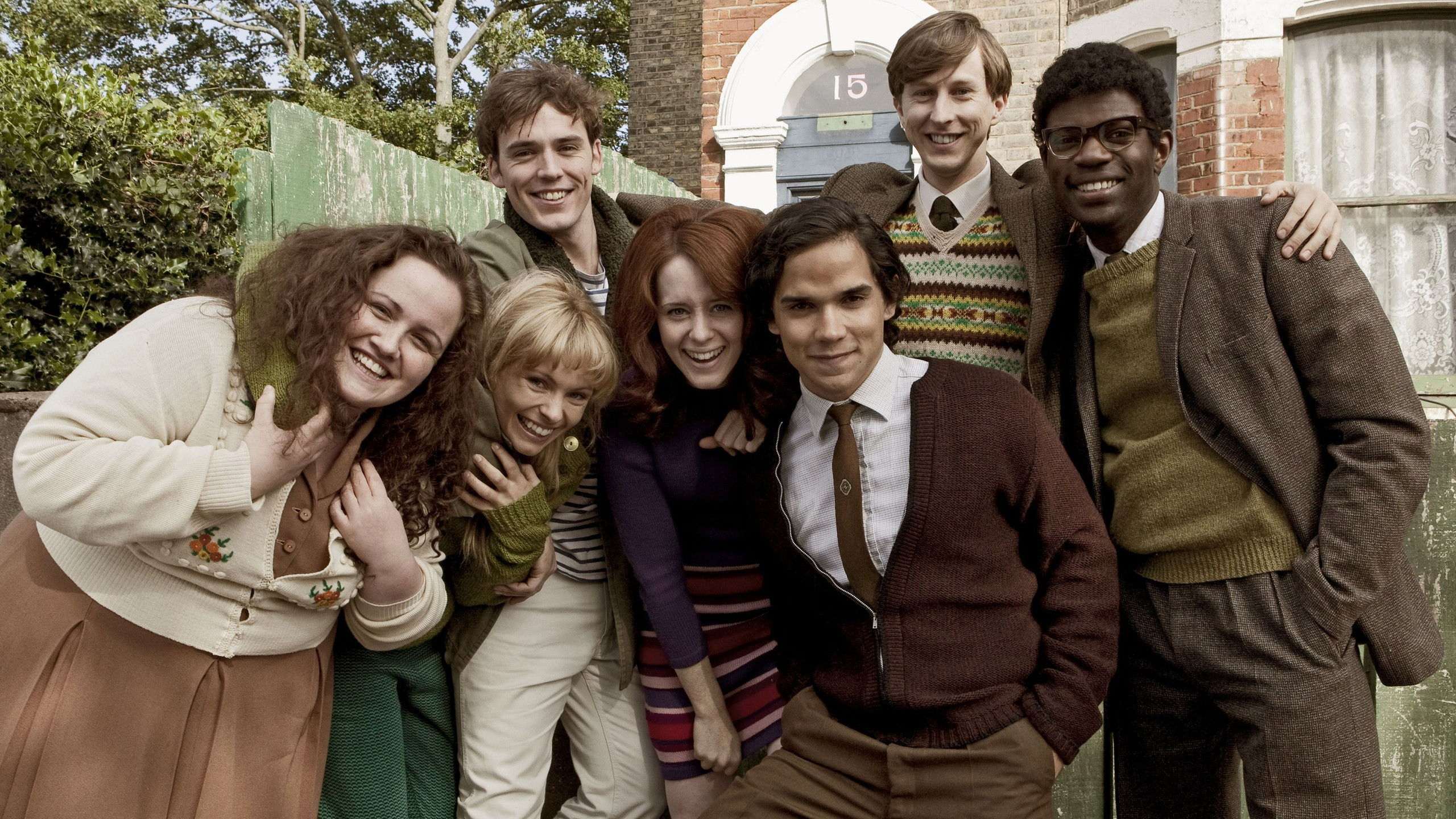
White Heat (2012) is the BBC Two six-episode period drama series created by Paula Milne tracking seven students who share a London flat from 1965 through 1990, with each episode anchored in a distinct year (1965, 1967, 1973, 1979, 1982, 1990) that captures a critical moment in British political-and-cultural history. A double-cast ensemble (Sam Claflin, MyAnna Buring, Claire Foy, Lee Ingleby, Reece Ritchie, Jessica Gunning, Tamla Kari as the younger versions; Lindsay Duncan, Michael Kitchen, Juliet Stevenson, Phil Daniels as the older versions) anchors the temporal jumps. The series ran from March 8 through April 12, 2012 on BBC Two with no continuation planned.
What Is the Budget of White Heat (2012)?
White Heat (2012), the BBC Two six-episode period drama series created by Paula Milne, was produced on an estimated per-episode budget of approximately £900,000 to £1,200,000, or roughly $1,400,000 to $1,900,000 in 2012 US dollar terms, across its six broadcast episodes. The cumulative production spend is estimated at approximately $8,000,000 to $11,000,000 in period dollars. Company Pictures produced the series in-house for BBC Two, with Mark Pybus and George Faber executive producing. Specific BBC Two drama budgets are rarely disclosed, but Company Pictures described White Heat as a "premium" BBC Two period drama positioned alongside The Hour (2011) in its commissioning tier, which placed it comfortably above the corporation's standard hour-long drama tariff.
The economics of the project were structured around BBC Two's premium scripted-drama slot rather than a multi-season commitment. Paula Milne pitched the series as a single-season multi-decade ensemble drama tracking seven students who share a London flat from 1965 through 1990, with each of the six episodes anchored in a distinct year and historical moment. The compressed six-episode-and-decades-spanning premise made the production design unusually period-and-prosthetic-dense for a single-season BBC Two drama, with the show's economics anchored in extensive period-costume-and-set construction rather than long-term ensemble-cast amortization.
Key Budget Allocation Categories
White Heat's per-episode spend broke down across the cost centers typical of a premium BBC Two period drama, with several show-specific items reflecting its multi-decade temporal structure:
- Above-the-Line Cast (Two Generations): The show featured two cast layers across each character: younger versions (Sam Claflin as Jack, MyAnna Buring as Charlotte, Claire Foy as Lilly, Lee Ingleby as Alan, Reece Ritchie as Victor, Jessica Gunning as Orla, Tamla Kari as Jay) and older versions (Lindsay Duncan, Michael Kitchen, Juliet Stevenson, Phil Daniels). The double-cast structure across the seven principal characters required two ensembles to be cast and compensated, with the older-cast Lindsay Duncan and Michael Kitchen commanding premium British scripted-drama lead quotes.
- London and Surrounding Location Production: The show was set in Tufnell Park, north London, but shot primarily in Tulse Hill, south London, with surrounding north-and-south London location work for the period exteriors. Period London location shooting (1965 fashion, 1970s strikes, 1980s political demonstrations, late-1980s urban environments) required extensive location dressing across the six episodes.
- Period-Authentic Costume Design Across Six Decades-Spanning Episodes: Costume design by Stephanie Collie across the 1965 through 1990 temporal span formed a recurring weekly cost item. The show's recurring use of period-specific fashion (Mary Quant-inflected 1960s women's wear, Mod-and-Hippie crossover men's wear, 1970s feminist-and-strike-era women's wear, 1980s Thatcherite-and-anti-Thatcherite men's wear) required extensive sourcing and construction across the temporal range.
- Period Set Construction and Dressing: Production design by Eve Stewart (later Oscar-nominated for Les Misérables, 2012) across the shared flat interior, the surrounding London street and pub exteriors, and the era-specific political-and-cultural backdrops required extensive set construction and dressing across each of the six temporal-anchor episodes. The shared flat interior, which appears across all six episodes with progressively redressed surface detail to track the passage of time, was the largest single set-construction line item.
- Episodic Director and Writer Costs: John Alexander directed all six episodes. Paula Milne served as creator and sole credited writer across the six-episode run, with her compensation reflecting her established premium British scripted-drama creator-writer quote (Endgame, 2009; The Politician's Wife, 1995). Alexander's direction of all six episodes anchored visual continuity across the temporal span.
- Music Supervision Across Six Decades: The show's recurring use of period-specific music (1960s Beatles-and-Stones-and-Cream needle drops, 1970s glam-rock-and-folk-revival cues, 1980s Specials-and-Smiths-and-Joy-Division alternative-rock cues) required extensive music-licensing work across the six-decade temporal span. Music-licensing compensation across the period popular-music range formed a substantial incremental cost item above the standard BBC Two period-drama music budget.
- BBC In-House Post and Delivery: Picture editing, sound, ADR, and BBC Two delivery ran through Company Pictures' established BBC-pipeline post infrastructure. The temporal-jump structure across the six episodes required additional editorial time to coordinate the flash-forward framing device used to bookend each episode.
- Practical Effects and Period Aging Makeup: While White Heat used double-cast ensembles rather than aging-makeup prosthetics to track the temporal passage, the show still required selected period-aging makeup work across the bridge moments between younger and older cast layers. Practical-makeup work by Caroline Noble and her team supported the temporal-continuity grammar across the six-episode arc.
How Does White Heat's Budget Compare to Similar Series?
At an estimated $1,400,000 to $1,900,000 per episode, White Heat sat in the upper-mid tier of British network drama economics, comparable to peer BBC and ITV period drama series of the same window:
- The Hour (2011): Estimated per-episode budget approximately £1,000,000 to £1,300,000 ($1,600,000 to $2,000,000). Kudos's BBC Two contemporaneous Cold War-era news-drama ran at a comparable per-episode tariff, illustrating the standard premium BBC Two period-drama economics of the early 2010s.
- Downton Abbey (2010): Estimated per-episode budget approximately £1,000,000 to £1,200,000 ($1,600,000 to $1,900,000). Carnival Films's ITV period drama ran at a comparable per-episode tariff, with similar period-design overhead and a longer multi-season broadcast commitment that White Heat did not receive.
- Call the Midwife (2012): Estimated per-episode budget approximately £900,000 to £1,100,000 ($1,400,000 to $1,700,000). Neal Street Productions' BBC One contemporaneous postwar London period drama ran at a comparable per-episode tariff with similar London-shot period-design economics.
- Mad Men (Season 5, 2012): Estimated per-episode budget approximately $2,500,000 to $3,000,000. AMC's contemporaneous American period drama ran at a meaningfully higher per-episode tariff than White Heat, illustrating the standard gap between American premium-cable and British BBC Two period drama economics of the early 2010s.
- Parade's End (2012): Estimated per-episode budget approximately £2,000,000 to £2,500,000 ($3,200,000 to $4,000,000). HBO and BBC Two's contemporaneous Benedict Cumberbatch Ford Madox Ford adaptation ran at a meaningfully higher per-episode tariff than White Heat, reflecting the additional Edwardian-period production-design overhead and the premium HBO co-financing.
- Wolf Hall (2015): Estimated per-episode budget approximately £1,500,000 to £2,000,000 ($2,400,000 to $3,100,000). Company Pictures' subsequent BBC Two Tudor-era period drama ran at a higher per-episode tariff than White Heat, reflecting the additional Tudor-period costume-and-set-design overhead and the international co-financing.
White Heat Season Performance and Critical Reception Trajectory
White Heat premiered on BBC Two on March 8, 2012 to strong opening figures (approximately 2,500,000 BBC Two overnight viewers, a strong figure for the channel's drama slot) and mixed-but-broadly-positive critical reviews. The economic framework across the single-season run breaks down as follows:
- Per-Episode Budget: estimated $1,400,000 to $1,900,000 across the six-episode single-season run
- Total Series Investment: estimated $8,000,000 to $11,000,000 across six broadcast episodes
- Network: BBC Two in the United Kingdom; BBC America in the United States; selected international territories through BBC Studios distribution
- Audience/Ratings: Premiere drew approximately 2,500,000 BBC Two overnight viewers (a strong figure for the channel's drama slot); subsequent episodes averaged approximately 1,800,000 to 2,200,000 across the six-episode run
- International Distribution: BBC Studios sold the format to BBC America and selected international territories; available on BBC iPlayer in the UK across the rights window
- Library/Syndication Value: Modest catalogue performer; available on BBC iPlayer during the rights window and on selected streaming services internationally; BBC Studios continues to monetize the catalogue through standard scripted-drama library windows
White Heat's commercial trajectory was typical of premium BBC Two period drama of the early 2010s: strong opening audience figures, steady ongoing audience across the six-episode run, and a single-season commitment with no continuation planned at the development stage. The six-episode-and-multi-decade-spanning compressed structure resolved the show's primary narrative arc across the broadcast run, with no Paula Milne-led continuation announced.
The show retained a strong critical reputation through the broadcast run and into subsequent retrospective British television-criticism conversations. The flash-forward framing device (the older versions of the seven characters reunite after one dies, becoming executors of the deceased's will, with the identity of the deceased character hidden until the finale) drew particular reviewer attention as a structural achievement of the six-episode compressed format.
White Heat Production History
Paula Milne, the established British scripted-drama creator-writer whose prior credits included The Politician's Wife (1995), Endgame (2009), and additional BBC One and Channel 4 premium scripted-drama productions, developed White Heat for BBC Two in 2010 and 2011. The pitch centered on a multi-decade ensemble premise: seven students share a London flat from 1965 onward, with each of the six episodes anchored in a distinct year (1965, 1967, 1973, 1979, 1982, 1990) that captures a critical moment in British political-and-cultural history.
Milne described her thematic frame in pre-broadcast press interviews as exploring "the disappointment of the Left" across the 25-year temporal span, with the seven characters representing different ideological-and-social positions across the postwar British political spectrum. Milne specifically positioned the show against the more nostalgic British period-drama framing typical of the early 2010s, with subject matter (feminism, race, sexual politics, anti-Thatcherism, sectarian Northern Irish politics) absent from peer period-drama productions of the same window.
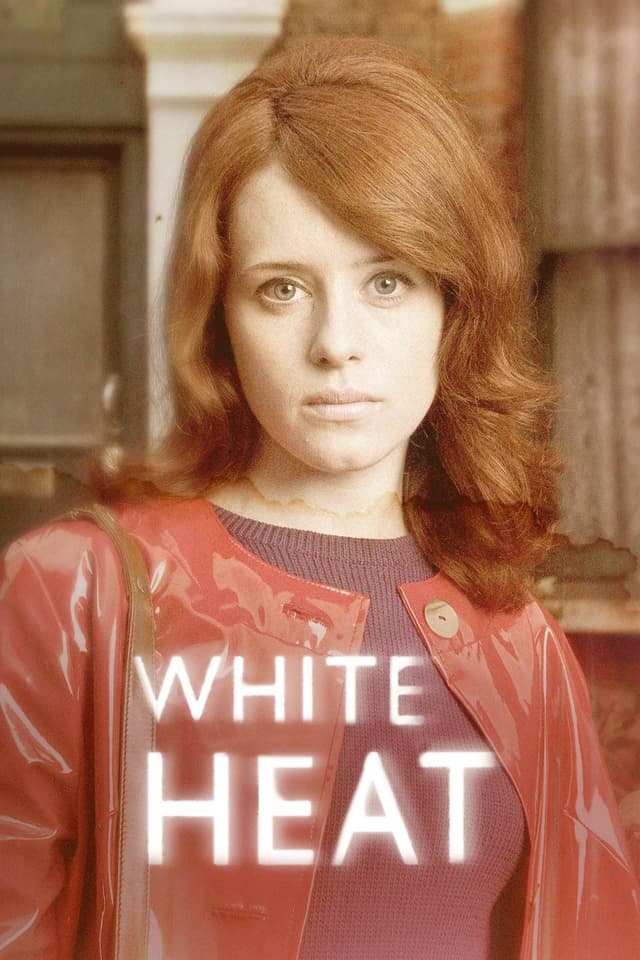
Casting the double-cast ensemble in late 2011 brought two layers of British scripted-drama talent into the project. The younger ensemble (Sam Claflin, MyAnna Buring, Claire Foy, Lee Ingleby, Reece Ritchie, Jessica Gunning, Tamla Kari) anchored the five youngest temporal-anchor episodes (1965, 1967, 1973, 1979, 1982), while the older ensemble (Lindsay Duncan, Michael Kitchen, Juliet Stevenson, Phil Daniels) anchored the 1990 flash-forward frame and the bridging moments. Claire Foy's casting as Lilly was particularly notable in retrospect given her subsequent breakthrough role as Queen Elizabeth II in The Crown (2016).
Principal photography ran from autumn 2011 through January 2012 in London, with the Tulse Hill (south London) location standing in for the show's Tufnell Park (north London) setting. Director John Alexander, who had previously directed selected episodes of British premium scripted-drama productions, directed all six episodes across the principal-photography window. Period set construction (the shared flat interior in particular) was redressed across each of the six temporal-anchor episodes to track the passage of time across 25 years.
BBC Two broadcast the six-episode run weekly from March 8 through April 12, 2012, with the flash-forward framing device structuring each episode around the older characters reuniting in 1990 after one of them dies (with the identity of the deceased character hidden until the finale). Editing through early 2012 by Mike Jones compiled the temporal-jump structure into broadcast cuts, with music-supervision integration across the six-decade popular-music span absorbing additional post-production time.
Awards and Recognition
White Heat received Royal Television Society and BAFTA Television Craft Awards nominations in selected craft categories across the 2012 to 2013 awards cycle. The show did not receive major individual BAFTA Television Awards or RTS Programme Awards wins, in part because the contemporaneous BBC scripted-drama slate (The Hollow Crown, 2012; Parade's End, 2012; Last Tango in Halifax, 2012; Call the Midwife, 2012) absorbed most of the British television academy's top-tier recognition during the same window.
Eve Stewart's production design across the six-decade temporal span received favorable craft-press attention, with the period-and-set-dressing achievement across the compressed six-episode arc cited as one of the year's strongest BBC scripted-drama production-design accomplishments. Stephanie Collie's costume design received comparable craft-press recognition.
The show's broader cultural footprint has been driven by retrospective British television-criticism conversation rather than major industry-awards recognition. Multiple "best canceled-after-one-season British dramas" lists have included White Heat across the 2010s and early 2020s, with Paula Milne's thematic ambition and the double-cast ensemble structure cited as a model for compressed multi-decade ensemble drama on British public-service broadcasting.
Critical Reception
White Heat received generally positive critical reviews. The Guardian's Sam Wollaston called the premiere "a serious and ambitious attempt to do something different with British period drama," The Telegraph praised the double-cast ensemble structure as "a structurally bold conceit handled with unusual skill," and The Times described the show as "the most thematically committed British period drama on television." Variety's Brian Lowry, reviewing the BBC America broadcast, called it "an unusually ambitious six-episode arc that earns its political reach."
Common critical observations focused on Paula Milne's thematic commitment to the political-and-social subject matter ("the disappointment of the Left"), the structural achievement of the flash-forward framing device, and the double-cast ensemble continuity across the temporal jumps. A minority of reviews raised tonal concerns about the show's ambition-versus-execution balance across the compressed six-episode arc, with The Independent's Tom Sutcliffe describing the show as "occasionally heavy-handed in its political signposting" while broadly endorsing the achievement.
Retrospective reception has been strongly positive within British television-criticism circles. The show has appeared on multiple "best British period drama of the early 2010s" lists alongside The Hour (2011), Call the Midwife (2012), and Last Tango in Halifax (2012), with Paula Milne's thematic ambition and the double-cast ensemble structure cited as a model for compressed multi-decade ensemble drama on British public-service broadcasting. Claire Foy's subsequent breakthrough role as Queen Elizabeth II in The Crown (2016) drove follow-on rediscovery of White Heat among new viewers across the late 2010s.
Frequently Asked Questions
How much did each episode of White Heat (2012) cost to produce?
Estimated per-episode budgets ranged from approximately £900,000 to £1,200,000 (roughly $1,400,000 to $1,900,000 in 2012 US dollars) across the six-episode single-season run. Specific BBC Two drama budgets are rarely disclosed, but Company Pictures described White Heat as a "premium" BBC Two period drama positioned alongside The Hour (2011) in its commissioning tier.
How many episodes of White Heat are there?
White Heat ran for a single season spanning six broadcast episodes on BBC Two. The series premiered on March 8, 2012 and concluded on April 12, 2012. The six-episode-and-multi-decade-spanning compressed structure resolved the show's primary narrative arc across the broadcast run, with no continuation planned at the development stage.
Who created White Heat?
Paula Milne, the established British scripted-drama creator-writer whose prior credits included The Politician's Wife (1995), Endgame (2009), and additional BBC One and Channel 4 premium scripted-drama productions, created White Heat for BBC Two. Milne served as sole credited writer across the six-episode run, with John Alexander directing all six episodes.
What is White Heat (2012) about?
White Heat follows seven students who share a London flat from 1965 through 1990, with each of the six episodes anchored in a distinct year (1965, 1967, 1973, 1979, 1982, 1990) that captures a critical moment in British political-and-cultural history. A flash-forward framing device shows the older versions of the characters reuniting in 1990 after one of them dies, with the identity of the deceased character hidden until the finale.
Where was White Heat filmed?
Principal photography took place in London from autumn 2011 through January 2012, with the Tulse Hill (south London) location standing in for the show's Tufnell Park (north London) setting. Period London location shooting across the 1965 to 1990 temporal span required extensive location dressing across the six episodes.
Who stars in White Heat?
The double-cast ensemble includes younger versions (Sam Claflin as Jack, MyAnna Buring as Charlotte, Claire Foy as Lilly, Lee Ingleby as Alan, Reece Ritchie as Victor, Jessica Gunning as Orla, Tamla Kari as Jay) and older versions (Lindsay Duncan, Michael Kitchen, Juliet Stevenson, Phil Daniels). Claire Foy's casting as Lilly is particularly notable in retrospect given her subsequent breakthrough role as Queen Elizabeth II in The Crown (2016).
Why is White Heat called White Heat?
The title references the "white heat of technology" speech delivered by British Labour Party leader Harold Wilson in October 1963, in which Wilson called for a new Britain forged in the "white heat" of the scientific-and-technological revolution. The phrase came to symbolize the postwar British Left's technological-modernization-and-social-democratic ambition, against which Paula Milne's thematic frame ("the disappointment of the Left") explicitly works.
Is White Heat related to the 1949 James Cagney film?
No. The 2012 BBC Two period drama series is a separate production from the 1949 James Cagney crime drama film also titled White Heat. The two productions share only the title and the underlying English-language phrase. The 2012 series is a multi-decade ensemble period drama; the 1949 film is a Raoul Walsh-directed gangster-crime drama with no historical or creative connection.
How does White Heat compare to other BBC period dramas?
White Heat ran at a comparable per-episode tariff to The Hour (2011) at approximately £1,000,000 to £1,300,000 and Downton Abbey (2010) at approximately £1,000,000 to £1,200,000, illustrating the standard premium BBC Two and ITV period-drama economics of the early 2010s. Subsequent BBC Two period dramas Wolf Hall (2015) and Parade's End (2012) ran at higher per-episode tariffs of approximately £1,500,000 to £2,500,000.
What did critics think of White Heat?
The series received generally positive critical reviews. The Guardian called it "a serious and ambitious attempt to do something different with British period drama," The Telegraph praised the double-cast ensemble structure as "structurally bold," and The Times described it as "the most thematically committed British period drama on television." Retrospective reception has been strongly positive within British television-criticism circles.
Filmmakers
White Heat

Official Trailer
Build budgets like this one in Saturation
Start from an industry-standard feature film template, import the schedule and rates you already have, and let the cost report keep itself current as you spend. Real-time collaboration, no spreadsheets.