8 Mile Budget
 DramaMusic1h 51m
Updated
Synopsis
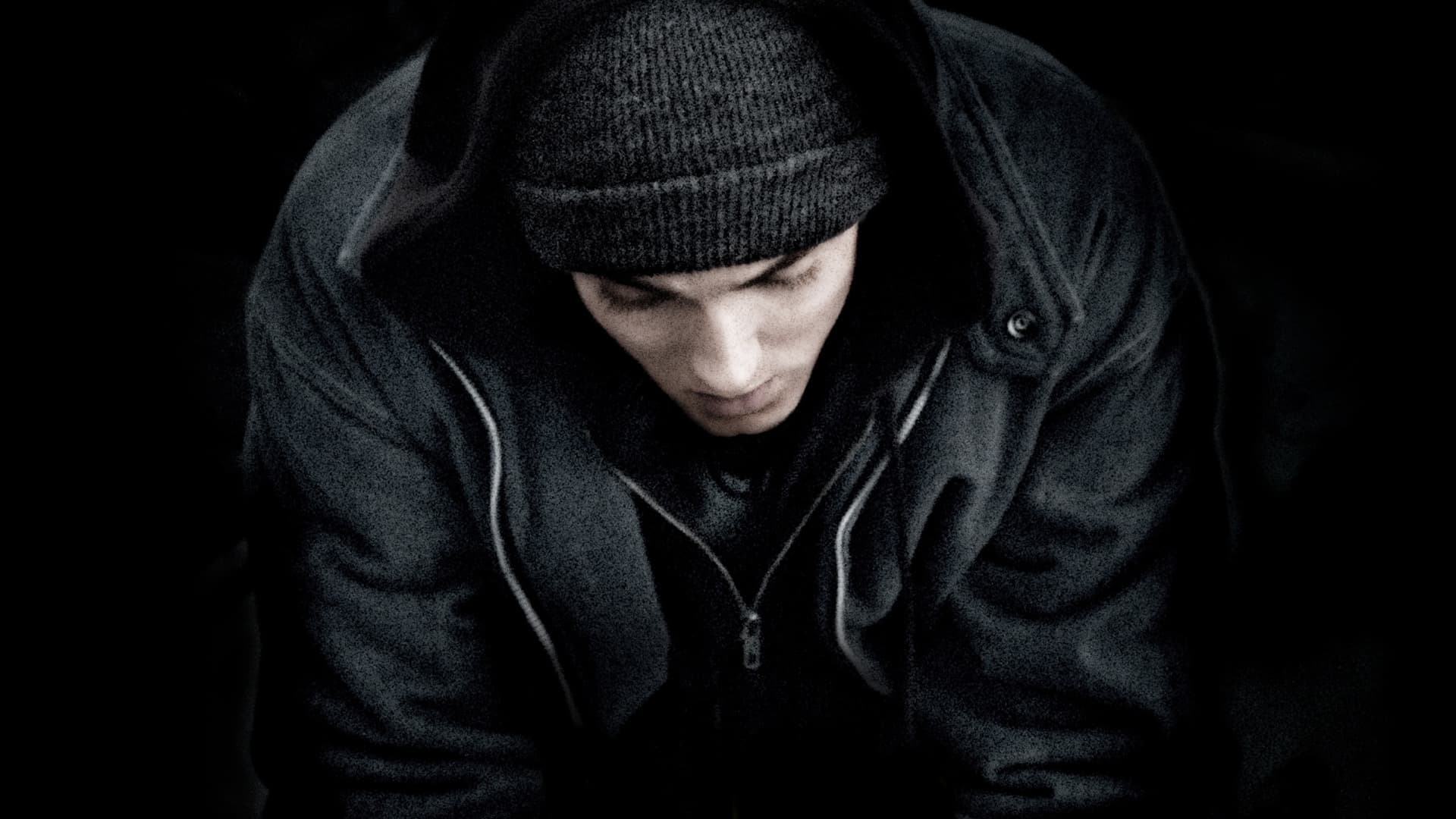
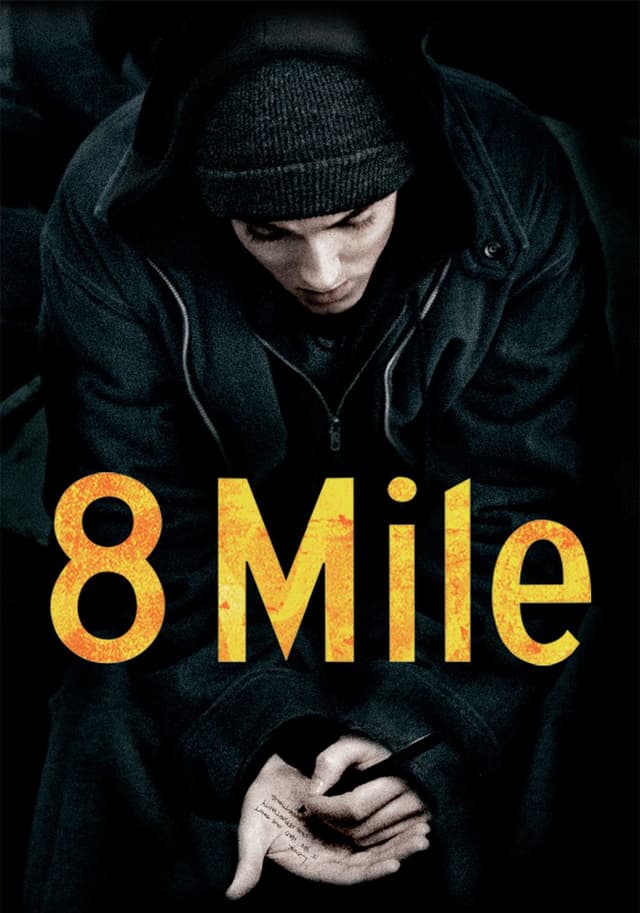
The setting is Detroit in 1995. The city is divided by 8 Mile, a road that splits the town in half along racial lines. A young white rapper, Jimmy "B-Rabbit" Smith Jr. summons strength within himself to cross over these arbitrary boundaries to fulfill his dream of success in hip hop. With his pal Future and the three one third in place, all he has to do is not choke.
What Is the Budget of 8 Mile?
8 Mile was produced for an estimated $41 million, making it a focused mid-budget drama by the standards of a major studio release in 2002. The film was developed by Brian Grazer's Imagine Entertainment in partnership with Universal Pictures and Mikona Productions. The $41 million budget reflected the creative ambition of the project: bringing an authentic, ground-level portrait of Detroit rap culture to the screen with a performer who had never acted before in a feature film.
Before Curtis Hanson was chosen to direct, both Quentin Tarantino and Danny Boyle were considered for the project. Hanson, fresh off L.A. Confidential and Wonder Boys, was ultimately selected for his ability to balance character-driven drama with a strong sense of place. His involvement helped give the film the credibility needed to attract serious talent on both sides of the camera.
The central casting gamble was Eminem himself, who turned down roles in Training Day and The Fast and the Furious to commit to this semi-autobiographical project. The budget had to account for a first-time actor headlining a major studio film, with all the uncertainty that entailed, alongside the cost of building an authentic 1995 Detroit around him.
Key Budget Allocation Categories
- Above-the-Line Talent: Eminem's fee as a first-time actor, Kim Basinger (fresh off an Oscar win for L.A. Confidential), Mekhi Phifer, Brittany Murphy, and director Curtis Hanson all contributed to above-the-line costs. The ensemble brought strong credibility to the project despite its unconventional lead.
- Location Filming in Detroit: The production filmed on location in Highland Park and other working-class Detroit neighborhoods beginning in September 2001. Securing abandoned factories, trailer parks, and authentic urban settings required significant location fees and logistical investment to capture the city's raw atmosphere.
- Rodrigo Prieto's Cinematography: The Oscar-nominated director of photography, who later shot Brokeback Mountain and Silence for Martin Scorsese, brought a distinctive gritty handheld visual language to the film. His approach gave 8 Mile a documentary-adjacent texture that defined its aesthetic identity.
- Music and Soundtrack Production: "Lose Yourself" and the full original soundtrack were produced by Eminem under the Shady/Interscope umbrella. Licensing existing tracks from the era, recording original material, and integrating the music into the narrative all required dedicated budget across production and post.
- Period Production Design: The film is set in 1995 Detroit, requiring era-accurate cars, fashion, set dressing, and props throughout the production. Recreating the mid-90s Detroit landscape consistently across location and studio work demanded close attention from the art and costume departments.
- Rap Battle Sequences: The underground battle rap scenes required extensive choreography, large numbers of extras playing audiences, and multi-camera setups capable of capturing the energy and physicality of the performances. These were among the most technically demanding sequences in the film to produce effectively.
How Does 8 Mile's Budget Compare to Similar Films?
Compared to other music-star-driven debut films and hip-hop biopics, 8 Mile sits at a notably confident budget level that reflected genuine studio belief in the project.
- Purple Rain (1984) -- Budget: $7M | Worldwide: $68M -- Prince's debut feature was a much lower-stakes production two decades earlier, but it set the template for the musician-as-fictional-alter-ego format that 8 Mile would later refine.
- Straight Outta Compton (2015) -- Budget: $28M | Worldwide: $201M -- The N.W.A biopic cost less than 8 Mile despite arriving 13 years later, suggesting Universal took a notable risk on Eminem's first film versus a more established hip-hop narrative.
- Hustle and Flow (2005) -- Budget: $2.8M | Worldwide: $22M -- The Terrence Howard-led indie took a far leaner approach to a similar hip-hop-as-escape narrative. Its success validated the genre but showed how much scale 8 Mile operated at by comparison.
- Get Rich or Die Tryin' (2005) -- Budget: $40M | Worldwide: $46M -- 50 Cent's attempt to replicate the 8 Mile formula with nearly the same budget delivered a fraction of the box office, illustrating how much Eminem's specific cultural moment shaped the earlier film's financial outcome.
8 Mile Box Office Performance
8 Mile opened on November 8, 2002 in 3,011 theaters and earned $51,240,555 in its opening weekend, a stunning debut that at the time ranked as the second-highest R-rated opening in history behind Hannibal. The film topped the box office, beating out The Santa Clause 2, and held the November R-rated opening weekend record until Gladiator II broke it in 2024.
Box Office Breakdown
8 Mile

The film returned approximately $2.99 for every $1 invested when accounting for total production and marketing costs, a strong result for a mid-budget R-rated drama without an action or franchise framework.
The box office performance cemented Eminem's status as a legitimate cultural crossover artist and proved that hip-hop could anchor a major studio drama to significant commercial success. The film's international gross of approximately $126 million demonstrated global appetite for the story, particularly in Europe, where Eminem already had a massive concert following.
8 Mile Production History
The project originated with producer Brian Grazer, who saw Eminem on MTV and became convinced that the rapper's story of emerging from Detroit poverty to global fame could anchor a major studio film. Grazer's Imagine Entertainment developed the concept with Universal, bringing in Scott Silver to write a script that drew loosely on Eminem's own biography without being a strict biopic.
Before Curtis Hanson came aboard, both Quentin Tarantino and Danny Boyle were considered to direct. Hanson, who had most recently made Wonder Boys with Michael Douglas, was selected for his proven ability to render specific American subcultures with authenticity. His involvement raised the artistic ambitions of the production and helped attract serious below-the-line talent.
Casting extended well beyond the lead. Seth Rogen and Jason Segel both auditioned for the role of Cheddar Bob, the part that eventually went to Evan Jones. Mekhi Phifer was reluctant to take the role of Future, initially skeptical that the project would amount to more than a commercial vehicle for Eminem, and also nervous about flying in the months after September 11, 2001. He ultimately signed on after meeting with Hanson.
Principal photography began in September 2001 in Highland Park, Michigan, with director of photography Rodrigo Prieto shooting in a style that emphasized the industrial textures and cramped interiors of working-class Detroit. The production captured real neighborhoods, warehouses, and trailer parks to build a tactile sense of place that studio sets could not have replicated.
"Lose Yourself" was written by Eminem during production, reportedly inspired by the psychological pressure of the battle rap sequences. The song debuted alongside the film and reached number one on the Billboard Hot 100, staying there for twelve weeks. The soundtrack album debuted at number one on the Billboard 200 with 702,000 copies sold in its first week.
8 Mile opened on November 8, 2002. Eminem turned down both Training Day and The Fast and the Furious before agreeing to this project, a decision that proved prescient as both franchises continued without the cultural weight his involvement might have added.
Awards and Recognition
The film's defining award achievement came at the 75th Academy Awards, where "Lose Yourself" won the Academy Award for Best Original Song. The win made Eminem the first hip-hop artist to win an Oscar in a major category. He did not attend the ceremony; he later said he fell asleep watching the broadcast at home and missed the announcement. Celine Dion performed the song at the ceremony in his absence.
"Lose Yourself" also won the Grammy Award for Best Rap Solo Performance and Best Short Form Music Video. Kim Basinger received a Golden Globe nomination for Best Supporting Actress in a Motion Picture for her portrayal of Stephanie, the struggling mother of Jimmy's character. The nomination was notable recognition for a performance that could have been a thankless role in a lesser film.
In total, 8 Mile received 17 wins and 21 nominations across major awards circuits, including recognition from the MTV Movie Awards, Teen Choice Awards, and the National Board of Review. The film was named to several top ten lists for 2002 by critics associations including the Chicago Film Critics and Boston Society of Film Critics.
Critical Reception
8 Mile holds a 76% approval rating on Rotten Tomatoes based on 196 reviews, with a critics consensus that describes it as "a gritty, surprisingly moving portrait of a rapper finding his voice." The film scores 77 out of 100 on Metacritic based on 40 critics, indicating "generally favorable reviews." Audiences gave the film a B+ CinemaScore on opening weekend, with audiences under 21 skewing toward an A rating.
Roger Ebert awarded the film 3 out of 4 stars, calling Eminem's performance convincing and praising Hanson's direction for grounding the film in an authentic environment without glamorizing poverty. Peter Travers of Rolling Stone gave it 3.5 out of 4 stars and called it a cinematic event, placing it among the best films of 2002. Eleanor Ringel Cater of the Atlanta Journal-Constitution was more measured, giving it a C and noting that it was hardly A Hard Day's Night, but also not Crossroads.
The film's legacy has grown since its release. It is widely regarded as one of the most successfully executed music-star debut films in Hollywood history, alongside Purple Rain, and has proven durable as both a portrait of Detroit hip-hop culture and as an artifact of the specific cultural moment when Eminem was at the peak of his mainstream crossover appeal.
Frequently Asked Questions
How much did 8 Mile cost to make?
8 Mile was produced on a budget of approximately $41 million, a mid-range investment for a major studio drama in 2002. The budget covered Eminem's fee as a first-time actor, the cost of filming on location across working-class Detroit neighborhoods in Highland Park and surrounding areas, and Rodrigo Prieto's award-caliber cinematography. Both Imagine Entertainment and Universal Pictures shared the financial risk on a project built around a performer with no prior acting credits.
How much did 8 Mile make at the box office?
8 Mile earned $116,750,901 at the domestic box office and $242,875,078 worldwide. The film opened with $51,240,555 in its first weekend, which at the time ranked as the second-highest R-rated opening in Hollywood history behind Hannibal. The record-breaking debut topped the box office over The Santa Clause 2. The film held the record for the highest-grossing November R-rated opening weekend until Gladiator II surpassed it in November 2024.
Did Eminem win an Oscar for 8 Mile?
"Lose Yourself" won the Academy Award for Best Original Song at the 75th Academy Awards, making Eminem the first hip-hop artist to win an Oscar in a major category. He did not attend the ceremony. He later explained that he fell asleep that night and woke up to discover he had won after missing the broadcast. Celine Dion performed the song at the ceremony in his absence.
Is 8 Mile based on a true story?
8 Mile is semi-autobiographical. Eminem plays Jimmy "B-Rabbit" Smith Jr., a character inspired by his own experiences growing up in Detroit in the mid-1990s. The film is set in 1995 and depicts the underground battle rap circuit in which Eminem built his early reputation. The specific characters and events are fictional, but the broader arc of a white rapper fighting for credibility in a predominantly Black art form reflects Eminem's real experience during that period.
How was 8 Mile received by critics?
8 Mile holds a 76% approval rating on Rotten Tomatoes and a score of 77 out of 100 on Metacritic, both indicating strong critical reception. Roger Ebert gave it 3 out of 4 stars and praised Eminem's authentic performance. Peter Travers of Rolling Stone awarded it 3.5 out of 4 stars and called it a cinematic event. The Rotten Tomatoes consensus describes the film as "a gritty, surprisingly moving portrait of a rapper finding his voice."
Did 8 Mile lead to a sequel?
No sequel to 8 Mile has been produced. Eminem has said in interviews that he would only return for a follow-up if the script met the same standard as the original, a threshold that apparently has not been reached in the years since the film's release. Following the success of 8 Mile, Eminem largely stepped back from acting to focus on his music career, and no serious sequel development has been publicly announced.
Filmmakers
8 Mile

Official Trailer
Build budgets like this one in Saturation
Start from an industry-standard feature film template, import the schedule and rates you already have, and let the cost report keep itself current as you spend. Real-time collaboration, no spreadsheets.