Where Is the Friend's House Budget
Updated
Synopsis
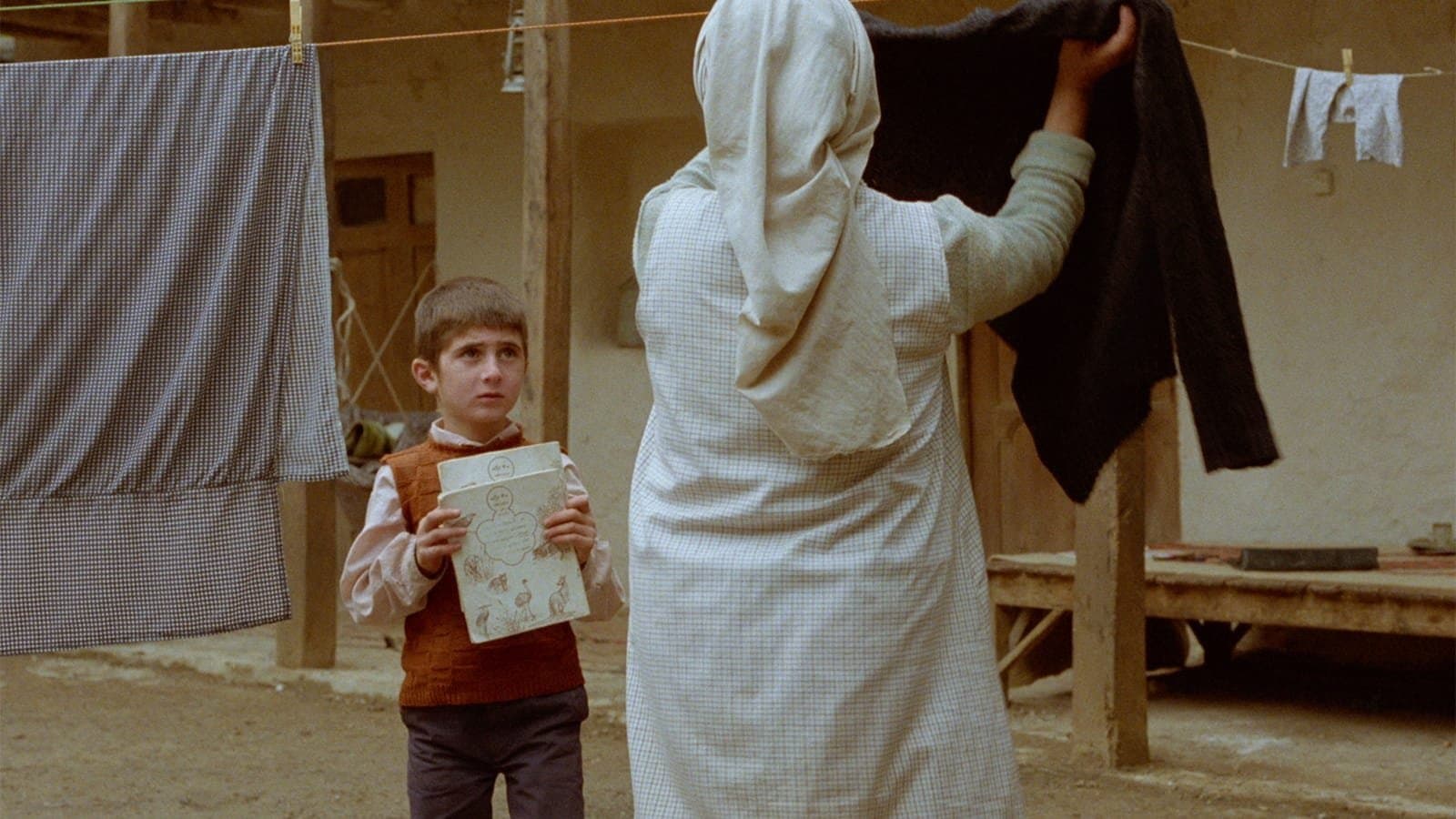
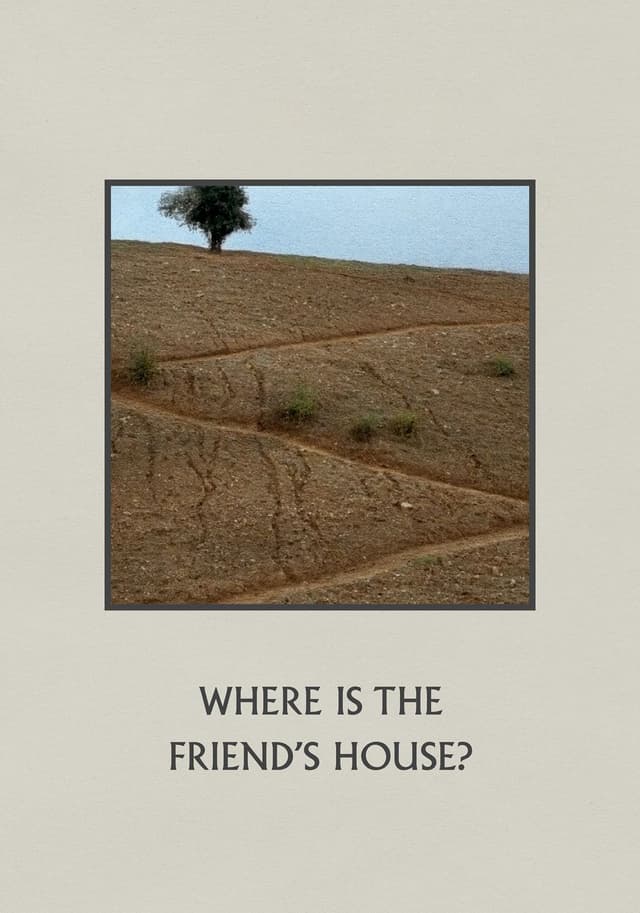
After accidentally taking home his classmate Mohammad Reza's notebook, eight-year-old Ahmad worries that the boy will be expelled without it. With evening closing in, Ahmad sets off across the hills between Koker and Poshteh in northern Iran to find his friend's house and return the notebook before morning.
What Is the Budget of Where Is the Friend's House (1987)?
Where Is the Friend's House (1987), Abbas Kiarostami's landmark Iranian neorealist drama, was produced on an extremely modest budget, with most reliable estimates placing the figure in the equivalent of $80,000 to $200,000 USD at the time of production. Iranian film financing in the 1980s did not produce the kind of public budget figures that Hollywood and major European film industries published, and exact numbers for Kiarostami's early features have not been formally disclosed. The estimate reflects the production scale of an Institute for the Intellectual Development of Children and Young Adults (Kanoon) film with non-professional child leads, rural location shooting, and a small crew.
The film was produced by Kanoon, the Iranian children's-cultural institute that functioned as both a state-affiliated arts organization and a training ground for major Iranian filmmakers across the 1970s and 1980s (Kiarostami, Bahram Beyzai, Jafar Panahi, and others all worked through Kanoon). The institute's production model deliberately operated at a small financial scale to enable filmmakers to develop distinctive personal styles outside of commercial-feature pressures.
Key Budget Allocation Categories
The estimated $80-200K budget covered the minimal production needs of a rural-Iranian neorealist film:
- Director and Crew Fees: Abbas Kiarostami served as director, screenwriter, and editor, with crew fees absorbing the production's largest line item. Cinematographer Farhad Saba captured the film's distinctive landscape compositions. The crew was small (fewer than 20 people across all departments) by Western feature-film standards.
- Non-Professional Cast: Babek Ahmed Poor, who plays Ahmad, was a non-professional child actor recruited from the village of Koker. Most of the cast members were also non-professional, drawn from the rural communities where the film shot. Non-professional cast members typically receive modest fees plus per diem rather than feature-actor compensation, which dramatically reduces above-the-line costs.
- Koker Region Location Shoot: Principal photography took place in the villages of Koker and Poshteh in northern Iran's Gilan Province, regions affected by the 1990 Manjil-Rudbar earthquake (which Kiarostami would later document in And Life Goes On). Location-based production with no constructed sets keeps art-department spend at a minimum.
- Camera Package: The film was shot on 35mm film with a small-footprint camera package. Film stock and processing absorbed a meaningful share of the production budget, a typical cost-distribution pattern for 1980s independent feature films.
- Sound Recording and Post-Production: The film features minimal score, with sound design built around natural ambient audio and dialogue. Persian-language dialogue recording on location required careful sound capture in outdoor environments. Post-production took place at Kanoon facilities in Tehran.
- Festival and Distribution Costs: The international festival travel and print-distribution expenses required to position the film for global recognition were absorbed by Kanoon and by the eventual international distributor MK2, which acquired worldwide rights and built Kiarostami's international reputation through subsequent decades.
How Does Where Is the Friend's House Compare to Similar Films?
At an estimated $80-200K, Where Is the Friend's House sits in the micro-budget tier characteristic of state-supported Iranian art cinema in the 1980s. The comparison set frames the financial context:
- Bicycle Thieves (1948): Budget approximately $100,000 USD at the time of production | Worldwide $358,000 (initial theatrical release). Vittorio De Sica's Italian neorealist landmark is the closest art-historical antecedent, with comparable financial scale, non-professional cast, and neorealist methodology.
- The 400 Blows (1959): Budget approximately $75,000 USD at the time of production | Worldwide modest. François Truffaut's debut feature about a boy in trouble offers the closest international comparison: a child-led neorealist drama from a major film-historical movement.
- Pather Panchali (1955): Budget approximately $3,000 USD at the time of production | Worldwide modest. Satyajit Ray's Bengali landmark cost less than Where Is the Friend's House and represents the broader tradition of state-supported, child-led neorealist cinema from outside the Hollywood system.
- And Life Goes On (1992): Reported budget approximately $200,000 USD | Festival circuit. Kiarostami's second film in the Koker trilogy, made after the 1990 earthquake to revisit the locations and people of Where Is the Friend's House, operated at a comparable budget tier and demonstrates the consistency of the director's production scale.
- Through the Olive Trees (1994): Reported budget approximately $400,000 USD | Festival circuit. The third film in Kiarostami's Koker trilogy cost roughly twice as much as Where Is the Friend's House, reflecting both inflation and Kiarostami's growing international financing options after his 1980s breakthrough.
Where Is the Friend's House Box Office Performance
Where Is the Friend's House had a limited Iranian theatrical release in 1987 and entered international film-festival circulation across the late 1980s and early 1990s. The film does not have a comprehensive worldwide box-office gross figure documented through standard industry sources (Box Office Mojo, The Numbers), and Iranian theatrical box office from the period is not consistently archived in English-language financial records.
The financial picture is best framed in art-house and festival-circulation terms:
Box Office Breakdown
Where Is the Friend's House

The film's commercial impact is dwarfed by its critical and historical impact. Where Is the Friend's House is widely cited as the work that launched Kiarostami's international reputation and that introduced Iranian art cinema to global festival circuits in a sustained way. Subsequent Kiarostami features (Close-Up, And Life Goes On, Taste of Cherry, The Wind Will Carry Us) built directly on the foundation this film established.
The film's enduring availability through Criterion (which released a 2019 4K restoration of the full Koker trilogy on Blu-ray and as part of the Criterion Channel) has continued to generate modest but consistent home-video and streaming revenue more than three decades after its original release.
Where Is the Friend's House Production History
Development on Where Is the Friend's House began at Kanoon in 1985 when Abbas Kiarostami, by then an established Kanoon director working primarily on short films and documentary projects, proposed a feature about a child navigating a moral dilemma. Kiarostami wrote the screenplay solo, drawing inspiration from a poem by Sohrab Sepehri ("Khaneye dust kojast?", "Where Is the Friend's House?") that gives the film its title.
Principal photography took place in the villages of Koker and Poshteh in Iran's Gilan Province across 1986 and into 1987. Kiarostami used the natural landscape and the actual residents of the villages as cast and crew supplement. Babek Ahmed Poor, the boy who plays Ahmad, was discovered through Kiarostami's village-casting process. The director's methodology of working with non-professionals in their actual environments became a foundational element of his later filmmaking and influenced an entire generation of Iranian and international directors.
Post-production took place in Tehran at Kanoon facilities. The film premiered at the 1987 Fajr Film Festival in Iran, where it won multiple awards including Best Director. International recognition followed at the 1989 Locarno International Film Festival, where the film won the Bronze Leopard and entered the European art-house circulation circuit.
The 1990 Manjil-Rudbar earthquake devastated the regions where Where Is the Friend's House was shot, killing more than 40,000 people. Kiarostami returned to the area to make And Life Goes On (1992), a film that explicitly revisits the locations and surviving residents of the original. These two films, joined by Through the Olive Trees (1994), form the Koker trilogy, one of the most celebrated film cycles in international art cinema.
Awards and Recognition
Where Is the Friend's House received significant international awards recognition. At the 1989 Locarno International Film Festival, the film won the Bronze Leopard, the FIPRESCI Prize, and the Ecumenical Jury Prize, three of the festival's most-respected art-house honors. The Locarno recognition was the primary launchpad for Kiarostami's international career.
Within Iran, the film won multiple prizes at the 1987 Fajr International Film Festival, including Best Director and the Special Jury Prize. The film also received attention at festivals across Europe and North America in the late 1980s and 1990s, with the Toronto International Film Festival, the New York Film Festival, and the BFI London Film Festival programming it across multiple seasons.
In retrospective awards and best-of lists, the film has been honored repeatedly. The British Film Institute's Sight & Sound critic polls have consistently placed Where Is the Friend's House among the most respected films of the late twentieth century. The 100 Greatest Films lists from Cahiers du Cinéma, the Iranian critic association, and Time Out have all included the film. In 2022, the Iranian Film Critics Association named it one of the top three Iranian films of all time. The film has been preserved by The Film Foundation as a work of urgent international film-heritage importance.
Critical Reception
Where Is the Friend's House received broadly enthusiastic critical reception that has only deepened across the decades. The film holds a 96% approval rating on Rotten Tomatoes based on contemporary and retrospective reviews, with a critical consensus describing it as a near-perfect example of neorealist child-led drama that uses the simplest possible plot to illuminate fundamental moral questions about responsibility, kindness, and persistence. CinemaScore did not poll the film.
Critics praised the film's narrative simplicity, the emotional integrity of Babek Ahmed Poor's performance, Kiarostami's framing of the rural Gilan landscape, and the moral seriousness with which the film treats an eight-year-old protagonist's apparently small dilemma. Roger Ebert wrote that the film "contains more wisdom about childhood than almost any other film I have seen." Jonathan Rosenbaum called it "one of the great films about the relationship between landscape, ethics, and human will."
Subsequent decades of critical reassessment have only elevated the film's standing. The New York Times' Manohla Dargis, in a 2019 retrospective review on the occasion of the Criterion Koker trilogy release, wrote that "Kiarostami uses the geography of one rural valley to ask the largest possible question about how we treat each other." The Guardian's Peter Bradshaw has repeatedly named the film among the most important works of the late twentieth century. Sight & Sound has placed the film in multiple greatest-of-all-time critic polls. The reception has established Where Is the Friend's House as one of the foundational works of post-1979 Iranian cinema and as one of the most influential international art films of the 1980s.
Frequently Asked Questions
How much did it cost to make Where Is the Friend's House (1987)?
Exact production budget figures for Iranian state-supported features of the 1980s were not formally disclosed, but reliable estimates place the figure between $80,000 and $200,000 USD at the time of production. The film was produced by Kanoon, the Iranian Institute for the Intellectual Development of Children and Young Adults, which operated at deliberately small financial scales to enable filmmakers to develop distinctive personal styles.
Who directed Where Is the Friend's House?
Abbas Kiarostami directed the film. He also wrote the screenplay and edited the picture. Kiarostami had been working at Kanoon since the early 1970s, primarily on short films and documentary projects, and Where Is the Friend's House was his breakthrough international feature.
Where was Where Is the Friend's House filmed?
Principal photography took place in the villages of Koker and Poshteh in Iran's Gilan Province in 1986 and 1987. Kiarostami used the natural landscape and the actual residents of the villages as cast. The 1990 Manjil-Rudbar earthquake later devastated the region, which Kiarostami documented in his follow-up film And Life Goes On (1992).
Who stars in Where Is the Friend's House?
Babek Ahmed Poor plays Ahmad, the eight-year-old protagonist. His real-life brother Ahmed Ahmed Poor plays the classmate Mohammad Reza. Both child leads were non-professional actors recruited from the village of Koker. The supporting cast was drawn primarily from the rural communities where the film was shot.
Is Where Is the Friend's House part of a trilogy?
Yes. The film is the first installment of what is commonly called the Koker trilogy. The other films are And Life Goes On (1992, which revisits the Where Is the Friend's House locations after the 1990 Manjil-Rudbar earthquake) and Through the Olive Trees (1994, which fictionalizes the making of And Life Goes On). The Criterion Collection released a 4K restoration of the full trilogy in 2019.
Did Where Is the Friend's House win any awards?
Yes. The film won the Bronze Leopard, the FIPRESCI Prize, and the Ecumenical Jury Prize at the 1989 Locarno International Film Festival, the recognition that launched Kiarostami's international career. It also won multiple prizes at the 1987 Fajr International Film Festival in Iran, including Best Director.
What did critics think of Where Is the Friend's House?
The film received broadly enthusiastic critical reception that has deepened across the decades. It holds a 96% approval rating on Rotten Tomatoes from contemporary and retrospective reviews. Roger Ebert wrote that it "contains more wisdom about childhood than almost any other film I have seen," and Sight & Sound has placed the film in multiple greatest-of-all-time critic polls.
Is Where Is the Friend's House based on a poem?
The film takes its title from the Sohrab Sepehri poem "Khaneye dust kojast?" ("Where Is the Friend's House?"), one of the most-loved poems of twentieth-century Iranian literature. Kiarostami's screenplay was inspired by but not directly adapted from the poem, which serves as a thematic touchstone rather than a narrative source.
How does Where Is the Friend's House compare to other neorealist films?
The film is widely cited as the most important neorealist drama produced outside Italy after the original Italian neorealist movement of the 1940s and 1950s. It is most often compared with Vittorio De Sica's Bicycle Thieves (1948), François Truffaut's The 400 Blows (1959), and Satyajit Ray's Pather Panchali (1955), all child-led neorealist landmarks from outside the Hollywood system.
Where can I watch Where Is the Friend's House?
The film is available on the Criterion Channel as part of the 2019 4K restoration of the full Koker trilogy. The Criterion Collection also released the trilogy on Blu-ray. The film is occasionally programmed at art-house theaters and film-festival retrospectives, and remains in active circulation more than three decades after its original release.
Filmmakers
Where Is the Friend's House

Build budgets like this one in Saturation
Start from an industry-standard feature film template, import the schedule and rates you already have, and let the cost report keep itself current as you spend. Real-time collaboration, no spreadsheets.