The Bridge on the River Kwai Budget
 DramaHistoryWar2h 42m
Updated
Synopsis
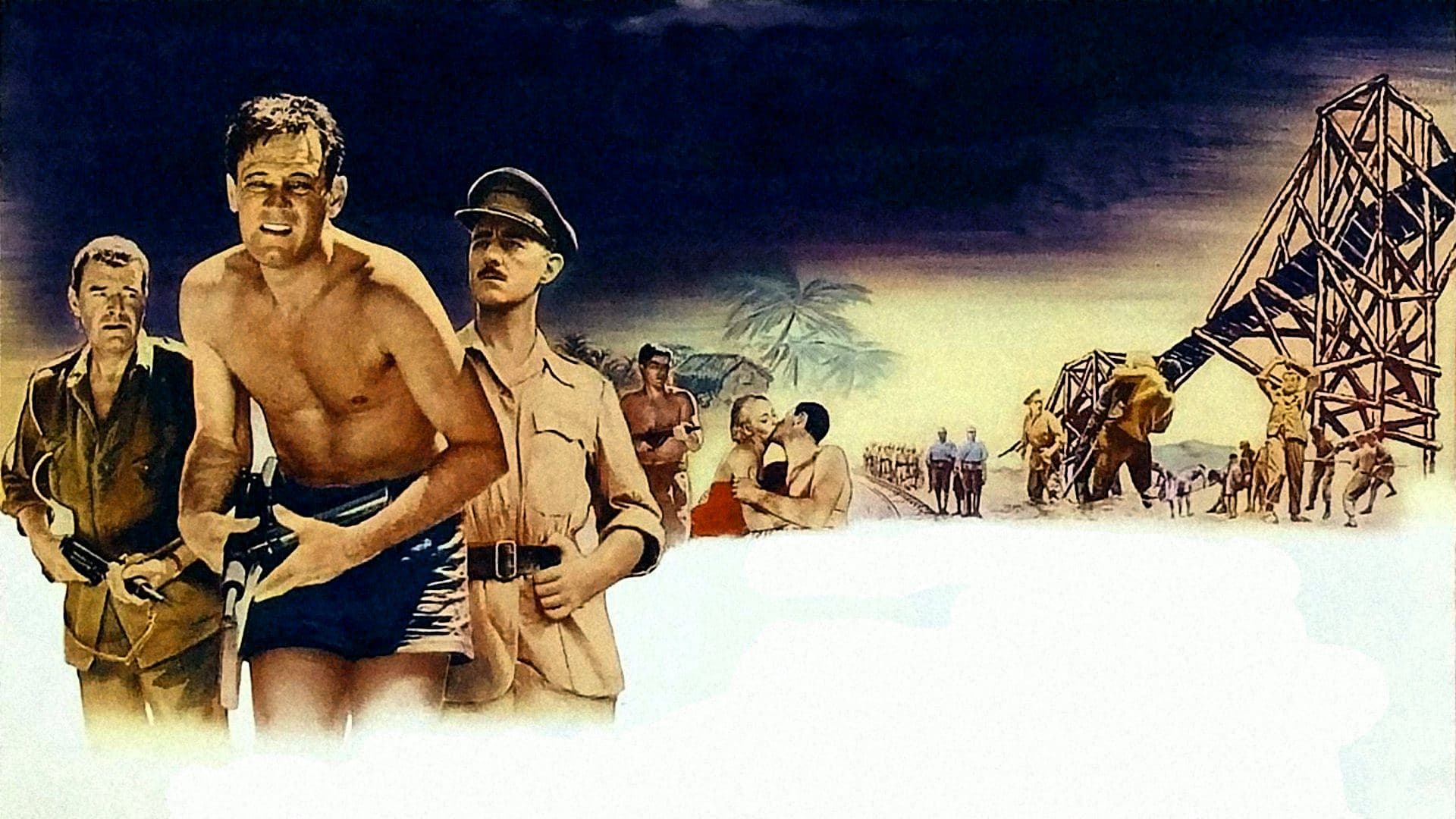
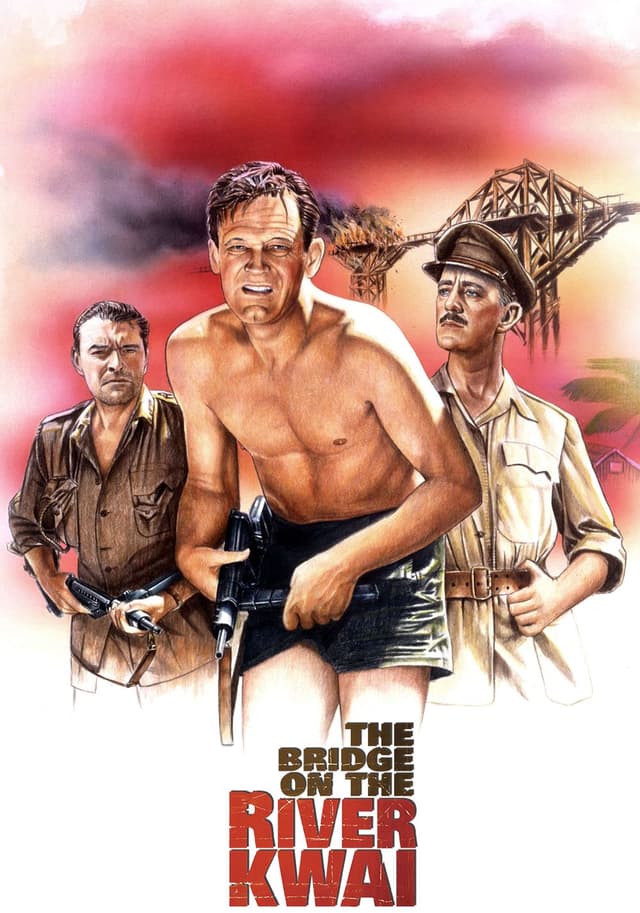
The classic story of English POWs in Burma forced to build a bridge to aid the war effort of their Japanese captors. British and American intelligence officers conspire to blow up the structure, but Col. Nicholson, the commander who supervised the bridge's construction, has acquired a sense of pride in his creation and tries to foil their plans.
What Is the Budget of The Bridge on the River Kwai?
The Bridge on the River Kwai was produced for an estimated $2.8 million, a significant investment for a 1957 production that required extensive location shooting in Ceylon (now Sri Lanka). Producer Sam Spiegel secured financing through Columbia Pictures for his Horizon Pictures banner, channeling much of the budget toward building a functional bridge on location, transporting a large international cast and crew to Southeast Asia, and staging the film's climactic destruction sequence.
For context, the average Hollywood studio film in the late 1950s cost roughly $1.5 to $2 million. The Bridge on the River Kwai exceeded that figure substantially due to its remote jungle locations, large-scale construction work, and David Lean's insistence on practical effects over studio shortcuts. The gamble paid off enormously, as the film became one of the highest-grossing releases of the decade.
Key Budget Allocation Categories
- Location and Construction : The single largest expense was building a real bridge over the Kelani River in Ceylon. The production constructed the bridge from scratch over several months, using local labor and materials, specifically so it could be destroyed on camera for the finale.
- Cast Salaries : William Holden commanded the highest fee as the top-billed American star, reportedly earning a percentage of gross profits in addition to his salary. Alec Guinness, Jack Hawkins, and Sessue Hayakawa rounded out a high-caliber international ensemble.
- Travel and Logistics : Transporting equipment and personnel to remote locations in Ceylon required chartered transport, temporary housing, and supply chains that added weeks to the schedule. The tropical climate also created challenges with weather delays and equipment maintenance.
- Cinematography and Equipment : Jack Hildyard shot in CinemaScope using the latest widescreen technology. Capturing the dense jungle landscapes and the bridge destruction required specialized camera rigs, multiple camera setups for unrepeatable sequences, and careful planning of natural lighting in the tropical canopy.
- Production Design : Beyond the bridge itself, the production built a complete prisoner-of-war camp, officer quarters, and surrounding infrastructure in the jungle. Every structure had to be convincingly weathered to reflect wartime conditions.
- Post-Production and Score : Malcolm Arnold composed an original orchestral score that incorporated the famous "Colonel Bogey March" as a recurring motif. Editing the complex action sequences, mixing location sound recorded in challenging jungle conditions, and finalizing the widescreen presentation required extended post-production work.
How Does The Bridge on the River Kwai's Budget Compare to Similar Films?
Compared to other epic productions of the 1950s, The Bridge on the River Kwai occupied a middle ground: more expensive than most dramas but less costly than the decade's largest spectacles. Its exceptional return on investment set the stage for a wave of location-shot epics in the years that followed.
- Ben-Hur (1959) : Budget $15.2M | Worldwide $146M. MGM's chariot epic cost more than five times as much, reflecting its massive Roman sets and extended production timeline. Both films swept the Oscars, but Kwai achieved its prestige at a fraction of the cost.
- The Ten Commandments (1956) : Budget $13.3M | Worldwide $122.7M. Cecil B. DeMille's biblical epic required enormous crowd scenes and elaborate special effects. Kwai proved that a smaller-scale war drama shot on location could compete commercially with the biggest spectacles.
- Around the World in 80 Days (1956) : Budget $6M | Worldwide $42M. Michael Todd's travelogue adventure also relied on international locations and an all-star cast, costing roughly twice Kwai's budget but earning slightly less at the worldwide box office.
- Lawrence of Arabia (1962) : Budget $15M | Worldwide $69.5M. David Lean's follow-up epic expanded on the location-shooting approach pioneered by Kwai, with a much larger budget reflecting the vast Jordanian desert production. Both films demonstrated Lean's ability to deliver prestige returns.
- Paths of Glory (1957) : Budget $935K | Worldwide $3.4M. Stanley Kubrick's anti-war film released the same year cost a third of Kwai's budget and used studio-built trenches instead of remote locations. The comparison highlights how Kwai's location authenticity drove both its costs and its commercial appeal.
The Bridge on the River Kwai Box Office Performance
The Bridge on the River Kwai was a commercial juggernaut, earning approximately $44.9 million worldwide against its $2.8 million production budget. It ranked as one of the top-grossing films of 1957 and became a defining commercial success for Columbia Pictures.
- Production Budget : $2,800,000
- Estimated Worldwide Gross : $44,908,000
- Estimated Break-Even Point : Approximately $5.6 million (roughly 2x the production budget to account for prints, advertising, and distribution fees)
- Net Profit (Estimated) : $39.3 million above the break-even threshold
- Return on Investment : Approximately 1,504% ((($44.9M - $2.8M) / $2.8M) x 100)
The film's extraordinary ROI made it one of the most profitable productions of the 1950s relative to its cost. Its success validated the model of prestige location shooting as a commercial strategy and directly enabled David Lean to secure the much larger budget for Lawrence of Arabia. William Holden's profit-participation deal reportedly earned him millions over the film's theatrical run, making it one of the most lucrative actor deals of the era.
The Bridge on the River Kwai Production History
The film originated from Pierre Boulle's 1952 novel "Le Pont de la Riviere Kwai," a fictionalized account inspired by the construction of the Burma Railway by Allied prisoners of war under Japanese captivity during World War II. Producer Sam Spiegel acquired the film rights and initially approached Howard Hawks and John Ford before landing on David Lean, who was coming off the success of Summertime (1955).
The screenplay presented an immediate political complication. Carl Foreman and Michael Wilson, both blacklisted during the McCarthy era, wrote the adaptation. Because neither could receive screen credit under the blacklist rules, the screenplay was officially attributed to Pierre Boulle, who did not speak English and had no involvement in the script. This injustice was not corrected until 1984, when the Academy posthumously awarded the Oscar to Foreman and Wilson.
Lean initially wanted Charles Laughton for Colonel Nicholson, but Laughton's health made the demanding jungle shoot impractical. Alec Guinness was reluctant to accept the role, concerned that the character was too unsympathetic, and clashed with Lean during production over the interpretation. Despite their creative tensions, Guinness delivered what became his most iconic performance. Sessue Hayakawa, the pioneering Japanese-American actor who had been a major silent film star, was cast as Colonel Saito in a career-reviving role at age 68.
Principal photography took place over eight months in Ceylon, primarily near Kitulgala. The production constructed a functional bridge 425 feet long and 90 feet high over the Kelani River, employing hundreds of local workers. Conditions were grueling: tropical heat, monsoon rains, insects, and dysentery plagued the cast and crew throughout the shoot. The bridge destruction sequence, the film's climax, required meticulous engineering because it could only be filmed once. Multiple cameras were positioned to capture every angle of the detonation.
Awards and Recognition
The Bridge on the River Kwai dominated the 30th Academy Awards, winning seven Oscars out of eight nominations. It was the most awarded film of the ceremony and cemented David Lean's reputation as the premier director of epic cinema.
- Best Picture (Sam Spiegel, producer)
- Best Director (David Lean)
- Best Actor (Alec Guinness, as Colonel Nicholson)
- Best Adapted Screenplay (Pierre Boulle, credited; later corrected to Carl Foreman and Michael Wilson)
- Best Cinematography (Jack Hildyard)
- Best Film Editing (Peter Taylor)
- Best Original Score (Malcolm Arnold)
The film also won the BAFTA Award for Best Film, the Golden Globe for Best Motion Picture (Drama), and the New York Film Critics Circle Award for Best Picture. It was selected for preservation in the United States National Film Registry by the Library of Congress in 1997 for being "culturally, historically, or aesthetically significant." The American Film Institute has consistently ranked it among the greatest films ever made.
Critical Reception
The Bridge on the River Kwai holds a 96% approval rating on Rotten Tomatoes, reflecting near-universal critical acclaim both at the time of release and in decades of retrospective evaluation. Critics praised David Lean's ability to balance intimate character study with large-scale spectacle, creating a war film that worked simultaneously as adventure, satire, and tragedy.
Alec Guinness's portrayal of Colonel Nicholson drew particular attention for its complexity. His performance captured a man whose rigid sense of duty and military pride gradually becomes indistinguishable from collaboration with the enemy, a characterization that reviewers found both compelling and deeply unsettling. Sessue Hayakawa earned equal praise as Colonel Saito, bringing dignity and depth to a role that lesser films would have reduced to a stereotype, earning him a Best Supporting Actor nomination.
The film's themes of obsession, the absurdity of war, and the fine line between heroism and madness have sustained critical interest for nearly seven decades. Malcolm Arnold's score, particularly the whistled "Colonel Bogey March" that accompanies the prisoners into camp, became one of the most recognizable pieces of film music in cinema history. The Bridge on the River Kwai is widely regarded as one of the defining achievements of 1950s filmmaking and a landmark in the war genre.
Frequently Asked Questions
How much did it cost to make The Bridge on the River Kwai (1957)?
The production budget was $2,800,000, covering principal photography, cast and crew salaries, locations, sets, post-production, and music. Marketing and distribution (P&A) costs are estimated at an additional $1,400,000 - $2,240,000, bringing the total studio investment to approximately $4,200,000 - $5,040,000.
How much did The Bridge on the River Kwai (1957) earn at the box office?
The Bridge on the River Kwai grossed $27,200,000 domestic, $17,708,000 international, totaling $44,908,000 worldwide.
Was The Bridge on the River Kwai (1957) profitable?
Yes. Against a production budget of $2,800,000 and estimated total costs of ~$7,000,000, the film earned $44,908,000 theatrically - a 1504% ROI on production costs alone.
What were the biggest costs in producing The Bridge on the River Kwai?
The primary cost drivers were above-the-line talent (William Holden, Alec Guinness, Jack Hawkins); talent compensation, authentic period production design, and meticulous post-production.
How does The Bridge on the River Kwai's budget compare to similar drama films?
At $2,800,000, The Bridge on the River Kwai is classified as a micro-budget production. The median budget for wide-release drama films in the era ranges from $30 - 80M for mid-budget to $150M+ for tentpoles. Comparable budgets: Memories of Murder (2003, $2,800,000); The Greatest Beer Run Ever (2022, $2,800,000); The Wizard of Oz (1939, $2,777,000).
Did The Bridge on the River Kwai (1957) go over budget?
There are no widely reported accounts of significant budget overruns for this production. However, studios rarely disclose precise budget overrun figures publicly. The reported production budget reflects the final estimated cost.
What was the return on investment (ROI) for The Bridge on the River Kwai?
The theatrical ROI was 1503.9%, calculated as ($44,908,000 − $2,800,000) ÷ $2,800,000 × 100. This measures gross revenue against production budget only - it does not account for P&A or exhibitor shares.
What awards did The Bridge on the River Kwai (1957) win?
Won 7 Oscars. 30 wins & 7 nominations total.
Who directed The Bridge on the River Kwai and who were the key crew members?
Directed by David Lean, written by Michael Wilson, Carl Foreman, shot by Jack Hildyard, with music by Malcolm Arnold, edited by Peter Taylor.
Where was The Bridge on the River Kwai filmed?
The Bridge on the River Kwai was filmed in United Kingdom. Many directors were considered for the project, among them John Ford, William Wyler, Howard Hawks, Fred Zinnemann, and Orson Welles (who was also offered a starring role). The film was an international co-production between companies in Britain and the United States. Director David Lean clashed repeatedly with his cast members, particularly Guinness and James Donald, who thought the novel was anti-British. Lean had a lengthy row with Guinness over how to play the role of Nicholson; the actor wanted to play the part with a sense of humor and sympathy, while Lean thought Nicholson should be "a bore." On another occasion, they argued over the scene where Nicholson reflects on his career in the army.
Filmmakers
The Bridge on the River Kwai

Official Trailer
Build budgets like this one in Saturation
Start from an industry-standard feature film template, import the schedule and rates you already have, and let the cost report keep itself current as you spend. Real-time collaboration, no spreadsheets.