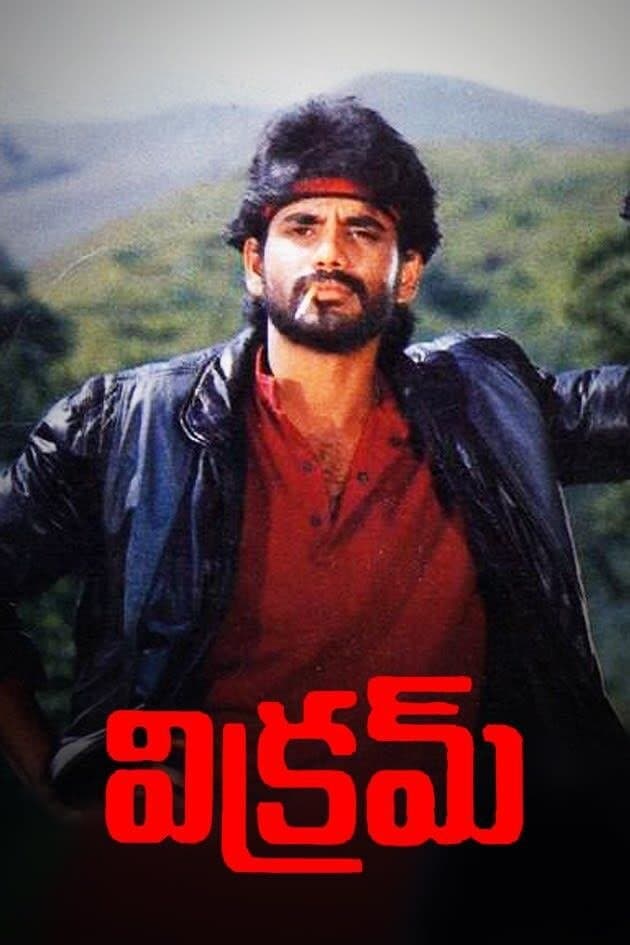
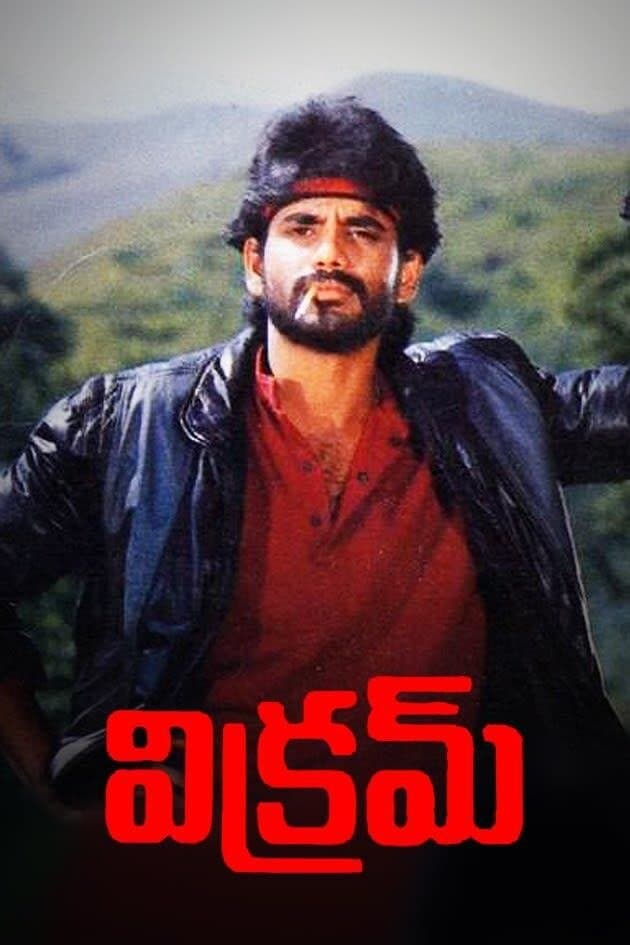
Vikram Budget
Updated
Synopsis
Vikram, a daring Indian intelligence agent, is sent to recover a stolen experimental missile called Salamander from the rogue Middle Eastern state of Sulgaria. To complete his mission he must contend with the country's ruthless dictator Khaftan and a global arms-smuggling network that has its own designs on the weapon.
What Is the Budget of Vikram (1986)?
Vikram (1986), directed by Rajasekar and starring Kamal Haasan, was the first Tamil film to be made on a budget of more than ₹1 crore (approximately $140,000 at the 1986 exchange rate of roughly ₹14 to the US dollar, or ₹14 crore in 2023 inflation-adjusted terms, roughly $1,400,000). It was the second production from Kamal Haasan's newly-formed banner Raaj Kamal Films International, following Raja Paarvai (1981).
The film was conceived as a Tamil-language James Bond-style espionage thriller, an ambitious genre play for the Tamil industry of the mid-1980s, which until that point had concentrated on family melodrama, mythologicals, and rural action. Haasan committed his own production capital to the elevated scale, importing technical talent and shooting elaborate action set pieces that pushed the Tamil industry's production ceiling for the era.
Key Budget Allocation Categories
The ₹1 crore-plus budget for Vikram was distributed across the production areas that defined the film as an industry first:
- Above-the-Line Talent — Kamal Haasan in the title role, with co-stars Sathyaraj as the villain Khaftan, Ambika as Sapna, Lissy Lakshmi as Princess Najma, and Janagaraj in support. Haasan also produced and co-wrote the film. Music director Ilaiyaraaja delivered one of the highest-profile scores of the period.
- International Set Design — Production designer Thotta Tharani built elaborate sets meant to evoke a fictional Middle Eastern country (Sulgaria) and its dictatorial regime. Custom palace interiors, military bunkers, and missile-launch installations were constructed at Madras studios to support the action set pieces.
- Special Effects and Action — The film featured action set pieces including missile launches, vehicle stunts, and a then-unprecedented animated sequence by India's pioneering computer-animation team. The budget supported imported effects technology and additional stunt coordination from Madras's leading action units.
- Music Production — Ilaiyaraaja composed a score that became one of the best-selling Tamil soundtracks of 1986. The soundtrack album sold in significant volume on cassette and contributed meaningful revenue back to the production. Songs were filmed across multiple international and domestic locations.
- Foreign Location Shoot — The production traveled internationally for sequences set in Sulgaria, expanding the budget beyond the typical Madras-bound Tamil production of the period. Travel, lodging, and unit logistics for an extended foreign schedule were a material line item.
- Wardrobe and Tactical Equipment — Military uniforms, formal palace attire, weapons props, and tactical gear for the espionage and combat sequences required custom design and procurement well beyond the standard Tamil-film wardrobe department spend of the mid-1980s.
How Does Vikram's Budget Compare to Similar Films?
Vikram's ₹1 crore-plus budget positioned it as the most expensive Tamil production of its era. The comparison set illustrates how it stretched the industry's spending ceiling:
- Sholay (1975): Budget approximately ₹3 crore | Worldwide approximately ₹35 crore. The benchmark Hindi big-budget action film of the prior decade, which Vikram echoed in its scale ambitions but for the Tamil market specifically.
- Mr. India (1987): Budget approximately ₹2.5 crore | Worldwide approximately ₹10 crore. The Anil Kapoor and Shekhar Kapur Hindi superhero thriller released a year later operated at a higher budget tier, in part because Bollywood's commercial Hindi cinema commanded larger budgets than Kollywood Tamil productions.
- Mouna Raagam (1986): Budget approximately ₹40 lakh | Tamil box office success. Mani Ratnam's breakout drama from the same year operated at less than half Vikram's budget but became a more lasting Tamil cultural touchstone, illustrating that budget did not guarantee long-term impact.
- Nayakan (1987): Budget approximately ₹1.5 crore | Tamil box office success. Mani Ratnam's gangster drama operated at a comparable budget tier the following year and is widely regarded as Kamal Haasan's creative peak performance.
- Vikram (2022): Budget approximately ₹150 crore | Worldwide approximately ₹434 crore. The Lokesh Kanagaraj-directed action thriller starring Kamal Haasan that uses elements of the 1986 character within the broader Lokesh Cinematic Universe, an entirely different production at modern Tamil cinema budget scale.
Vikram Box Office Performance
Vikram released theatrically in Tamil cinemas in 1986 and went on to gross approximately ₹8 crore worldwide (roughly $1,120,000 at the 1986 exchange rate), making it a commercial hit by the standards of mid-1980s Tamil cinema. The film recouped its production cost during its theatrical run and generated additional revenue through music sales and television rights.
Against a reported budget of more than ₹1 crore, the film returned approximately 8x its negative cost in theatrical revenue. Here is the financial profile based on publicly available historical data:
Box Office Breakdown
Vikram

The soundtrack album by Ilaiyaraaja became one of the best-selling Tamil soundtracks of 1986, generating significant additional revenue back to Raaj Kamal Films International through cassette sales. Music rights for Vikram remained commercially valuable across subsequent decades through CD reissues, streaming licensing, and ringtone-era mobile licensing in the early 2000s.
Kamal Haasan has spoken across multiple interviews about Vikram's commercial success despite mixed critical reception, citing it as a vindication of the production banner's ambition to scale Tamil cinema upward. The film established Raaj Kamal Films International as a serious producer of large-format Tamil action cinema.
Vikram Production History
Vikram was developed at Kamal Haasan's production company Raaj Kamal Films International, founded in 1981 by Haasan and his brother Charuhasan. Director Rajasekar was attached to the project alongside Haasan and screenwriter Panchu Arunachalam. Haasan co-wrote the screenplay and contributed substantially to the action and espionage sequence design.
Production design was led by Thotta Tharani, who built elaborate sets at the AVM Studios in Madras representing the fictional Middle Eastern dictatorship of Sulgaria. The animated sequence in the film, designed by Indian computer animation pioneers, was a national-first for Tamil cinema and a significant technical milestone.
Music director Ilaiyaraaja composed the soundtrack, with songs filmed across multiple international and domestic locations. Cinematographer Ashok Kumar shot the film in 35mm, applying a high-contrast espionage-film visual style with extensive practical effects work and on-set pyrotechnics.
The film released in Tamil cinemas in 1986 and ran successfully across South India, with additional revenue from dubbed Telugu and Hindi versions. The character of Vikram from the 1986 film was later referenced in the 2022 Lokesh Kanagaraj film Vikram, which serves as a spiritual continuation rather than a remake.
Awards and Recognition
Vikram received Filmfare South nominations but did not take home top prizes at the major South Indian award ceremonies of the year. Ilaiyaraaja's score received recognition within the music industry, with the soundtrack album certified as one of the best-selling Tamil albums of 1986.
The film's primary legacy is industrial rather than awards-based. As the first Tamil film with a budget exceeding ₹1 crore, Vikram is consistently cited in Tamil cinema histories as a turning point that opened the door to larger-budget Tamil productions through the late 1980s and early 1990s. The 2022 Lokesh Kanagaraj film of the same name with Kamal Haasan revived public interest in the 1986 original and prompted multiple retrospective evaluations.
Critical Reception
Vikram received mixed critical reviews on release in 1986. According to Haasan's own subsequent recollection, the film was unfavourably reviewed by Tamil film critics despite its commercial performance, with reviewers objecting to the genre transplant and finding the espionage tropes uncomfortably grafted onto Tamil melodrama conventions.
Audience response was substantially more positive, with the film running successfully across South India through extended theatrical engagements. The Ilaiyaraaja soundtrack and Kamal Haasan's performance were the most consistently praised elements within both critical and popular discussion. Retrospective coverage across the subsequent decades has been more generous than contemporary 1986 reviews, with Tamil film historians citing Vikram as a transitional work that introduced the international action-thriller register to mainstream Tamil cinema.
The release of Lokesh Kanagaraj's 2022 Vikram, which references and pays homage to the 1986 character, prompted a wave of retrospective coverage of the original film. Outlets including The Hindu, Film Companion, and Baradwaj Rangan's commentary have framed the 1986 Vikram as a flawed but historically pivotal entry in Kamal Haasan's filmography and in Tamil action cinema more broadly.
Frequently Asked Questions
How much did Vikram (1986) cost to make?
Vikram (1986) was the first Tamil film to be produced on a budget of more than ₹1 crore, approximately $140,000 at the 1986 exchange rate of roughly ₹14 to the US dollar. Adjusted for inflation, that budget is equivalent to roughly ₹14 crore in 2023 terms, or approximately $1,400,000.
Who directed Vikram (1986)?
Vikram (1986) was directed by Rajasekar, with Kamal Haasan producing through his banner Raaj Kamal Films International and co-writing the screenplay alongside Panchu Arunachalam.
Is Vikram (1986) connected to Vikram (2022)?
The 2022 Lokesh Kanagaraj film Vikram, also starring Kamal Haasan, is a spiritual continuation rather than a direct remake. The 2022 film references the 1986 character and operates as part of the larger Lokesh Cinematic Universe, but tells a new story at a modern Tamil cinema budget scale of approximately ₹150 crore.
How much did Vikram (1986) earn at the box office?
The film grossed approximately ₹8 crore worldwide (roughly $1,120,000 at 1986 exchange rates), making it a commercial hit by mid-1980s Tamil cinema standards. The film recouped its production cost during its theatrical run and generated additional revenue through music sales and television rights.
Who composed the music for Vikram (1986)?
Ilaiyaraaja composed the score and songs for Vikram (1986). The soundtrack album became one of the best-selling Tamil soundtracks of 1986, generating significant additional revenue for the production through cassette sales.
Who stars in Vikram (1986)?
Kamal Haasan stars as the title character Vikram, an Indian intelligence agent. Sathyaraj plays the villain Khaftan, with Ambika as Sapna and Lissy Lakshmi as Princess Najma. Janagaraj provides comic support, and Dimple Kapadia appears in a featured role.
What is Vikram (1986) about?
Vikram is an Indian intelligence agent sent to recover a stolen experimental missile called Salamander from the rogue Middle Eastern state of Sulgaria. To complete his mission he must contend with the dictator Khaftan and a global arms-smuggling network that has its own designs on the weapon.
Where was Vikram (1986) filmed?
The film shot primarily at AVM Studios in Madras (now Chennai), where production designer Thotta Tharani built elaborate sets representing the fictional Middle Eastern dictatorship of Sulgaria. Additional sequences were filmed across multiple international and domestic locations, an unusual production scale for Tamil cinema of the era.
Did Vikram (1986) win any awards?
The film received Filmfare South nominations but did not take home top prizes at the major South Indian award ceremonies of 1986. Ilaiyaraaja's soundtrack received industry recognition. The film's primary legacy is industrial, as the first Tamil production to break the ₹1 crore budget ceiling.
Why is Vikram (1986) historically important?
Vikram is consistently cited as the first Tamil film with a budget exceeding ₹1 crore, a milestone that opened the door to larger-budget Tamil productions through the late 1980s and 1990s. It introduced the international espionage-thriller register to mainstream Tamil cinema, paving the way for the modern Tamil action genre that culminated in films like the 2022 Vikram.
Filmmakers
Vikram

Official Trailer
Build budgets like this one in Saturation
Start from an industry-standard feature film template, import the schedule and rates you already have, and let the cost report keep itself current as you spend. Real-time collaboration, no spreadsheets.