VFW Budget
Updated
Synopsis
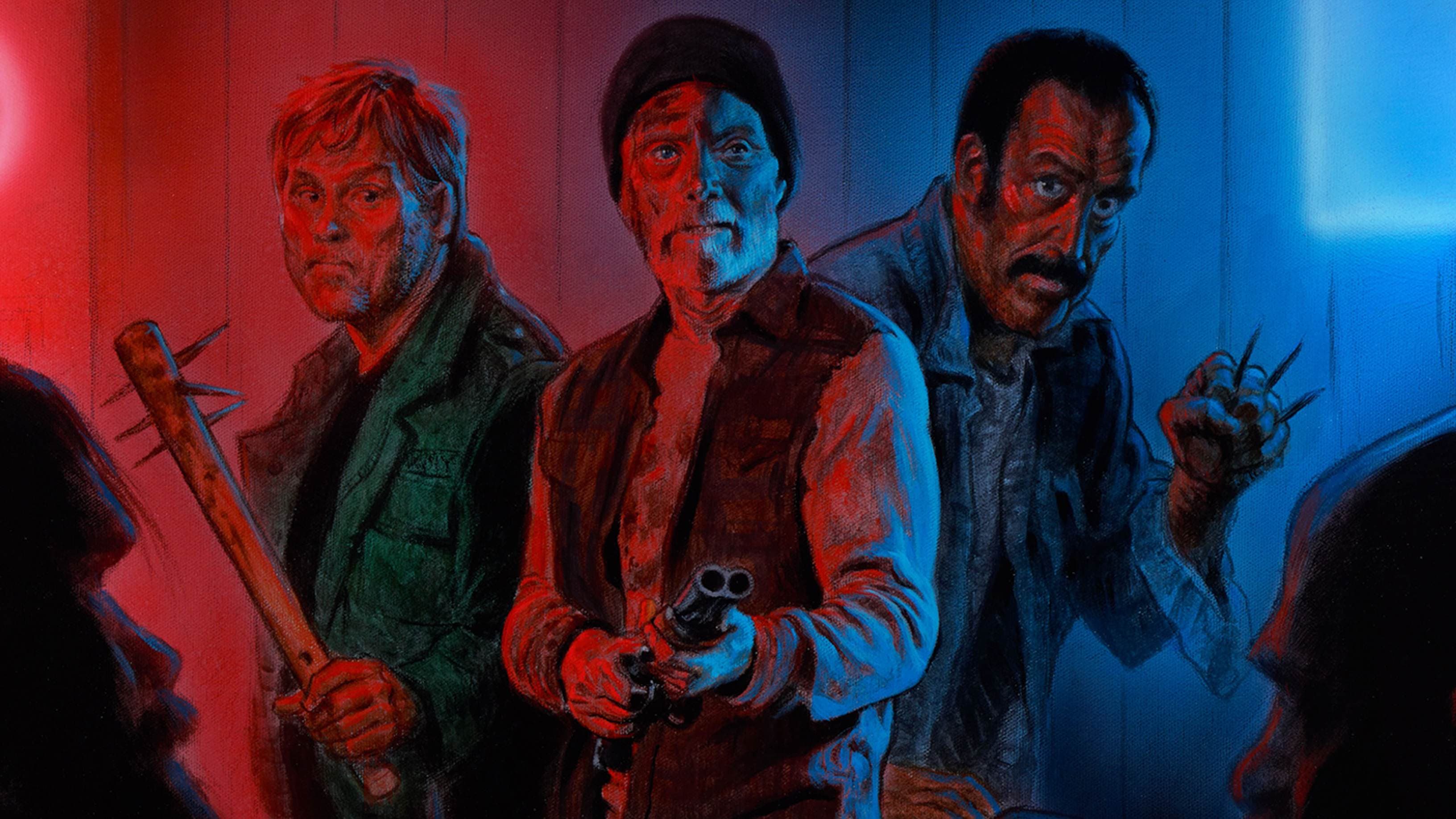
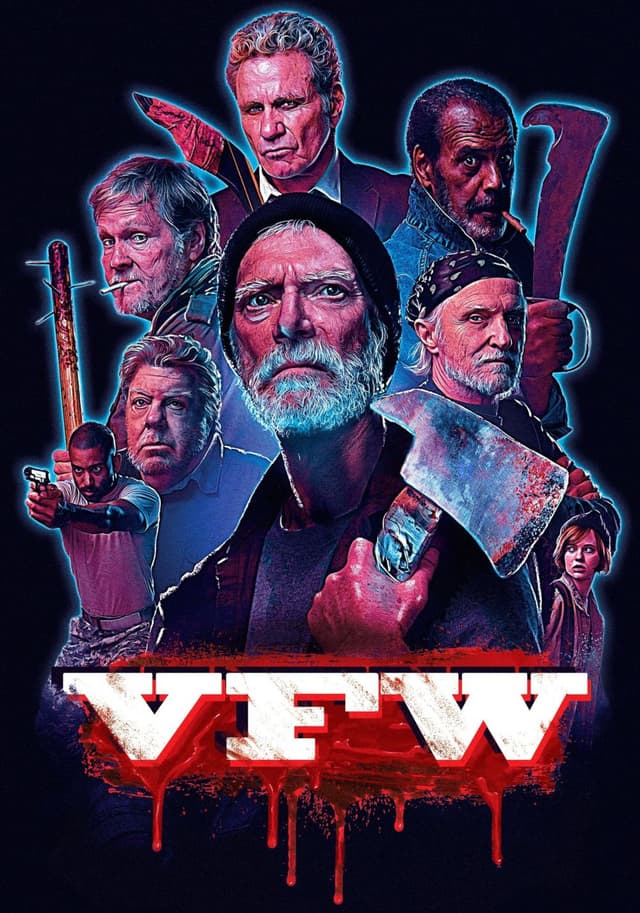
A typical night for veterans at a VFW turns into an all-out battle for survival when a desperate teen runs into the bar with a bag of stolen drugs. When a gang of violent punks come looking for her, the vets use every weapon at their disposal to protect the girl and themselves from an unrelenting attack.
What Is the Budget of VFW?
VFW (2019) was produced on an estimated budget of approximately $700,000. For a film packed with practical gore effects, stunt choreography, and a veteran ensemble cast, that figure reflects the resourcefulness of the indie horror community. Director Joe Begos and the Fangoria/Cinestate production team leveraged tight scheduling, a single primary location, and a crew experienced in low-budget genre filmmaking to deliver a film that looks and feels far more expensive than its price tag.
The sub-million-dollar budget placed VFW squarely in micro-budget territory, even by independent horror standards. By comparison, most wide-release genre films operate with budgets 20 to 50 times higher. Begos, who had previously delivered films like Bliss (2018) and Almost Human (2012) on similar shoestring budgets, brought a proven track record of maximizing production value within extreme financial constraints.
Key Budget Allocation Categories
With roughly $700,000 to cover the entire production, every dollar had to serve the film's siege-horror premise. The allocation priorities reflected a project built around atmosphere, practical effects, and character performance rather than spectacle.
- Cast and Talent accounted for a significant share of the budget given the caliber of the ensemble. Stephen Lang, William Sadler, Fred Williamson, Martin Kove, George Wendt, and David Patrick Kelly each brought decades of genre credibility, though their participation at indie rates reflected personal enthusiasm for the material.
- Practical Effects and Makeup consumed a disproportionately large slice of the budget relative to typical films at this price point. VFW is drenched in practical blood, prosthetic wounds, and handmade creature work. Begos insisted on in-camera gore, which required skilled makeup artists and substantial consumable materials.
- Production Design and Location costs were kept lean by shooting almost entirely inside a single standing set built to resemble the VFW post bar. Filming took place in Dallas, Texas, where Cinestate maintained production infrastructure, reducing travel and logistics overhead.
- Crew and Below-the-Line Labor reflected the compact shooting schedule. The film was shot over approximately 18 days, keeping daily crew costs contained while still maintaining a professional department structure.
- Lighting and Cinematography leaned into the neon-soaked, high-contrast aesthetic that defines Begos's visual style. Practical neon fixtures doubled as both set dressing and primary light sources, reducing the need for expensive lighting rigs.
- Post-Production and Sound included editing, color grading, sound design, and the synth-driven score. The film's retro soundtrack complemented the 1980s throwback tone without requiring costly licensing of existing music.
How Does VFW's Budget Compare to Similar Films?
VFW belongs to a tradition of single-location siege films that have long thrived at the lower end of the budget spectrum. Its $700,000 production cost positions it alongside other lean genre entries that punched well above their financial weight.
- Green Room (2015) had a budget of approximately $5 million and grossed $3.8 million domestically. Jeremy Saulnier's punk-club siege film operated at roughly seven times VFW's budget but shared the same DNA of confined-space tension with a veteran character actor ensemble.
- Don't Breathe (2016) was produced for $9.9 million and earned $157 million worldwide. Fede Alvarez's home-invasion thriller demonstrates the commercial ceiling for well-executed single-location horror, though it benefited from studio marketing muscle that VFW never had.
- Assault on Precinct 13 (1976) was made for approximately $100,000. John Carpenter's siege classic is VFW's most direct spiritual ancestor, proving that a barricade premise, strong character work, and relentless pacing can overcome almost any budget limitation.
- Bliss (2018) was produced for an estimated $300,000 to $400,000. Begos's own previous film operated at roughly half VFW's budget, making VFW his most financially ambitious project at the time of production.
- The Night Comes for Us (2018) reportedly cost around $2 million. Timo Tjahjanto's Indonesian action-horror film shares VFW's appetite for extreme practical violence on a constrained budget, though it had roughly three times the resources.
VFW Box Office Performance
VFW received a limited theatrical release through RLJE Films in February 2020, with the bulk of its distribution strategy focused on VOD platforms and physical media. The film did not receive a wide theatrical rollout, so traditional box office metrics do not fully capture its commercial performance.
For a $700,000 production, the break-even threshold including marketing and distribution costs would sit in the range of $1.4 million to $2 million using the standard rule of roughly two times the production budget to account for prints and advertising. VFW's revenue model, however, was never built around theatrical receipts. RLJE Films positioned the title as a premium VOD and Blu-ray release, targeting the dedicated horror collector market that Fangoria's brand reaches directly.
The film performed strongly on home video and streaming platforms, earning back its production costs through a combination of digital rentals, Blu-ray sales (including a collector's edition through Fangoria), and licensing deals. Its financial model is representative of how micro-budget genre films increasingly bypass theatrical economics entirely in favor of direct-to-audience distribution channels.
Box Office Breakdown
VFW

VFW Production History
VFW originated from a screenplay by Max Brallier and Matthew McArdle that imagined a group of aging war veterans defending their local VFW post against waves of drug-crazed attackers. The script caught the attention of Cinestate, the Dallas-based production company that had partnered with Fangoria to revive the iconic horror brand as a film production label. Cinestate and Fangoria had previously collaborated on Puppet Master: The Littlest Reich (2018) and Satanic Panic (2019), establishing a pipeline for delivering practical-effects-driven genre films on tight budgets.
Joe Begos was brought on to direct after his work on Bliss impressed the producers with its aggressive visual style and ability to deliver striking results on minimal resources. Begos brought a clear vision: a loving homage to the siege films of John Carpenter and the splatter horror of George Romero, filtered through a neon-drenched, synth-scored aesthetic.
Casting came together quickly, with Stephen Lang signing on as the lead after connecting with the material's themes of aging, loyalty, and defiance. The rest of the ensemble, including William Sadler, Fred Williamson, Martin Kove, George Wendt, and David Patrick Kelly, joined in rapid succession. The casting of so many recognizable character actors gave the film an identity that far exceeded its budget bracket.
Principal photography took place in Dallas over approximately 18 days in early 2019. The VFW bar interior was constructed as a practical set, allowing the crew to control lighting and camera placement with precision. Begos and cinematographer Mike Testin used a combination of neon practicals and anamorphic lenses to create the film's distinctive look. The shoot was physically demanding, with the cast performing many of their own stunts and enduring long hours under layers of prosthetic blood and makeup.
VFW premiered at Fantastic Fest in Austin, Texas, in September 2019, where it received enthusiastic responses from genre audiences. RLJE Films acquired distribution rights and released the film theatrically and on VOD in February 2020.
Awards and Recognition
VFW earned its strongest recognition on the genre festival circuit, where its unapologetic commitment to practical effects and retro action filmmaking resonated with dedicated horror audiences.
The film's world premiere at Fantastic Fest 2019 generated significant buzz within the horror community, with critics praising its energy, ensemble cast, and refusal to rely on CGI. While VFW did not compete in traditional awards circuits, it received nominations and recognition from genre-specific organizations and publications. Fangoria, which co-produced the film, featured it prominently in their editorial coverage, reinforcing its status as a flagship title of the Fangoria revival era.
Stephen Lang's performance as Fred, the stoic leader of the veterans, was frequently singled out by reviewers as a highlight. Several critics noted that the role showcased Lang's ability to anchor an ensemble with quiet authority, drawing comparisons to his work in Don't Breathe and Avatar.
Critical Reception
VFW holds a 72% approval rating on Rotten Tomatoes, reflecting broadly positive reviews from critics who appreciated its commitment to genre craftsmanship. The critical consensus centered on the film's success as a throwback to the siege films and splatter horror of the 1980s, with particular praise for the ensemble cast and practical effects work.
Reviewers consistently highlighted the film's pacing and energy. At just 92 minutes, VFW wastes no time establishing its premise before plunging into relentless action. Critics favorably compared its structure to Carpenter's Assault on Precinct 13 and Romero's Night of the Living Dead, noting that Begos understood how to build tension within a confined space while giving each character distinct moments to shine.
The practical effects drew near-universal praise. In an era dominated by digital blood and CGI creatures, VFW's commitment to handmade gore struck reviewers as both refreshing and thematically appropriate for a film celebrating old-school filmmaking values. The sheer volume of practical bloodshed became a selling point in itself, with several critics describing the film as one of the most satisfying entries in recent low-budget horror.
Some reviewers noted that the screenplay's characterization remained thin beyond the broad archetypes, and that the mutant antagonists lacked the specificity to be truly memorable villains. However, most critics agreed that these limitations were offset by the cast's charisma and the film's relentless forward momentum. VFW was widely recommended as a crowd-pleasing genre film that delivered exactly what its premise promised.
Frequently Asked Questions
How much did it cost to make VFW (2019)?
The production budget was $1,000,000, covering principal photography, visual effects, cast and crew salaries, locations, sets, post-production, and music. Marketing and distribution (P&A) costs are estimated at an additional $500,000 - $800,000, bringing the total studio investment to approximately $1,500,000 - $1,800,000.
How much did VFW (2019) earn at the box office?
VFW grossed $23,101 worldwide.
Was VFW (2019) profitable?
The film did not break even theatrically, earning $23,101 against an estimated $2,500,000 needed. Ancillary revenue may have improved the picture.
What were the biggest costs in producing VFW?
The primary cost drivers were above-the-line talent (Stephen Lang, Martin Kove, William Sadler); visual effects, practical stunts, and A-list talent compensation.
How does VFW's budget compare to similar action films?
At $1,000,000, VFW is classified as a micro-budget production. The median budget for wide-release action films in the 2010s ranges from $30 - 80M for mid-budget to $150M+ for tentpoles. Comparable budgets: Gone in 60 Seconds (1974, $1,000,000); A Woman Under the Influence (1974, $1,000,000); Rear Window (1954, $1,000,000).
Did VFW (2019) go over budget?
There are no widely reported accounts of significant budget overruns for this production. However, studios rarely disclose precise budget overrun figures publicly. The reported production budget reflects the final estimated cost.
What was the return on investment (ROI) for VFW?
The theatrical ROI was -97.7%, calculated as ($23,101 − $1,000,000) ÷ $1,000,000 × 100. This measures gross revenue against production budget only - it does not account for P&A or exhibitor shares.
What awards did VFW (2019) win?
2 wins & 1 nomination total.
Who directed VFW and who were the key crew members?
Directed by Joe Begos, written by Matthew McArdle, Max Brallier, with music by Steve Moore, edited by Josh Ethier.
Where was VFW filmed?
VFW was filmed in United States of America.
Filmmakers
VFW

Official Trailer
Build budgets like this one in Saturation
Start from an industry-standard feature film template, import the schedule and rates you already have, and let the cost report keep itself current as you spend. Real-time collaboration, no spreadsheets.