Vanity Fair Budget
 Drama
DramaUpdated
Synopsis
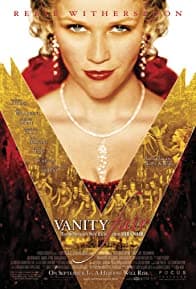
In Regency-era England, the orphaned and penniless Becky Sharp (Reese Witherspoon) leaves her finishing school determined to climb from the working class into the upper reaches of British society. Through her own intelligence, beauty, and willingness to manipulate the men around her, she ascends from a governess position into an unsuitable marriage to Captain Rawdon Crawley (James Purefoy), and eventually into the orbit of the Marquess of Steyne (Gabriel Byrne) himself. Against the backdrop of the Battle of Waterloo and the upheavals of nineteenth-century English society, Becky's rise and fall plays out across the social pages of vanity fair.
What Is the Budget of Vanity Fair (2004)?
Vanity Fair (2004), directed by Mira Nair and distributed by Focus Features in the United States with United International Pictures handling some international territories, was produced on a reported budget of $23,000,000. The period adaptation was based on William Makepeace Thackeray's 1847-1848 serial novel "Vanity Fair," with Matthew Faulk, Mark Skeet, and Julian Fellowes adapting the screenplay. The film positioned Reese Witherspoon, fresh off Legally Blonde (2001) and Sweet Home Alabama (2002), in her first major prestige-drama lead role following two years of contemporary commercial comedies.
The $23,000,000 budget reflected the prestige-period economics of early-2000s art-house adaptations. The figure sat below tentpole-period epic budgets (Pride and Prejudice 2005 at $28 million, The Other Boleyn Girl 2008 at $35 million) but well above the typical independent period-drama tier. Mira Nair, working in her largest-budget assignment to date after Monsoon Wedding (2001) and Mississippi Masala (1991), brought a director-of-record name without commanding tentpole compensation.
Key Budget Allocation Categories
Vanity Fair's reported $23,000,000 budget was distributed across these production areas:
- Above-the-Line Talent: Reese Witherspoon played the lead Becky Sharp at a mid-six-figure rate, with significant additional participation. The supporting ensemble included James Purefoy as Captain Rawdon Crawley, Romola Garai as Amelia Sedley, Eileen Atkins as Matilda Crawley, Jim Broadbent as Mr. Osborne, Bob Hoskins as Sir Pitt Crawley, Geraldine McEwan as Lady Southdown, Gabriel Byrne as the Marquess of Steyne, Rhys Ifans as William Dobbin, and Jonathan Rhys Meyers as George Osborne.
- United Kingdom and India Location Production: Principal photography spanned the United Kingdom (Bath, London, Berkshire) and India (Rajasthan, Mumbai), with the dual-location work integrating Mira Nair's characteristic India-Britain cultural-bridge sensibility into the Thackeray adaptation. The international location shoot drove costs significantly above a single-country production.
- Costume and Period Design: Costume designer Beatrix Aruna Pasztor designed approximately 250 distinct period costumes for the principal cast plus hundreds of extras, with Becky Sharp's wardrobe progression alone requiring dozens of pieces tracked across the character's social-climbing arc. Production designer Maria Djurkovic built the London and country-estate interiors at Shepperton Studios.
- Set Construction and Locations: The film used substantial practical locations including Stansted House in West Sussex (for Queen's Crawley), Plas Mawr in Wales, and the Royal Crescent in Bath. Vauxhall Pleasure Gardens, the Waterloo battlefield aftermath, and the Steyne ballroom required substantial set dressing and crowd-extra coordination.
- Score and Music: Mychael Danna composed the score, integrating Indian classical instrumentation alongside Regency-period orchestration to reflect Nair's cultural-fusion aesthetic. The closing-credits "Indian Dance" sequence required additional choreography and music-licensing.
- Marketing Setup: Focus Features positioned the film as the studio's September 2004 awards-season opener, with marketing emphasizing Witherspoon's dramatic-prestige turn ahead of her Walk the Line release the following year.
How Does Vanity Fair's Budget Compare to Similar Films?
At $23,000,000, Vanity Fair sits in the lower mid-range of prestige period adaptations:
- Pride and Prejudice (2005): Budget $28,000,000 | Worldwide $121,100,000. Joe Wright's Keira Knightley adaptation cost slightly more than Vanity Fair and earned over six times its worldwide gross.
- Becoming Jane (2007): Budget $16,500,000 | Worldwide $37,300,000. Julian Jarrold's Anne Hathaway Jane Austen biographical drama cost less than Vanity Fair and modestly outperformed its worldwide gross.
- The Importance of Being Earnest (2002): Budget $15,000,000 | Worldwide $17,200,000. Oliver Parker's Reese Witherspoon-Colin Firth Oscar Wilde adaptation released two years before Vanity Fair and earned a similar worldwide total on a lower budget.
- The Duchess (2008): Budget $20,000,000 | Worldwide $43,400,000. Saul Dibb's Keira Knightley historical drama benchmarks a more successful late-2000s period adaptation at a similar budget tier.
- The Other Boleyn Girl (2008): Budget $35,000,000 | Worldwide $78,000,000. Justin Chadwick's Natalie Portman-Scarlett Johansson historical drama spent more than Vanity Fair and earned roughly four times its worldwide gross.
Vanity Fair Box Office Performance
Vanity Fair opened on September 1, 2004 in a wide release of 1,041 screens, earning $4,109,150 over its three-day opening weekend and $5,500,000 across the five-day Labor Day corridor. The opening was significantly below Focus Features' targets for a Reese Witherspoon-led prestige drama and reflected the difficulty of converting Witherspoon's commercial-comedy following to a period-prestige genre.
Against a reported production budget of $23,000,000, the film needed approximately $55,000,000 in worldwide gross to reach profitability accounting for marketing and distribution costs. Here is the financial breakdown:
Box Office Breakdown
Vanity Fair (2004)

Vanity Fair returned approximately $0.47 in worldwide theatrical revenue for every $1 invested when measured against total estimated production and marketing spend. The domestic share of the gross was $16,144,690 against an international share of $3,319,452, an 83/17 split heavily weighted toward North America that reflected the genre's domestic-prestige-audience target. The international shortfall was particularly notable given the film's English-language Thackeray pedigree, which would typically have traveled stronger.
The financial underperformance was absorbed by Focus Features as part of its prestige-portfolio risk model. Vanity Fair did not damage Reese Witherspoon's career, which surged the following year with Walk the Line (2005, Oscar winner for Best Actress). Mira Nair followed Vanity Fair with The Namesake (2006) and Amelia (2009), continuing her cross-cultural prestige-drama trajectory.
Vanity Fair Production History
Matthew Faulk, Mark Skeet, and Julian Fellowes adapted Thackeray's 1847-1848 novel across multiple drafts in the late 1990s and early 2000s. Mira Nair attached to direct in 2002 after Monsoon Wedding (2001) had cemented her cross-cultural directorial profile. The project was financed by Focus Features and a coalition of British and American partners including Granada Productions, Tempesta Films, and Hand Made Films.
Casting Reese Witherspoon as Becky Sharp gave the project its commercial anchor. Witherspoon was pregnant during production, which Mira Nair worked into the film's visual design without explicitly altering the character. The supporting cast assembled British prestige-television talent including James Purefoy as Captain Rawdon Crawley, Romola Garai as Amelia Sedley, Bob Hoskins, Eileen Atkins, Jim Broadbent, Gabriel Byrne, and a young Jonathan Rhys Meyers.
Principal photography ran from June to October 2003 in the United Kingdom and India, with United Kingdom location work in Bath, Berkshire, West Sussex, and London, and India location work in Rajasthan and Mumbai. The dual-country shoot integrated Mira Nair's characteristic cultural-bridge sensibility into the otherwise Britain-centered Thackeray adaptation. Focus Features scheduled the United States release for September 1, 2004 as the studio's Labor Day prestige-drama anchor.
Awards and Recognition
Vanity Fair received limited industry awards recognition. The film registered no Oscar, BAFTA, or Golden Globe nominations. Reese Witherspoon was nominated for a Satellite Award for Best Actress in a Motion Picture, Drama, but did not win. Beatrix Aruna Pasztor's costume work received Costume Designers Guild and other technical-craft nominations.
The film has been largely absent from awards conversation since its release, fitting within the broader pattern of underperforming early-2000s period adaptations. Mira Nair's subsequent directorial work has more frequently entered awards conversation than Vanity Fair specifically.
Critical Reception
Vanity Fair received mixed reviews. The film holds a 51% approval rating on Rotten Tomatoes based on 173 critic reviews, with a critical consensus that praised the production design and Witherspoon's commitment while objecting to the screenplay's compression of the source novel's sprawling structure. On Metacritic, the film scored 49 out of 100, indicating mixed reviews. Audiences surveyed by CinemaScore gave the film a B-, a typical prestige-drama floor.
Critics broadly praised the production design, the costume work, and Witherspoon's commitment to the dramatic register, while objecting to the screenplay's decision to soften Becky Sharp's amoral edges and the awkward integration of Mira Nair's Indian-cultural-bridge framing into the otherwise Britain-centered Thackeray adaptation. Roger Ebert gave the film three stars in the Chicago Sun-Times, writing that "Witherspoon makes Becky Sharp her own, but the movie around her remains uncertain of its register."
The Hollywood Reporter's Kirk Honeycutt criticized the film's pacing and the screenplay's reliance on voiceover narration to compress the novel's plotting. Variety's David Rooney called Vanity Fair "a handsomely mounted but emotionally distant adaptation that fails to capture the satirical bite of its source." The mixed reception combined with the modest commercial outcome cemented Vanity Fair's reputation as a representative example of the under-monetized mid-2000s prestige-period adaptation.
Frequently Asked Questions
How much did it cost to make Vanity Fair (2004)?
The reported production budget was $23,000,000. The film was produced by Janette Day, Donna Gigliotti, and Lydia Dean Pilcher through Focus Features in coalition with Granada Productions and Tempesta Films.
How much did Vanity Fair earn at the box office?
The film grossed $16,144,690 domestically and $3,319,452 internationally for a worldwide total of $19,464,142. It opened to $4,109,150 over its September 1, 2004 weekend and $5,500,000 across the five-day Labor Day corridor.
Was Vanity Fair profitable?
No. Against a $23,000,000 production budget and approximately $15 to $20 million in marketing costs, the film returned approximately $0.47 in worldwide theatrical revenue for every $1 invested. The international gross of just $3.3 million was particularly notable given the film's English-language Thackeray pedigree.
Who directed Vanity Fair (2004)?
Mira Nair directed the film, working in her largest-budget assignment to date following Monsoon Wedding (2001) and Mississippi Masala (1991). Nair brought her characteristic cross-cultural sensibility to the otherwise Britain-centered Thackeray adaptation.
Where was Vanity Fair filmed?
Principal photography ran from June to October 2003 in the United Kingdom and India, with United Kingdom locations in Bath, Berkshire (Stansted House for Queen's Crawley), West Sussex, and London, and India location work in Rajasthan and Mumbai. The dual-country shoot was supported by Shepperton Studios for the principal soundstage work.
Who stars in Vanity Fair?
Reese Witherspoon stars as Becky Sharp, with James Purefoy as Captain Rawdon Crawley, Romola Garai as Amelia Sedley, Eileen Atkins as Matilda Crawley, Jim Broadbent as Mr. Osborne, Bob Hoskins as Sir Pitt Crawley, Gabriel Byrne as the Marquess of Steyne, Rhys Ifans as William Dobbin, and Jonathan Rhys Meyers as George Osborne.
Is Vanity Fair based on a novel?
Yes. The film adapts William Makepeace Thackeray's 1847-1848 serial novel "Vanity Fair: A Novel without a Hero," compressing the source's sprawling 800-page structure into a 141-minute runtime. The screenplay by Matthew Faulk, Mark Skeet, and Julian Fellowes softened several of Becky Sharp's sharper edges relative to the novel.
Did Vanity Fair win any awards?
No major awards. Reese Witherspoon was nominated for a Satellite Award for Best Actress in a Motion Picture, Drama, but did not win. Beatrix Aruna Pasztor's costume work received Costume Designers Guild nominations. The film registered no Oscar, BAFTA, or Golden Globe nominations.
What did critics think of Vanity Fair?
The film received mixed reviews, with a 51% Rotten Tomatoes score based on 173 critics and a 49 Metacritic score. Critics praised the production design and Witherspoon's commitment but objected to the screenplay's compression of the source novel and the softening of Becky Sharp's amoral edges. Audiences gave the film a B- CinemaScore.
How does Vanity Fair compare to other Reese Witherspoon period dramas?
Vanity Fair (2004) was Witherspoon's first major prestige-period lead after Legally Blonde and Sweet Home Alabama. The Importance of Being Earnest (2002) earned a comparable worldwide gross on a lower budget. Witherspoon's breakthrough Oscar-winning Walk the Line (2005) followed the year after Vanity Fair and successfully completed her dramatic-genre pivot.
Filmmakers
Vanity Fair (2004)

Build budgets like this one in Saturation
Start from an industry-standard feature film template, import the schedule and rates you already have, and let the cost report keep itself current as you spend. Real-time collaboration, no spreadsheets.