Unstoppable Budget
 ActionThriller1h 38m
Updated
Synopsis
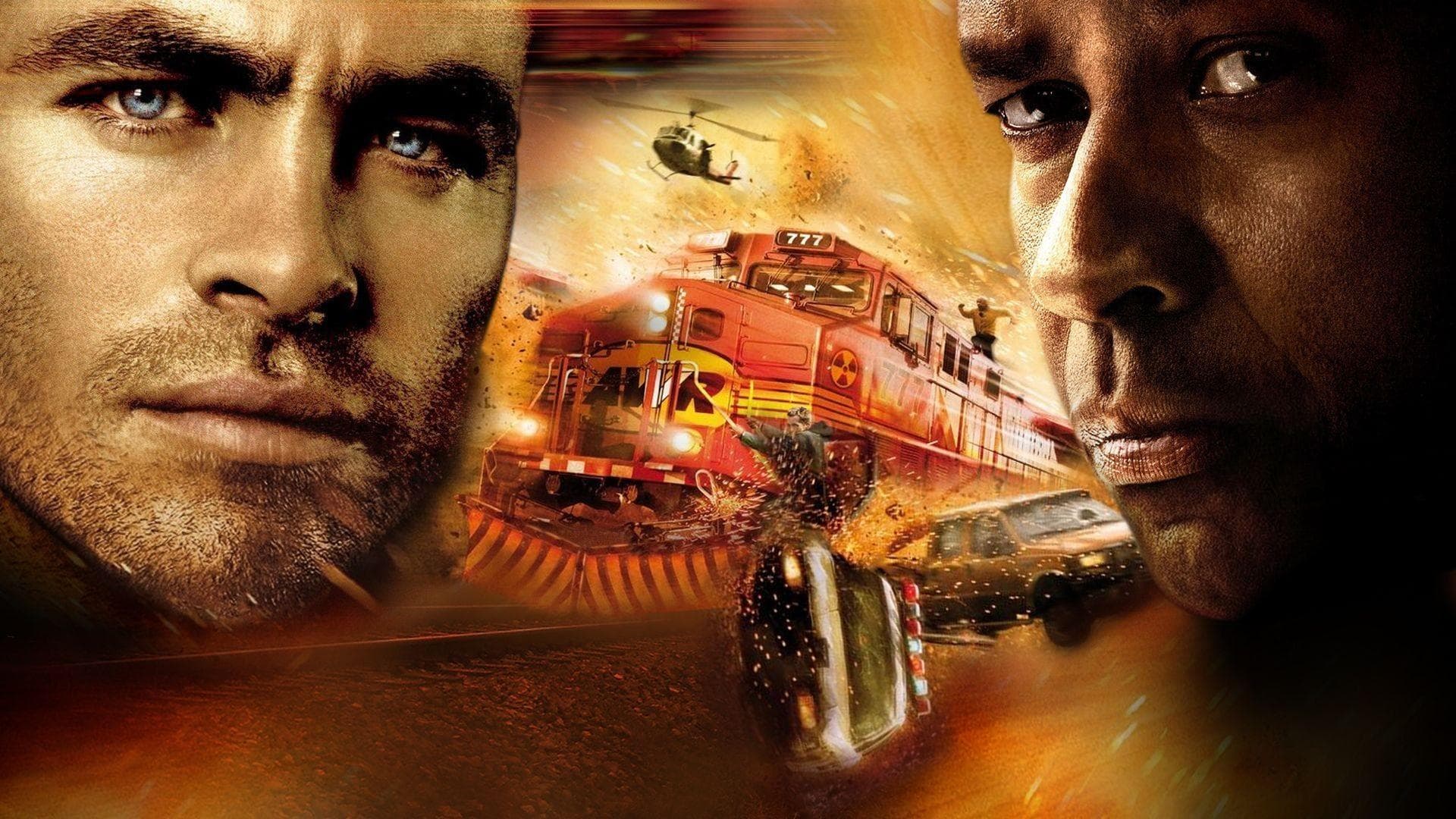
"Unstoppable" is a high-octane thriller that follows the gripping tale of a runaway freight train carrying a cargo of toxic chemicals. When a seasoned engineer, Frank Barnes, and a rookie conductor, Will Colson, discover the out-of-control train barreling towards a populated area, they must race against time to avert disaster. As they devise a daring plan to stop the train, they face numerous obstacles, including the relentless speed of the locomotive and the looming threat of a catastrophic derailment. With tension mounting and lives hanging in the balance, the duo's courage and ingenuity are put to the ultimate test in this heart-pounding race against time.
What Is the Budget of Unstoppable?
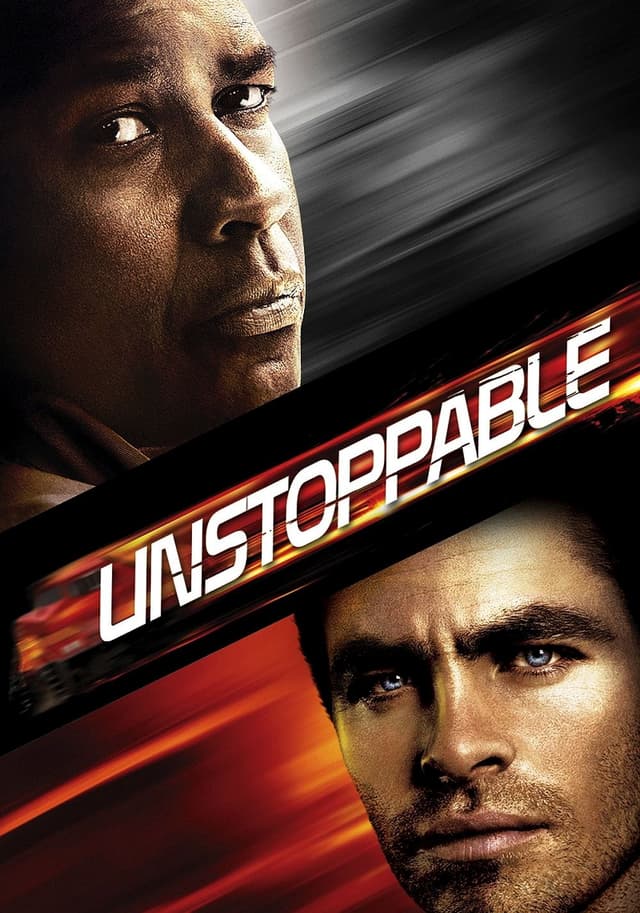
The production budget of Unstoppable (2010) was $100 million. Distributed by 20th Century Fox, the film was directed by Tony Scott and stars Denzel Washington and Chris Pine as railroad workers racing to stop a runaway freight train carrying hazardous chemicals through populated areas of Pennsylvania.
For a character-driven action thriller set almost entirely on and around moving trains, the $100 million budget reflected the scale of practical filmmaking involved. Scott insisted on shooting with real locomotives at full speed rather than relying on CGI, which required extensive coordination with active rail networks, specialized stunt work, and multiple camera units running simultaneously across miles of track.
Key Budget Allocation Categories
The $100 million budget covered the extensive logistics of filming a real-train action thriller on active rail corridors across Pennsylvania.
- Above-the-Line Talent: Denzel Washington commanded a significant salary as the film's marquee star, with Chris Pine earning a rising-star rate fresh off the 2009 Star Trek reboot. Director Tony Scott's fee reflected his status as one of Hollywood's top action filmmakers.
- Practical Train Action: The largest single cost driver. Scott used real CSX locomotives running at speed, requiring custom camera rigs mounted on trains, helicopters, and chase vehicles. Coordination with Norfolk Southern and other rail operators added scheduling premiums and safety costs that would not exist on a stage-bound production.
- Location Filming: Principal photography took place across multiple Pennsylvania towns including Bellaire, Martins Ferry, and Tyrone. Shutting down rail crossings, rerouting traffic, and managing safety perimeters in populated areas drove location costs well above typical on-location shoots.
- Stunt Coordination and Safety: Sequences involving derailments, near-misses with vehicles, and actors performing on moving trains required specialized stunt teams, safety rigging, and insurance riders. Several sequences were shot at genuine high speeds with minimal digital augmentation.
- Visual Effects and Post-Production: While Scott favored practical action, post-production still required compositing work to enhance crash sequences, wire removal, and environmental effects. Harry Gregson-Williams composed the score, and the sound design team delivered Oscar-caliber work mixing real locomotive audio with layered effects.
- Cinematography and Multi-Camera Setups: Ben Seresin served as director of photography, deploying multiple camera units to cover the train sequences from every angle simultaneously. The sheer volume of footage captured across moving platforms, aerials, and ground positions required significant equipment and crew expenditure.
How Does Unstoppable's Budget Compare to Similar Films?
At $100 million, Unstoppable sits in the upper range for action thrillers grounded in practical, real-world scenarios rather than superhero spectacle. Here is how it compares to other transportation-based action films:
- Speed (1994) had a budget of $30 million and earned $350 million worldwide. Made 16 years earlier at a fraction of the cost, it relied on a simpler single-bus premise and pre-digital practical effects, making Unstoppable's $100 million budget a reflection of how much real-vehicle action filmmaking had escalated in cost by 2010.
- The Taking of Pelham 123 (2009) cost $100 million and grossed $150 million worldwide. Tony Scott's previous train-set thriller with Denzel Washington delivered a nearly identical budget but was set primarily underground in a subway, illustrating that Scott's productions carried a consistent price tag regardless of location constraints.
- Non-Stop (2014) was produced for $50 million and earned $222 million worldwide. Confined almost entirely to the interior of an airplane, Liam Neeson's airborne thriller achieved strong returns at half the budget, demonstrating that enclosed-vehicle thrillers can work at lower price points when the action stays contained.
- Deepwater Horizon (2016) cost $110 million and grossed $121 million worldwide. Another disaster film based on a real industrial incident, it matched Unstoppable's commitment to practical effects and real-world authenticity but struggled to recoup its budget at the box office.
Unstoppable Box Office Performance
Unstoppable earned $81,562,942 domestically and $167,752,471 worldwide. Against a production budget of $100 million, the film needed roughly $200 million globally (accounting for prints and advertising costs, typically estimated at matching the production budget) to reach the break-even threshold.
With worldwide gross of $167.8 million, Unstoppable fell short of that $200 million target in theatrical revenue alone. The return on investment based purely on theatrical receipts calculates to approximately (167,752,471 - 100,000,000) / 100,000,000 x 100 = 67.8%, which does not account for the marketing spend.
However, Unstoppable performed strongly in home media and ancillary markets. The film opened at number one domestically with $23.4 million over its first weekend and held well through the holiday corridor. International markets contributed $86.2 million, with solid performances in the UK, Germany, and Japan. When home video, pay television, and streaming licensing revenues are included, Unstoppable is considered to have been profitable for Fox, though not a blockbuster hit by the standards of the studio's tentpole releases that year.
Box Office Breakdown
Unstoppable

Unstoppable Production History
Unstoppable is based on the real CSX 8888 incident of May 2001, in which an unmanned freight train carrying thousands of gallons of molten phenol and diesel fuel ran away for nearly two hours across Ohio before two crew members managed to slow and stop it. Screenwriter Mark Bomback adapted the incident into a fictionalized thriller, relocating the story to Pennsylvania and compressing the timeline for dramatic effect.
Tony Scott signed on to direct, marking his fifth collaboration with Denzel Washington after Crimson Tide (1995), Man on Fire (2004), Deja Vu (2006), and The Taking of Pelham 123 (2009). Scott's insistence on authenticity shaped every production decision. Rather than building train sets or relying on CGI, he negotiated access to active rail lines and used real locomotives for the chase sequences. The production worked with multiple railroad companies across Pennsylvania, shutting down sections of track for controlled high-speed runs.
Chris Pine was cast opposite Washington as the inexperienced conductor, giving the film a generational tension that mirrored the mentor-rookie dynamic at the story's core. Rosario Dawson rounded out the principal cast as the rail yard dispatcher coordinating the response from a control room.
Principal photography ran from late summer through fall 2009 across locations in Bellaire, Martins Ferry, Brewster, and Tyrone, Pennsylvania. Scott deployed his signature multi-camera, handheld style, often shooting with five or more cameras simultaneously to capture the kinetic energy of the train sequences. Ben Seresin served as cinematographer, working in close coordination with aerial and chase-vehicle camera teams to maintain visual coherence at speed.
Unstoppable was completed and released on November 12, 2010. It became the last film Tony Scott completed before his death in August 2012, giving the project an added weight in his filmography as the final work of one of Hollywood's most distinctive action directors.
Awards and Recognition
Unstoppable received an Academy Award nomination for Best Sound Editing, recognizing the intricate layering of locomotive sounds, environmental audio, and impact effects that drove the film's visceral intensity. The nomination placed the film alongside major blockbusters in the technical categories, a testament to the sound team's work in capturing and designing audio from real train environments rather than relying on library effects.
The film also received recognition from the Broadcast Film Critics Association and several regional critics' groups for its action filmmaking and performances. While it was not a major awards contender in the acting or directing categories, the craft disciplines recognized the technical difficulty of what Scott and his team achieved in creating sustained tension from practical action sequences.
Critical Reception
Unstoppable holds an 87% approval rating on Rotten Tomatoes, with critics praising Tony Scott's ability to generate white-knuckle tension from a straightforward premise. The consensus highlighted the film's efficiency: no subplots, no romantic diversions, just a relentless escalation built around two men trying to stop a train.
Denzel Washington and Chris Pine received praise for their chemistry, with reviewers noting that Washington brought gravitas and lived-in authenticity to his veteran engineer role while Pine's younger conductor provided the emotional stakes of a man with something to prove. Roger Ebert awarded the film three and a half stars, writing that Scott "ichannels pure craft into making something genuinely exciting out of what sounds like a simple premise."
Some critics noted that the film's villain is literally a machine, which limits character-driven conflict, but most agreed that Scott compensated through relentless pacing and visual storytelling. The practical action sequences were universally praised, with multiple reviewers calling Unstoppable one of the best pure-action films of 2010 and a fitting capstone to Tony Scott's career as a master of kinetic, visceral filmmaking.
Frequently Asked Questions
How much did it cost to make Unstoppable (2010)?
The production budget was $100,000,000, covering principal photography, visual effects, cast and crew salaries, locations, sets, post-production, and music. Marketing and distribution (P&A) costs are estimated at an additional $50,000,000 - $80,000,000, bringing the total studio investment to approximately $150,000,000 - $180,000,000.
How much did Unstoppable (2010) earn at the box office?
Unstoppable grossed $81,562,942 domestic, $86,242,524 international, totaling $167,805,466 worldwide.
Was Unstoppable (2010) profitable?
The film did not break even theatrically, earning $167,805,466 against an estimated $250,000,000 needed. Ancillary revenue may have improved the picture.
What were the biggest costs in producing Unstoppable?
The primary cost drivers were above-the-line talent (Denzel Washington, Chris Pine, Rosario Dawson); visual effects, practical stunts, and A-list talent compensation; international production across United States of America, United Kingdom.
How does Unstoppable's budget compare to similar action films?
At $100,000,000, Unstoppable is classified as a big-budget production. The median budget for wide-release action films in the 2010s ranges from $30 - 80M for mid-budget to $150M+ for tentpoles. Comparable budgets: 1917 (2019, $100,000,000); American Gangster (2007, $100,000,000); Bad Boys: Ride or Die (2024, $100,000,000).
Did Unstoppable (2010) go over budget?
There are no widely reported accounts of significant budget overruns for this production. However, studios rarely disclose precise budget overrun figures publicly. The reported production budget reflects the final estimated cost.
What was the return on investment (ROI) for Unstoppable?
The theatrical ROI was 67.8%, calculated as ($167,805,466 − $100,000,000) ÷ $100,000,000 × 100. This measures gross revenue against production budget only - it does not account for P&A or exhibitor shares.
What awards did Unstoppable (2010) win?
Nominated for 1 Oscar. 1 win & 14 nominations total.
Who directed Unstoppable and who were the key crew members?
Directed by Tony Scott, written by Mark Bomback, shot by Ben Seresin, with music by Harry Gregson-Williams, edited by Robert Duffy, Chris Lebenzon.
Where was Unstoppable filmed?
Unstoppable was filmed in United States of America, United Kingdom. Production was headquartered in Pittsburgh, Pennsylvania, where the fictional "Allegheny and West Virginia Railroad" depicted in the movie is headquartered. Filming took place in a broad area around there including the Ohio cities of Martins Ferry, Bellaire, Mingo Junction, Steubenville, and Brewster, and in the Pennsylvania cities of Pittsburgh, Emporium, Milesburg, Tyrone, Julian, Unionville, Port Matilda, Bradford, Monaca, Eldred, Mill Hall, Turtlepoint, Port Allegany, and Carnegie, and also in Portville, New York and Olean, New York.
Filmmakers
Unstoppable

Official Trailer
Build budgets like this one in Saturation
Start from an industry-standard feature film template, import the schedule and rates you already have, and let the cost report keep itself current as you spend. Real-time collaboration, no spreadsheets.