Unsane Budget
 HorrorThriller1h 38m
Updated
Synopsis
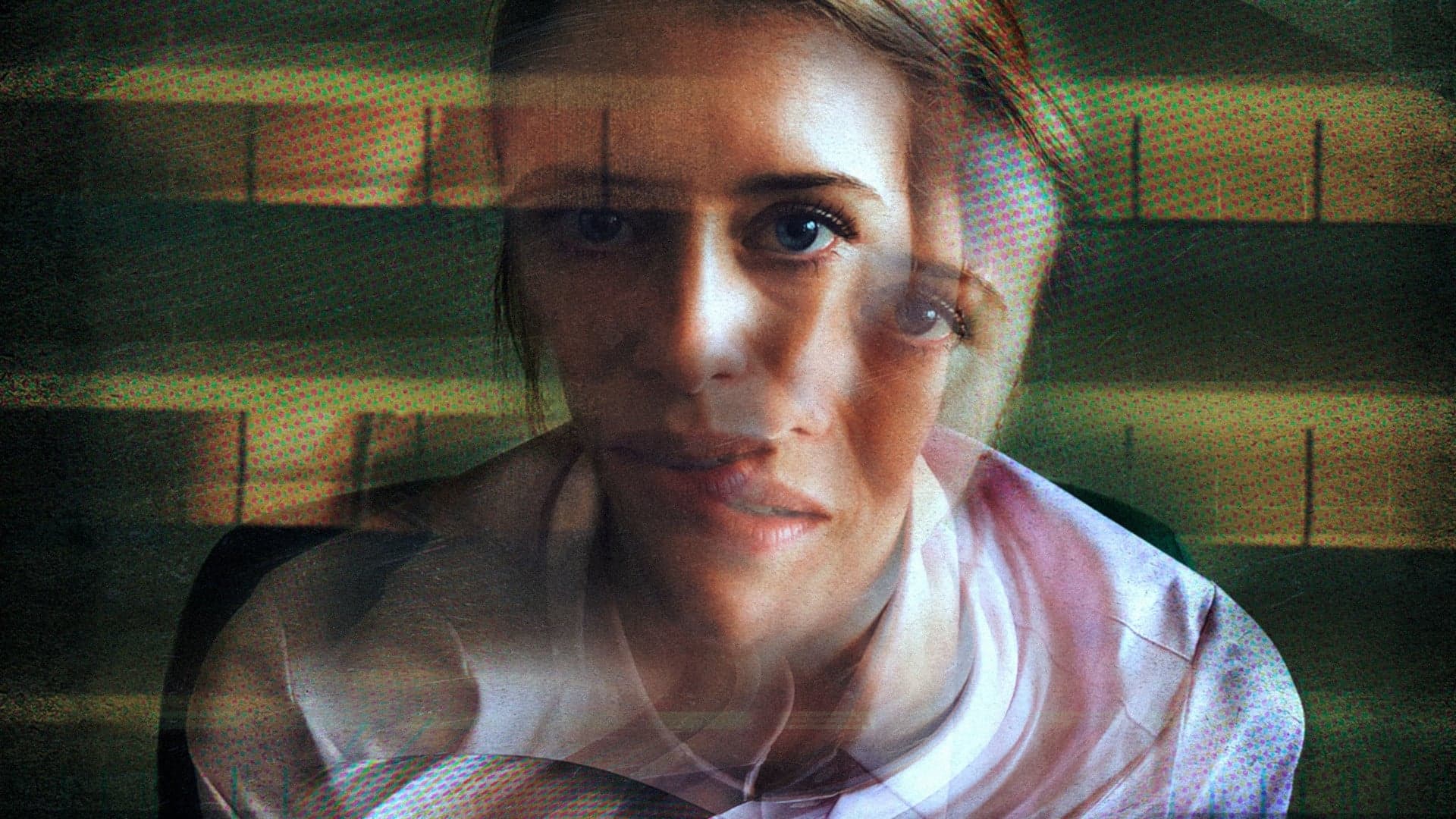
A woman is involuntarily committed to a mental institution where she is confronted by her greatest fear.
What Is the Budget of Unsane?
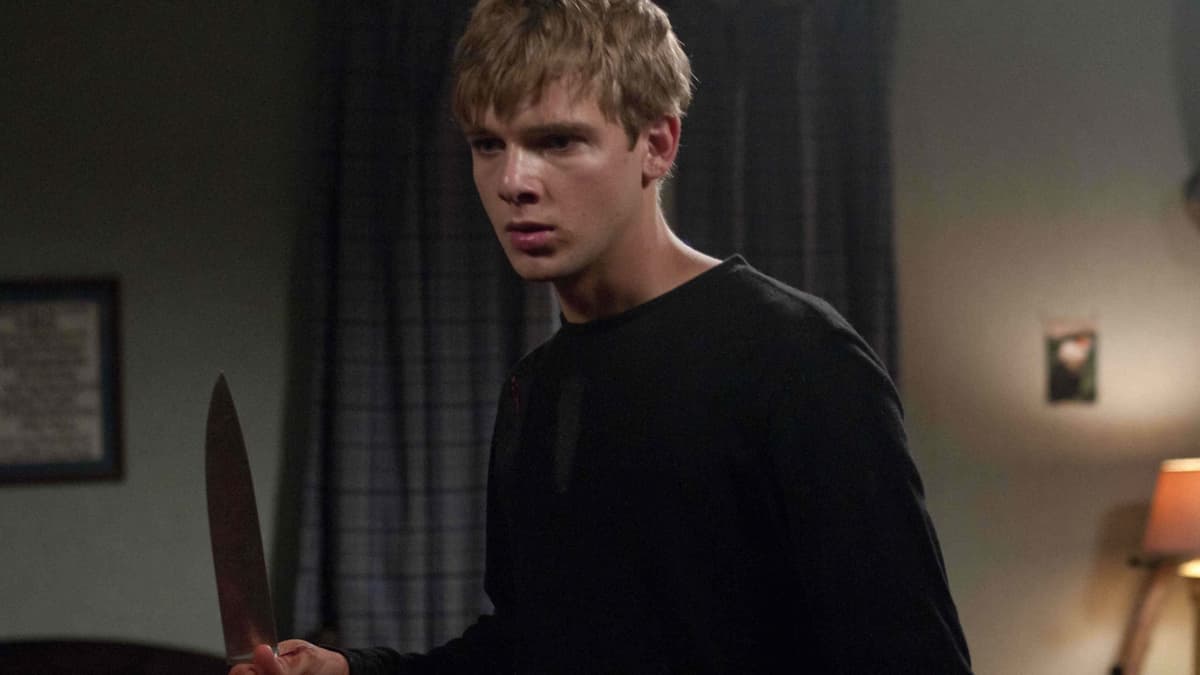
Unsane was produced for an estimated $1.5 million, making it one of the most cost-effective studio-distributed films in recent memory. Steven Soderbergh deliberately designed the project around micro-budget constraints, shooting the entire film on an iPhone 7 Plus to eliminate the overhead of traditional camera packages, grip trucks, and the large crews they require.
By wearing multiple hats (directing, shooting under his pseudonym Peter Andrews, and editing as Mary Ann Bernard), Soderbergh collapsed several department budgets into one salary. The result was a theatrically released psychological thriller that looked and felt far more expensive than its price tag, distributed by Bleecker Street and Fingerprint Releasing across more than 2,000 screens.
Key Budget Allocation Categories
- Cast Salaries: Claire Foy, coming off the global success of The Crown, headlined alongside Joshua Leonard, Jay Pharoah, Juno Temple, and Amy Irving. The lean ensemble kept talent costs proportional to the overall budget.
- Camera and Equipment: The entire film was captured on iPhone 7 Plus units fitted with Moment anamorphic lenses and a custom stabilizer rig. This eliminated the need for a traditional camera department, rental packages, and the associated transport and insurance costs.
- Crew and Production Staff: Soderbergh operated without a separate cinematographer or editor, and the minimal camera setup allowed a skeleton crew. Fewer personnel meant lower payroll, catering, and logistical expenses across the 10-day shoot.
- Location and Set Design: Filming took place at an actual psychiatric facility and practical locations in and around New York, avoiding the expense of purpose-built sets while lending the film a clinical authenticity.
- Post-Production: Soderbergh handled the edit himself, and the iPhone footage required specialized color grading to achieve a theatrical look. Sound design and mixing were completed on a compressed timeline that matched the production pace.
- Music: Thomas Newman contributed score elements (uncredited), with Soderbergh drawing on existing pieces rather than commissioning a full original score, keeping music costs minimal.
How Does Unsane's Budget Compare to Similar Films?
- Tangerine (2015): Budget $100K | Worldwide $1M. Sean Baker shot entirely on iPhone 5s for a fraction of Unsane's budget, proving the format viable for festival cinema. Unsane scaled the concept to wide theatrical release.
- Get Out (2017): Budget $4.5M | Worldwide $255M. Jordan Peele's horror debut cost three times as much as Unsane but generated returns that redefined the low-budget thriller market.
- Split (2016): Budget $9M | Worldwide $278M. M. Night Shyamalan self-financed a psychological thriller at six times Unsane's budget. Both films demonstrate that contained, performance-driven thrillers can thrive without blockbuster spending.
- 10 Cloverfield Lane (2016): Budget $15M | Worldwide $110M. A single-location psychological thriller that spent ten times more than Unsane, largely on visual effects and a broader marketing push.
- Paranormal Activity (2007): Budget $15K | Worldwide $193M. The gold standard for micro-budget horror ROI. Unsane operated at a higher production value but followed the same principle: strip costs to amplify returns.
Unsane Box Office Performance
Unsane earned $7,690,539 domestically and $14,318,072 worldwide against its $1.5 million production budget. For a film at this price point, the standard break-even threshold (accounting for prints, advertising, and distribution fees at roughly 2x production cost) sits at approximately $3 million in global receipts. Unsane cleared that mark nearly five times over.
The return on investment calculation is striking: ($14,318,072 - $1,500,000) / $1,500,000 x 100 = 854% ROI. Even with marketing spend factored in, the film was a clear financial success for Bleecker Street, validating both the iPhone shooting approach and Soderbergh's ability to draw audiences on name recognition and concept alone.
The film opened on 2,023 screens, an unusually wide release for a $1.5 million production. That distribution confidence reflected Soderbergh's track record and the novelty of the iPhone production angle, which generated substantial press coverage that functioned as organic marketing.
Box Office Breakdown
Unsane

Unsane Production History
Unsane originated from a screenplay by Jonathan Bernstein and James Greer that explored involuntary psychiatric commitment and the experience of a stalking survivor trapped in a system designed to keep her confined. Soderbergh was drawn to the material's claustrophobic tension and saw it as the ideal vehicle for an experiment he had been planning: shooting a full narrative feature on a smartphone.
Soderbergh had come out of a self-declared retirement in 2017 with Logan Lucky, but Unsane represented a different kind of return. Where Logan Lucky was a conventional production, Unsane was designed as a proof of concept for a radically stripped-down filmmaking model. Soderbergh wanted to demonstrate that a director could walk onto a location with a phone, a small case of lenses, and a handful of crew members, and produce something indistinguishable from a traditionally shot thriller.
Principal photography wrapped in just 10 days, an extraordinary pace even by independent standards. The iPhone 7 Plus, fitted with Moment lenses (including a 1.33x anamorphic adapter), allowed Soderbergh to shoot handheld in tight spaces that would have been impossible with traditional cameras. The small footprint meant scenes in hospital corridors, intake rooms, and isolation cells could be captured with natural movement and genuine spatial pressure.
Claire Foy signed on while still in the middle of her acclaimed run as Queen Elizabeth II on The Crown, and the role required a complete physical and emotional transformation. The compressed schedule meant minimal rehearsal, which Soderbergh used to his advantage, capturing raw, unrehearsed reactions that heightened the film's disorienting atmosphere.
The film premiered at the Berlin International Film Festival in February 2018, where the iPhone production method became a significant point of discussion. Bleecker Street acquired North American distribution rights and positioned the film as both a genre thriller and a technological milestone, opening it wide on March 23, 2018.
Awards and Recognition
Unsane premiered in competition at the 68th Berlin International Film Festival, one of the world's most prestigious film events. The selection validated Soderbergh's iPhone experiment at the highest level of international cinema and generated significant industry conversation about the future of digital filmmaking tools.
Claire Foy received widespread praise for her performance, with several critics' groups highlighting her work as one of the year's strongest lead turns. The film earned nominations from genre-focused organizations and independent film bodies that recognized its innovative production approach.
Beyond formal awards, Unsane's lasting recognition has been its influence on the conversation about accessible filmmaking technology. Soderbergh continued shooting on iPhone for his subsequent films, and the success of Unsane opened doors for other filmmakers to consider smartphone cinematography as a legitimate creative choice rather than a limitation.
Critical Reception
Unsane holds a 79% approval rating on Rotten Tomatoes, with critics praising the film's suffocating atmosphere and Foy's committed performance. The consensus acknowledged that the iPhone format, rather than feeling like a gimmick, actively enhanced the story's themes of surveillance, paranoia, and institutional dehumanization.
Reviewers noted that Soderbergh used the iPhone's wide-angle distortion and lower dynamic range as deliberate storytelling tools. The slightly degraded image quality mirrored the protagonist's deteriorating grip on reality, and the handheld intimacy placed audiences uncomfortably close to the action in a way that polished cinematography might not have achieved.
Some critics found the third act's genre escalation less convincing than the restrained psychological tension of the first two acts, and a minority felt the iPhone aesthetic occasionally undermined dramatic moments. However, the prevailing view was that Unsane succeeded both as a gripping thriller and as a compelling argument for rethinking what tools a filmmaker truly needs.
Frequently Asked Questions
How much did it cost to make Unsane (2018)?
The production budget was $1,500,000, covering principal photography, cast and crew salaries, locations, sets, post-production, and music. Marketing and distribution (P&A) costs are estimated at an additional $750,000 - $1,200,000, bringing the total studio investment to approximately $2,250,000 - $2,700,000.
How much did Unsane (2018) earn at the box office?
Unsane grossed $14,293,601 worldwide.
Was Unsane (2018) profitable?
Yes. Against a production budget of $1,500,000 and estimated total costs of ~$3,750,000, the film earned $14,293,601 theatrically - a 853% ROI on production costs alone.
What were the biggest costs in producing Unsane?
The primary cost drivers were above-the-line talent (Claire Foy, Joshua Leonard, Jay Pharoah); practical creature effects, atmospheric cinematography, and psychologically engineered sound design.
How does Unsane's budget compare to similar horror films?
At $1,500,000, Unsane is classified as a micro-budget production. The median budget for wide-release horror films in the 2010s ranges from $30 - 80M for mid-budget to $150M+ for tentpoles. Comparable budgets: Satantango (1994, $1,500,000); City Lights (1931, $1,500,000); Tampopo (1985, $1,500,000).
Did Unsane (2018) go over budget?
There are no widely reported accounts of significant budget overruns for this production. However, studios rarely disclose precise budget overrun figures publicly. The reported production budget reflects the final estimated cost.
What was the return on investment (ROI) for Unsane?
The theatrical ROI was 852.9%, calculated as ($14,293,601 − $1,500,000) ÷ $1,500,000 × 100. This measures gross revenue against production budget only - it does not account for P&A or exhibitor shares.
Who directed Unsane and who were the key crew members?
Directed by Steven Soderbergh, written by James Greer, Jonathan Bernstein, shot by Steven Soderbergh, with music by David Wilder Savage, edited by Steven Soderbergh.
Where was Unsane filmed?
Unsane was filmed in United States of America.
Filmmakers
Unsane

Official Trailer
Build budgets like this one in Saturation
Start from an industry-standard feature film template, import the schedule and rates you already have, and let the cost report keep itself current as you spend. Real-time collaboration, no spreadsheets.