Braveheart Budget
 ActionDramaHistoryWar178 minutes
Updated
Synopsis
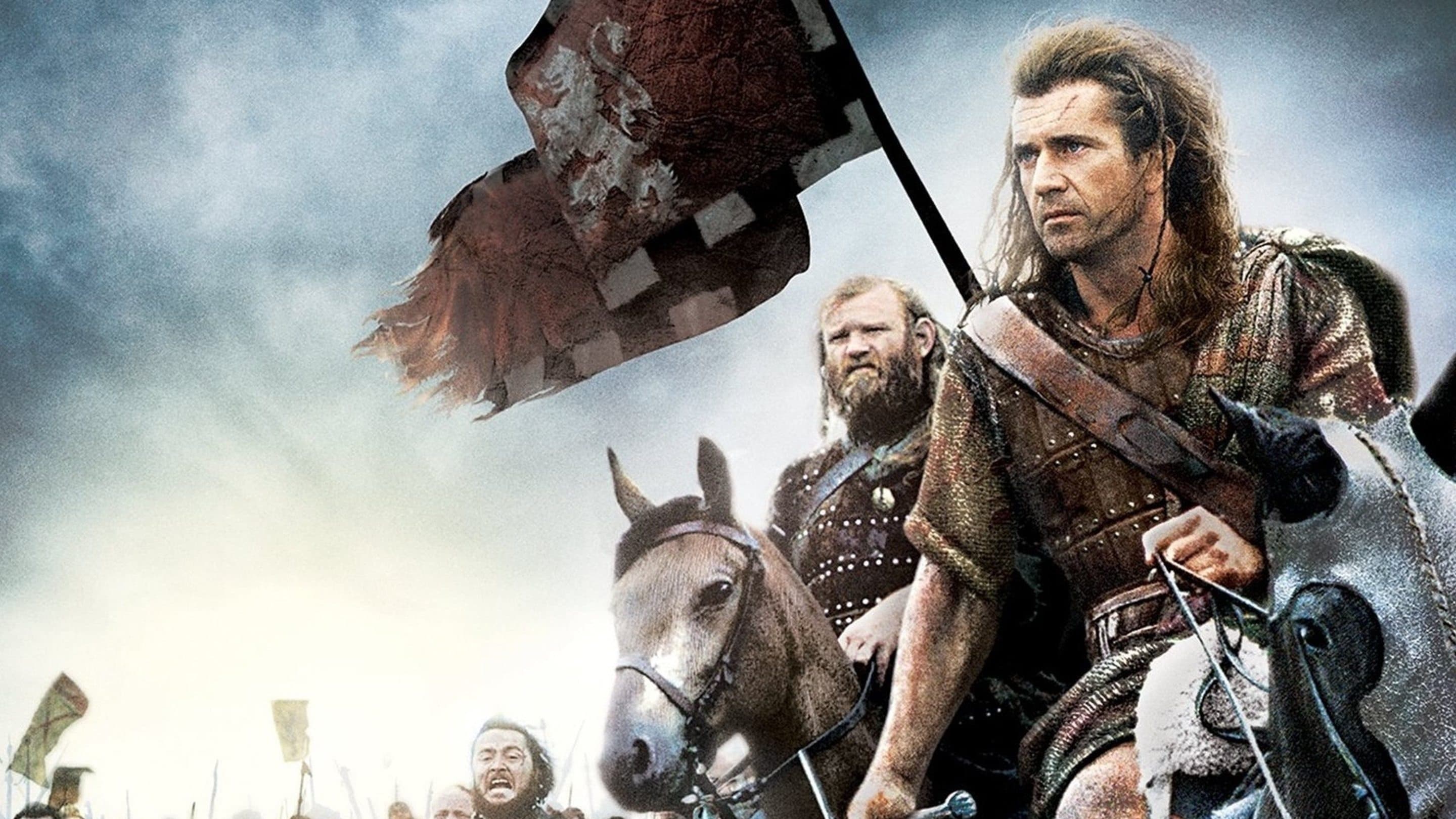
In 13th-century Scotland, William Wallace leads his countrymen in a rebellion against English king Edward I, who has imposed his cruel rule over Scotland. With his men outnumbered and outmatched, Wallace turns to revolutionary tactics, scoring decisive victories at the Battle of Stirling Bridge while inspiring a nation to fight for its freedom.
What Is the Budget of Braveheart (1995)?
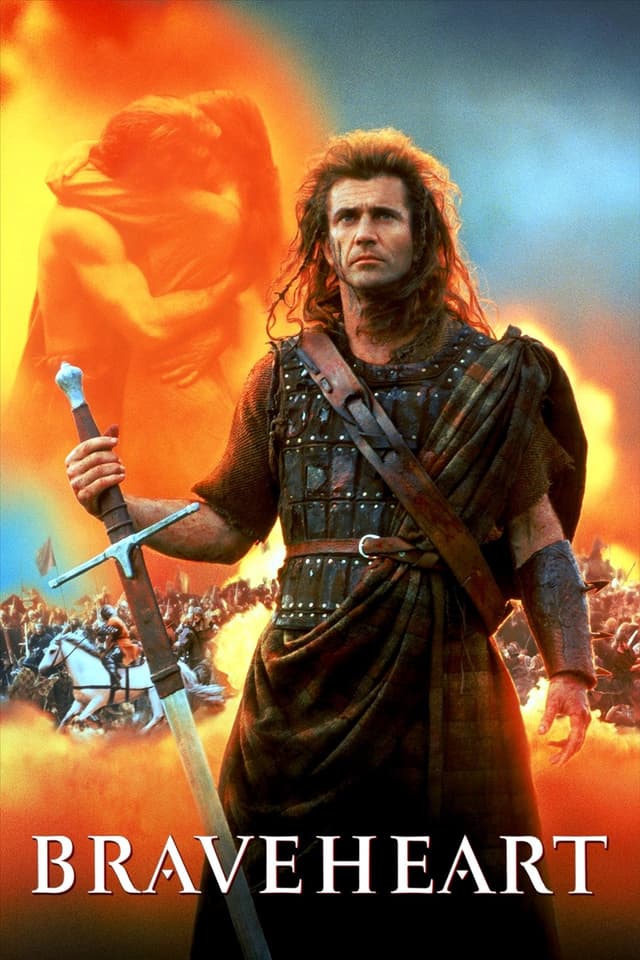
Braveheart (1995), directed by and starring Mel Gibson, had a production budget of $72,000,000. Financing the epic required an unconventional two-studio deal: Paramount Pictures funded one-third of the production for North American distribution rights, while 20th Century Fox financed the remaining two-thirds in exchange for international distribution. The split arrangement was necessary after Warner Bros. refused to greenlight the project unless Gibson agreed to make another Lethal Weapon installment, a condition he flatly declined.
At $72 million in 1995 dollars, Braveheart was a large-scale production by the standards of its era. The budget encompassed thousands of costumed extras recruited from the Irish Army Reserve, elaborate practical battle sequences shot across Scotland and Ireland, and a sweeping orchestral score recorded with the London Symphony Orchestra. Gibson also benefited from significant cost savings by shooting in Ireland, where the government offered tax incentives and access to 1,600 Army Reserve soldiers as extras, allowing the same personnel to double for both the Scottish and English armies.
Key Budget Allocation Categories
The $72,000,000 budget was deployed across several major cost centers that defined the production's epic scale:
- Cast and Talent: Gibson took scale pay as director while also starring as William Wallace, minimizing above-the-line costs. Patrick McGoohan, Sophie Marceau, and Brendan Gleeson rounded out the principal cast.
- Extras and Battle Logistics: The Irish Army Reserve provided 1,600 soldiers at heavily subsidized rates across multiple weeks of filming. Gibson used the same extras for both sides of battles, cutting costs substantially.
- Costumes and Wardrobe: Period-accurate Highland and medieval English garb for thousands of background performers represented a significant wardrobe department expenditure.
- Practical Stunts and Action: Large-scale cavalry charges, siege sequences, and hand-to-hand combat were executed with real horses and stunt performers, with minimal CGI augmentation.
- Score and Music: Composer James Horner recorded the film's iconic soundtrack with the London Symphony Orchestra. The score became one of the best-selling film soundtracks of 1995.
- Production Design and Sets: The team constructed period fortifications and village sets across Scottish Highland locations and Irish countryside, with interiors filmed at Ardmore Studios near Dublin.
How Does Braveheart's Budget Compare to Similar Films?
Braveheart's $72 million investment placed it among the largest historical epics of the mid-1990s. Here is how it compared to contemporaneous and later films in the genre:
- Rob Roy (1995): Budget $28M | Worldwide $31.5M. Released the same year as Braveheart and covering adjacent Scottish history, Rob Roy operated at less than half the budget and earned less than half as much, illustrating how Gibson's scale and star power amplified returns.
- Braveheart (1995): Budget $72M | Worldwide $210.4M. The film returned approximately $138 million over its production cost, before accounting for marketing, making it one of the decade's most profitable historical epics.
- Gladiator (2000): Budget $103M | Worldwide $460.6M. Gladiator proved the historical action epic could command even higher budgets post-Braveheart, and its success was partly attributed to the appetite Braveheart had built for the genre.
- Kingdom of Heaven (2005): Budget $130M | Worldwide $211.7M. Ridley Scott's Crusades epic matched Braveheart's worldwide take on a significantly higher budget, but the director's cut restored critical reputation.
- 300 (2006): Budget $65M | Worldwide $456.1M. Zack Snyder's stylized ancient warfare film showed how digital production methods could achieve comparable spectacle for less money a decade later.
Braveheart (1995) Box Office Performance
Braveheart opened on May 24, 1995, in a limited release before expanding wide on Memorial Day weekend. In its opening weekend it earned approximately $9.9 million from 1,364 theaters, a modest start that belied the film's eventual commercial strength. Word of mouth and the Academy Awards campaign drove sustained theatrical legs through the summer and fall.
Box Office Breakdown
Braveheart (1995)

Braveheart ultimately generated approximately $2.92 for every $1 invested in production. Domestic receipts reached $75.5 million while international markets contributed $133.5 million, demonstrating the film's strong appeal outside North America. When home video, television licensing, and ancillary revenues are factored in, the film became a substantial long-term earner for both Paramount and Fox.
The film's theatrical run was also extended by its Oscar nominations in November 1995 and its five wins at the 68th Academy Awards in March 1996, which spurred re-releases and renewed audience interest. Braveheart remains a reliable title in the historical epic genre for catalog sales and streaming licensing.
Braveheart (1995) Production History
The origins of Braveheart trace back to screenwriter Randall Wallace, who was inspired by a statue of William Wallace he encountered during a trip to Edinburgh in 1983. Wallace researched the 13th-century Scottish knight for years before completing his original screenplay. Producer Alan Ladd Jr. acquired the script through MGM-Pathe Communications, but when MGM underwent corporate upheaval in 1993 and new management arrived, Ladd departed the studio and took the Braveheart project with him.
Mel Gibson was not the first choice to direct. Terry Gilliam was offered the helm but declined. Gibson, who initially passed on the script after his first read, reconsidered and ultimately committed to both directing and starring. He considered casting Brad Pitt as William Wallace and himself in a supporting role, but reversed the decision to take the lead himself. With Gibson attached in both capacities, the project attracted dual financing from Paramount and Fox when Warner Bros. declined without a Lethal Weapon commitment.
Principal photography ran from June 6 to October 28, 1994. Scotland provided the iconic Highland landscapes around Loch Leven and Glen Coe, while the Irish government offered access to 1,600 Army Reserve soldiers as extras and favorable tax conditions at Ardmore Studios near Dublin. Gibson filmed the same extras in identical costumes from different angles to portray both Scottish and English forces, a practical cost-saving measure. The Irish Army soldiers proved highly disciplined extras, though Gibson noted several were equipped with wristwatches and sunglasses that had to be continuously removed between takes.
Gibson revealed in later interviews that a cavalry charge during the Battle of Stirling sequence nearly resulted in his death when a horse veered unexpectedly; his stunt double intervened at the last moment. The initial assembly cut ran approximately 195 minutes. Paramount chief Sherry Lansing requested edits to reduce the runtime to 177 minutes for wide release. James Horner, who had previously collaborated with Gibson, composed the orchestral score in fewer than three weeks, recording it with the London Symphony Orchestra in a session that Gibson attended personally.
Awards and Recognition
Braveheart received ten nominations at the 68th Academy Awards ceremony held on March 25, 1996, and won five, a rare achievement for a film with no acting nominations:
- Academy Award, Best Picture: Won. Produced by Mel Gibson, Alan Ladd Jr., and Bruce Davey.
- Academy Award, Best Director: Won. Mel Gibson became the second actor-director to win in this category.
- Academy Award, Best Cinematography: Won. John Toll, who had won the year prior for Legends of the Fall.
- Academy Award, Best Sound Effects Editing: Won. Lon Bender and Per Hallberg.
- Academy Award, Best Makeup: Won. Peter Frampton, Paul Pattison, and Lois Burwell.
- Academy Award nominations (not won): Best Original Screenplay (Randall Wallace), Best Film Editing, Best Costume Design, Best Original Score (James Horner), Best Sound.
Beyond the Oscars, Braveheart earned a Golden Globe for Best Director for Gibson, the Writers Guild of America Award for Best Original Screenplay, and three BAFTA Awards including Best Cinematography, Best Costume Design, and Best Sound. The American Cinema Editors honored it with the Eddie Award for Best Edited Feature Film (Dramatic). The film has been noted historically as the ninth Best Picture winner in Academy history to receive no acting nominations.
Critical Reception
Braveheart opened to a divided but ultimately favorable critical response. On Rotten Tomatoes the film holds a 78% approval rating based on 140 reviews, with an average score of 7.4 out of 10. Metacritic calculated a score of 68 out of 100 based on 20 reviews, indicating generally favorable notices. Audiences gave the film a CinemaScore of A-.
Roger Ebert of the Chicago Sun-Times awarded three and a half out of four stars, describing Braveheart as 'an action epic with the spirit of the Hollywood swordplay classics' and praising Gibson's direction of the large-scale battle sequences. Caryn James of The New York Times called it 'one of the most spectacular entertainments in years,' highlighting the emotional arc of Wallace's journey. CNN later cited the Battle of Stirling as one of cinema's finest battle sequences.
Dissenting voices were notable. Richard Schickel of Time magazine criticized Gibson's 'self-indulgence' as director-star. Alex von Tunzelmann of The Guardian assigned a C- grade, writing that the film 'serves up a great big steaming haggis of lies' in reference to its significant historical liberties, including the anachronistic kilts and the invented romantic subplot involving Princess Isabella of France. Nonetheless, Empire magazine placed Braveheart on its list of the 100 Greatest Films, even as it also appeared on lists of controversial Best Picture choices. The film's historical inaccuracies have been a subject of ongoing academic and popular debate, but its cinematic power and emotional impact continue to draw audiences decades after its release.
Frequently Asked Questions
How much did Braveheart (1995) cost to make?
Braveheart had a production budget of $72,000,000. The film was co-financed by Paramount Pictures, which held North American distribution rights, and 20th Century Fox, which covered international distribution. Mel Gibson directed and starred, helping control above-the-line costs while the budget went primarily to battle sequences, thousands of extras from the Irish Army Reserve, and period production design.
How much did Braveheart make at the box office?
Braveheart earned $210,409,945 worldwide. Domestic receipts reached $75.5 million and international markets contributed $133.5 million. The film had a slow opening weekend of roughly $9.9 million but built strong word of mouth and benefited from extended theatrical runs following its Academy Awards campaign in early 1996.
Was Braveheart profitable?
Yes. Against a $72 million production budget and an estimated $35 million in prints and advertising, Braveheart generated a worldwide gross of over $210 million, returning roughly $2.92 for every $1 spent on production. Long-term home video, television, and streaming revenues added substantially to those returns.
How many Oscars did Braveheart win?
Braveheart won five Academy Awards at the 68th Oscars ceremony in 1996: Best Picture, Best Director (Mel Gibson), Best Cinematography (John Toll), Best Sound Effects Editing, and Best Makeup. The film was nominated for ten awards in total. Notably, it is one of the few Best Picture winners in history to receive no acting nominations.
Where was Braveheart filmed?
Braveheart was filmed primarily in Scotland and Ireland between June and October 1994. Scottish locations included the Highlands around Loch Leven and Glen Coe for the sweeping outdoor battle sequences. The majority of interior scenes and additional exterior work were shot in Ireland, with Ardmore Studios near Dublin serving as the main production base. The Irish government provided 1,600 Army Reserve soldiers as extras and significant tax incentives.
What was Braveheart's Rotten Tomatoes score?
Braveheart holds a 78% approval rating on Rotten Tomatoes based on 140 reviews, with an average score of 7.4 out of 10. The Metacritic score is 68 out of 100. Audiences gave the film a CinemaScore of A-, indicating strong positive response from general moviegoers.
Filmmakers
Braveheart (1995)

Build budgets like this one in Saturation
Start from an industry-standard feature film template, import the schedule and rates you already have, and let the cost report keep itself current as you spend. Real-time collaboration, no spreadsheets.