Trouble with the Curve Budget
 Drama
DramaUpdated
Synopsis
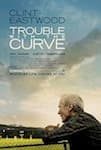
Aging baseball scout Gus Lobel is losing his eyesight, threatening the career he has spent decades building for the Atlanta Braves. His estranged adult daughter Mickey, a lawyer up for partner at her firm, reluctantly joins him on a North Carolina scouting trip to evaluate a young hitting prospect, and along the way the two confront the long-buried wounds that drove them apart.
What Is the Budget of Trouble with the Curve (2012)?
Trouble with the Curve (2012), the directorial debut of longtime Clint Eastwood assistant director and producer Robert Lorenz, was produced on a reported budget of $58,400,000. Warner Bros. Pictures financed the project through Eastwood's Malpaso Productions, the production company that had delivered Mystic River, Million Dollar Baby, Gran Torino, Invictus, and other Eastwood vehicles to Warner Bros. across the 2000s and early 2010s. The film marked Eastwood's first appearance as a lead actor in a film he did not direct since In the Line of Fire (1993), with Lorenz taking the directorial reins after serving as assistant director and producer on more than a decade of Eastwood's work.
The $58,400,000 figure reflected the production scale required for a major-studio drama with three above-the-line names (Eastwood, Amy Adams, and Justin Timberlake), Atlanta and North Carolina location work, and Tom Stern's naturalistic location-friendly cinematography that had defined the Eastwood-Malpaso visual signature. The budget also covered Marco Beltrami's replacement score (taking over from Eastwood's longtime collaborator Lennie Niehaus), MLB licensing for the Atlanta Braves uniforms and stadium photography, and a roughly seven-week shooting schedule across Georgia.
Key Budget Allocation Categories
Trouble with the Curve's $58,400,000 budget was distributed across several core production areas:
- Above-the-Line Talent: Clint Eastwood received an established veteran lead-acting fee, his first since In the Line of Fire (1993) for a film he did not direct. Amy Adams, coming off The Fighter (2010) and The Master (2012), commanded an A-list dramatic-lead rate. Justin Timberlake was paid at established featured-player rates. Director Robert Lorenz, in his feature directing debut, received a first-time-director fee, with his assistant director and producer history with Eastwood underwriting the studio's trust in him.
- Atlanta and North Carolina Locations: Principal photography ran from March to May 2012 in Atlanta, Georgia, and across the Carolinas, with location work in Asheville, Macon, and various rural baseball-diamond locations standing in for high-school and minor-league scouting trips. The Georgia Entertainment Industry Investment Act and North Carolina film tax credits offset costs against a Los Angeles-based shoot.
- MLB Licensing and Wardrobe: The Atlanta Braves licensing deal allowed the production to use the team's name, uniforms, logos, and Turner Field stadium for the climactic baseball-scouting sequence. The licensing cost, combined with Major League Baseball clearance for the broader baseball-environment footage, represented a meaningful sport-IP line item.
- Cinematography: Cinematographer Tom Stern (Mystic River, Million Dollar Baby, Changeling) shot the film on 35mm with the desaturated naturalistic palette that had defined his Eastwood-Malpaso collaborations. Day-exterior coverage at multiple baseball diamonds required portable lighting packages and weather contingencies.
- Production Design: Production designer James J. Murakami built the Gus Lobel home in suburban Atlanta, the law-firm interior used for Mickey's subplot, and the various small-town hotels and diners that punctuate the road-trip structure. Period and contemporary baseball memorabilia populated the scouting-life set decoration.
- Score and Music: Composer Marco Beltrami (3:10 to Yuma, The Hurt Locker) replaced Eastwood's longtime collaborator Lennie Niehaus, recording a more contemporary orchestral score that included Americana motifs and acoustic textures. Eastwood himself wrote and performed a song on the soundtrack.
- Post-Production: Editors Joel Cox and Gary Roach, both regular Eastwood collaborators, cut the film through the summer of 2012 for a September 21 release. The relatively short post-production window followed Eastwood's established practice of efficient turnaround.
How Does Trouble with the Curve's Budget Compare to Similar Films?
At $58,400,000, Trouble with the Curve sat in the middle of the contemporary baseball-and-sports-drama tier. The comparison set illustrates how its commercial outcome stacked up:
- Moneyball (2011): Budget $50,000,000 | Worldwide $110,206,216. Sony's Brad Pitt-led baseball drama released a year before Trouble with the Curve cost 14% less and earned more than twice the worldwide gross, the genre benchmark for the early 2010s.
- Million Dollar Baby (2004): Budget $30,000,000 | Worldwide $216,763,646. Eastwood's Best Picture winner cost roughly half what Trouble with the Curve spent and earned more than four times the worldwide gross, the upper ceiling for an Eastwood-led sports drama.
- Gran Torino (2008): Budget $33,000,000 | Worldwide $269,958,228. Eastwood's contemporary urban drama cost 43% less than Trouble with the Curve and earned more than five times the worldwide gross, illustrating how an Eastwood directorial vehicle outperformed a Lorenz-directed Eastwood vehicle by a wide margin.
- The Mule (2018): Budget $50,000,000 | Worldwide $174,800,000. Eastwood's later Warner Bros. drama, in which he both directed and starred, cost 14% less than Trouble with the Curve and earned more than three times the worldwide gross.
- 42 (2013): Budget $40,000,000 | Worldwide $97,500,000. Warner Bros.' Jackie Robinson biopic released the following spring cost 31% less than Trouble with the Curve and earned nearly twice the worldwide gross, suggesting Warner Bros.' baseball-genre appetite was tied to higher-concept material.
Trouble with the Curve Box Office Performance
Trouble with the Curve opened on September 21, 2012, in 3,212 theaters and earned $12,162,040 over its opening weekend, finishing third behind End of Watch and House at the End of the Street. The opening was soft for a Clint Eastwood-led film, well below the $29,484,789 debut of Gran Torino (2008) and the $11,201,074 debut of J. Edgar (2011) on which Eastwood served only as director.
Against a $58,400,000 production budget, the film needed approximately $130,000,000 in worldwide gross to reach profitability after marketing and distribution costs. Here is the financial breakdown:
Box Office Breakdown
Trouble with the Curve

Trouble with the Curve returned approximately $0.45 in worldwide theatrical revenue for every $1 invested when measured against total estimated production and marketing spend, registering as one of the highest-profile commercial misses of the 2012 fall season. The domestic share of the gross was $35,800,000 against an international share of $13,200,000, a 73/27 split heavily weighted toward North America and indicative of the limited overseas market for a baseball-centric drama led by a 82-year-old American star.
Warner Bros. absorbed the theatrical loss, though home video and television revenue partially offset the shortfall. The film's commercial disappointment ended Robert Lorenz's feature directing arc at Warner Bros. for nearly a decade. Lorenz did not return to feature directing until The Marksman (2021) at Open Road, also a Liam Neeson-led release. Eastwood pivoted to American Sniper (2014) as his next directorial project, returning to a more commercially successful template.
Trouble with the Curve Production History
Development on Trouble with the Curve began at Warner Bros. in 2011 with a spec screenplay by Randy Brown that Eastwood's Malpaso Productions optioned. Robert Lorenz, who had served as Eastwood's assistant director and second-unit director on Mystic River, Million Dollar Baby, Flags of Our Fathers, Letters from Iwo Jima, Changeling, Gran Torino, Invictus, Hereafter, and J. Edgar, was offered his first feature directing assignment as Eastwood agreed to star in a film he would not direct. The arrangement marked a planned succession move within the Malpaso production family.
Casting Amy Adams as Mickey Lobel in late 2011, coming off The Fighter and The Master, gave the film a contemporary A-list dramatic anchor opposite Eastwood. Justin Timberlake, in a featured supporting role as a former pitcher turned scout, brought a third demographic. Eastwood's son Scott Eastwood took a small role, an early film appearance that preceded his Suicide Squad and Fury work later in the decade. Casting director Geoffrey Miclat handled the broader scout, player, and small-town-Carolina ensemble.
Principal photography ran from March 19, 2012 to May 5, 2012 in Atlanta, Georgia, and across the Carolinas, with location work in Asheville, Macon, and various rural baseball diamonds standing in for high-school and minor-league scouting trips. The Georgia Entertainment Industry Investment Act's 20% transferable tax credit (plus 10% logo uplift) and North Carolina's contemporary 25% film tax credit offset costs against a Los Angeles-based shoot. The Atlanta Braves licensing deal allowed the production to film at Turner Field for the climactic scouting-tournament sequence.
Post-production ran through the summer of 2012 with editors Joel Cox and Gary Roach cutting on Eastwood's established efficient turnaround. Composer Marco Beltrami took over scoring duties from Eastwood's longtime collaborator Lennie Niehaus, recording a more contemporary orchestral score. The film opened wide on September 21, 2012, positioned as a Warner Bros. counter-program to the fall studio prestige releases.
Awards and Recognition
Trouble with the Curve received minimal awards recognition. Amy Adams received a Satellite Award nomination for Best Actress in a Motion Picture, Drama, her only major nomination for the role. The film received an AARP Movies for Grownups Award for Best Movie for Grownups Who Refuse to Grow Up, recognizing its older-audience target demographic.
Eastwood's lead performance received no significant industry nominations, in contrast to the awards traction he had earned for Million Dollar Baby and Gran Torino. The film received no Academy Award, Golden Globe, BAFTA, or Screen Actors Guild nominations, marking the lowest awards profile for an Eastwood-led film in more than a decade. The directorial debut for Robert Lorenz also went unrecognized at major industry ceremonies.
Critical Reception
Trouble with the Curve received mixed reviews. The film holds a 52% approval rating on Rotten Tomatoes based on 188 critic reviews, with a critical consensus that praised the cast while criticizing the formulaic and sentimental screenplay. On Metacritic, the film scored 57 out of 100, indicating mixed-to-positive reviews. Audiences surveyed by CinemaScore gave the film a B+, indicating a generally favorable response from the older-skewing audience that turned out for the September 2012 release.
Critics praised Amy Adams' grounded performance as Mickey Lobel, John Goodman's supporting work as Gus's long-time friend Pete Klein, and Eastwood's comfortable rapport with the material. Roger Ebert gave the film three out of four stars and wrote that it "doesn't do anything new, but it does what it does so well that I came away convinced," while The New York Times' Manohla Dargis flagged the film as "Mr. Eastwood, the gruff old timer, in a comfort zone he has earned."
Detractors objected to the screenplay's reliance on familiar absent-father, estranged-daughter beats, a romantic subplot between Mickey and Justin Timberlake's character that critics found underdeveloped, and a Moneyball-rebutting analytical-scouting subplot that arrived a year after Moneyball had won the genre conversation. Variety's Justin Chang called the film "an old-school baseball movie with old-school problems," and The Hollywood Reporter's Todd McCarthy wrote that the film "feels designed for an audience that already agrees with its conclusions." The film's critical reputation has stabilized as a competent but minor entry in Eastwood's late-career filmography.
Frequently Asked Questions
How much did it cost to make Trouble with the Curve (2012)?
The reported production budget was $58,400,000. Warner Bros. Pictures financed the project through Clint Eastwood's Malpaso Productions, which had delivered Mystic River, Million Dollar Baby, Gran Torino, and Invictus to the studio across the 2000s.
How much did Trouble with the Curve earn at the box office?
The film grossed $35,800,000 domestically and $13,200,000 internationally, for a worldwide total of $49,000,000. It opened to $12,162,040 over its September 21, 2012 weekend, finishing third behind End of Watch and House at the End of the Street.
Was Trouble with the Curve a box office flop?
Yes. Against an estimated $98,000,000 to $108,000,000 total investment (production plus marketing), the film returned approximately $0.45 in worldwide gross for every $1 invested, registering as one of the highest-profile commercial misses of the 2012 fall season. Warner Bros. absorbed the theatrical loss.
Who directed Trouble with the Curve?
Robert Lorenz directed the film, his feature directorial debut. Lorenz had served as Clint Eastwood's assistant director and producer on more than a decade of Eastwood's work, including Mystic River, Million Dollar Baby, Gran Torino, Invictus, and J. Edgar. Trouble with the Curve was planned as a succession move within the Malpaso production family.
Did Clint Eastwood direct Trouble with the Curve?
No. Trouble with the Curve marked Eastwood's first lead acting role in a film he did not direct since In the Line of Fire (1993). Robert Lorenz directed, with Eastwood serving as a producer through his Malpaso Productions company alongside Lorenz and Michele Weisler.
Where was Trouble with the Curve filmed?
Principal photography ran from March 19, 2012 to May 5, 2012 in Atlanta, Georgia, and across the Carolinas, with location work in Asheville, Macon, and various rural baseball diamonds standing in for high-school and minor-league scouting trips. The Atlanta Braves licensing deal allowed the production to film at Turner Field.
How does Trouble with the Curve compare to other Clint Eastwood films?
Trouble with the Curve cost $58.4M and earned $49M worldwide, well behind Eastwood's other Warner Bros. dramas: Million Dollar Baby ($30M / $217M), Gran Torino ($33M / $270M), and The Mule ($50M / $175M). It marks one of the lowest commercial returns of any Eastwood-led release of the 2000s and 2010s.
How does Trouble with the Curve compare to Moneyball?
Trouble with the Curve cost $58.4M and earned $49M worldwide, while Moneyball (2011) cost $50M and earned $110M. Trouble with the Curve's analytical-scouting-rebuttal subplot arrived a year after Moneyball had won the genre conversation, a timing problem that critics flagged in reviews.
What did critics think of Trouble with the Curve?
The film received mixed reviews, with a 52% approval rating on Rotten Tomatoes (based on 188 critics) and a 57 out of 100 Metacritic score. Audiences gave it a B+ CinemaScore. Critics praised Amy Adams' grounded performance and John Goodman's supporting work, while detractors objected to the formulaic screenplay and underdeveloped romantic subplot with Justin Timberlake.
Did Trouble with the Curve win any awards?
No. The film received no major awards wins. Amy Adams received a Satellite Award nomination for Best Actress in a Motion Picture, Drama. The film received an AARP Movies for Grownups Award for Best Movie for Grownups Who Refuse to Grow Up. Eastwood's lead performance received no significant industry nominations.
Filmmakers
Trouble with the Curve

Build budgets like this one in Saturation
Start from an industry-standard feature film template, import the schedule and rates you already have, and let the cost report keep itself current as you spend. Real-time collaboration, no spreadsheets.