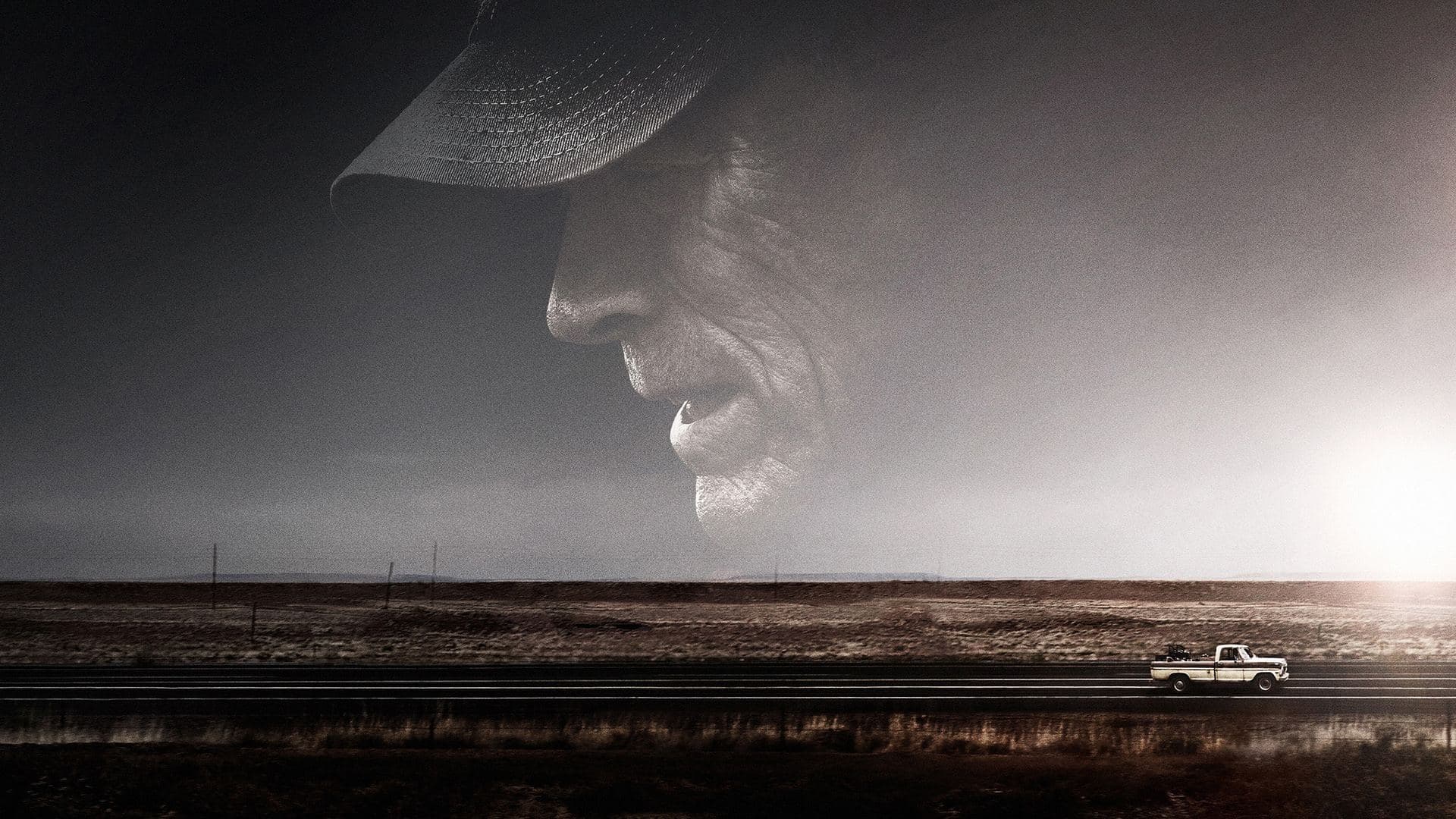
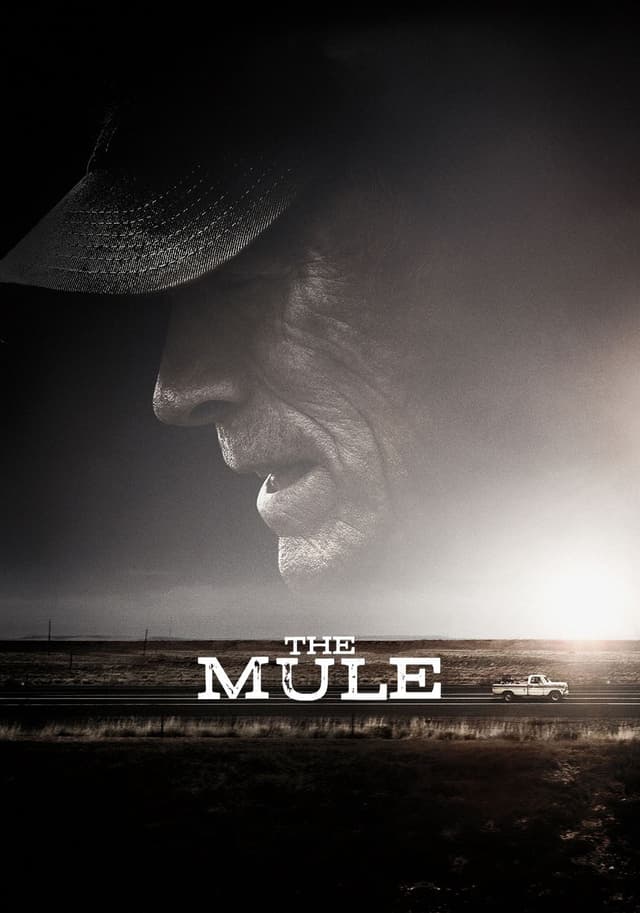
The Mule Budget
 CrimeDrama1h 56m
Updated
Synopsis
Earl Stone, a man in his eighties, is broke, alone, and facing foreclosure of his business when he is offered a job that simply requires him to drive. Easy enough, but, unbeknownst to Earl, he's just signed on as a drug courier for a Mexican cartel. He does so well that his cargo increases exponentially, and Earl hit the radar of hard-charging DEA agent Colin Bates.
What Is the Budget of The Mule?
The Mule was produced on an estimated budget of $50 million, financed and distributed by Warner Bros. Pictures. For a drama built around a single character arc rather than set pieces or visual effects, the figure reflects the premium attached to Clint Eastwood as both director and star. Eastwood was 88 years old during production, making this one of the most expensive films ever headlined by an octogenarian actor.
A significant share of the budget went toward securing the ensemble cast, which included Bradley Cooper, Laurence Fishburne, Michael Pena, Dianne Wiest, and Andy Garcia alongside Eastwood. The remainder covered a multi-state production footprint spanning Georgia and New Mexico, period-appropriate production design, and Eastwood's signature efficient shooting schedule that historically keeps costs under control.
Key Budget Allocation Categories
- Above-the-Line Talent accounted for the largest portion of the budget. Eastwood commanded fees for both directing and starring, while the supporting cast of A-list and veteran actors required competitive compensation packages.
- Production and Location Filming covered principal photography across Atlanta, Georgia and Las Cruces, New Mexico. Eastwood's films typically shoot on practical locations rather than soundstages, which involves travel, local crew hires, and location permits across multiple states.
- Production Design and Period Detail required recreating environments spanning over a decade of Earl Stone's life, from his thriving horticulture business to its decline, along with period-accurate vehicles, wardrobe, and set dressing for scenes set across the American Southwest and Midwest.
- Post-Production and Score encompassed editing under Eastwood's longtime collaborator Joel Cox, color grading, sound mixing, and an original score. Eastwood's lean post-production approach typically limits this category to a modest share of the total budget.
- Marketing and Distribution costs were handled separately by Warner Bros. and are not included in the production budget. The studio positioned The Mule as a holiday-season release targeting adult audiences, a demographic underserved during the blockbuster-heavy winter corridor.
How Does The Mule's Budget Compare to Similar Films?
At $50 million, The Mule sits in the mid-range for character-driven dramas with star power. Comparing it to films with similar profiles reveals how Eastwood's efficiency and star value shape production economics.
- Gran Torino (2008) had an estimated budget of $33 million and earned $270 million worldwide. Eastwood's previous starring vehicle demonstrated that his name alone could drive significant returns on a modest investment, establishing the template The Mule would follow a decade later.
- American Made (2017) cost approximately $50 million and grossed $134 million worldwide. Tom Cruise starred in this similarly true-crime-inspired drama about drug trafficking, offering a direct budget comparison for star-driven stories based on real smuggling operations.
- A Star Is Born (2018) was produced for $36 million and earned $436 million globally. Released the same year by the same studio, Bradley Cooper's directorial debut proved that Warner Bros. could generate outsized returns from character dramas at moderate budgets.
- The Judge (2014) carried a $50 million budget and earned $84 million worldwide. Robert Downey Jr. and Robert Duvall headlined this courtroom drama, showing that even major star pairings in dramatic material don't guarantee The Mule's level of commercial performance.
The Mule Box Office Performance
The Mule opened on December 14, 2018 to $17.5 million domestically, a strong debut for an adult-skewing drama released against tentpole competition from Spider-Man: Into the Spider-Verse and Mortal Engines. The film held well through the holiday corridor, demonstrating the kind of sustained audience interest that blockbuster-driven release calendars rarely afford to mid-budget originals.
Domestically, The Mule earned $103,804,407, crossing the $100 million threshold that few non-franchise films achieve. International markets contributed an additional $71 million, bringing the worldwide total to $174.8 million. For a $50 million production, those numbers translate into a clear financial success for Warner Bros.
Box Office Breakdown
The Mule

The Mule Production History
The Mule is based on the true story of Leo Sharp, an 87-year-old World War II veteran and award-winning horticulturist from Michigan who became the oldest known drug mule for the Sinaloa Cartel. Sharp's story was first reported in a 2014 New York Times Magazine article by Sam Dolnick titled "The Sinaloa Cartel's 90-Year-Old Drug Mule," which caught the attention of screenwriter Nick Schenk.
Schenk, who had previously written Gran Torino for Eastwood, adapted the article into a screenplay originally titled "The Runner." The project was initially developed with Eastwood attached only to direct, but he ultimately decided to star as well, marking his return to acting after a six-year absence following Trouble with the Curve (2012). At 88, Eastwood became one of the oldest leading men in major studio history.
Principal photography began in June 2018 in Atlanta and surrounding areas of Georgia, with additional filming in Las Cruces, New Mexico. True to Eastwood's reputation for speed, the shoot wrapped in approximately 40 days. Eastwood rarely shoots more than two takes per scene, a discipline that keeps production on schedule and under budget. Warner Bros. fast-tracked post-production to secure a December 14, 2018 release date, positioning the film as counter-programming against the holiday season's franchise tentpoles.
Awards and Recognition
The Mule received modest awards attention, with most recognition centering on Eastwood's continued vitality as both a filmmaker and actor approaching his ninth decade. The film was not a major contender during the 2018-2019 awards season, which was dominated by Green Book, Roma, and A Star Is Born.
Eastwood received a nomination for Best Actor at the Saturn Awards, and the film earned nods from several regional critics' circles. The African-American Film Critics Association nominated it for Best Picture. While the film did not break through to Oscar contention, its commercial performance reaffirmed Eastwood's singular position in Hollywood as a filmmaker whose name alone constitutes a viable marketing campaign.
Critical Reception
The Mule holds a 69% approval rating on Rotten Tomatoes based on 274 reviews, with a consensus praising Eastwood's screen presence while noting the film's uneven storytelling. On Metacritic, the film scored 58 out of 100, indicating mixed-to-positive reviews from the critical establishment.
Critics who championed the film highlighted Eastwood's effortless charm in the role of Earl Stone, a character whose stubbornness and late-life reckoning mirrored themes Eastwood has explored across decades of work. The performance carries a self-awareness that elevates what could have been a routine crime drama into something more reflective and personal.
Detractors pointed to pacing issues in the second act and a tendency to rely on familiar Eastwood tropes rather than fully engaging with the moral complexity of Leo Sharp's real story. Some reviewers felt the film softened Sharp's involvement with the cartel to make Earl Stone more sympathetic. Despite these criticisms, audiences embraced the film enthusiastically, giving it an A CinemaScore and driving the kind of sustained theatrical run that few dramas achieve in the streaming era.
Frequently Asked Questions
How much did it cost to make The Mule (2018)?
The production budget was $50,000,000, covering principal photography, cast and crew salaries, locations, sets, post-production, and music. Marketing and distribution (P&A) costs are estimated at an additional $25,000,000 - $40,000,000, bringing the total studio investment to approximately $75,000,000 - $90,000,000.
How much did The Mule (2018) earn at the box office?
The Mule grossed $103,804,407 domestic, $70,995,593 international, totaling $174,800,000 worldwide.
Was The Mule (2018) profitable?
Yes. Against a production budget of $50,000,000 and estimated total costs of ~$125,000,000, the film earned $174,800,000 theatrically - a 250% ROI on production costs alone.
What were the biggest costs in producing The Mule?
The primary cost drivers were above-the-line talent (Clint Eastwood, Bradley Cooper, Laurence Fishburne); talent compensation, location cinematography, and tension-driven editorial; international production across Canada, United States of America.
How does The Mule's budget compare to similar crime films?
At $50,000,000, The Mule is classified as a mid-budget production. The median budget for wide-release crime films in the 2010s ranges from $30 - 80M for mid-budget to $150M+ for tentpoles. Comparable budgets: Angela's Ashes (1999, $50,000,000); Dredd (2012, $50,000,000); Lord of War (2005, $50,000,000).
Did The Mule (2018) go over budget?
There are no widely reported accounts of significant budget overruns for this production. However, studios rarely disclose precise budget overrun figures publicly. The reported production budget reflects the final estimated cost.
What was the return on investment (ROI) for The Mule?
The theatrical ROI was 249.6%, calculated as ($174,800,000 − $50,000,000) ÷ $50,000,000 × 100. This measures gross revenue against production budget only - it does not account for P&A or exhibitor shares.
Who directed The Mule and who were the key crew members?
Directed by Clint Eastwood, written by Nick Schenk, shot by Yves Bélanger, with music by Arturo Sandoval, edited by Joel Cox.
Where was The Mule filmed?
The Mule was filmed in Canada, United States of America. Principal photography on the film began on June 4, 2018, in Atlanta, Canton, Rome, and Augusta, Georgia. It was also shot in Las Cruces, New Mexico. [Filming] Principal photography on the film began on June 4, 2018, in Atlanta, Canton, Rome, and Augusta, Georgia.
Filmmakers
The Mule

Official Trailer
Build budgets like this one in Saturation
Start from an industry-standard feature film template, import the schedule and rates you already have, and let the cost report keep itself current as you spend. Real-time collaboration, no spreadsheets.