Triple 9 Budget
 Thriller/Suspense
Updated
Synopsis
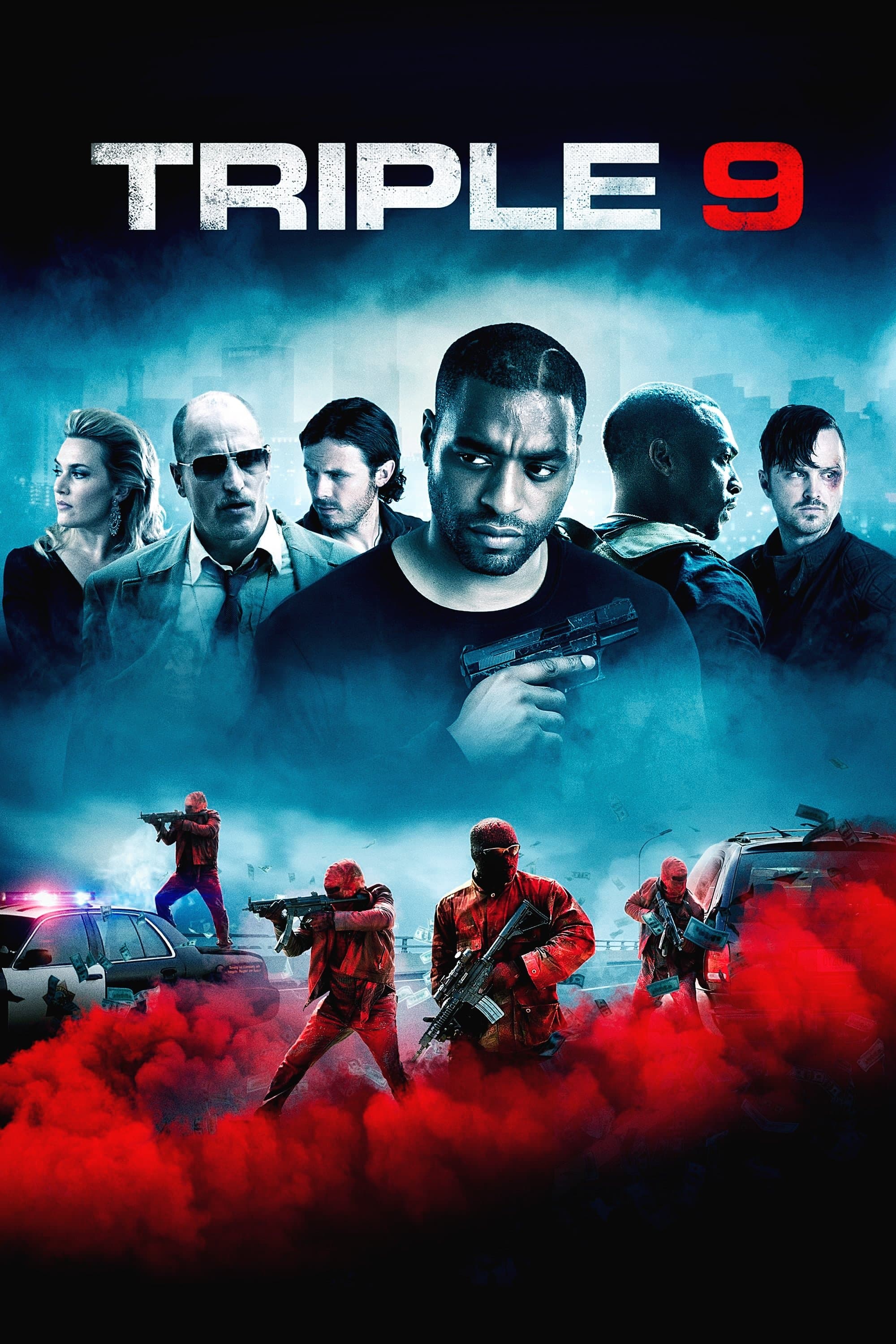
A gang of criminals and corrupt cops plan the murder of a police officer in order to pull off their biggest heist yet across town. When the brotherhood of dirty detectives lure their newest unwitting recruit into setting up the diversionary killing, the plan turns into a deadly trap that pits the suspect lawmen against their colleagues, the Russian mob, and the streets of Atlanta.
What Is the Budget of Triple 9 (2016)?
Triple 9 (2016), directed by John Hillcoat and distributed by Open Road Films, was produced on a reported budget of $20,000,000. The crime thriller was financed by an unusual consortium of independent equity sources rather than a major studio, with Worldview Entertainment, Anonymous Content, Sierra Pictures, MadRiver Pictures, and SureFire Capital each contributing pieces of the production stack. Open Road Films acquired North American distribution rights and handled the theatrical release, treating Triple 9 as a mid-budget adult crime thriller positioned in the same commercial lane as The Town and End of Watch.
The $20,000,000 figure was modest given the visible scale of the production, which included a marquee ensemble cast of ten name actors, two large heist set pieces, extensive Atlanta location work, and a complete principal photography schedule of roughly 11 weeks in the summer of 2014. The number reflected the discipline of an independent finance structure, where above-the-line compensation, location days, and post-production allocations were all negotiated tightly against pre-sales and tax incentive recoupment rather than studio overhead.
Key Budget Allocation Categories
Triple 9's reported $20,000,000 budget was distributed across several core production areas:
- Above-the-Line Ensemble: The cast included Casey Affleck, Chiwetel Ejiofor, Anthony Mackie, Aaron Paul, Woody Harrelson, Kate Winslet, Norman Reedus, Clifton Collins Jr., Gal Gadot, and Michael K. Williams. Securing ten recognizable names on a $20,000,000 budget required pay-or-play deals scaled to indie financing rather than studio rates, with several actors taking reduced fees in exchange for back-end participation or scheduling flexibility.
- Atlanta Location Shoot: Principal photography ran from May 28 to August 6, 2014, with the production based entirely in metro Atlanta. Locations included Buckhead, Decatur, Centennial Olympic Park, and a working stretch of downtown that was dressed to stand in for a fictional southeastern urban precinct. Georgia tax credits offset a meaningful portion of qualifying local spend, allowing the production to absorb the cost of multiple police vehicle convoys and street closures.
- Stunts and Practical Action: Two extended set pieces, an opening bank robbery and a midfilm housing-project SWAT raid, were staged with practical squibs, vehicle work, and live ammunition tracking rather than CGI. The film employed a full stunt unit for the bank getaway through downtown Atlanta and for the climactic shootout, including ramp-mounted SUV crashes and choreographed gunfights involving up to forty extras.
- Cinematography Package: Director of photography Nicolas Karakatsanis (Bullhead, The Drop) shot the film on Arri Alexa with anamorphic lenses to deliver a saturated, grainy palette evocative of 1970s crime thrillers. The camera and lighting package, combined with extensive night-for-night shooting and helicopter aerial coverage of the Atlanta skyline, accounted for one of the larger line items in the technical budget.
- Score and Sound Design: Atticus Ross composed the original score with collaborators Claudia Sarne, Leopold Ross, and Bobby Krlic (The Haxan Cloak), delivering an electronic-driven soundscape that mirrored the work Ross and Trent Reznor had developed on David Fincher projects. Music budget covered original composition, additional licensing of source cues, and a five-channel theatrical mix supervised at a Los Angeles dubbing stage.
- Wardrobe, Picture Vehicles, and Tactical Gear: The film required complete SWAT and patrol uniforms for two separate precinct units, body armor, breaching gear, Russian Bratva costume design for the criminal underworld subplot, and a fleet of dressed police interceptors, unmarked sedans, and armored cars. Picture vehicle leases and weapons rentals from licensed armorers were carried for the full 11-week schedule.
- Editorial and Post: Editor Dylan Tichenor (There Will Be Blood, Zero Dark Thirty) cut the film over a multi-month post period in Los Angeles, with additional ADR sessions and a moderate visual effects budget for muzzle flash compositing, environment enhancements, and a small amount of digital blood work in the third-act shootout.
How Does Triple 9's Budget Compare to Similar Films?
At $20,000,000, Triple 9 sits in the affordable mid-range for ensemble police thrillers, well below studio tentpoles but considerably more than a pure indie. The comparison set illustrates how the film fit into the genre economically:
- Sicario (2015): Budget $30,000,000 | Worldwide $84,939,492. Denis Villeneuve's cartel thriller from the year prior cost half again as much and earned more than three times Triple 9's worldwide gross, the kind of result Open Road had hoped for from the same adult-crime audience.
- Den of Thieves (2018): Budget $30,000,000 | Worldwide $80,500,000. The Gerard Butler heist film that arrived two years later spent 50% more, reached a wider audience with a January release date, and demonstrated that the ensemble cops-and-robbers premise could still find commercial traction when paced for mainstream rather than art-house viewers.
- Heat (1995): Budget $60,000,000 | Worldwide $187,436,818. Michael Mann's genre benchmark cost three times Triple 9's budget in 1995 dollars and built the modern template that Triple 9 explicitly references in its bank robbery prologue.
- The Departed (2006): Budget $90,000,000 | Worldwide $291,465,034. Martin Scorsese's undercover police drama, the most successful film in the comparison set, illustrates how much capital a major studio will commit to the corrupt-cop premise when an A-list filmmaking package is attached.
- Street Kings (2008): Budget $20,000,000 | Worldwide $66,438,162. David Ayer's LAPD corruption thriller offers the closest budget peer, earning more than three times its production cost on a similar premise and an ensemble led by Keanu Reeves and Forest Whitaker.
Triple 9 Box Office Performance
Triple 9 opened on February 26, 2016 to $6,109,085 from 2,205 theaters, finishing fifth on a weekend led by Deadpool in its third frame. The opening was soft for an R-rated crime thriller with a recognizable cast, and the film dropped 62.9% in its second weekend to $2,263,668, a steeper second-week fall than Open Road or its financing partners had projected. The film never broadened its theater count and exited the domestic top ten after its third weekend.
Against a $20,000,000 production budget, Triple 9 needed roughly $50,000,000 in worldwide gross to reach break-even after marketing and distribution costs. Here is the financial breakdown:
Box Office Breakdown
Triple 9 (2016)

Triple 9 returned approximately $0.61 in theatrical revenue for every $1 invested when measured against total estimated production and marketing spend, placing it among the more decisive mid-budget studio losses of early 2016. The domestic share of the gross was $12,639,297 against an international share of $13,304,495, an almost even 49/51 split that ran counter to most adult-crime thrillers, which typically over-index domestically.
Post-theatrical revenue from home video, premium cable, and streaming licensing helped the film recover a meaningful portion of its capital over the following 18 months, though it never reached profitability on a pure theatrical accounting. The Worldview Entertainment financing collapse later that same year, unrelated to Triple 9 but coincident with its release window, further complicated final returns for several equity holders in the production stack.
Triple 9 Production History
Matt Cook's screenplay for Triple 9 first appeared on the 2010 Black List of best unproduced scripts, where it attracted producer interest from Anonymous Content and director attachment from John Hillcoat (The Proposition, Lawless). The project moved through several casting cycles between 2011 and 2013, at various points attaching Shia LaBeouf, Charlie Hunnam, Cate Blanchett, and Michael B. Jordan before settling on the final ensemble of Casey Affleck, Chiwetel Ejiofor, Anthony Mackie, Aaron Paul, Kate Winslet, and Woody Harrelson by early 2014.
Hillcoat assembled a department-head team built around long-time collaborators and a small number of new additions, including cinematographer Nicolas Karakatsanis and editor Dylan Tichenor. Composer Atticus Ross was brought in alongside Claudia Sarne, Leopold Ross, and Bobby Krlic to develop an electronic-leaning score that contrasted with the period sound Hillcoat had used on Lawless and The Road.
Principal photography ran from May 28 to August 6, 2014 in Atlanta, Georgia, anchored by the state's 30% production tax credit. Locations included Buckhead, Decatur, Centennial Olympic Park, and a redressed stretch of downtown standing in for a fictional southeastern metropolis. Producers Bard Dorros, Marc Butan, Christopher Woodrow, Anthony Katagas, and Keith Redmon ran the production through a co-financing structure that pooled equity from Worldview, Sierra, Anonymous Content, MadRiver Pictures, and SureFire Capital, with Open Road Films closing the North American theatrical deal in 2015.
The film premiered out of competition at the Venice International Film Festival on September 9, 2015, then moved through TIFF and the Toronto crime-genre slot before its delayed theatrical release on February 26, 2016. The 17-month gap between the wrap of principal photography and domestic release reflected both an extended post production and Open Road's decision to slot the film against the Deadpool aftermath rather than into the fall awards corridor, where Hillcoat's previous film Lawless had performed modestly.
Awards and Recognition
Triple 9 received limited awards recognition, consistent with its mixed critical reception and modest commercial footprint. The film was nominated for Best Action Movie at the 22nd Critics' Choice Awards in December 2016, where it lost to Captain America: Civil War. It was also nominated for Best Editing at the 2017 American Cinema Editors Eddie Awards in the Dramatic feature category, recognizing Dylan Tichenor's work on the heist sequences.
Atticus Ross and his co-composers received a nomination from the World Soundtrack Awards for Discovery of the Year for the Triple 9 score, alongside Ross's contemporary work on Love & Mercy. The film received no Saturn Awards, no Independent Spirit Awards, and no Razzie nominations, leaving its legacy primarily as a craft showcase rather than an awards-season contender.
Critical Reception
Triple 9 received mixed reviews from critics. The film holds a 54% approval rating on Rotten Tomatoes based on 186 critic reviews, with the site's consensus reading: "Triple 9's pulpy potboiler thrills don't quite live up to the ferocious talents of its cast, but the film's efficient, solidly crafted genre fun is often enough to balance its troublesome flaws." On Metacritic, the film scored 52 out of 100 based on 41 critics, indicating mixed or average reviews. Audiences surveyed by CinemaScore gave the film a C+, a result that signaled poor word of mouth and explained the steep second-weekend drop.
Critics broadly praised the technical execution of the two major action sequences, Nicolas Karakatsanis's cinematography, and the depth of the ensemble cast, while objecting to a screenplay that scattered attention across too many characters and undercut its emotional stakes with abrupt plot turns. The Hollywood Reporter's Todd McCarthy wrote that the film "boasts an excellent cast and some bracing action sequences, but its overstuffed plot leaves several characters underdeveloped." Variety's Justin Chang called Triple 9 "a serviceable, hard-bitten crime drama whose impressive cast can't quite overcome a fragmented script."
Genre press was more receptive. Time Out's reviewer described the film as "carried off with brashness and momentum," and IndieWire's Eric Kohn praised Hillcoat's ability to "stage gritty action with a real sense of weight." The mixed reception, combined with the soft commercial performance, has cemented Triple 9's reputation as a cult cast showcase that never quite assembled into the modern Heat its premise promised.
Frequently Asked Questions
How much did it cost to make Triple 9 (2016)?
The reported production budget was $20,000,000. The film was financed by an unusual consortium of independent equity sources including Worldview Entertainment, Anonymous Content, Sierra Pictures, MadRiver Pictures, and SureFire Capital, with Open Road Films acquiring North American theatrical distribution rights.
How much did Triple 9 earn at the box office?
The film grossed $12,639,297 domestically and $13,304,495 internationally, for a worldwide total of $25,943,792. It opened to $6,109,085 in the United States, finishing fifth on its February 26, 2016 opening weekend behind Deadpool, Gods of Egypt, Kung Fu Panda 3, and Risen.
Was Triple 9 a box office bomb?
Yes, by theatrical accounting. Against a $20,000,000 production budget and an estimated $20,000,000 to $25,000,000 in marketing spend, the film returned approximately $0.61 in worldwide gross for every $1 invested. Post-theatrical revenue from home video and streaming helped recover a portion of the loss, but the film never reached profitability on pure theatrical economics.
Who directed Triple 9?
John Hillcoat directed the film, working from a screenplay by Matt Cook. Hillcoat had previously directed The Proposition (2005), The Road (2009), and Lawless (2012). Cook's Triple 9 script first appeared on the 2010 Black List of best unproduced screenplays before Hillcoat attached.
Where was Triple 9 filmed?
Principal photography took place entirely in metro Atlanta, Georgia from May 28 to August 6, 2014. Locations included Buckhead, Decatur, Centennial Olympic Park, and a redressed stretch of downtown Atlanta. The production was anchored by Georgia's 30% film production tax credit.
Who is in the cast of Triple 9?
The ensemble cast includes Casey Affleck, Chiwetel Ejiofor, Anthony Mackie, Aaron Paul, Kate Winslet, Woody Harrelson, Norman Reedus, Clifton Collins Jr., Gal Gadot, Michael K. Williams, and Teresa Palmer. The production cycled through several earlier casting attachments including Shia LaBeouf, Charlie Hunnam, Cate Blanchett, and Michael B. Jordan before settling on the final lineup.
How does Triple 9 compare to other ensemble police thrillers?
Triple 9 cost less than Sicario (2015) at $30,000,000 and Den of Thieves (2018) at $30,000,000, but grossed only $25,943,792 worldwide compared with Sicario's $84,939,492 and Den of Thieves' $80,500,000. Street Kings (2008), made on an identical $20,000,000 budget, out-grossed Triple 9 by more than 150% with $66,438,162 worldwide.
What did critics think of Triple 9?
The film received mixed reviews, with a 54% approval rating on Rotten Tomatoes based on 186 critics and a 52 out of 100 score on Metacritic. Audiences surveyed by CinemaScore gave the film a C+. Critics praised the cast and Nicolas Karakatsanis's cinematography but objected to a screenplay that scattered attention across too many characters.
Did Triple 9 win any awards?
Triple 9 was nominated for Best Action Movie at the 22nd Critics' Choice Awards in December 2016 and for Best Editing at the 2017 American Cinema Editors Eddie Awards for Dylan Tichenor's work. Atticus Ross and his co-composers received a World Soundtrack Awards Discovery of the Year nomination. The film won no major industry awards.
Why did Triple 9 underperform at the box office?
The film opened against Deadpool in its third weekend and lost the broader adult-crime-thriller audience to that release. A C+ CinemaScore signaled poor word of mouth, leading to a 62.9% second-weekend drop. Open Road's February 26, 2016 release slot, 17 months after the wrap of principal photography, also positioned the film outside the fall awards corridor where Hillcoat's previous work had performed.
Filmmakers
Triple 9 (2016)

Build budgets like this one in Saturation
Start from an industry-standard feature film template, import the schedule and rates you already have, and let the cost report keep itself current as you spend. Real-time collaboration, no spreadsheets.