Triangle of Sadness Budget
 ComedyDrama2h 27m
Updated
Synopsis
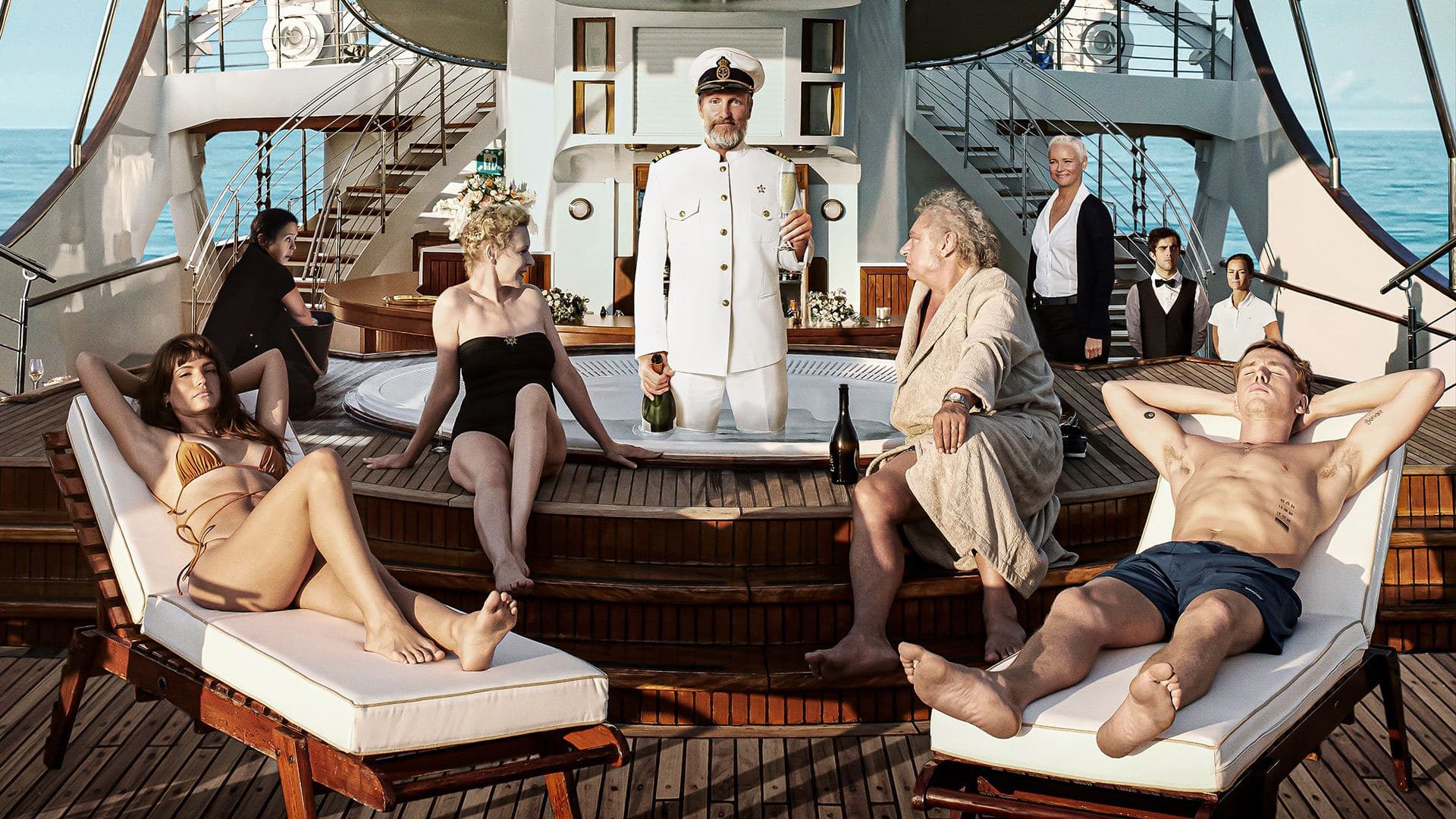
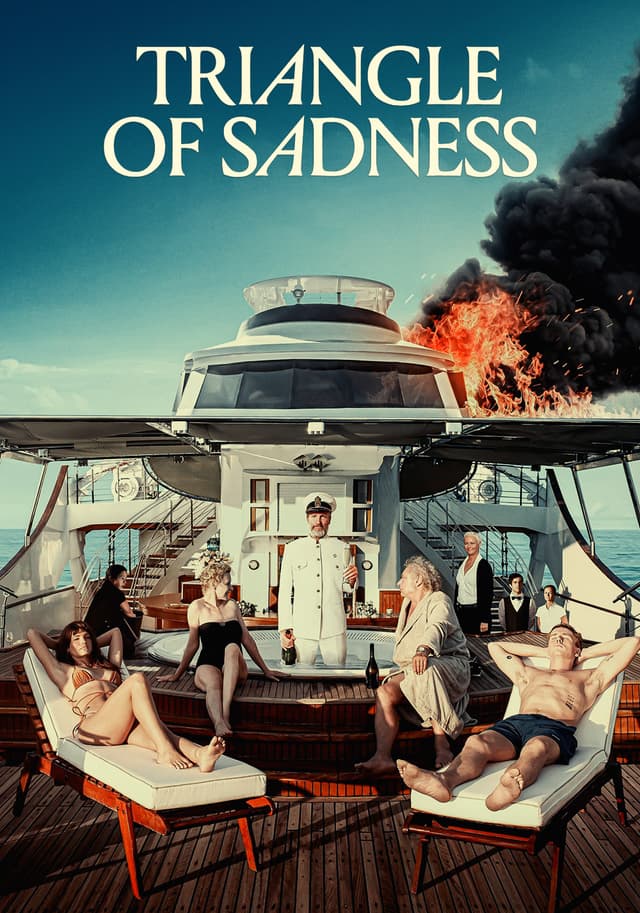
A celebrity model couple are invited on a luxury cruise for the uber-rich, helmed by an unhinged, alcoholic captain. What first appears Instagrammable ends catastrophically, leaving the survivors stranded on a desert island in a struggle of hierarchy.
What Is the Budget of Triangle of Sadness?
Triangle of Sadness was produced on an estimated budget of $8.5 million (approximately €8.5 million), a modest sum for an internationally co-produced satire with ensemble cast sequences set on a superyacht and a remote island. Writer-director Ruben Ostlund, working through his Swedish production company Plattform Produktion, assembled financing from multiple European co-producers and territories to cover the production without relying on Hollywood studio backing.
For a film that required extensive nautical set design, elaborate practical effects for its notorious seasickness sequence, and location work across multiple countries, the budget reflects efficient European co-production financing. Ostlund had built considerable industry credibility after winning the Palme d'Or for The Square in 2017, giving him leverage to secure the resources needed for his most ambitious project to date.
Key Budget Allocation Categories
- Cast and Talent: Harris Dickinson and Charlbi Dean led the ensemble as the central couple, with Woody Harrelson commanding a significant portion of the talent budget as the Marxist sea captain. Supporting players including Dolly de Leon, Zlatko Buric, and Henrik Dorsin rounded out a large ensemble that required coordination across multiple shooting blocks.
- Production Design and Set Construction: The luxury yacht interiors were constructed as practical sets rather than shot on an actual vessel, allowing greater control over the elaborate dinner and seasickness sequences. The contrast between opulent yacht decor and the stripped-down island survival setting required two distinct design approaches.
- Special Effects and Practical Stunts: The film's centerpiece vomiting and seasickness sequence demanded extensive practical effects work, including custom rigs, prosthetics, and fluid effects that were choreographed over multiple shooting days to achieve the sustained comedic horror Ostlund envisioned.
- Location and Travel: Principal photography spanned locations in Sweden, Greece, and other European territories. The island sequences required remote coastal locations, adding logistical complexity and transport costs for crew and equipment.
- Post-Production and Visual Effects: While the film favored practical effects, post-production work was needed to enhance ocean sequences, clean up practical effect shots, and composite certain yacht exterior scenes. Color grading played a key role in differentiating the three-act visual palette.
- Music and Sound Design: The sound mix was critical for the seasickness sequence, where audio cues amplify the physical comedy. The overall score and sound design balanced satirical tone with moments of genuine tension during the island survival act.
How Does Triangle of Sadness's Budget Compare to Similar Films?
- Parasite (2019): Budget $11M | Worldwide $263M. Bong Joon-ho's Palme d'Or winner operated at a slightly higher budget and achieved massive crossover commercial success, setting the modern benchmark for foreign-language prestige films breaking through globally.
- The Square (2017): Budget $5.5M | Worldwide $20M. Ostlund's previous Palme d'Or winner was made for less and earned a comparable return, establishing the template for his brand of provocative social satire funded through European co-production.
- Force Majeure (2014): Budget $4.8M | Worldwide $16M. Ostlund's earlier breakout hit demonstrated his ability to deliver high-concept premises on modest budgets, with a ski resort avalanche sequence that punched well above its financial weight.
- The Lobster (2015): Budget $4M | Worldwide $17M. Yorgos Lanthimos's absurdist social satire operated in a similar tonal and budgetary space, proving that European-produced English-language films with strong festival debuts can find meaningful theatrical audiences.
- White Lotus (Season 1, 2021): Budget approximately $30M for the season. While a television production, HBO's resort satire covered similar thematic ground and demonstrated audience appetite for sharp class commentary set in luxury environments, at a significantly higher per-episode cost.
Triangle of Sadness Box Office Performance
Triangle of Sadness earned $4,747,768 domestically and $30,073,741 worldwide during its theatrical run. Neon distributed the film in North America, opening it on a limited platform release following its Cannes premiere and Palme d'Or win, before expanding to wider release during awards season.
Using the standard break-even threshold of roughly 2x the production budget (to account for prints and advertising costs), Triangle of Sadness needed approximately $17 million to recoup. With $30 million in worldwide gross, the film comfortably cleared that mark. The ROI calculation: ($30,073,741 minus $8,500,000) divided by $8,500,000 equals approximately 254%, a strong return for a subtitled European satire released primarily through art-house channels.
International markets drove the majority of revenue, with strong performance across Europe, particularly in France, Germany, and Scandinavia. The film's Cannes pedigree and Oscar nominations sustained its theatrical life well into early 2023, and ancillary revenue from streaming licensing (Hulu acquired U.S. streaming rights) added considerably to the film's overall profitability.
Box Office Breakdown
Triangle of Sadness

Triangle of Sadness Production History
Ruben Ostlund began developing Triangle of Sadness shortly after completing The Square, drawing inspiration from his observations of the fashion industry and wealth disparity. The script went through extensive development, with Ostlund crafting the three-act structure as distinct worlds that progressively strip away the social hierarchies his characters depend on: the fashion industry, a luxury cruise, and a deserted island where survival skills matter more than status.
Casting proved pivotal to the project's identity. Harris Dickinson was cast as the male model Carl after Ostlund saw his work in Beach Rats. Charlbi Dean, a South African model and actress, won the role of Yaya through a lengthy audition process. Woody Harrelson signed on for the eccentric Captain Thomas Smith, bringing Hollywood name recognition to the European production. Dolly de Leon, a veteran Filipino actress, was cast as the toilet manager Abigail, a role that would earn her widespread critical acclaim and numerous award nominations.
Principal photography began in 2020 but was interrupted by the COVID-19 pandemic, pushing the shoot across multiple phases. Filming resumed in 2021 across locations in Sweden and Greece. The yacht sequences were shot using a combination of constructed sets and real vessel footage. The seasickness dinner scene required approximately two weeks of shooting on its own, with elaborate practical rigs to simulate the yacht's rocking motion while actors performed amid cascading fluids and physical comedy.
The film premiered in competition at the 2022 Cannes Film Festival, where it won the Palme d'Or, making Ostlund only the ninth director in history to win the award twice. The victory was not without controversy, as critical reception at the festival was divided between those who found the satire brilliant and those who considered it heavy-handed. Tragically, Charlbi Dean died on August 29, 2022, at age 32 from bacterial sepsis caused by a rare complication, just months after the film's triumphant Cannes premiere and before its wide theatrical release.
Awards and Recognition
Triangle of Sadness received three Academy Award nominations: Best Picture, Best Director for Ruben Ostlund, and Best Original Screenplay. While it did not win in any category at the 95th Academy Awards, the nominations cemented the film's place as one of the most recognized international productions of 2022.
The film's signature achievement was the Palme d'Or at the 2022 Cannes Film Festival, Ostlund's second consecutive win after The Square in 2017. This made him one of only a handful of filmmakers to achieve back-to-back Palme d'Or victories, placing him alongside Francis Ford Coppola, Shohei Imamura, and the Dardenne brothers.
Dolly de Leon's performance as Abigail earned particular recognition, including wins from several critics' circles and a BAFTA nomination for Best Supporting Actress. The film also won the European Film Award for Best Comedy and received nominations from the Golden Globes (Best Motion Picture, Musical or Comedy), the Screen Actors Guild Awards, and numerous international critics' associations.
Critical Reception
Triangle of Sadness holds a 72% approval rating on Rotten Tomatoes, reflecting a polarized critical response that split largely along lines of taste for Ostlund's brand of confrontational satire. Supporters praised the film's audacious set pieces, particularly the extended seasickness sequence, and its willingness to push social commentary to absurd extremes. Detractors found the satire overly broad, arguing that its targets (wealthy people are shallow, beauty standards are arbitrary) lacked the nuance of Ostlund's earlier work.
Peter Bradshaw of The Guardian called it "outrageously entertaining," while A.O. Scott of The New York Times described it as "a series of provocations in search of a point." The divide often fell between critics who valued the film's visceral, physical comedy and those who expected more intellectual rigor from a Palme d'Or winner. The seasickness sequence became a particular flashpoint, with some viewing it as a masterclass in sustained comedic filmmaking and others dismissing it as shock value.
Despite the mixed notices, the film found a receptive audience in theaters, particularly among younger viewers drawn to its skewering of influencer culture and performative wealth. The three-act structure, which essentially reinvents the film's genre from fashion satire to disaster comedy to survival drama, was widely praised for its ambition even by critics who felt individual sections were uneven. Over time, the film's reputation has settled into appreciation as an imperfect but boldly entertaining work that reflects Ostlund's singular willingness to make audiences deeply uncomfortable in service of social observation.
Frequently Asked Questions
How much did it cost to make Triangle of Sadness (2022)?
The production budget was $15,600,000, covering principal photography, cast and crew salaries, locations, sets, post-production, and music. Marketing and distribution (P&A) costs are estimated at an additional $7,800,000 - $12,480,000, bringing the total studio investment to approximately $23,400,000 - $28,080,000.
How much did Triangle of Sadness (2022) earn at the box office?
Triangle of Sadness grossed $4,608,096 domestic, $20,125,476 international, totaling $24,733,572 worldwide.
Was Triangle of Sadness (2022) profitable?
The film did not break even theatrically, earning $24,733,572 against an estimated $39,000,000 needed. Ancillary revenue may have improved the picture.
What were the biggest costs in producing Triangle of Sadness?
The primary cost drivers were above-the-line talent (Harris Dickinson, Charlbi Dean, Dolly de Leon); star comedian salaries, location filming, and aggressive marketing campaigns; international production across Denmark, France, Germany, Greece, Mexico, Sweden, Switzerland, Turkey, United Kingdom, United States of America.
How does Triangle of Sadness's budget compare to similar comedy films?
At $15,600,000, Triangle of Sadness is classified as a low-budget production. The median budget for wide-release comedy films in the 2020s ranges from $30 - 80M for mid-budget to $150M+ for tentpoles. Comparable budgets: Demon Slayer -Kimetsu no Yaiba- The Movie: Mugen Train (2020, $15,700,000); Annette (2021, $15,500,000); Blitz (2011, $15,774,948).
Did Triangle of Sadness (2022) go over budget?
There are no widely reported accounts of significant budget overruns for this production. However, studios rarely disclose precise budget overrun figures publicly. The reported production budget reflects the final estimated cost.
What was the return on investment (ROI) for Triangle of Sadness?
The theatrical ROI was 58.5%, calculated as ($24,733,572 − $15,600,000) ÷ $15,600,000 × 100. This measures gross revenue against production budget only - it does not account for P&A or exhibitor shares.
What awards did Triangle of Sadness (2022) win?
Nominated for 3 Oscars. 24 wins & 83 nominations total.
Who directed Triangle of Sadness and who were the key crew members?
Directed by Ruben Östlund, written by Ruben Östlund, shot by Fredrik Wenzel, edited by Mikel Cee Karlsson, Ruben Östlund.
Where was Triangle of Sadness filmed?
Triangle of Sadness was filmed in Denmark, France, Germany, Greece, Mexico, Sweden, Switzerland, Turkey, United Kingdom, United States of America.
Filmmakers
Triangle of Sadness

Official Trailer
Build budgets like this one in Saturation
Start from an industry-standard feature film template, import the schedule and rates you already have, and let the cost report keep itself current as you spend. Real-time collaboration, no spreadsheets.