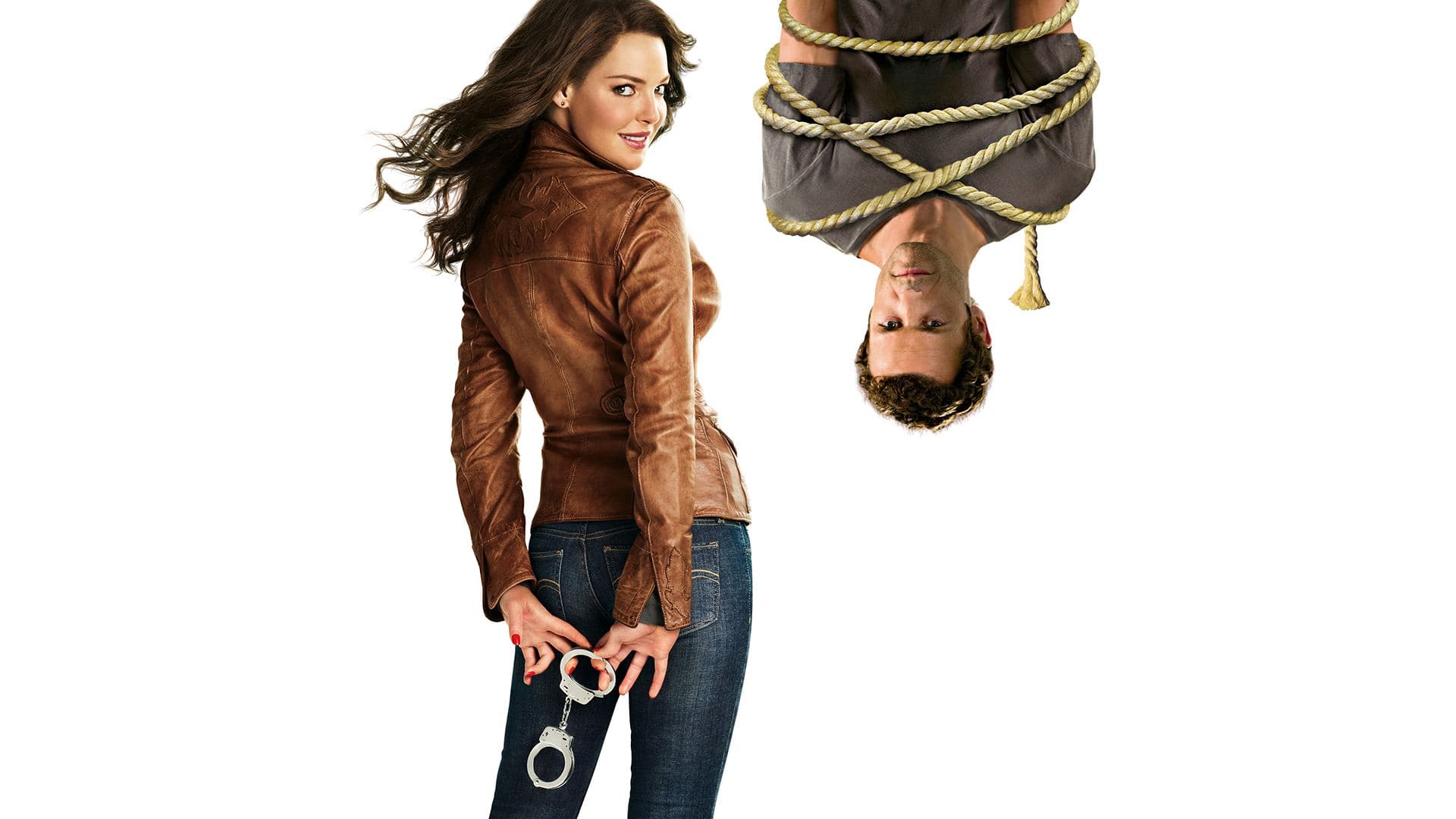
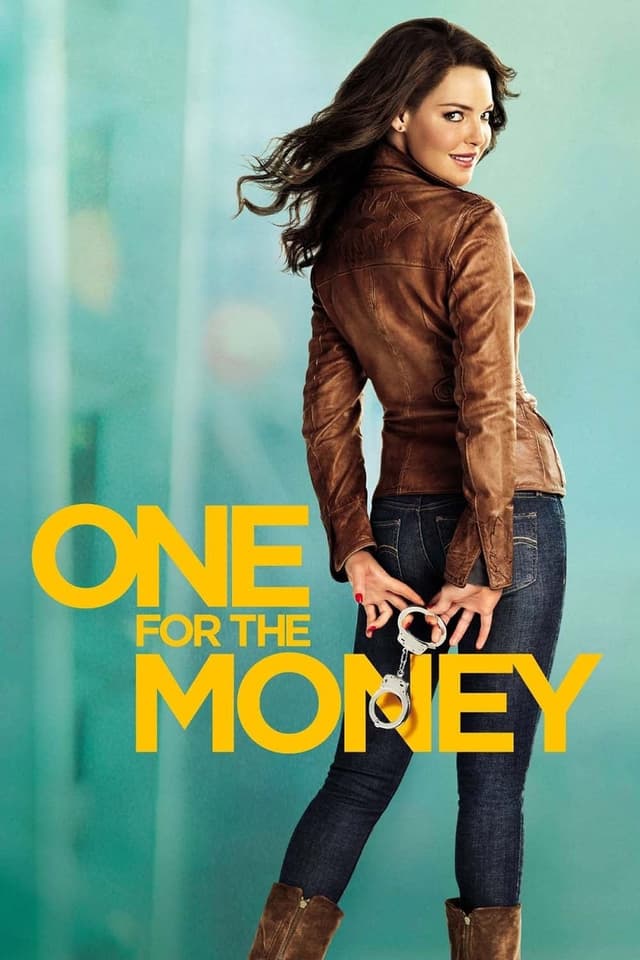
One for the Money Budget
 ActionComedyCrime1h 31m
Updated
Synopsis
Unemployed and newly divorced Stephanie Plum lands a job at her cousin's bail-bond business, where her first assignment puts her on the trail of a wanted local cop, Joe Morelli, from her old neighborhood. Armed only with attitude, pepper spray, and her grandmother's pearl-handled pistol, the rookie bounty hunter must learn the ropes from a mysterious mentor named Ranger if she has any hope of bringing Morelli in alive.
What Is the Budget of One for the Money (2012)?
One for the Money (2012), directed by Julie Anne Robinson and distributed by Lionsgate, was produced on a reported budget of $40,000,000. The film adapted Janet Evanovich's 1994 debut novel of the same name, the first installment in her bestselling Stephanie Plum mystery-comedy series, which had reached its eighteenth volume by the time of the movie's release. Lakeshore Entertainment financed and produced the picture alongside Sidney Kimmel Entertainment, with the project positioned as a star vehicle for Katherine Heigl and the launch point for a potential franchise mirroring the books.
The $40,000,000 figure reflected a calculated mid-budget romantic-comedy investment. The number had to cover Heigl's above-the-title compensation, a Pittsburgh production base with a Pennsylvania tax credit anchor, an ensemble supporting cast led by Jason O'Mara and Daniel Sunjata, and the location-driven New Jersey setting recreated on East Coast streets. Lionsgate projected a worldwide gross in the $80,000,000 to $100,000,000 range as the break-even target after marketing, a goal the film missed decisively when it opened to mocking reviews and weak word-of-mouth.
Key Budget Allocation Categories
The reported $40,000,000 budget was distributed across the production areas typical of a star-led studio comedy:
- Above-the-Line Talent: Katherine Heigl, coming off Knocked Up, 27 Dresses, and The Ugly Truth, was the project's most expensive line item, commanding a star salary appropriate to her status as one of the early-2010s romantic-comedy leads. Producer credits for Heigl and her mother Nancy Heigl through Abishag Productions added a layer of compensation on top of her acting fee, a deal structure that became a recurring point of industry commentary.
- Supporting Cast: Jason O'Mara as bail-jumper Joe Morelli, Daniel Sunjata as bounty-hunter mentor Ranger, John Leguizamo as informant Jimmy Alpha, Sherri Shepherd as bail-bond clerk Lula, Debbie Reynolds in her final theatrical role as Grandma Mazur, and Debra Monk as Stephanie's mother filled out the New Jersey ensemble. Reynolds in particular came at a legacy-talent rate that exceeded the standard supporting-cast scale.
- Pittsburgh Production Base: Principal photography ran from August to October 2010 in and around Pittsburgh, doubling for the Trenton, New Jersey setting of the novel. The Pennsylvania Film Production Tax Credit, then 25% of qualified in-state spend, anchored the budget and made the multi-month shoot economically feasible against the contemporaneous studio appetite for production incentives.
- New Jersey Location Authenticity: A short location unit picked up establishing photography in Trenton and other New Jersey locations to lend authenticity to Stephanie Plum's Burg neighborhood and the various Italian-American household interiors. Production design recreated the rest in Pittsburgh, including the bail-bonds office, a funeral home, and a series of working-class row-house exteriors.
- Wardrobe, Makeup, and Hair: The character of Stephanie Plum, a recently fired discount-store lingerie buyer turned reluctant bounty hunter, required a distinct working-class New Jersey aesthetic. Costume designer Cindy Evans built a wardrobe for Heigl that read as deliberately downmarket rather than glamorous, an unusual brief for a Heigl vehicle and one that required a larger-than-typical fittings and continuity allocation.
- Music and Soundtrack: Composer Deborah Lurie delivered the score, with a soundtrack populated by needle drops curated to evoke working-class New Jersey. Music licensing for recognizable songs by artists including Bon Jovi consumed a meaningful slice of the soundtrack budget.
- Reshoots and Editorial: Industry reporting at the time noted that the studio commissioned additional photography to address pacing and tone after early test screenings, a not-uncommon comedy refinement that nonetheless added to the all-in cost.
How Does One for the Money's Budget Compare to Similar Films?
At $40,000,000, One for the Money sat in the standard range for a star-vehicle romantic comedy or comedic mystery in the late-2000s and early-2010s. The comparison set illustrates how its commercial outcome diverged sharply from its budgetary peers:
- 27 Dresses (2008): Budget $30,000,000 | Worldwide $160,308,348. Heigl's prior Fox 2000 romantic comedy cost 25% less and grossed four times the worldwide total, the precise template Lionsgate hoped One for the Money would replicate.
- The Ugly Truth (2009): Budget $38,000,000 | Worldwide $205,335,940. Heigl's Sony R-rated romantic comedy with Gerard Butler released two and a half years earlier on a near-identical budget and earned more than five times the worldwide total, demonstrating that the Heigl-led romantic-comedy formula was still working as recently as 2009.
- Killers (2010): Budget $75,000,000 | Worldwide $98,150,742. Heigl's prior action-comedy hybrid with Ashton Kutcher cost nearly twice as much, struggled to break even, and signaled the first wave of audience fatigue with her star vehicles, a warning sign Lionsgate did not heed.
- Hot Pursuit (2015): Budget $35,000,000 | Worldwide $51,738,114. The Reese Witherspoon and Sofia Vergara cop-comedy three years later offered the closest genre comparison, a female-led law-enforcement comedy that also failed to translate a movie-star pairing into a hit.
- Miss Congeniality (2000): Budget $45,000,000 | Worldwide $212,742,720. Sandra Bullock's detective comedy a decade earlier showed the upside ceiling for a female-led crime-comedy when the script, casting, and tone aligned, an outcome One for the Money could not approach.
One for the Money Box Office Performance
One for the Money opened on January 27, 2012, finishing fourth on its debut weekend with $11,505,228, behind The Grey, Underworld: Awakening, and Man on a Ledge. The opening was well below industry pre-release tracking, and the film's cratering CinemaScore of C and 2% Rotten Tomatoes score left it with no path to recovery. Domestic receipts collapsed in week two, and the picture finished its run in March 2012 with $26,414,527 domestic and $12,841,975 international, for a worldwide total of $39,256,502.
Against a reported production budget of $40,000,000, the film needed approximately $80,000,000 to $100,000,000 in worldwide gross to reach profitability when accounting for marketing and distribution costs. Here is the financial breakdown:
Box Office Breakdown
One for the Money

One for the Money returned approximately $0.52 in theatrical revenue for every $1 invested when measured against total estimated production and marketing spend, placing it among the most clear-cut commercial disappointments of the 2012 first quarter. The domestic share of the gross was $26,414,527 against an international share of just $12,841,975, a 67/33 split heavily weighted toward North America and a clear signal that the Stephanie Plum brand had no meaningful international recognition outside the novel's English-language territories.
The collapse killed the planned franchise. Lionsgate had publicly floated adapting the next several Plum novels, with Two for the Dough and Three to Get Deadly mentioned in early development conversations, but the studio quietly shelved every follow-up after the opening-weekend numbers came in. The film is also frequently cited as the inflection point at which Hollywood's appetite for Katherine Heigl-led star vehicles cooled, with her subsequent feature roles consisting largely of smaller comedies, animated voice work, and a return to television.
One for the Money Production History
Development on a Stephanie Plum film stretched back more than a decade before One for the Money reached theaters. TriStar Pictures optioned Janet Evanovich's novel in the late 1990s with Reese Witherspoon attached to star and Laurie Craig writing the screenplay. The project sat in development for years and went through multiple iterations, with Sandra Bullock and Jennifer Lopez each circling the lead role at different points before the rights eventually moved to Lakeshore Entertainment.
Sidney Kimmel Entertainment came on board as co-producer, and Katherine Heigl committed to star in March 2010 through her Abishag Productions banner, with her mother Nancy Heigl producing alongside Tom Rosenberg and Gary Lucchesi. Julie Anne Robinson, the British television director best known for The Last Song (2010) and extensive credits on Grey's Anatomy and Coupling, was hired to direct. The shooting script was credited to Stacy Sherman, Karen Ray, and Liz Brixius, with Evanovich serving as a consulting producer to retain author input on tone and characterization.
Principal photography ran from August through October 2010 in Pittsburgh, Pennsylvania, with the city doubling for the working-class Trenton, New Jersey setting of the novel. The Pennsylvania Film Production Tax Credit anchored the location decision, and the production used Pittsburgh's mix of brick row houses, industrial corners, and Italian-American neighborhoods to recreate the Burg, Stephanie Plum's home community. A small second-unit detail picked up establishing photography in actual New Jersey locations including Trenton and Point Pleasant for authentic exteriors.
Post-production extended through 2011, with the film originally slated for a July 2011 release. Lionsgate pushed the date first to January 27, 2012 amid persistent rumors that the studio was unhappy with early cuts and ordered tonal reshoots to lean further into comedy and away from the source material's darker mystery elements. Marketing leaned into Heigl's romantic-comedy persona rather than the bounty-hunter premise, and pre-release tracking suggested a soft opening that the studio attempted to counter with an aggressive late-January TV spend.
Debbie Reynolds, who played Grandma Mazur, completed her work on the film as one of her final theatrical roles. Reynolds, then 78, brought decades of screen comedy experience to the supporting part, and contemporary coverage frequently singled out her performance as the most enjoyable element of the picture even as the film around her was savaged. Reynolds died in December 2016, and One for the Money would prove to be one of her last feature appearances.
Awards and Recognition
One for the Money received no positive awards recognition and instead became a focal point of the 2013 Razzie Awards. The film earned three Golden Raspberry nominations: Worst Actress for Katherine Heigl, Worst Screen Combo for Heigl and her quote bouncing chest, and Worst Screenplay for Stacy Sherman, Karen Ray, and Liz Brixius. Heigl ultimately did not win, with Worst Actress that year going to Kristen Stewart for The Twilight Saga: Breaking Dawn, Part 2.
The film was shut out of every legitimate industry award and was not recognized at the Critics' Choice Awards, the People's Choice Awards, or the Teen Choice Awards. The MTV Movie Awards, which had previously embraced Heigl vehicles like 27 Dresses and Knocked Up, declined to include One for the Money in any of its 2012 nomination slates. The picture's reputation as a commercial and critical low point for both Heigl and Lionsgate has remained stable in the years since, with retrospective coverage citing it as a textbook example of a star vehicle misjudged on every axis from script to release date.
Critical Reception
One for the Money received some of the worst reviews of any wide release in 2012. The film holds a 2% approval rating on Rotten Tomatoes based on 101 critic reviews, with the critical consensus reading that "Katherine Heigl is woefully miscast, and One for the Money sacrifices all the entertaining diversions of Janet Evanovich's bestselling novel." On Metacritic, the film scored 22 out of 100 indicating generally unfavorable reviews. Audiences surveyed by CinemaScore gave the film a C, a damaging grade for a romantic comedy and a clear early warning that word of mouth would not sustain a second weekend.
Critics objected to Heigl's wandering New Jersey accent, the muddled tone that could not commit to comedy or mystery, and the pacing of an investigation plotline that drifted between subplots without ever generating suspense or comic momentum. Roger Ebert gave the film one star and wrote that it was "what we used to call a Programmer, a movie made not because anyone had anything to say, but because they had a contract to fulfill." The Washington Post's Ann Hornaday described it as "a movie so toothless and tepid that it disappears even as you're watching it," and Variety's Rob Nelson called it "a flat, joyless adaptation that wastes a likable cast on material that has been stale for years."
The few mildly positive notices focused almost entirely on Debbie Reynolds' brief scenes as Grandma Mazur, with The Hollywood Reporter's John DeFore writing that Reynolds "lights up the screen for the few minutes she's on it, suggesting the warmer, sillier movie that might have been." That qualified praise was not enough to offset the broader rejection, and One for the Money has settled into industry memory as a cautionary example of how a long-developing literary adaptation, a miscast star, and a misjudged release date can compound into a single high-profile failure.
Frequently Asked Questions
How much did it cost to make One for the Money (2012)?
The reported production budget was $40,000,000. Lakeshore Entertainment and Sidney Kimmel Entertainment co-financed the production, with Lionsgate distributing. Katherine Heigl's Abishag Productions also produced the film, with Heigl and her mother Nancy Heigl taking producer credits in addition to Heigl's above-the-title star salary.
How much did One for the Money earn at the box office?
The film grossed $26,414,527 domestically and $12,841,975 internationally, for a worldwide total of $39,256,502. It opened to $11,505,228 in the United States, finishing fourth on its January 27, 2012 opening weekend behind The Grey, Underworld: Awakening, and Man on a Ledge.
Was One for the Money a box office bomb?
Yes. Against a $40,000,000 production budget and an estimated $30,000,000 to $40,000,000 in marketing spend, the film returned approximately $0.52 in worldwide gross for every $1 invested. It is widely cited as the reason Lionsgate shelved a planned Stephanie Plum film franchise based on the remaining novels in Janet Evanovich's bestselling series.
Who directed One for the Money?
Julie Anne Robinson directed the film. Robinson was a British television director best known at the time for the Miley Cyrus and Liam Hemsworth feature The Last Song (2010), as well as extensive episodic credits on Grey's Anatomy and Coupling. The screenplay was credited to Stacy Sherman, Karen Ray, and Liz Brixius, adapted from Janet Evanovich's 1994 novel of the same name.
Where was One for the Money filmed?
Principal photography ran from August to October 2010 in Pittsburgh, Pennsylvania, with the city doubling for the working-class Trenton, New Jersey setting of the novel. The Pennsylvania Film Production Tax Credit anchored the location decision. A small second-unit detail picked up establishing photography in actual New Jersey locations including Trenton and Point Pleasant for authentic exteriors.
How does One for the Money compare to other Katherine Heigl films?
One for the Money grossed $39,256,502 worldwide against a $40,000,000 budget, dramatically underperforming 27 Dresses (2008), which earned $160,308,348 worldwide against a $30,000,000 budget, and The Ugly Truth (2009), which earned $205,335,940 against $38,000,000. It is widely viewed as the inflection point at which Hollywood's appetite for Heigl-led star vehicles cooled.
Is One for the Money based on a book?
Yes. The film adapts Janet Evanovich's 1994 novel One for the Money, the first installment in her bestselling Stephanie Plum mystery-comedy series. By the time the film was released in January 2012, the series had reached its eighteenth volume. Evanovich served as a consulting producer on the film to retain author input on tone and characterization.
Did One for the Money launch a franchise?
No. Lionsgate had publicly floated adapting the next several Plum novels, with Two for the Dough and Three to Get Deadly mentioned in early development conversations, but the studio quietly shelved every follow-up after the opening-weekend numbers came in. No sequel has been produced, although the novel series itself has continued to expand.
What did critics think of One for the Money?
The film received some of the worst reviews of any wide release in 2012, with a 2% approval rating on Rotten Tomatoes (based on 101 critics) and a 22 out of 100 score on Metacritic. Audiences gave it a C CinemaScore. Roger Ebert gave the film one star, calling it "what we used to call a Programmer," and critics broadly objected to Katherine Heigl's wandering New Jersey accent and the film's muddled tone.
Did One for the Money win any awards?
No. The film received no positive awards recognition and instead earned three Golden Raspberry nominations at the 2013 Razzies: Worst Actress for Katherine Heigl, Worst Screen Combo for Heigl and her bouncing chest, and Worst Screenplay for Stacy Sherman, Karen Ray, and Liz Brixius. Heigl ultimately did not win, with Worst Actress that year going to Kristen Stewart for The Twilight Saga: Breaking Dawn, Part 2.
Filmmakers
One for the Money

Official Trailer
Build budgets like this one in Saturation
Start from an industry-standard feature film template, import the schedule and rates you already have, and let the cost report keep itself current as you spend. Real-time collaboration, no spreadsheets.