Touch of Evil Budget
Updated
Synopsis
A border-town bombing draws Mexican investigator Miguel Vargas into a corruption-ridden police investigation led by crooked captain Hank Quinlan, setting off a deadly struggle over power, justice, and truth.
What Is the Budget of Touch of Evil?
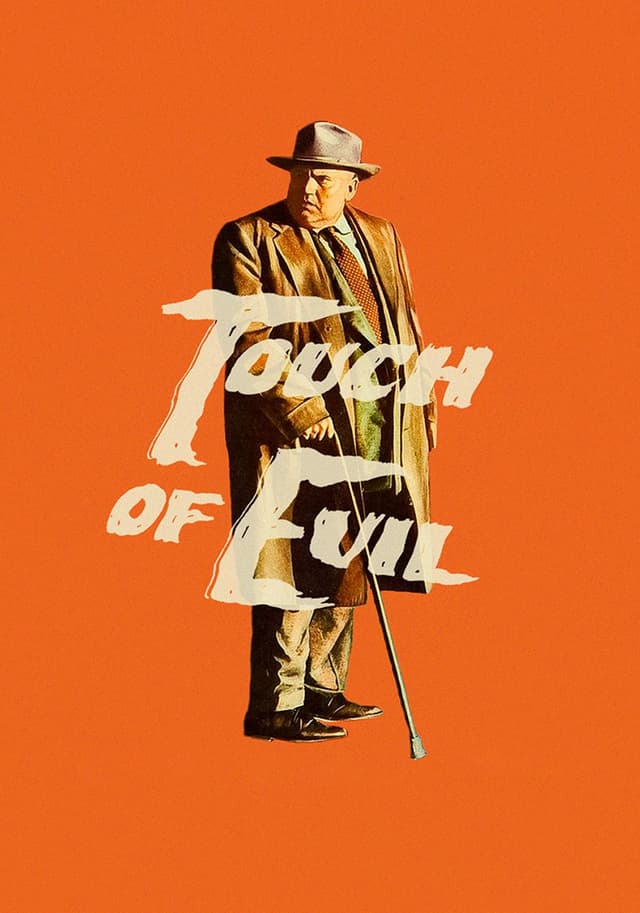
The budget for Touch of Evil (1958) was approximately $895,000, financed by Universal-International Pictures. For a studio production of the late 1950s, this was a modest allocation, reflecting Universal's cautious approach to a project they never fully championed. Orson Welles had been largely shut out of Hollywood directing for over a decade, and the studio viewed the film primarily as a B-movie programmer rather than a prestige release. The relatively tight budget forced Welles into creative problem-solving that ultimately produced some of cinema's most inventive sequences, including the legendary unbroken opening tracking shot.
Key Budget Allocation Categories
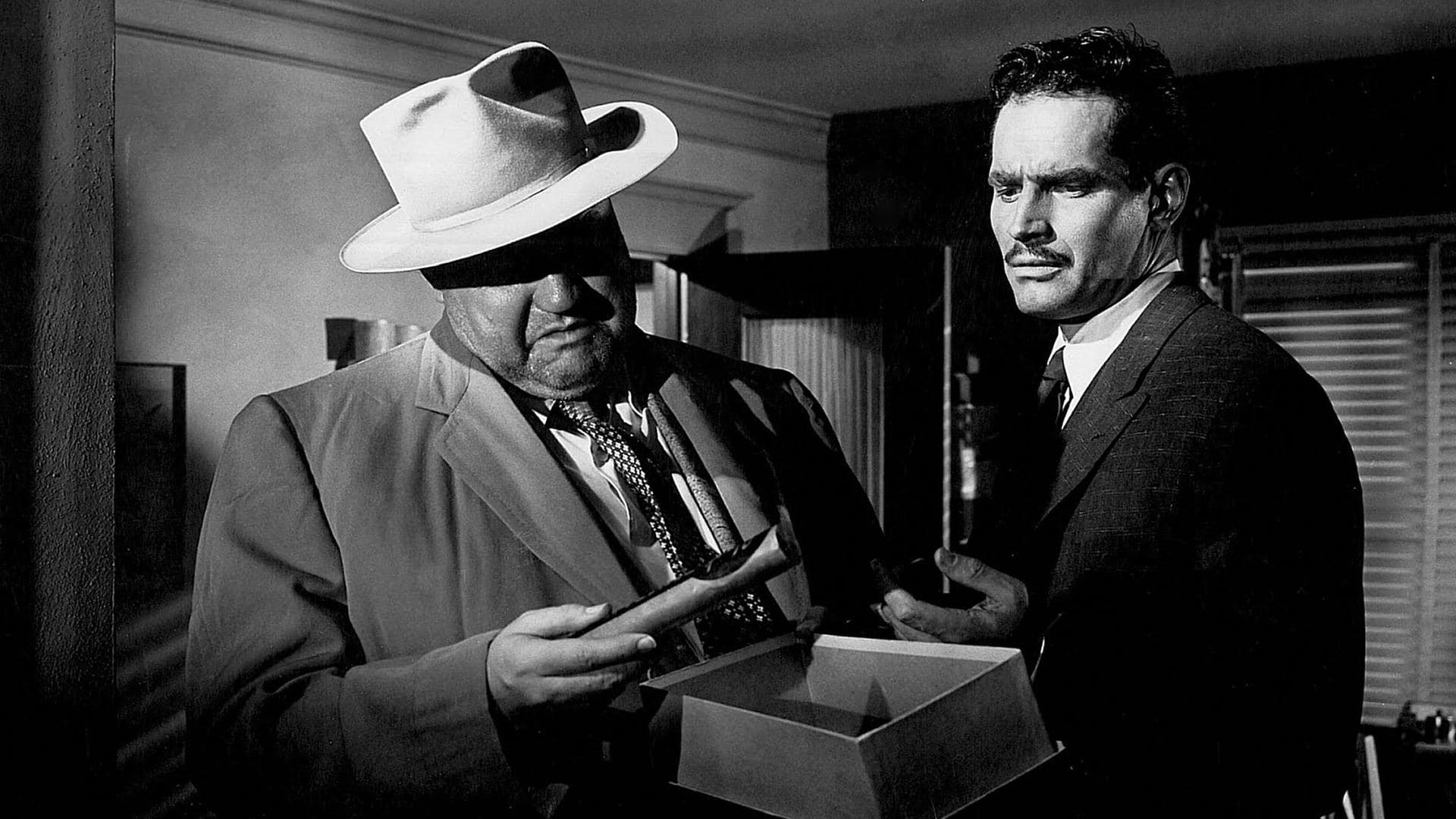
- Above-the-Line Talent accounted for a significant portion of the budget. Charlton Heston, fresh off The Ten Commandments, commanded a substantial fee, while Welles served triple duty as writer, director, and star. Janet Leigh and Marlene Dietrich rounded out the marquee names, though Dietrich reportedly worked for a modest sum as a personal favor to Welles.
- Cinematography and Camera Equipment required specialized resources for Russell Metty's atmospheric black-and-white photography. The famous 3-minute, 20-second opening tracking shot demanded a custom-built crane rig that could move through multiple city blocks, follow characters in and out of buildings, and coordinate dozens of extras with precise timing.
- Location and Set Design centered on Venice Beach, California, which was dressed to double as a seedy U.S.-Mexico border town. The rundown canals, oil derricks, and decaying boardwalk architecture provided a naturally atmospheric setting that reduced the need for expensive set construction.
- Music and Sound Design featured an original score by Henry Mancini, then still early in his career. Welles used source music, particularly Afro-Cuban rhythms and player piano compositions, as an integral part of the film's soundscape, blending diegetic and non-diegetic elements in ways that were unusual for the period.
- Post-Production and Editing became the film's most contentious budget line. After Welles delivered his cut, Universal ordered extensive re-editing and shot additional scenes directed by Harry Keller. This dual editing process effectively doubled post-production costs, though the studio absorbed the overages as part of their effort to reshape the film to their commercial preferences.
- Supporting Cast and Extras included a deep roster of character actors: Akim Tamiroff, Dennis Weaver, Joseph Calleia, and an uncredited cameo by Zsa Zsa Gabor. Venice Beach locals served as background extras for the border town sequences, keeping crowd scene costs low.
How Does Touch of Evil's Budget Compare to Similar Films?
Touch of Evil arrived at the tail end of the classic film noir cycle, when the genre was typically produced on modest budgets. Here is how it compares to other notable noirs and thrillers of the era:
- The Big Heat (1953) had a budget of approximately $750,000 and grossed $2.3 million worldwide. Fritz Lang's noir was produced on a similar shoestring at Columbia, proving that tightly crafted crime films could deliver strong returns without lavish spending.
- Vertigo (1958) had a budget of approximately $2.5 million and grossed $7.3 million worldwide. Alfred Hitchcock's psychological thriller, released the same year, received nearly three times the investment from Paramount, reflecting the gulf between how studios treated their A-list directors versus Welles.
- The Night of the Hunter (1955) had a budget of approximately $795,000 and grossed $1.1 million worldwide. Charles Laughton's only directorial effort was another case of a visionary filmmaker working on a tight budget, and like Touch of Evil, it was initially dismissed before being recognized as a masterpiece.
- Sunset Boulevard (1950) had a budget of approximately $1.75 million and grossed $5 million worldwide. Billy Wilder's noir classic received significantly more financial support from Paramount, demonstrating the disparity between studio confidence in Wilder versus the skepticism Welles faced at Universal.
- Kiss Me Deadly (1955) had a budget of approximately $410,000 and grossed $1.4 million worldwide. Robert Aldrich's pulpy noir was made for roughly half the cost of Touch of Evil, showing that even within the low-budget noir tradition, Welles's film had a reasonable allocation for the genre.
Touch of Evil Box Office Performance
Touch of Evil performed poorly at the domestic box office upon its initial release. Universal dumped the film onto the market as the bottom half of a double bill, paired with The Female Animal, giving it virtually no marketing support or standalone theatrical run. The studio's decision to re-edit the film against Welles's wishes, then bury the result, ensured commercial failure from the start.
With a production budget of $895,000, the film needed to gross roughly $1.8 million to break even after accounting for prints and advertising. It fell well short of that threshold in its initial run. The break-even calculation follows the standard formula where total recovery costs are approximately twice the production budget: ($895,000 x 2 = $1.79 million). Touch of Evil's domestic returns were modest enough that Universal considered it a commercial disappointment.
The film's financial story changed dramatically over the following decades. Repertory screenings, home video releases, and the landmark 1998 restoration by Walter Murch generated substantial revenue that dwarfed the original theatrical run. The restoration alone prompted a limited theatrical re-release that attracted strong per-screen averages, and subsequent DVD and Blu-ray editions became perennial catalog sellers for Universal.
Box Office Breakdown
Touch of Evil

Touch of Evil Production History
The project originated when Charlton Heston was offered a role in a Universal crime picture based on Whit Masterson's novel Badge of Evil. When Heston learned that Orson Welles was attached as an actor, he suggested Welles direct as well. Universal agreed, largely because Welles came cheap and Heston's star power reduced the studio's financial risk. Welles accepted the assignment and immediately rewrote the screenplay from scratch, keeping only the bare skeleton of the source novel.
Principal photography took place over approximately 40 days in early 1957, primarily on location in Venice Beach, California. Welles chose the decaying beachside community because its oil derricks, canals, and run-down storefronts provided a convincingly grimy border-town atmosphere without requiring extensive set construction. The production shot mostly at night, adding to the film's oppressive visual texture.
The opening tracking shot, now one of the most celebrated sequences in cinema history, was meticulously planned and rehearsed over an entire day before being captured in a single continuous take lasting 3 minutes and 20 seconds. The shot follows a car with a bomb in its trunk through busy streets, past a border checkpoint, and alongside the protagonists, all without a single cut. Russell Metty's camera was mounted on a specially constructed crane that could navigate the street-level choreography while maintaining focus across multiple planes of action.
After Welles delivered his cut, Universal executives screened it and balked. They brought in director Harry Keller to shoot additional expository scenes, re-edited the film to impose a more conventional narrative structure, and added Henry Mancini's score over sequences Welles had designed to play without music. Welles responded with a now-famous 58-page memo to Universal studio head Edward Muhl, detailing shot by shot how the film should be re-cut. The studio ignored the memo entirely and released their version.
In 1998, producer Rick Schmidlin commissioned editor Walter Murch to create a new version of the film following Welles's memo as closely as the surviving materials allowed. Murch removed Keller's added scenes, restructured the opening to eliminate the credits Welles never wanted over the tracking shot, and adjusted the sound mix throughout. This restored version was released theatrically and is now widely considered the definitive cut.
Awards and Recognition
Touch of Evil received little awards attention upon its initial release, a casualty of Universal's decision to treat it as disposable genre product. The film was entered in competition at the 1958 Brussels World's Fair Film Festival, where it won the top prize, providing one of the few bright spots in its early reception. In the United States, however, it was largely overlooked by the Academy and major critics' organizations.
Recognition arrived decades later as the film's reputation grew. In 1993, Touch of Evil was selected for preservation in the United States National Film Registry by the Library of Congress, recognizing it as "culturally, historically, or aesthetically significant." The 1998 Walter Murch restoration brought renewed critical attention and introduced the film to a new generation of audiences and scholars.
The film consistently ranks among the greatest noirs ever made in major polls and retrospective assessments. The American Film Institute, the British Film Institute, and Cahiers du cin'ema have all included it in their canonical lists. Its influence on subsequent filmmakers, from the French New Wave directors who championed Welles to modern crime cinema, has been extensively documented in film scholarship.
Critical Reception
Touch of Evil holds a 97% approval rating on Rotten Tomatoes, reflecting near-unanimous critical acclaim from modern reviewers. This score stands in stark contrast to the film's initial reception, when many American critics dismissed it as an overwrought B-movie or ignored it entirely due to Universal's burial of the release.
Contemporary reviews were mixed at best. Some American critics acknowledged Welles's visual bravura while criticizing what they saw as narrative excess. European critics, particularly in France, were far more enthusiastic. François Truffaut and Jean-Luc Godard both championed the film as evidence that Welles remained one of cinema's great artists, and their advocacy helped sustain the film's reputation during the years when it was largely unavailable in the United States.
The 1998 restoration fundamentally shifted the critical conversation. Reviewers who had previously known only the studio's compromised version could now evaluate something much closer to Welles's intentions. Roger Ebert awarded the restored version four stars, calling it "a movie of crackling, mocking dialogue, of images that reveal a filmmaker in total command, of a display of virtuosity that is, yes, parsing on the edge of self-parody but never falling." The consensus view today recognizes Touch of Evil as one of the finest American films of the 1950s and the definitive final chapter of the classic film noir era.
Frequently Asked Questions
How much did it cost to make Touch of Evil (1958)?
The production budget was $829,000, covering principal photography, cast and crew salaries, locations, sets, post-production, and music. Marketing and distribution (P&A) costs are estimated at an additional $414,500 - $663,200, bringing the total studio investment to approximately $1,243,500 - $1,492,200.
How much did Touch of Evil (1958) earn at the box office?
Touch of Evil grossed $2,247,465 domestic, $35 international, totaling $2,247,500 worldwide.
Was Touch of Evil (1958) profitable?
Yes. Against a production budget of $829,000 and estimated total costs of ~$2,072,500, the film earned $2,247,500 theatrically - a 171% ROI on production costs alone.
What were the biggest costs in producing Touch of Evil?
The primary cost drivers were above-the-line talent (Charlton Heston, Janet Leigh, Orson Welles); talent compensation, location cinematography, and tension-driven editorial.
How does Touch of Evil's budget compare to similar crime films?
At $829,000, Touch of Evil is classified as a ultra-low-budget production. The median budget for wide-release crime films in the era ranges from $30 - 80M for mid-budget to $150M+ for tentpoles. Comparable budgets: Mirror (1975, $825,000); Woman of the Hour (2024, $836,057); Citizen Kane (1941, $839,727).
Did Touch of Evil (1958) go over budget?
There are no widely reported accounts of significant budget overruns for this production. However, studios rarely disclose precise budget overrun figures publicly. The reported production budget reflects the final estimated cost.
What was the return on investment (ROI) for Touch of Evil?
The theatrical ROI was 171.1%, calculated as ($2,247,500 − $829,000) ÷ $829,000 × 100. This measures gross revenue against production budget only - it does not account for P&A or exhibitor shares.
What awards did Touch of Evil (1958) win?
7 wins & 1 nomination total.
Who directed Touch of Evil and who were the key crew members?
Directed by Orson Welles, written by Orson Welles, shot by Russell Metty, with music by Henry Mancini, edited by Aaron Stell, Virgil W. Vogel.
Where was Touch of Evil filmed?
Touch of Evil was filmed in United States of America. The film was shot in Venice, California from February 18, 1957, to April 2, 1957. The location had been suggested by Aldous Huxley to Welles, who informed him the town had decayed significantly.
Filmmakers
Touch of Evil

Official Trailer
Build budgets like this one in Saturation
Start from an industry-standard feature film template, import the schedule and rates you already have, and let the cost report keep itself current as you spend. Real-time collaboration, no spreadsheets.