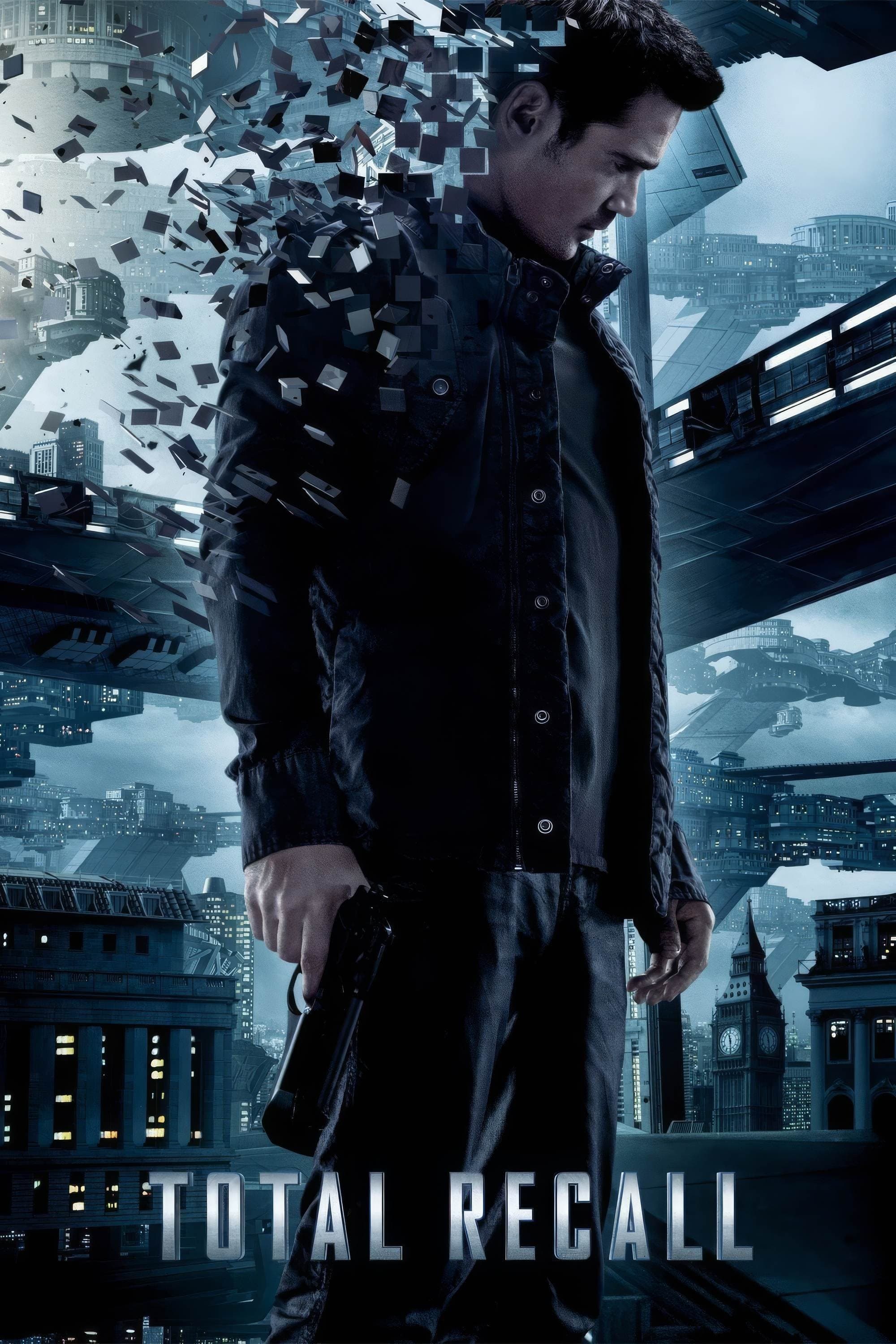
Total Recall Budget
 Action
Updated
Synopsis
In a future Earth devastated by chemical warfare, factory worker Douglas Quaid visits Rekall, a company that implants false memories of fantasy adventures, hoping to escape his routine life. When the procedure goes wrong, Quaid discovers he may actually be a spy and finds himself hunted by his own wife and the totalitarian government of the United Federation of Britain. He must travel to the Colony, the only other surviving region of the planet, to unravel his true identity before time runs out.
What Is the Budget of Total Recall (2012)?
Total Recall (2012), directed by Len Wiseman and distributed by Columbia Pictures, was produced on a reported budget of $125,000,000, with some industry sources placing the all-in figure as high as $200,000,000 once heavy reshoots, marketing carry, and effects overages were folded in. The science fiction action remake of Paul Verhoeven's 1990 film of the same name was financed by Sony Pictures Entertainment through Columbia, with co-financing from Original Film and producing partner Neal H. Moritz. The investment was pitched as a tentpole franchise restart that would update the Philip K. Dick source material with a contemporary action vocabulary and a Colin Farrell-led ensemble.
The $125,000,000 commitment reflected Sony's ambition to bring the property in line with modern visual effects expectations. Compared with the $50,000,000 to $65,000,000 spent on the 1990 Verhoeven version, the new production more than doubled the inflation-adjusted spend to support a fully digital production design, the elaborate Fall transit set piece, and large-scale Toronto stage work. The math assumed Total Recall would clear roughly $300,000,000 worldwide to break even after marketing, a target the film ultimately missed.
Key Budget Allocation Categories
Total Recall's reported $125,000,000 budget was distributed across several core production areas:
- Above-the-Line Talent: Director Len Wiseman, coming off the Underworld franchise and Live Free or Die Hard, commanded a tentpole-director fee. Lead Colin Farrell was paid an estimated $7,000,000 to $10,000,000 in line with his post-In Bruges asking rate, with Kate Beckinsale, Jessica Biel, and Bryan Cranston filling out a quartet of recognizable names. The ensemble sat at the upper end of mid-budget compensation, though it stopped short of the eight-figure salaries attached to bigger sci-fi stars.
- Visual Effects: Double Negative led a multi-vendor effects pipeline that included Method Studios, MPC, and Pixomondo. The film required approximately 1,400 visual effects shots covering the United Federation of Britain cityscape, the Colony slum environment, hover-car chases, and the Fall, a giant gravity-defying transit tube cutting through the Earth's core. VFX is widely cited as the single largest line item, with industry estimates placing the post visual effects spend at $40,000,000 to $55,000,000.
- Production Design: Production designer Patrick Tatopoulos built a series of large practical sets at Pinewood Toronto Studios, including The Fall interior, the Bureau of Rekall facility, and the Colony shantytown decks. The future-noir aesthetic borrowed from Blade Runner and Minority Report visual reference points and required extensive scenic painting, lighting rigging, and atmospheric effects for the perpetually rainy Colony exteriors.
- Toronto and Vancouver Shoot: Principal photography ran from May to September 2011 in Toronto, Ontario, with a brief unit in Vancouver, British Columbia for additional photography. Pinewood Toronto provided sound stage anchorage and the production qualified for federal and provincial production tax credits, but the long stage block, six-day weeks during the Fall sequence, and a sizable Canadian below-the-line crew kept labor and facilities costs near the top of the budget.
- Stunts and Choreography: Stunt coordinator Garrett Warren and second-unit director Vic Armstrong staged elevator shaft chases, hover-car combat, and the Kate Beckinsale and Jessica Biel hand-to-hand fight inside the synth factory. The wire work, vehicle gags, and elevated rig setups all required dedicated rehearsal time and specialized stunt performers, adding several million dollars to the budget.
- Score and Reshoots: Harry Gregson-Williams scored the film, recording with the Hollywood Studio Symphony at the Newman Scoring Stage. The production also undertook reshoots in spring 2012 to refine the third act after early test screenings registered audience confusion, adding incremental costs for cast availability, stage rental, and editorial.
How Does Total Recall's Budget Compare to Similar Films?
At a reported $125,000,000, Total Recall sits squarely in the upper-middle tier of early 2010s science fiction action films. The comparison set illustrates how its commercial outcome diverged from its budgetary peers:
- Total Recall (1990): Budget $65,000,000 | Worldwide $261,400,000. Paul Verhoeven's original cost roughly half of the 2012 remake in raw dollars (and even when adjusted for inflation came in below the new film's spend), yet generated a worldwide total comfortably ahead of Wiseman's version. The original's practical Mars effects, animatronic mutants, and Arnold Schwarzenegger's star wattage delivered a multiple the 2012 remake could not approach.
- Minority Report (2002): Budget $102,000,000 | Worldwide $358,372,926. Steven Spielberg's adjacent Philip K. Dick adaptation cost less than Wiseman's Total Recall while earning nearly twice as much worldwide. The contrast underscores how brand-name director equity and stronger reviews can stretch a science fiction budget further than star casting alone.
- I, Robot (2004): Budget $120,000,000 | Worldwide $353,133,889. Twentieth Century Fox's Will Smith vehicle spent within $5,000,000 of Total Recall and generated nearly $150,000,000 more in worldwide receipts, anchored by a global star and a more accessible high-concept hook.
- Elysium (2013): Budget $115,000,000 | Worldwide $286,140,700. Neill Blomkamp's class-divide science fiction film cost slightly less than Total Recall the year after and out-grossed it by approximately $87,000,000, illustrating how a filmmaker-driven follow-up to District 9 could leverage similar production resources more efficiently.
- Edge of Tomorrow (2014): Budget $178,000,000 | Worldwide $370,541,256. Doug Liman's Tom Cruise time-loop film cost more than Total Recall but earned nearly twice as much, and built sustained cult momentum that translated into long-tail home entertainment revenue Total Recall never matched.
Total Recall Box Office Performance
Total Recall opened on August 3, 2012, finishing third at the domestic box office with $25,568,790 over its opening weekend. That figure trailed Universal's The Bourne Legacy, which won the weekend with $38,142,825, and was substantially below the August opening that Sony's marketing spend implied. The film never recovered from its soft start and exited domestic theaters in October 2012 with a final domestic tally well under its production budget.
Against a reported production budget of $125,000,000, the film needed approximately $300,000,000 in worldwide gross to reach profitability when accounting for marketing and distribution costs. Here is the financial breakdown:
Box Office Breakdown
Total Recall (2012)

Total Recall returned approximately $1.01 in worldwide gross for every $1 invested when measured against total estimated production and marketing spend, placing it firmly in the underperformer column despite eventually crossing $200,000,000 worldwide. The domestic share of the gross was $58,877,969 against an international share of $152,938,846, a 28/72 split heavily weighted toward overseas markets where the science fiction action premise traveled more reliably than it did in North America.
The disappointing return killed the planned franchise. Sony quietly shelved sequel development that had been in early discussion ahead of release, and Len Wiseman moved on to television work rather than continuing the property. Home entertainment performance, including a 132-minute extended director's cut released on Blu-ray, recovered some of the deficit but never converted the title into a catalog earner on the scale of the 1990 original.
Total Recall Production History
Development on a Total Recall remake started at Dimension Films in the mid-2000s before reverting to Sony Pictures, which had held the underlying rights through Columbia's original 1990 production. Kurt Wimmer (Equilibrium, Salt) was hired in 2009 to draft a contemporary screenplay that would set the story on a future Earth rather than on Mars, the central setting of the Verhoeven film and a deliberate move away from the source material's Martian colony plot. Mark Bomback (Live Free or Die Hard, The Wolverine) handled subsequent revisions and on-set rewrites, building out the United Federation of Britain and Colony political backdrop that anchors the remake.
Philip K. Dick's 1966 short story "We Can Remember It for You Wholesale" remained the underlying source material, but Wiseman, Wimmer, and Bomback restructured the narrative to keep the action terrestrial. The Fall, a giant gravity-defying transit tube cutting through the Earth's core to connect the United Federation of Britain to the Colony in present-day Australia, replaced the original's Mars travel. Dropping Mars was the most consequential creative departure from the 1990 film and one of the most divisive choices among fans of the Verhoeven adaptation.
Principal photography ran from May 15, 2011 to September 16, 2011 at Pinewood Toronto Studios in Ontario, with the production qualifying for the Ontario Production Services Tax Credit and federal Canadian Film or Video Production Services Tax Credit. A short additional unit shot in Vancouver, British Columbia to pick up plate photography and second-unit elements. Cinematographer Paul Cameron led the principal unit, with Vic Armstrong directing second unit on the larger action sequences.
Len Wiseman, fresh off Live Free or Die Hard and the Underworld franchise, was attached as director in 2010 and brought regular collaborator Kate Beckinsale into the production as Lori Quaid, the role originated by Sharon Stone in 1990. The decision to expand Lori's role from a brief antagonist into a primary action lead chasing Colin Farrell's Doug Quaid across two thirds of the film was Wiseman's most visible structural change. Reshoots in spring 2012 refined the third act after early test screenings registered audience confusion, with editor Nicolas De Toth recutting key sequences before Sony locked the August 3, 2012 release.
Awards and Recognition
Total Recall (2012) received minimal industry awards recognition and was primarily acknowledged for its negative reception. The film was nominated for two Golden Raspberry Awards at the 33rd Razzies, including Worst Remake or Rip-Off and Worst Prequel, Remake, Rip-Off, or Sequel, although it did not win in either category. The film was shut out of mainstream genre ceremonies including the Saturn Awards, where Cabin in the Woods, Looper, and The Avengers dominated the 2012 science fiction categories.
Industry technical bodies acknowledged the film selectively. Production designer Patrick Tatopoulos and the visual effects team were referenced in trade coverage of the Fall sequence and the Colony cityscape, but the film failed to convert that craft attention into nominations at the Visual Effects Society Awards or the Art Directors Guild Excellence in Production Design Awards. The combined commercial underperformance and tepid critical response meant Total Recall left almost no awards footprint beyond the Razzie attention.
Critical Reception
Total Recall (2012) received predominantly negative reviews. The film holds a 30% approval rating on Rotten Tomatoes based on 264 critic reviews, with a critical consensus that called it visually polished but creatively bankrupt against the high bar set by the 1990 original. On Metacritic, the film scored 43 out of 100, indicating mixed or average reviews. Audiences surveyed by CinemaScore gave the film a B, a tepid grade for an effects-driven August action release.
Critics broadly praised the production design, the Patrick Tatopoulos sets, and the Double Negative visual effects work on the Fall, but objected to the film's lack of the political satire, gore, and tonal strangeness that defined the Verhoeven version. Roger Ebert wrote that the film "is well-made, but I never quite believed that any of it was happening to anyone I cared about," awarding it two stars out of four. Variety's Justin Chang called it "a slick but uninspired retread that mistakes velocity for vision," and The New York Times' Manohla Dargis criticized the loss of the original's "satirical bite."
Genre-press reaction was harsher. Empire summarized the film as "Total Rehash," and IGN praised the action choreography while flagging the absence of the surreal Mars sequences and the practical creature work that gave the 1990 version its distinct identity. The mixed-to-negative reception, combined with the franchise-killing commercial result, has cemented Total Recall (2012) as the textbook example of a polished science fiction remake that nailed its visual brief while failing to clear the legacy bar of the Paul Verhoeven original.
Frequently Asked Questions
How much did it cost to make Total Recall (2012)?
The reported production budget was $125,000,000, with some industry sources placing the all-in figure as high as $200,000,000 once heavy reshoots, marketing carry, and visual effects overages were factored in. Sony Pictures Entertainment financed the production through Columbia Pictures, with co-financing from Neal H. Moritz's Original Film.
How much did Total Recall (2012) earn at the box office?
The film grossed $58,877,969 domestically and $152,938,846 internationally, for a worldwide total of $211,816,815. It opened to $25,568,790 in the United States, finishing third on its August 3, 2012 opening weekend behind The Bourne Legacy and Diary of a Wimpy Kid: Dog Days.
Was Total Recall (2012) a box office bomb?
Total Recall is widely regarded as an underperformer rather than a clean bomb. Against a $125,000,000 production budget and an estimated $75,000,000 to $90,000,000 in marketing spend, the film returned roughly $1.01 in worldwide gross for every $1 invested. It cleared $200,000,000 worldwide but fell short of the $300,000,000 it needed to reach theatrical profitability, prompting Sony to shelve sequel development.
Who directed Total Recall (2012)?
Len Wiseman directed the film, working from a screenplay by Kurt Wimmer with revisions by Mark Bomback. Wiseman had previously directed the first two Underworld films and Live Free or Die Hard.
Where was Total Recall (2012) filmed?
Principal photography took place at Pinewood Toronto Studios in Ontario from May 15 to September 16, 2011, with a brief additional unit in Vancouver, British Columbia for plate photography and second-unit elements. The production qualified for both the Ontario Production Services Tax Credit and the federal Canadian Film or Video Production Services Tax Credit.
How does the 2012 Total Recall compare to the 1990 original?
The 1990 Paul Verhoeven version cost roughly $65,000,000 and grossed $261,400,000 worldwide. The 2012 remake nearly doubled the production budget to $125,000,000 but earned only $211,816,815 worldwide. The 2012 film also abandoned the 1990 version's Mars setting, relocating the entire story to a future Earth divided between the United Federation of Britain and the Colony in present-day Australia.
Why does the 2012 Total Recall not take place on Mars?
Screenwriters Kurt Wimmer and Mark Bomback restructured the narrative around a terrestrial setting to differentiate the remake from the 1990 film and to keep the visual effects budget focused on a single core production conceit. The Fall, a giant gravity-defying transit tube cutting through the Earth's core, replaced the original's Mars travel as the central science fiction premise.
Who stars in Total Recall (2012)?
Colin Farrell stars as Douglas Quaid, with Kate Beckinsale as Lori Quaid, Jessica Biel as Melina, and Bryan Cranston as the antagonist Chancellor Vilos Cohaagen. Bokeem Woodbine, Bill Nighy, and John Cho appear in supporting roles. Beckinsale's Lori was expanded from the brief antagonist role Sharon Stone played in 1990 into a primary chase pursuer across two thirds of the film.
What did critics think of Total Recall (2012)?
The film received predominantly negative reviews, with a 30% approval rating on Rotten Tomatoes based on 264 critics and a 43 out of 100 score on Metacritic. Audiences gave it a B CinemaScore. Critics praised the production design and visual effects work on the Fall but objected to the lack of the political satire, gore, and tonal strangeness that defined the Verhoeven original. Roger Ebert awarded it two stars out of four.
Did Total Recall (2012) win any awards?
No. The film was nominated for two Golden Raspberry Awards at the 33rd Razzies, Worst Remake or Rip-Off and Worst Prequel, Remake, Rip-Off, or Sequel, but did not win. It was shut out of the Saturn Awards and received no nominations at the Visual Effects Society Awards or the Art Directors Guild Excellence in Production Design Awards.
Filmmakers
Total Recall (2012)

Build budgets like this one in Saturation
Start from an industry-standard feature film template, import the schedule and rates you already have, and let the cost report keep itself current as you spend. Real-time collaboration, no spreadsheets.