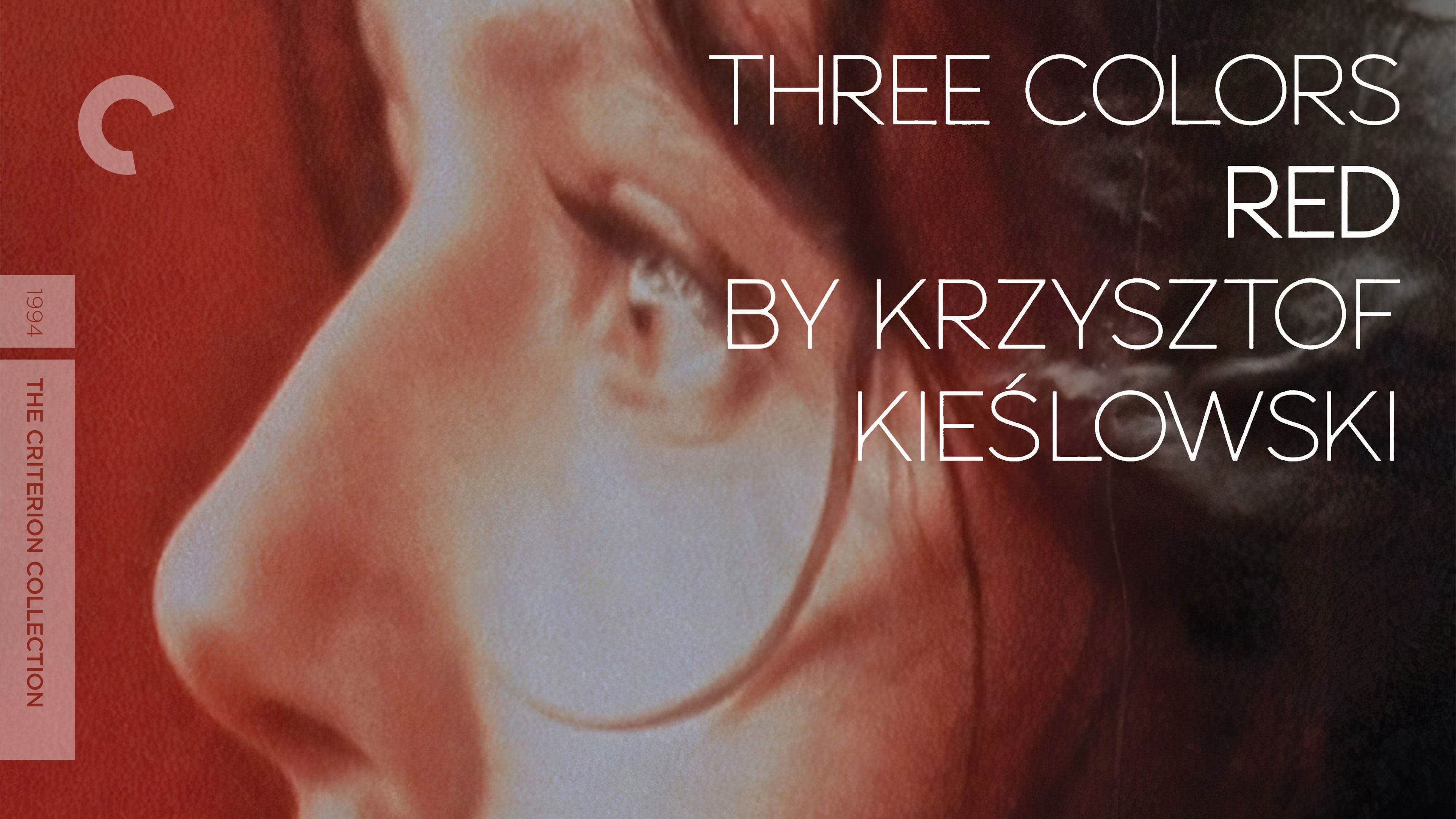
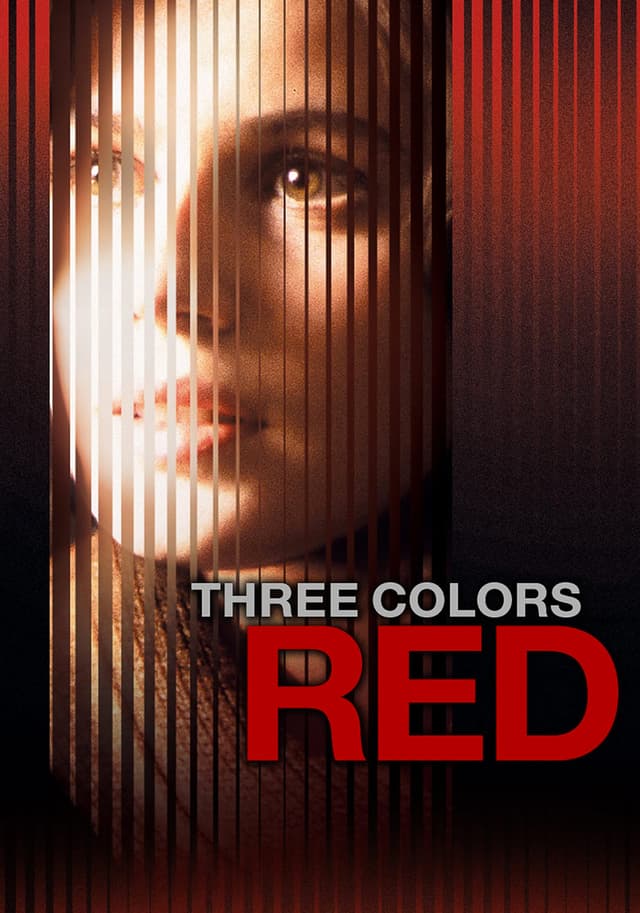
Three Colours Red Budget
 DramaMysteryRomance1h 40m
Updated
Synopsis
Valentine, a young model in Geneva, accidentally injures a dog and traces the animal to a retired judge who spends his days eavesdropping on his neighbors' phone calls. Their unlikely friendship draws her into the moral aftermath of the judge's past and toward a parallel young judge whose life is unfolding nearby, all moving toward the trilogy's shared destination.
What Is the Budget of Three Colours: Red (1994)?
Three Colours: Red (1994), directed by Krzysztof Kieślowski and distributed internationally by MK2 and Miramax, was produced as the capstone of the Three Colours trilogy and Kieślowski's final feature film. The production was a French-Polish-Swiss co-production with no fully public budget figure. Industry sources and the British Film Institute have placed the budget at approximately $5,000,000, slightly higher than its two trilogy predecessors and reflecting the deeper involvement of the Swiss financing partner CAB Productions, given the film's setting in Geneva.
The film was produced by Marin Karmitz through MK2 Productions in Paris, with Kieślowski's longtime collaborator Krzysztof Piesiewicz co-writing the screenplay. Karmitz committed the full $12,000,000 trilogy budget across all three films as a single package, an unusual structural commitment for European art cinema. The Red production benefited from the trilogy's cumulative awards momentum and from the involvement of legendary French actor Jean-Louis Trintignant, whose participation helped lock the financing and ensured international distribution interest.
Key Budget Allocation Categories
Three Colours: Red's estimated $5,000,000 budget broke down across the following European art-cinema categories:
- Above-the-Line Talent: Irène Jacob played the central character Valentine, having previously starred for Kieślowski in The Double Life of Veronique (1991). Jean-Louis Trintignant commanded a senior French acting rate appropriate to his standing after Z, My Night at Maud's, and decades of Continental art cinema. Jean-Pierre Lorit played the parallel character Auguste, a young judge in training.
- Geneva Location Shoot: Principal photography took place primarily in Geneva, Switzerland, with additional work in Paris and at Polish soundstages. Location costs in Switzerland were significantly higher than equivalent French or Polish locations, particularly for the extended apartment-interior and street sequences that anchored the film.
- Score and Music: Composer Zbigniew Preisner provided the score, including the central Bolero motif that recurs throughout the film and serves as its emotional centerpiece. As with the other trilogy films, Preisner's contribution involved full orchestra recording sessions and substantial collaboration with Kieślowski on the integration of music and image.
- Cinematography: Director of photography Piotr Sobociński collaborated with Kieślowski on the film's red-saturated palette, achieved through filters, lighting, costume, and production-design choices. Sobociński's work earned an Academy Award nomination for Best Cinematography, the rare recognition of a foreign-language film cinematographer at the time.
- Swiss-French Co-Production Coordination: The financing structure required coordination across multiple national funding agencies including the Swiss federal cinema funds, the French CNC, and Polish state funding. Administrative and legal costs associated with multi-nation co-production added meaningful overhead.
- Post-Production in Paris: Editing, sound, and final mix were completed at MK2's Paris facilities, with editor Jacques Witta returning from the previous trilogy entries. The color grading process to achieve the trademark red tonality required extensive post-production work matching the precedents set by Blue's blue grading.
How Does Three Colours: Red's Budget Compare to Similar Films?
Continental European auteur cinema of the mid-1990s clustered in a relatively narrow budget band. Comparable productions include:
- Three Colours: Blue (1993): Budget approximately $4,000,000 to $5,000,000 | US gross approximately $1,300,000. The trilogy opener, which won the Venice Golden Lion. Red's budget was at or slightly above Blue's.
- Three Colours: White (1994): Budget approximately $4,000,000 | US gross approximately $1,300,000. The middle entry, released between Blue and Red. Red's budget was modestly larger reflecting the Swiss financing.
- The Double Life of Veronique (1991): Budget approximately $4,000,000 | US gross approximately $2,000,000. Kieślowski and Marin Karmitz's previous collaboration with Irène Jacob.
- Howards End (1992): Budget approximately $8,000,000 | Worldwide $25,966,696. The Merchant Ivory English-language prestige drama, included for cross-Atlantic comparison among contemporaneous auteur features.
- La Cérémonie (1995): Budget approximately $4,500,000 | US gross approximately $1,750,000. Claude Chabrol's French drama released the year after Red, offering a comparable prestige French production.
Three Colours: Red Box Office Performance
Three Colours: Red grossed approximately $4,000,000 in the United States during its 1994 to 1995 art-house release, the highest US gross of any film in the trilogy. The film accumulated additional grosses across European, Japanese, and other international territories. Comprehensive worldwide gross figures are not published, but European trade press reporting suggests a total theatrical gross in the $8,000,000 to $12,000,000 range across all markets.
The financial breakdown using mid-range industry assumptions for European art cinema of the period:
Box Office Breakdown
Three Colours Red

The Three Colours trilogy as a whole has generated decades of catalog revenue through Criterion Collection home video releases, broadcaster licensing in multiple territories, and streaming deals with platforms including the Criterion Channel, Max, and Mubi. Red has consistently been the trilogy's best performer in retrospective programming and the most frequently cited entry in critical writing on Kieślowski.
Tragically, Three Colours: Red was Kieślowski's final feature. The director retired from filmmaking after its release in 1994 and died in 1996 at age 54 during a planned new trilogy project. The film's status as his final work has elevated its cultural and commercial value over the subsequent decades and made it the central object of Kieślowski retrospective programming and scholarship.
Three Colours: Red Production History
Development on Red proceeded in parallel with Blue and White as part of the trilogy's integrated production schedule. Krzysztof Kieślowski and Krzysztof Piesiewicz developed all three screenplays simultaneously, with the goal of releasing the films sequentially across an 18-month window. Producer Marin Karmitz committed the full trilogy budget upfront, allowing Kieślowski to plan production across all three films without renegotiating each independently.
Principal photography for Red took place in Geneva, Switzerland, with additional work in Paris, France, through the spring and summer of 1993, slotting between Blue and White principal photography. Director of photography Piotr Sobociński worked closely with Kieślowski to develop the film's red-saturated palette, using filters, lighting, costume, and production-design choices. The film's central character is a model whose advertising image (a Bolero gum billboard) appears throughout Geneva as a recurring visual motif.
Post-production took place at MK2 facilities in Paris through 1993 and into early 1994. The film premiered out of competition at the 47th Cannes Film Festival in May 1994 (after MK2 declined to enter the film in competition there, an unusual choice that nonetheless became a major Cannes event of the year). Red opened theatrically in France on May 27, 1994, in Switzerland in June, and in the United States in November 1994.
Awards and Recognition
Three Colours: Red received the most prominent awards recognition of any Kieślowski film. The film was nominated for three Academy Awards at the 67th Academy Awards in 1995: Best Director (Krzysztof Kieślowski), Best Original Screenplay (Krzysztof Kieślowski and Krzysztof Piesiewicz), and Best Cinematography (Piotr Sobociński). The nominations were extraordinary for a French-language, foreign-produced film, particularly the director nomination.
The film won the Cannes International Film Critics Award (FIPRESCI Prize) at the 1994 Cannes Film Festival. It also won the Los Angeles Film Critics Association Award for Best Foreign Language Film, the New York Film Critics Circle Award for Best Foreign Language Film, the National Society of Film Critics Award for Best Foreign Language Film, and multiple César Award nominations including Best Director and Best Original Screenplay. Irène Jacob received critical recognition for her performance, though she did not receive a Best Actress Academy Award nomination.
Critical Reception
Three Colours: Red received near-universal critical acclaim and has retained its position as Kieślowski's most celebrated film. The film holds a 100% approval rating on Rotten Tomatoes based on 60 critic reviews, with a critical consensus describing it as Kieślowski's masterful trilogy capstone that elevates the project's thematic ambitions to genuine spiritual achievement. On Metacritic, the film scored 100 out of 100, indicating universal acclaim.
Critics praised Irène Jacob's central performance, Jean-Louis Trintignant's reclusive judge, the film's mature meditation on connection and chance, and Piotr Sobociński's cinematography. Roger Ebert awarded the film four stars and described it as "a film of perfect serenity, beautifully made, with a clarity that allows the viewer's mind to roam freely." The New York Times's Janet Maslin called it "an enchantment, a magic act with the gravity of art." The Village Voice's J. Hoberman wrote that the film "achieves the rare condition of a work that finds its own form."
The film has been included on multiple BFI Sight and Sound critic and director polls as one of the greatest films of the modern era. Roger Ebert later added it to his Great Movies series. It is regularly programmed in retrospective screenings, taught in film schools, and cited as an influence by filmmakers ranging from Tom Tykwer to the Coen Brothers. The Three Colours trilogy as a whole is considered one of the defining achievements of 1990s European cinema, with Red functioning as its most critically celebrated entry.
Frequently Asked Questions
How much did it cost to make Three Colours: Red (1994)?
The film's budget was never publicly disclosed in full. Industry sources and the British Film Institute have placed the budget at approximately $5,000,000, slightly higher than its two trilogy predecessors and reflecting the deeper involvement of the Swiss financing partner CAB Productions given the film's Geneva setting.
Who directed Three Colours: Red?
Polish filmmaker Krzysztof Kieślowski directed the film. Red was Kieślowski's final feature; he retired from filmmaking after its release and died in 1996. He co-wrote the screenplay with longtime collaborator Krzysztof Piesiewicz.
Where can you watch Three Colours: Red?
The film is available on Blu-ray and DVD through the Criterion Collection (often packaged as part of the full Three Colours trilogy boxset), plus streaming on the Criterion Channel, Max, and Mubi in various territories.
Did Three Colours: Red win an Academy Award?
No. The film was nominated for three Academy Awards at the 67th Academy Awards in 1995: Best Director (Krzysztof Kieślowski), Best Original Screenplay (Kieślowski and Piesiewicz), and Best Cinematography (Piotr Sobociński). It did not win in any category.
How is Three Colours: Red connected to the other Three Colours films?
The three films form a trilogy organized around the colors of the French flag and the values of liberty (Blue), equality (White), and fraternity (Red). Red is the trilogy capstone and contains visual and narrative threads that connect to characters from Blue and White, culminating in a shared final scene.
Who composed the music for Three Colours: Red?
Polish composer Zbigniew Preisner composed the score, including the central Bolero motif that recurs throughout the film. Preisner was Kieślowski's regular collaborator and scored all three Three Colours films plus the earlier Dekalog series.
Where was Three Colours: Red filmed?
Principal photography took place primarily in Geneva, Switzerland, with additional work in Paris. Locations included the apartment buildings of the central characters, the streets of central Geneva, the lakeside settings, and the bowling alley where Valentine works as a model. Some interiors were captured at Polish soundstages.
How was Three Colours: Red received by critics?
The film received near-universal acclaim, with a 100% approval rating on Rotten Tomatoes based on 60 critic reviews and a Metacritic score of 100 out of 100. Roger Ebert added it to his Great Movies series. It is regularly cited on BFI Sight and Sound polls as one of the greatest films of the modern era.
Was Three Colours: Red Krzysztof Kieślowski's last film?
Yes. Kieślowski announced his retirement from filmmaking shortly after Red's release in 1994. He died in 1996 at age 54 during a planned new trilogy project (Heaven, Hell, Purgatory) that was later partially realized by other filmmakers from his and Piesiewicz's screenplays.
How long is Three Colours: Red?
The film has a running time of 99 minutes, in line with the compressed runtimes of all three Three Colours films, each of which falls within five minutes of the others.
Filmmakers
Three Colours Red

Official Trailer
Build budgets like this one in Saturation
Start from an industry-standard feature film template, import the schedule and rates you already have, and let the cost report keep itself current as you spend. Real-time collaboration, no spreadsheets.