The Young Girls of Rochefort Budget
 RomanceComedyDrama2h 6m
Updated
Synopsis
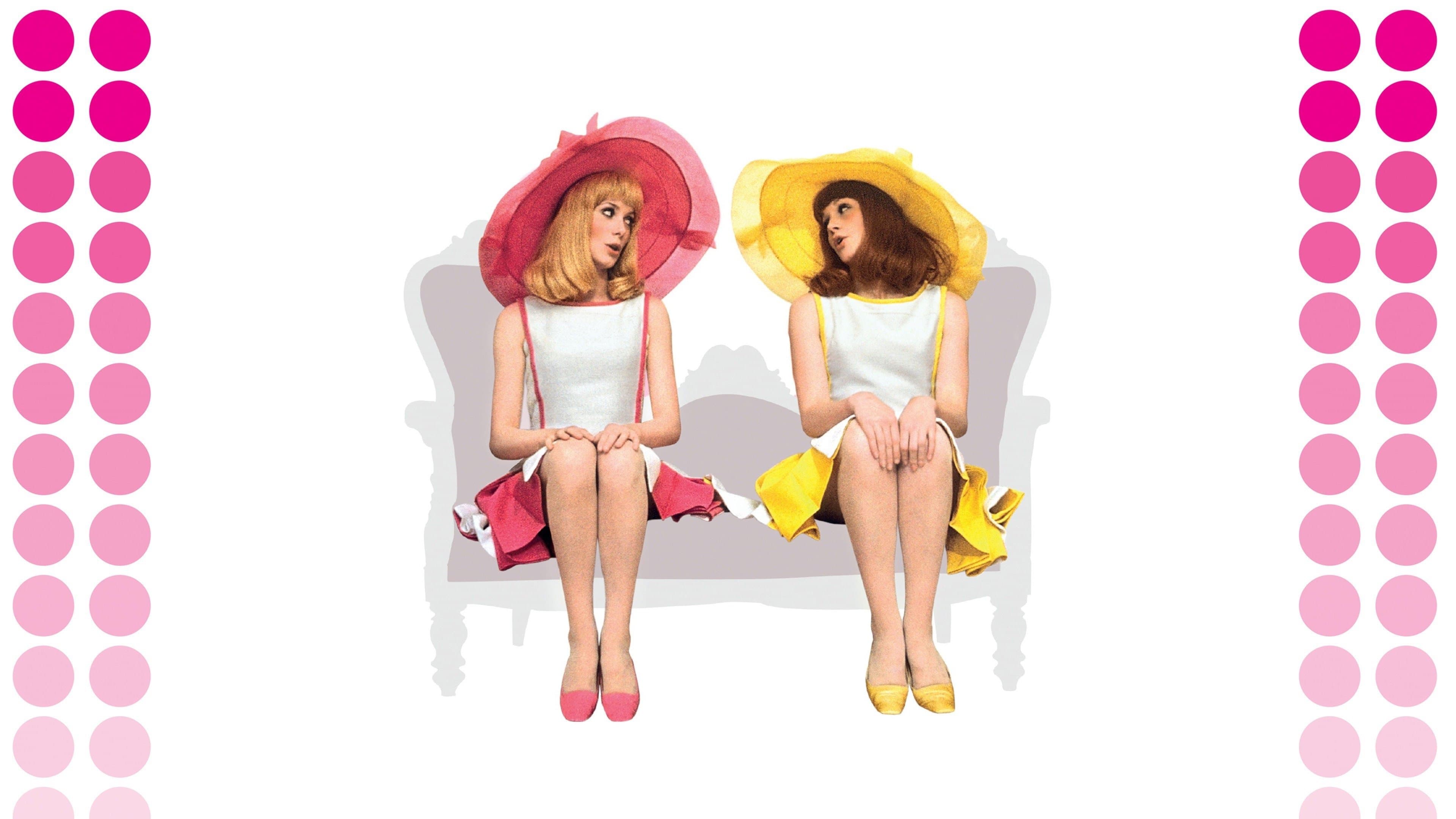
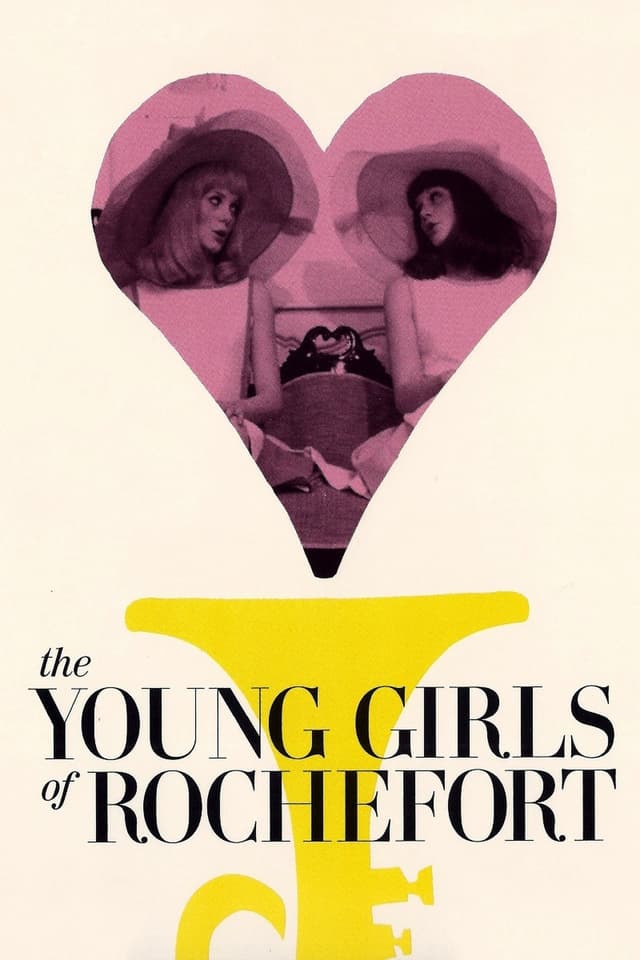
In the seaside town of Rochefort, twin sisters Delphine and Solange dream of love and artistic fulfillment beyond their quiet lives. As sailors, artists, musicians, and chance visitors pass through town during a weekend fair, a web of near-misses and romantic longing brings ideal partners tantalizingly close—without their realizing it.
What Is the Budget of The Young Girls of Rochefort?
The Young Girls of Rochefort (1967) was produced on an estimated budget of approximately $1.5 million, a figure derived from the French franc production costs of the era. For a large-scale musical filmed entirely on location with elaborate choreography, multiple international stars, and an original orchestral score, this represented a significant investment by French standards in the mid-1960s. Director Jacques Demy and producer Mag Bodard committed to building the film as a full-blown Hollywood-style musical within the French industry, where such productions were virtually unheard of.
The budget reflected Demy's ambition to expand on the musical format he had pioneered in The Umbrellas of Cherbourg (1964). While Umbrellas had been a sung-through drama with minimal dancing, Rochefort required professional choreography, large ensemble dance sequences, and the participation of American stars Gene Kelly and George Chakiris, both of whom commanded fees well above typical French actor salaries.
Key Budget Allocation Categories
- Cast Salaries The ensemble included Catherine Deneuve, Francoise Dorleac, Gene Kelly, George Chakiris, Danielle Darrieux, Michel Piccoli, and Jacques Perrin. Securing Kelly and Chakiris from Hollywood added a premium to the casting budget that most French productions of the period would never have attempted.
- Music and Score Michel Legrand composed an entirely original score with dozens of songs and orchestral arrangements. Recording sessions required a full orchestra, and the complexity of syncing pre-recorded tracks to on-set playback demanded extensive studio time.
- Location and Set Design The production famously repainted large sections of the town of Rochefort in bright pastels, pinks, yellows, and blues to create the candy-colored visual palette Demy envisioned. This transformation of real buildings and public squares was a major practical expense.
- Choreography and Rehearsals Norman Maen choreographed the dance sequences, which required weeks of rehearsal before principal photography. Deneuve and Dorleac trained extensively, and the large ensemble numbers with dozens of dancers added both time and cost.
- Cinematography and Equipment Ghislain Cloquet shot the film in widescreen Franscope (the French anamorphic format), capturing the town's geometry and color in a way that demanded careful lighting of outdoor locations and large interior sets.
- Post-Production Sound mixing was particularly complex given the pre-recorded musical tracks, dialogue, and ambient sound layers. The editing had to precisely match choreography to playback, requiring meticulous conforming of picture to score.
How Does The Young Girls of Rochefort's Budget Compare to Similar Films?
Placing the film's $1.5 million budget alongside other musicals from the 1960s reveals how ambitious Demy's production was within its national context, even as it remained modest by Hollywood standards.
- The Umbrellas of Cherbourg (1964) Budget ~$500K | Worldwide ~$7M. Demy's prior musical was produced for a fraction of the cost because it featured no dance sequences and was filmed in a single small town with a smaller cast. Rochefort tripled the investment to deliver a fundamentally different scale of spectacle.
- West Side Story (1961) Budget ~$6M | Worldwide ~$44M. The Hollywood gold standard for musicals in this era operated at four times Rochefort's budget, with studio resources, back lots, and an established musical infrastructure that France simply did not have.
- Funny Face (1957) Budget ~$3M | Worldwide ~$8M. Gene Kelly's peers in the Paramount musical stable worked with double Demy's resources a full decade earlier, illustrating how lean the French production was by comparison.
- A Man and a Woman (1966) Budget ~$150K | Worldwide ~$14M. Claude Lelouch's Cannes winner showed that French cinema could achieve global commercial success on a shoestring, but it was a two-character drama, not a choreographed musical with a cast of hundreds.
The Young Girls of Rochefort Box Office Performance
The Young Girls of Rochefort performed strongly in France upon its March 1967 release, drawing over 1.3 million admissions in its initial theatrical run. For a French musical, a genre with almost no domestic precedent at this scale, this was a commercial validation of Demy's vision. The film was distributed internationally and played in art house circuits across Europe and North America, though exact worldwide gross figures from the 1960s are difficult to verify with precision.
Using a standard break-even estimate of roughly two times the production budget (accounting for prints, advertising, and distribution fees), the film needed approximately $3 million in total revenue to reach profitability. French theatrical receipts alone likely approached or met this threshold, and international distribution pushed the film into the black. The production was considered a financial success, though not the kind of blockbuster that would have justified a wave of French musicals.
The film's commercial afterlife has been substantial. Agnes Varda, Demy's widow, supervised a full 4K restoration that brought the film back to theaters worldwide and onto home video and streaming platforms. These re-releases have introduced the film to new generations, and it now ranks among the most recognized French musicals ever made, ensuring ongoing revenue decades after its original run.
The Young Girls of Rochefort Production History
Jacques Demy conceived The Young Girls of Rochefort as a direct response to the success of The Umbrellas of Cherbourg, which won the Palme d'Or at Cannes in 1964 and earned an Oscar nomination for Best Foreign Language Film. Where Umbrellas had been melancholic and entirely sung, Demy wanted Rochefort to be joyful, danced, and infused with the spirit of the classic MGM musicals he had loved since childhood. He chose the coastal town of Rochefort specifically for its geometric town square and neoclassical architecture, which provided natural stages for choreography.
The most striking production decision was the physical transformation of Rochefort itself. Demy ordered entire building facades, shutters, and storefronts repainted in vivid pastels. The town's central square became a candy-colored set piece that exists nowhere else in 1960s cinema. Local residents participated as extras, and the production effectively took over the town for the duration of the shoot, creating a festival atmosphere that blurred the line between movie set and real life.
Casting Gene Kelly was a coup that Demy had dreamed of for years. Kelly, then 54, accepted the role partly because he admired Umbrellas and saw the project as a chance to work in the European art film tradition while doing what he did best. George Chakiris, fresh from his Oscar win for West Side Story, joined as the other male lead. The pairing of these Hollywood musical veterans with Catherine Deneuve and Francoise Dorleac, who were real-life sisters, gave the film a unique transatlantic energy.
Dorleac's involvement carries a tragic weight. She and Deneuve were extraordinarily close, and their on-screen chemistry as twin sisters reflected their real bond. On June 26, 1967, just three months after the film's premiere, Dorleac died in a car accident near Nice at the age of 25. She never saw the film's international release, and Rochefort became her final major role. Deneuve has spoken about the film with both deep affection and profound sadness throughout her career.
Michel Legrand's score was composed and recorded before filming began, as the choreography and performances had to be synced to playback on set. This meant the entire musical architecture of the film existed as a finished recording before a single frame was shot, a method borrowed from the Hollywood studio system that was foreign to French production practices. Legrand wrote over two dozen songs and instrumental pieces, creating one of the most celebrated film scores in French cinema history.
Awards and Recognition
The Young Girls of Rochefort received a warm reception from French critics and audiences upon release, though it did not achieve the same level of international award recognition as The Umbrellas of Cherbourg. The film was nominated for several Cesar Awards in subsequent years as the French award system formalized, and Michel Legrand's score was recognized as one of his finest achievements.
The film's legacy has grown enormously over the decades. Agnes Varda's meticulous 4K restoration brought the film to major retrospective screenings at festivals worldwide, including Cannes and the New York Film Festival. It is now regularly cited in surveys of the greatest musicals ever made and is considered essential viewing in French cinema education. The Criterion Collection released a definitive edition that cemented its status in the English-speaking world.
Legrand's score has taken on a life of its own, with songs like "Chanson des jumelles" and the main theme becoming staples of French popular music. The score is frequently performed in concert settings and has been recorded by artists across multiple genres, ensuring that the film's musical identity persists independently of the film itself.
Critical Reception
The Young Girls of Rochefort holds an 83% approval rating on Rotten Tomatoes, reflecting broad critical admiration tempered by occasional reservations about the film's deliberately lightweight plot. Critics have consistently praised the visual design, the score, and the performances, while some have noted that the narrative, which interweaves multiple romantic storylines across a single weekend, prioritizes mood and movement over dramatic depth.
French critics at the time recognized the film as a remarkable technical and artistic achievement, a genuine attempt to create a Hollywood-caliber musical within the French system. The transformation of Rochefort, the choreography, and the integration of American and French stars were all cited as evidence of Demy's singular ambition. Some critics compared it unfavorably to Umbrellas, finding the earlier film's emotional gravity more affecting, but most acknowledged that Demy was pursuing an entirely different register: pure joy rather than bittersweet romance.
International critics have been particularly generous in retrospect. The film's reputation has risen steadily since the 1990s, driven by restorations, retrospectives, and a growing appreciation for Demy's unique position in cinema history as the only French filmmaker to seriously engage with the American musical tradition. The tragedy of Dorleac's death has added an unavoidable emotional layer to viewings, as audiences watch two sisters dancing together in a film that celebrates happiness while knowing that one of them would be gone within months.
Frequently Asked Questions
How much did it cost to make The Young Girls of Rochefort (1967)?
The production budget has not been publicly disclosed.
How much did The Young Girls of Rochefort (1967) earn at the box office?
Box office figures are not publicly available.
Was The Young Girls of Rochefort (1967) profitable?
Insufficient data for a profitability assessment.
What were the biggest costs in producing The Young Girls of Rochefort?
Specific cost breakdowns are not publicly available.
How does The Young Girls of Rochefort's budget compare to similar romance films?
Without a confirmed budget, comparison is not possible.
Did The Young Girls of Rochefort (1967) go over budget?
There are no widely reported accounts of significant budget overruns for this production. However, studios rarely disclose precise budget overrun figures publicly. The reported production budget reflects the final estimated cost.
What awards did The Young Girls of Rochefort (1967) win?
Nominated for 1 Oscar. 2 nominations total.
Who directed The Young Girls of Rochefort and who were the key crew members?
Directed by Jacques Demy, written by Jacques Demy, shot by Ghislain Cloquet, with music by Michel Legrand, edited by Jean Hamon.
Where was The Young Girls of Rochefort filmed?
The Young Girls of Rochefort was filmed in France.
Filmmakers
The Young Girls of Rochefort

Official Trailer
Build budgets like this one in Saturation
Start from an industry-standard feature film template, import the schedule and rates you already have, and let the cost report keep itself current as you spend. Real-time collaboration, no spreadsheets.