The Young and the Damned Budget
Updated
Synopsis
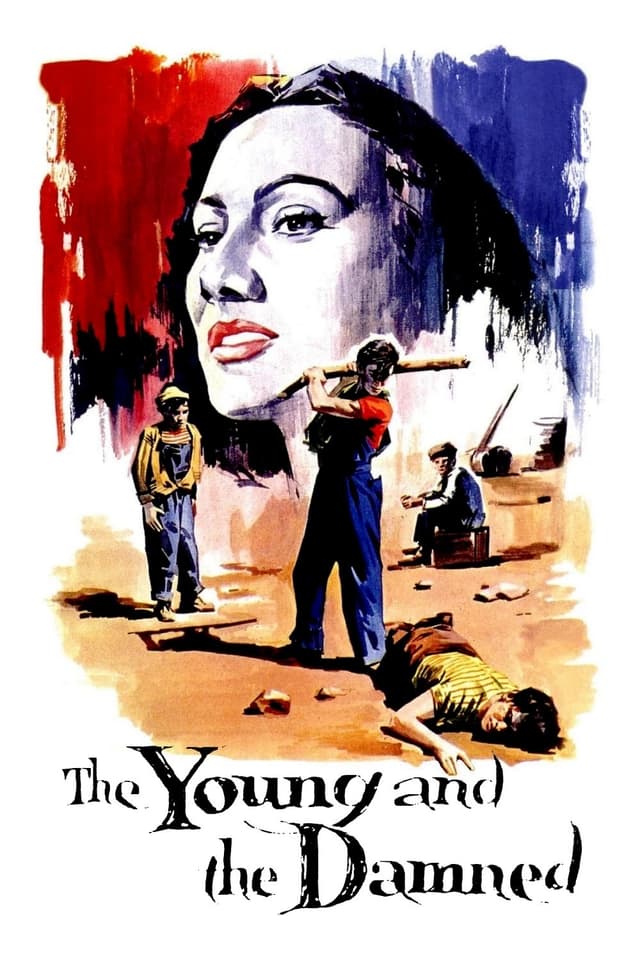
In the slums of Mexico City, juvenile delinquent Jaibo escapes from a reformatory and corrupts younger boys, especially the impressionable Pedro, leading to violence and tragedy. Luis Buñuel's scathing Mexican social-realist drama (also known as Los Olvidados, "The Forgotten Ones") won Best Director at the 1951 Cannes Film Festival.
What Is the Budget of The Young and the Damned (1950)?
The Young and the Damned (1950, original title Los Olvidados, "The Forgotten Ones"), written and directed by Luis Buñuel, was produced on a reported budget of approximately 450,000 Mexican pesos in 1950 figures, the equivalent of roughly $35,000 U.S. dollars at the contemporary exchange rate (and approximately $400,000 to $500,000 in 2020s inflation-adjusted dollars). The film was financed by Mexican producer Óscar Dancigers through his production company Ultramar Films, with a 21-day shooting schedule that reflected the extreme cost-control discipline typical of Mexican commercial cinema in the late 1940s and early 1950s.
Buñuel had been working in commercial Mexican cinema since 1946 as a director-for-hire, producing genre features for the Mexican studio system following his exile from Franco's Spain and his subsequent years in the United States. Producer Óscar Dancigers, a Russian-born Mexican exile producer, had previously employed Buñuel on the 1949 comedy The Great Madcap (El Gran Calavera) and offered Buñuel creative freedom on the next project provided he delivered on schedule and on budget. Buñuel proposed Los Olvidados as a social-realist drama about Mexico City's street children, drawing on his pre-production research with the city's reformatories and impoverished neighborhoods.
Key Budget Allocation Categories
The micro-budget production was distributed across these focused areas:
- Mexico City Location Production: Principal photography ran across the slum neighborhoods of Mexico City in February through April 1950, with substantial location shooting in the colonia Romita and Mercado Hidalgo areas. Studio interiors were shot at Tepeyac Studios (Estudios Tepeyac) in Mexico City. The location-heavy approach kept production design costs low while delivering documentary authenticity.
- Cast: The principal young leads (Alfonso Mejía as Pedro, Roberto Cobo as Jaibo, Estela Inda as Pedro's mother) were either young nonprofessionals from the Mexico City neighborhoods or rising Mexican actors paid at standard Mexican commercial rates. Adult supporting cast included established Mexican actors Miguel Inclán and Alma Delia Fuentes.
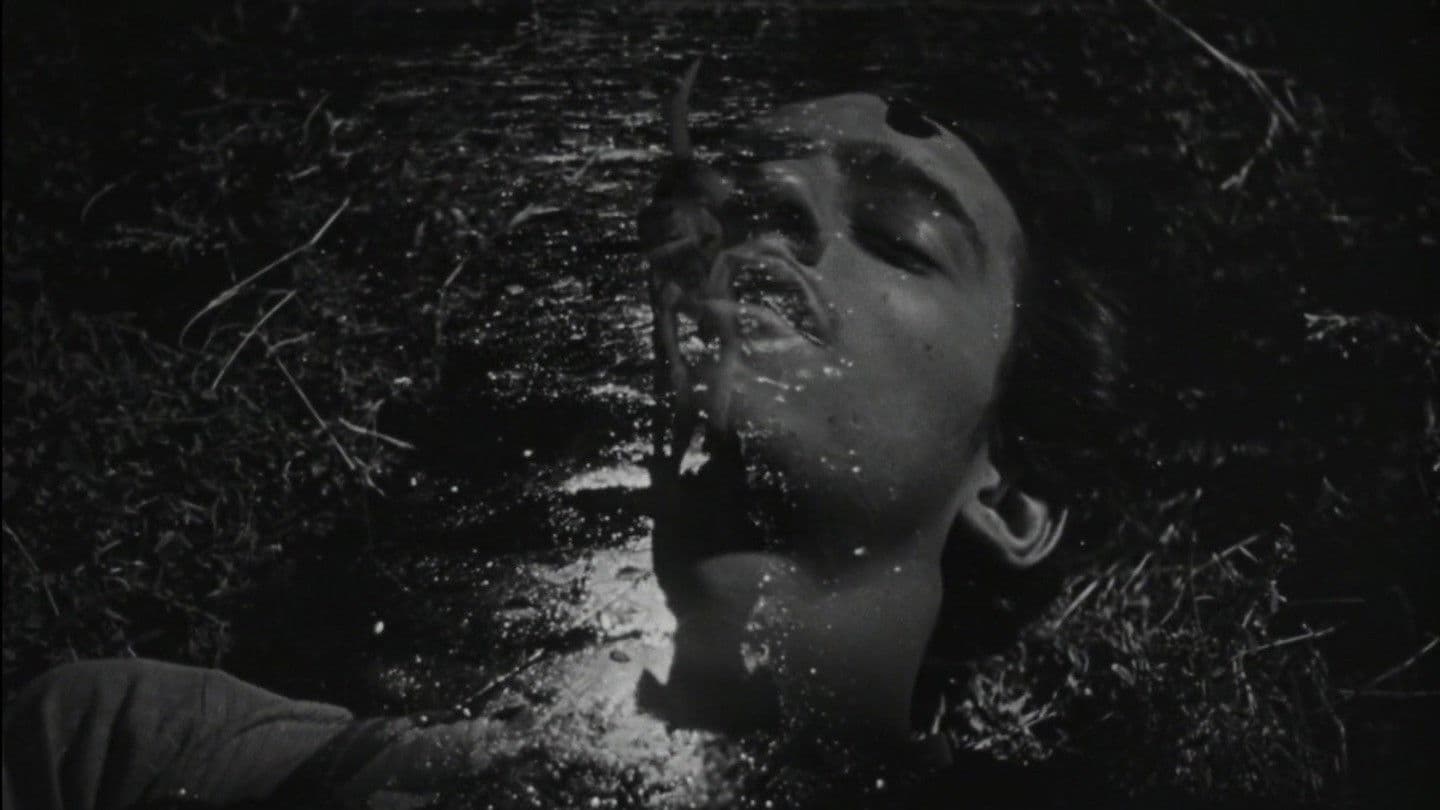
- Cinematography: Cinematographer Gabriel Figueroa (1907-1997), one of the most celebrated cinematographers in Mexican cinema history, photographed the film. Figueroa had worked with directors including John Ford, John Huston, Emilio Fernández, and Luis Buñuel multiple times. The 21-day schedule required Figueroa's established efficiency on a tight Mexican-studio shoot, with the film's expressionist visual style (particularly the surreal dream sequence) achieved through camera, lighting, and in-camera techniques rather than post-production effects.
- Score and Sound: Composer Rodolfo Halffter scored the film with a dissonant, modernist orchestral approach. The film's sparse music cues and naturalistic sound design were budget-appropriate to the Mexican commercial production scale.
- Editor and Post: Editor Carlos Savage shaped the 80-minute film during a compressed Mexican commercial cinema post-production schedule. The film's controlled rhythm and the integration of the now-famous surreal dream sequence required precise post-production attention within the studio's standard turnaround timeline.
- Cannes Submission: After completion, producer Óscar Dancigers and Buñuel submitted the film to the 1951 Cannes Film Festival, where its Best Director win (and Octavio Paz's public advocacy on behalf of the film) elevated it to international art-house status well beyond its initial Mexican commercial release.
How Does The Young and the Damned's Budget Compare to Similar Films?
The film operates at the budget scale typical of Mexican Golden Age commercial cinema, dramatically lower than contemporaneous Hollywood productions:
- Bicycle Thieves (1948): Budget approximately $130,000 (1948 dollars) | Worldwide approximately $7,000,000 (1948-1949). Vittorio De Sica's Italian neorealist masterpiece is the closest international peer in subject matter (urban poverty), period, and critical reputation.
- Rome, Open City (1945): Budget approximately $19,000 (1945 dollars) | Limited theatrical / canonical. Roberto Rossellini's founding Italian neorealist work offers another close European art-cinema comparison.
- The Boy with Green Hair (1948): Budget approximately $700,000 (1948 dollars) | Worldwide $1,400,000. Joseph Losey's American socially conscious children's film illustrates the higher-budget American studio comparison.
- Macunaíma (1969): Budget approximately $200,000 (1969 dollars). Joaquim Pedro de Andrade's Brazilian Cinema Novo work offers a Latin American art-cinema comparison from a later period.
- The Pearl (1947): Budget approximately $300,000 (1947 dollars). The earlier Mexico-set RKO co-production directed by Emilio Fernández illustrates the Mexico-Hollywood crossover budget tier of the late 1940s.
The Young and the Damned Box Office Performance
The film opened in Mexico City on November 9, 1950 at the Cinema México theater and was initially met with hostile critical reception from Mexican press and public, with some commentators considering its depiction of Mexico City poverty as a betrayal of national image. The film was pulled from theaters after only three days. The Mexican initial theatrical revenue was minimal.
The film's reception transformed completely in May 1951, when it premiered at the Cannes Film Festival and won Best Director (Luis Buñuel) and the FIPRESCI Prize. Mexican intellectual Octavio Paz publicly campaigned for the film during the festival, distributing essays defending Buñuel's vision. Following the Cannes triumph, the film was re-released in Mexico to substantially better critical and commercial reception, and subsequent international art-house distribution followed through the 1950s and 1960s. Documented box office figures are incomplete:
Box Office Breakdown
The Young and the Damned

The film's commercial significance lies less in initial theatrical revenue than in its sustained cultural prestige and continuous canonization. Los Olvidados has been continuously available in theatrical revival, home video, and streaming through Criterion Collection, the Mexican Cineteca Nacional, and international art-cinema distributors. In 2003 UNESCO inscribed the film in its Memory of the World Programme, making it the first film granted that designation.
The Young and the Damned Production History
Development began in 1949 when Luis Buñuel proposed a social-realist film about Mexico City street children to producer Óscar Dancigers. Buñuel and co-writer Luis Alcoriza spent several months conducting field research, observing the lives of children in the Mexico City colonia Romita, the central market districts, and the city's juvenile detention facilities. Buñuel later described the research process as a deliberate effort to "see, not to imagine" the conditions he would depict on screen.
The screenplay was developed during summer 1949, drawing on real testimonies from Mexico City street children and on case files Buñuel reviewed during his research. The script's commitment to depicting harsh urban poverty without sentimentalization or melodramatic redemption was unusual for Mexican commercial cinema of the period, which favored melodrama and family-centered comedy.
Principal photography ran for 21 days in February through April 1950, primarily in Mexico City. Cinematographer Gabriel Figueroa photographed the film with his characteristic chiaroscuro lighting and expressionist compositions, including the now-famous surreal dream sequence in which Pedro hallucinates raw meat passing between his mother and the predatory Jaibo. The dream sequence drew on Buñuel's surrealist filmmaking past in 1920s and 1930s Europe.
Studio interiors were shot at Estudios Tepeyac in Mexico City, with the production wrapping on schedule. The film was completed and submitted to the 1951 Cannes Film Festival, where producer Dancigers and Mexican intellectual Octavio Paz mounted a coordinated advocacy campaign on its behalf. The Cannes Best Director win (and the FIPRESCI Prize) transformed Buñuel's commercial Mexican director-for-hire career into international art-cinema prestige, leading directly to his subsequent Spanish (Viridiana, 1961) and French (Belle de Jour, 1967; The Discreet Charm of the Bourgeoisie, 1972; The Phantom of Liberty, 1974; That Obscure Object of Desire, 1977) art-house masterworks.
Awards and Recognition
Los Olvidados won the Best Director Award (Luis Buñuel) at the 1951 Cannes Film Festival and the International Critics' Award (FIPRESCI Prize) at the same festival. The film also won the Mexican Ariel Award for Best Picture, Best Director, and additional craft categories in 1951, after the Mexican film industry reversed its initial hostility following the Cannes triumph.
In 2003, UNESCO inscribed Los Olvidados in its Memory of the World Programme, recognizing the film as documentary heritage of universal significance. The film became the first motion picture granted that designation. Subsequent canonization has placed the film consistently in international Best of All Time polls: Sight & Sound, Cahiers du Cinéma, and the Toronto International Film Festival have all recognized the film in retrospective surveys. The Mexican Academy of Motion Picture Arts and Sciences has named Buñuel one of the most important filmmakers in Mexican history, with Los Olvidados as the defining work of his Mexican period.
Critical Reception
Los Olvidados was initially received hostilely in Mexico upon its November 1950 theatrical release, with mainstream Mexican press accusing Buñuel of slandering the nation by depicting its urban poverty without redemption. The film was pulled from theaters after only three days. The reception transformed completely following the May 1951 Cannes Best Director win, after which the Mexican intellectual class led by Octavio Paz mounted a coordinated defense of the film and the Mexican film industry reversed its position.
Subsequent critical canonization has been extraordinary. The film holds a 98% approval rating on Rotten Tomatoes (based on the available limited sample of English-language critics) and is included in Sight & Sound's Greatest Films of All Time polls. Roger Ebert wrote in his Great Movies essay that Los Olvidados "stands among the most powerful indictments of urban poverty ever filmed, with Buñuel's commitment to depicting his subjects without sentimentalization producing both its initial controversy and its enduring power." J. Hoberman of The Village Voice called the film "the foundational Latin American art-cinema masterwork."
Octavio Paz's contemporary essay defending the film (published in the journal Sur in 1951) remains one of the most-cited works of Latin American film criticism. Paz wrote that "Buñuel has refused to flatter, has refused to console, and has refused to look away," establishing the film's central critical defense as a work of moral rather than melodramatic realism. Subsequent scholarly literature has positioned the film as the foundational text in Latin American art-cinema and a foundational influence on Mexican filmmakers including Arturo Ripstein, Carlos Reygadas, and Alfonso Cuarón. The 2003 UNESCO Memory of the World designation has further cemented the film's status as a permanent fixture of world cinema heritage.
Frequently Asked Questions
How much did The Young and the Damned / Los Olvidados (1950) cost to make?
The film was produced on a reported budget of approximately 450,000 Mexican pesos in 1950, the equivalent of roughly $35,000 U.S. dollars at the contemporary exchange rate (and approximately $400,000 to $500,000 in 2020s inflation-adjusted dollars). The film was financed by producer Óscar Dancigers through Ultramar Films.
What is the original title of The Young and the Damned?
The film's original Spanish title is Los Olvidados, which translates as "The Forgotten Ones." The film has been released internationally under multiple English titles including The Young and the Damned, The Forgotten Ones, and Los Olvidados. The Spanish title is the most widely used in scholarly and repertory contexts.
Who directed Los Olvidados?
Luis Buñuel (1900-1983) directed the film. Buñuel, a Spanish-born director who had been working in commercial Mexican cinema since 1946 following his exile from Franco's Spain and subsequent years in the United States, is widely considered one of the most significant filmmakers of the 20th century. Los Olvidados marked his transition from commercial Mexican director-for-hire to international art-cinema master.
Did Los Olvidados win at Cannes?
Yes. Luis Buñuel won the Best Director Award at the 1951 Cannes Film Festival for Los Olvidados, and the film also won the International Critics' Award (FIPRESCI Prize) at the same festival. The Cannes triumph transformed the film's reception, reversing the initial hostile Mexican critical response.
Where was Los Olvidados filmed?
Principal photography ran for 21 days in February through April 1950, primarily in the slum neighborhoods of Mexico City (substantial location shooting in the colonia Romita and Mercado Hidalgo areas). Studio interiors were shot at Estudios Tepeyac in Mexico City. The location-heavy approach kept production design costs low while delivering documentary authenticity.
Is Los Olvidados a true story?
The film is a fictional dramatization, but the screenplay was developed through extensive field research that Buñuel and co-writer Luis Alcoriza conducted in Mexico City's impoverished neighborhoods and juvenile detention facilities. The screenplay drew on real testimonies from Mexico City street children and on case files Buñuel reviewed during his research.
Who shot Los Olvidados?
Cinematographer Gabriel Figueroa (1907-1997), one of the most celebrated cinematographers in Mexican cinema history, photographed the film. Figueroa's expressionist chiaroscuro style and his now-famous surreal dream sequence (in which Pedro hallucinates raw meat passing between his mother and the predatory Jaibo) are defining visual elements of the film.
Why was Los Olvidados controversial in Mexico?
The film was initially received hostilely in Mexico upon its November 1950 theatrical release, with mainstream Mexican press accusing Buñuel of slandering the nation by depicting urban poverty without redemption or melodramatic catharsis. The film was pulled from theaters after only three days. The reception transformed completely following the May 1951 Cannes Best Director win, after which Octavio Paz led an intellectual defense of the film.
Why is Los Olvidados in the UNESCO Memory of the World Programme?
In 2003, UNESCO inscribed Los Olvidados in its Memory of the World Programme, recognizing the film as documentary heritage of universal significance. The film became the first motion picture granted that designation, in recognition of its enduring importance as a record of urban poverty in mid-20th-century Mexico City and as a defining work of world cinema.
What did Roger Ebert say about Los Olvidados?
Roger Ebert wrote in his Great Movies essay that Los Olvidados "stands among the most powerful indictments of urban poverty ever filmed, with Buñuel's commitment to depicting his subjects without sentimentalization producing both its initial controversy and its enduring power."
Filmmakers
The Young and the Damned

Official Trailer
Build budgets like this one in Saturation
Start from an industry-standard feature film template, import the schedule and rates you already have, and let the cost report keep itself current as you spend. Real-time collaboration, no spreadsheets.