The Wolf House Budget
Updated
Synopsis
After escaping from a religious colony in Chile, Maria seeks shelter in a mansion where she’s taken in by two pigs, its only inhabitants. Like in a stop-motion dream, the universe of the house reacts to her feelings. The animals slowly morph into humans and the house into a dark, menacing world.
What Is the Budget of The Wolf House?
The Wolf House (La Casa Lobo) was produced on an estimated budget of $100,000 to $200,000, placing it firmly in the micro-budget category even by independent animation standards. The film was funded in part through CORFO, Chile's national economic development agency that supports local film production through competitive grants. Directors Cristobal Leon and Joaquin Cocina supplemented public funding with revenue from their gallery installation work, as the film's production method doubled as a touring art exhibit at institutions across Chile and internationally.
For context, this budget range is remarkably low for a feature-length animated film of any kind. Most stop-motion features require budgets in the millions, but Leon and Cocina kept costs minimal by working with a skeleton crew, using found and inexpensive materials, and integrating the production process into their existing art practice. The five-year production timeline (2013 to 2018) spread costs over a long period, making the project financially viable without commercial studio backing.
Key Budget Allocation Categories
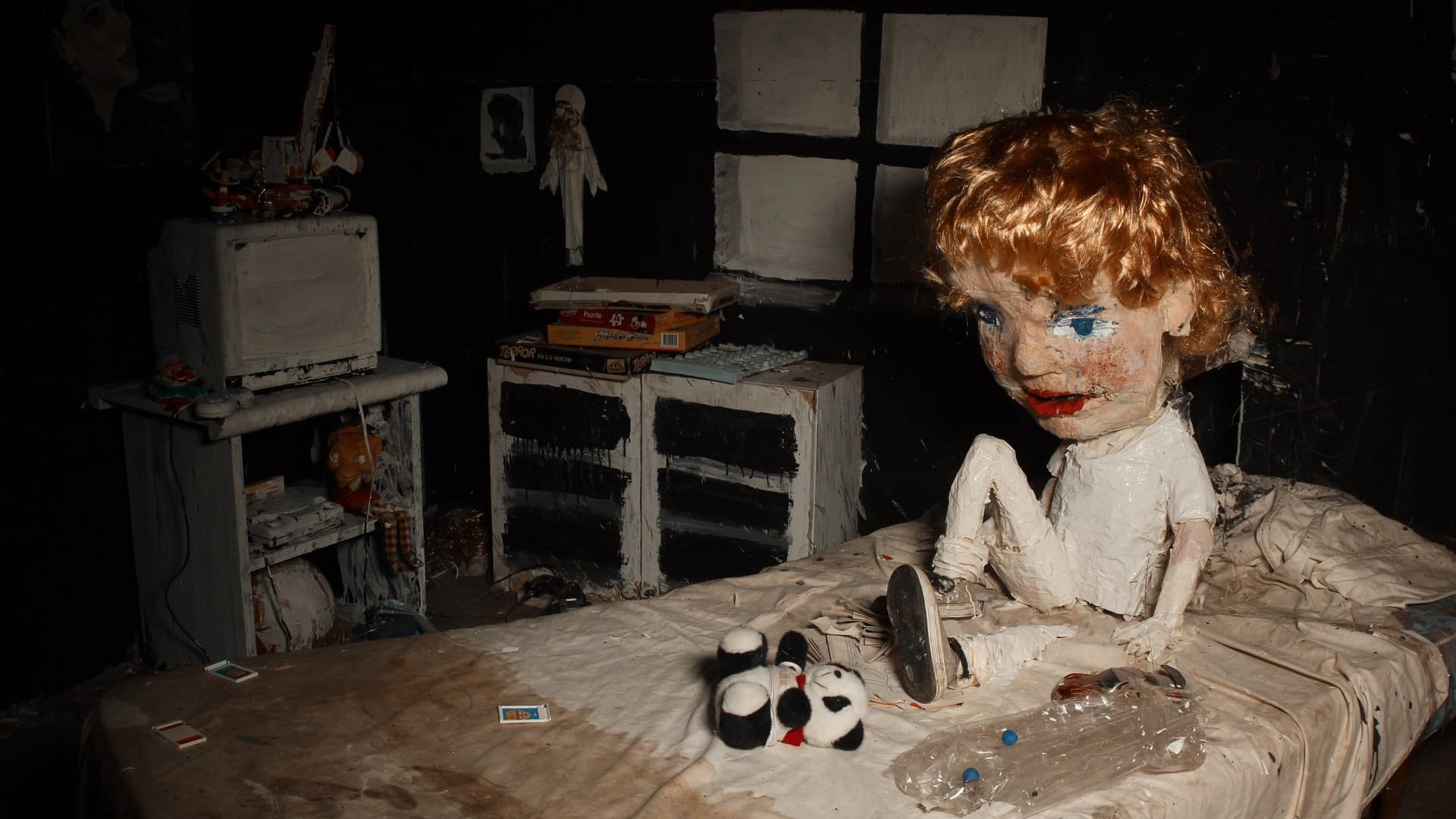
- Materials and Set Construction The film's sets were built from everyday materials including cardboard, paint, tape, masking materials, and found objects. Each scene was constructed and then gradually destroyed or transformed in-camera, requiring continuous rebuilding throughout the five-year shoot.
- Animation Labor Stop-motion animation is extraordinarily labor-intensive. Leon and Cocina served as the primary animators, with a small team of assistants. The continuous single-take approach meant every frame had to be precisely planned to maintain the illusion of an unbroken camera movement through transforming spaces.
- Gallery Installation Costs Because the film was produced across multiple gallery installations in Chile and abroad, venue logistics, shipping of materials, and installation setup represented a meaningful portion of the budget. Each gallery residency produced a segment of the final film.
- Camera and Lighting Equipment The production used relatively modest camera equipment by feature film standards, though specialized rigs were necessary to achieve the continuous tracking shot effect that defines the film's visual language.
- Sound Design and Music The atmospheric soundtrack and sound design were critical to the film's horror atmosphere. Sound work was completed in post-production after the animation was assembled from years of gallery-shot footage.
- Post-Production and Editing Assembling five years of footage shot across different locations into a seamless 75-minute film required substantial editing and compositing work to maintain the single-take illusion throughout.
How Does The Wolf House's Budget Compare to Similar Films?
- Anomalisa (2015) Budget $8M | Worldwide $7.2M. Charlie Kaufman's stop-motion drama cost roughly 40 to 80 times more than The Wolf House, illustrating the gulf between studio-backed and independently produced stop-motion features.
- My Life as a Zucchini (2016) Budget $8M | Worldwide $16.7M. This Swiss-French stop-motion film operated at a similar scale to Anomalisa, demonstrating that even "small" European stop-motion films typically require budgets far exceeding what Leon and Cocina worked with.
- Junk Head (2017) Budget ~$30K (initial short) | Limited release. Japanese filmmaker Takahide Hori spent years building and animating his stop-motion sci-fi film largely alone, making it one of the few comparable micro-budget stop-motion features.
- It's Such a Beautiful Day (2012) Budget ~$500K | Limited release. Don Hertzfeldt's animated feature used mixed media techniques on a minimal budget, achieving critical acclaim through festivals and limited distribution similar to The Wolf House's release path.
- Mad God (2021) Budget undisclosed (crowdfunded) | Limited release. Phil Tippett's 30-year stop-motion passion project shares The Wolf House's DNA as an animator-driven labor of love produced outside the commercial system over an extended timeline.
The Wolf House Box Office Performance
The Wolf House received an extremely limited theatrical release, primarily through festival screenings and specialty art-house venues. Precise worldwide box office figures are not publicly reported, which is typical for micro-budget animated films that circulate through the festival and gallery circuit rather than conventional theatrical distribution.
The film's distribution followed a pattern common to experimental animation: premieres at major international festivals (Berlin International Film Festival, Toronto International Film Festival, Fantastic Fest), followed by curated theatrical runs at cinematheques and independent theaters in select cities. KimStim acquired North American distribution rights, releasing the film in the U.S. in early 2020.
With an estimated production budget of $100,000 to $200,000, the break-even threshold (roughly 2x budget to account for prints and advertising) would fall between $200,000 and $400,000. Given the film's distribution through festival fees, international sales, streaming licensing, and home video, it likely recouped its modest investment over time. The gallery installations that produced the film also generated separate revenue, effectively subsidizing the production costs before the film was even completed.
The Wolf House Production History
Cristobal Leon and Joaquin Cocina began developing The Wolf House in 2013 as an extension of their collaborative art practice, which had already produced acclaimed short films including Lucía (2007) and Luis (2008). The concept drew from the dark history of Colonia Dignidad, a secretive German commune in southern Chile led by Paul Schafer, a convicted child abuser who ran the settlement from 1961 until his arrest in 2005. The film presents itself as a propaganda film supposedly made by the colony, following a young woman named Maria who escapes into a house in the forest where she cares for two pigs that gradually transform into human children.
The production method was unlike any conventional animation process. Leon and Cocina set up their workshop in gallery spaces, building sets that visitors could observe during museum hours. Each installation residency produced a portion of the film, with the directors animating frame by frame while the sets continuously transformed around the camera. Walls, furniture, and characters morphed from one material to another, with paint spreading across surfaces and figures growing from the walls themselves. The entire film was designed to appear as a single continuous camera movement through these shifting environments.
Gallery residencies took place at institutions across Chile and internationally, including the Museum of Contemporary Art in Santiago, the Carpenter Center at Harvard, and spaces in Buenos Aires, New York, and Berlin. Each location contributed a segment that was later stitched together in post-production. This approach meant the film was simultaneously a production, an installation artwork, and a performance piece throughout its five-year creation.
The film premiered at the 2018 Berlin International Film Festival in the Forum section, followed by screenings at the Toronto International Film Festival, Fantastic Fest in Austin, and dozens of other festivals worldwide. The premiere was met with immediate critical enthusiasm, with reviewers highlighting the film's nightmarish atmosphere and unprecedented visual approach.
Awards and Recognition
The Wolf House received widespread recognition on the international festival circuit and in year-end critical lists, establishing Leon and Cocina as major voices in contemporary animation.
- Berlin International Film Festival (2018) World premiere in the Forum section, one of the festival's most prestigious sidebars for innovative and experimental cinema.
- Toronto International Film Festival (2018) Selected for the Wavelengths program dedicated to avant-garde and boundary-pushing work.
- Fantastic Fest (2018) Screened in the animated features program at Austin's genre film festival, where it became one of the most discussed titles of the edition.
- Annecy International Animation Film Festival Recognized at the world's largest animation-dedicated festival, further cementing the film's reputation within the professional animation community.
- Chilean Film Critics' Circle Named among the best Chilean films of the year, acknowledging the directors' contribution to national cinema.
- Rotten Tomatoes: 96% Critical Score Near-universal critical praise positioned the film as one of the highest-rated animated features of 2018 and one of the most acclaimed Chilean films in recent memory.
Critical Reception
The Wolf House earned extraordinary critical praise, with reviewers consistently describing it as one of the most original and unsettling animated films ever made. On Rotten Tomatoes, the film holds a 96% approval rating, reflecting near-unanimous admiration from critics who encountered it on the festival circuit and during its limited U.S. release.
Critics highlighted the film's unique visual approach as its defining achievement. The continuous transformation of sets, where walls melt into new configurations and characters shift between two and three dimensions, was described as genuinely unprecedented in the history of animation. Reviewers drew comparisons to the Brothers Quay, Jan Svankmajer, and David Lynch, while noting that Leon and Cocina had created something that belonged to no existing tradition.
The film's engagement with the history of Colonia Dignidad added a layer of political weight that elevated it beyond pure visual experimentation. Critics praised how the framing device of a "propaganda film" created an atmosphere of institutional menace, where the domestic warmth of the house concealed something deeply sinister. The allegory of control, transformation, and captivity resonated with audiences familiar with Chile's history under authoritarian rule.
Several publications named The Wolf House among the best films of 2018 across all categories, not just animation. Its reputation has continued to grow since release, with the film frequently cited in discussions of the most innovative animated features of the 2010s. Leon and Cocina's follow-up project, The Bones (Los Huesos, 2021), was met with similar anticipation, confirming that their debut feature had launched an enduring body of work.
Frequently Asked Questions
How much did it cost to make The Wolf House (2018)?
The production budget was $245,000, covering principal photography, visual effects, cast and crew salaries, locations, sets, post-production, and music. Marketing and distribution (P&A) costs are estimated at an additional $122,500 - $196,000, bringing the total studio investment to approximately $367,500 - $441,000.
How much did The Wolf House (2018) earn at the box office?
Box office figures are not publicly available.
Was The Wolf House (2018) profitable?
Insufficient data for a profitability assessment.
What were the biggest costs in producing The Wolf House?
The primary cost drivers were above-the-line talent (Amalia Kassai, Rainer Krause, Karina Hyland); multi-year animation production, celebrity voice talent, and original musical compositions; international production across Chile, Germany.
How does The Wolf House's budget compare to similar animation films?
At $245,000, The Wolf House is classified as a ultra-low-budget production. The median budget for wide-release animation films in the 2010s ranges from $30 - 80M for mid-budget to $150M+ for tentpoles. Comparable budgets: High and Low (1963, $250,000); The Kid (1921, $250,000); Rashomon (1950, $250,000).
Did The Wolf House (2018) go over budget?
There are no widely reported accounts of significant budget overruns for this production. However, studios rarely disclose precise budget overrun figures publicly. The reported production budget reflects the final estimated cost.
What awards did The Wolf House (2018) win?
7 wins & 15 nominations total.
Who directed The Wolf House and who were the key crew members?
Directed by Cristóbal León, Joaquín Cociña, written by Cristóbal León, Alejandra Moffat, Joaquín Cociña.
Where was The Wolf House filmed?
The Wolf House was filmed in Chile, Germany. The film was shot in several studios and exhibitions at museums of different cities from Latin America and Europe including the Upstream Gallery in Amsterdam, Netherlands, the Kampnagel in Hamburg, Germany and the Chilean National Museum of Fine Arts in Santiago, Chile. [Filming] The film was shot in several studios and exhibitions at museums of different cities from Latin America and Europe including the Upstream Gallery in Amsterdam, Netherlands, the Kampnagel in Hamburg, Germany and the Chilean National Museum of Fine Arts in Santiago, Chile..
Filmmakers
The Wolf House

Official Trailer
Build budgets like this one in Saturation
Start from an industry-standard feature film template, import the schedule and rates you already have, and let the cost report keep itself current as you spend. Real-time collaboration, no spreadsheets.