The Way Back Budget
 DramaAdventureHistory2h 13m
Updated
Synopsis
Jack Cunningham once had a life filled with promise. In high school, he was a basketball phenom with a full university scholarship, when suddenly, for reasons unknown, he walked away from the game, forfeiting his future. Now years later, Jack is spiraling down, triggered by an unspeakable loss, and drowning in the alcoholism that cost him his marriage and any hope for a better life. When he is asked to coach the basketball team at his alma mater, which has fallen far since his glory days, he reluctantly accepts, surprising no one more than himself. As the boys start to come together as a team and win, Jack may have finally found a reason to confront the demons that have derailed him. But will it be enough to fill the void, heal the deep wounds of his past, and set him on the road to redemption?
What Is the Budget of The Way Back?
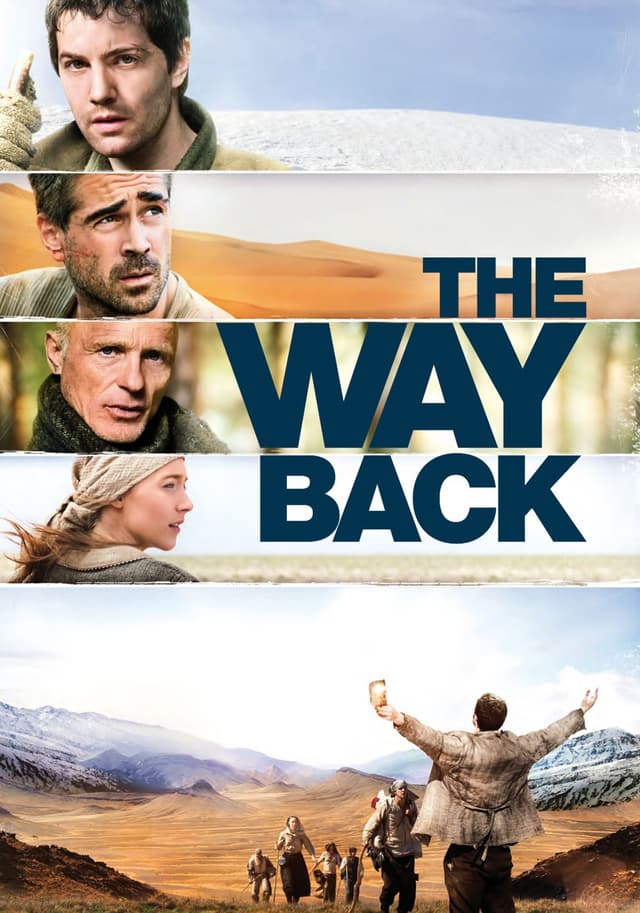
The Way Back (2010) was produced with an estimated budget of $30 million. Directed by Peter Weir and produced through a collaboration between National Geographic Films, Exclusive Media Group, and Newmarket Films, the project represented a significant financial commitment for an epic survival drama without franchise appeal or major action set pieces. The budget reflected the film's ambitious scope: a story spanning thousands of miles across multiple continents, requiring extensive location shooting in varied and remote environments.
For Weir, whose previous film Master and Commander: The Far Side of the World (2003) had commanded a $150 million budget at Fox, The Way Back marked a deliberate shift to a more modestly scaled production. The $30 million figure was lean for a film of this geographic ambition, requiring careful resource allocation to capture the vast landscapes central to the story.
Key Budget Allocation Categories
- Location Filming: The production shot across Bulgaria, Morocco, and India to represent Siberia, the Mongolian steppe, the Gobi Desert, and the Himalayas. Transporting cast and crew across three countries with distinct logistical challenges consumed a major share of the budget.
- Cast Salaries: The ensemble featured Jim Sturgess, Ed Harris, Colin Farrell, Saoirse Ronan, and Mark Strong. While none commanded blockbuster-level fees, the combined cost of a respected international cast was a meaningful budget line.
- Production Design and Costumes: Recreating 1940s-era Soviet gulag conditions, period-accurate wardrobe for characters enduring months of travel, and the progressive physical deterioration of the escapees all required detailed work from the art and costume departments.
- Cinematography: Russell Boyd, who won an Academy Award for his work on Master and Commander, served as director of photography. Capturing the sweeping, desolate landscapes of three continents in natural light required specialized equipment and extended shooting schedules.
- Practical Effects and Stunts: The film depicted extreme weather conditions, physical endurance challenges, and survival scenarios largely through practical means rather than CGI, adding complexity and cost to the physical production.
- Post-Production and Score: Burkhard Dallwitz composed the score, reuniting with Weir after The Truman Show. Sound design played a critical role in conveying the isolation and environmental harshness of the journey.
How Does The Way Back's Budget Compare to Similar Films?
- Into the Wild (2007): Budget $15M | Worldwide $56M. Sean Penn's survival drama cost half as much but was set primarily in North America, avoiding the multinational location costs that drove The Way Back's budget higher.
- The Road (2009): Budget $25M | Worldwide $27M. Another bleak survival story released around the same period, The Road performed similarly at the box office relative to its budget, suggesting limited commercial appetite for this genre.
- Rescue Dawn (2006): Budget $10M | Worldwide $8.6M. Werner Herzog's POW escape film was made for a third of The Way Back's cost and also struggled commercially, pointing to a pattern of modest returns for escape and survival dramas.
- Master and Commander: The Far Side of the World (2003): Budget $150M | Worldwide $212M. Weir's previous film earned strong reviews but underperformed against its massive budget. The Way Back can be seen as Weir's attempt to tell an equally ambitious story at a fraction of the cost.
- Tracks (2013): Budget $12M | Worldwide $12.6M. Another true-story walking journey across harsh terrain, Tracks was made far more cheaply but operated at a similar scale of commercial return, confirming that epic trek narratives rarely break out commercially.
The Way Back Box Office Performance
The Way Back earned $2,659,953 domestically and $20,375,578 worldwide against its $30 million production budget. The film opened in limited release in January 2011, a traditionally quiet period for prestige drama, and never expanded beyond a modest theater count. Newmarket Films handled domestic distribution, and the film struggled to find an audience despite strong reviews.
Using the standard break-even estimate of roughly 2x production budget (to account for marketing and distribution costs), The Way Back needed approximately $60 million worldwide to recoup its investment. With a worldwide gross of $20.4 million, the film fell well short, returning a negative ROI of approximately -32% on production cost alone ((20.4M - 30M) / 30M x 100). When marketing and prints are factored in, the financial loss was substantially deeper.
Several factors contributed to the underperformance. The January release window offered limited visibility. The film lacked a single marquee star capable of driving opening weekend numbers. The subject matter, while compelling as history, was grim and grueling in ways that discouraged casual moviegoers. The distributor's limited marketing budget further constrained awareness. Ancillary revenue from home video and international television helped offset some losses, but The Way Back remained a significant commercial disappointment.
Box Office Breakdown
The Way Back

The Way Back Production History
The Way Back was inspired by Slavomir Rawicz's 1956 memoir "The Long Walk," which recounted the author's claimed escape from a Siberian gulag in 1940 and a 4,000-mile trek on foot to British India. Peter Weir first became interested in the story in the early 2000s and spent years developing the screenplay, which he co-wrote with Keith Clarke. The project went through multiple iterations as Weir wrestled with how to dramatize a journey defined more by endurance and monotony than by conventional narrative structure.
Production began after Weir secured financing through National Geographic Films (their first theatrical narrative feature), Exclusive Media Group, and Newmarket Films. Weir had not directed a film since Master and Commander in 2003, making The Way Back his return after a seven-year absence from filmmaking. He brought back cinematographer Russell Boyd and composer Burkhard Dallwitz, both longtime collaborators.
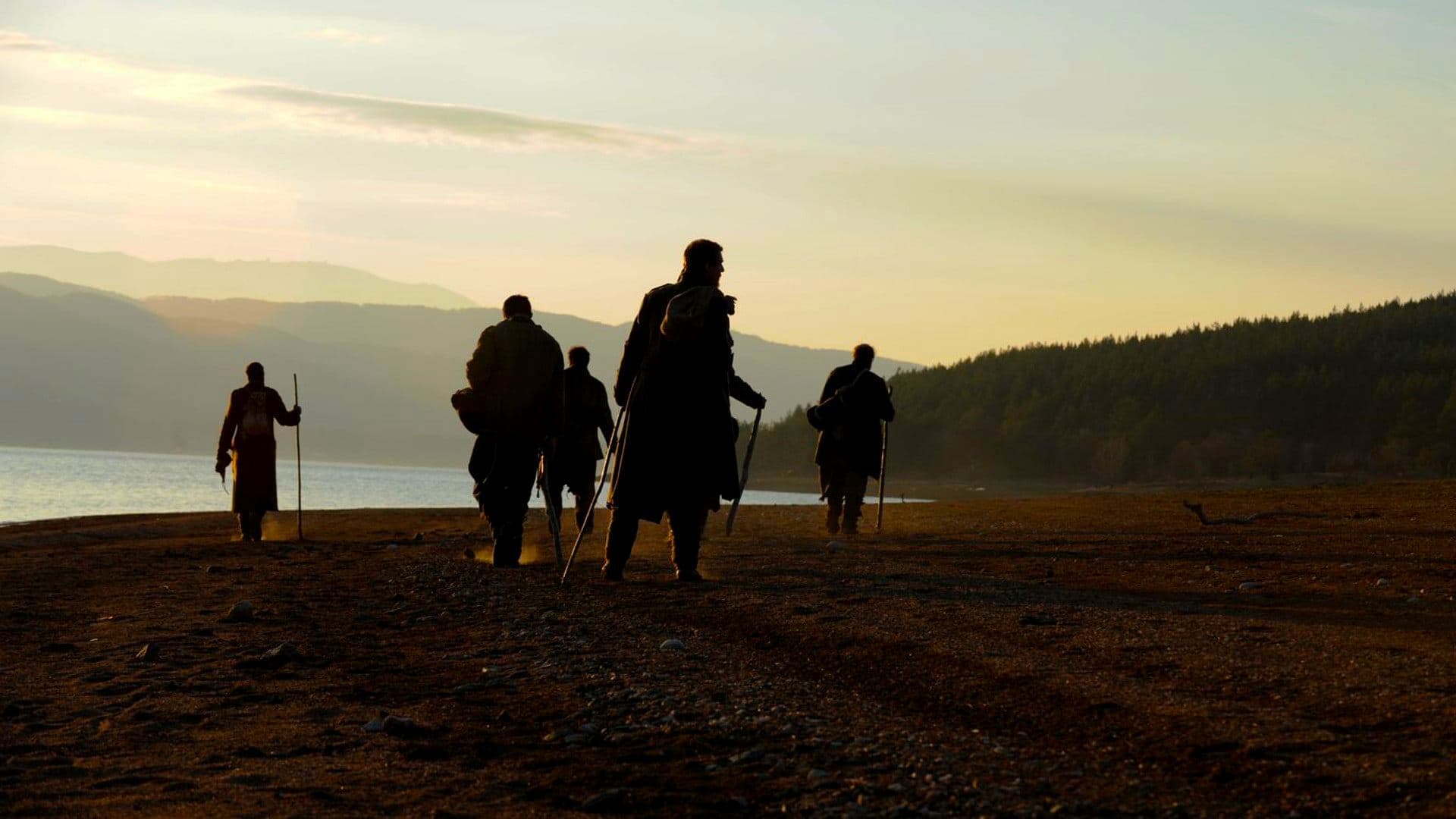
Principal photography took place across three countries. Bulgaria doubled for Siberia and parts of the early journey. Morocco provided the desert landscapes representing the Gobi. India supplied the Himalayan sequences. The shooting schedule was demanding, requiring the cast to endure genuinely harsh conditions to achieve the physical realism Weir insisted upon. Jim Sturgess, Ed Harris, and Colin Farrell all underwent significant physical transformations to portray characters suffering from starvation, exposure, and exhaustion over the course of the journey.
During the film's development and release, questions arose about the historical accuracy of Rawicz's account. Research by the BBC and others suggested that Rawicz may not have made the walk himself, though a similar journey may have been completed by other prisoners. Weir acknowledged these controversies but maintained that the story worked as a testament to human endurance regardless of precise historical attribution. The film's opening title card was adjusted to describe it as "inspired by true events" rather than claiming direct factual accuracy.
The Way Back proved to be Peter Weir's final film. Despite critical respect for the picture and a career that included The Truman Show, Witness, Gallipoli, and Picnic at Hanging Rock, Weir has not directed another feature since. He received the Honorary Golden Bear at the 2024 Berlin Film Festival in recognition of his career, with The Way Back standing as its quiet conclusion.
Awards and Recognition
The Way Back received modest awards attention relative to Weir's reputation. The film was nominated for the Academy Award for Best Makeup (Rick Findlater and Edouard F. Henriques), recognizing the detailed work required to depict the characters' physical deterioration over thousands of miles of walking. It did not win.
Russell Boyd's cinematography was widely praised by critics, though it did not receive an Oscar nomination. The film earned selections and nominations at several international festivals, including the Telluride Film Festival and the Toronto International Film Festival, where it premiered in September 2010. The Australian Film Institute recognized the film with a nomination for Best International Film.
While the awards haul was limited, The Way Back has gained recognition over time as a significant work in Peter Weir's filmography and as one of the more underappreciated survival films of its era. Its reputation has grown steadily among cinephiles who regard it as a quietly powerful final statement from one of cinema's most distinctive directors.
Critical Reception
The Way Back holds a 74% approval rating on Rotten Tomatoes, reflecting generally positive reviews that praised the film's visual ambition and performances while noting its deliberate pacing. Critics recognized Peter Weir's commitment to physical authenticity and the immersive quality of Russell Boyd's landscape cinematography.
Roger Ebert awarded the film three and a half stars out of four, writing that Weir "weights his film with the sheer physical reality of the experience" and admiring the director's refusal to sentimentalize the journey. A.O. Scott of The New York Times called it "a painstaking, visually stunning account" while acknowledging that the relentless grimness could test audience patience. Peter Bradshaw in The Guardian praised the film's "tremendous visual sweep" and Weir's mature, restrained direction.
Common criticisms centered on the film's episodic structure and its challenge in sustaining dramatic tension across what is fundamentally a long walk. Some reviewers felt that the characters, beyond Sturgess's Janusz and Farrell's Valka, remained underdeveloped given the large ensemble. Others noted that the historical uncertainties surrounding the source material created an awkward tension between the film's factual claims and its dramatic liberties.
Despite these reservations, The Way Back has maintained a reputation as a thoughtful, visually commanding survival film. Colin Farrell's performance as the volatile, vodka-fueled Valka received particular praise as one of his most textured supporting roles. The consensus holds that while the film may not rank among Weir's greatest works, it represents an honorable and ambitious final chapter for a director who consistently chose challenging material over commercial calculation.
Frequently Asked Questions
How much did it cost to make The Way Back (2010)?
The production budget was $30,000,000, covering principal photography, cast and crew salaries, locations, sets, post-production, and music. Marketing and distribution (P&A) costs are estimated at an additional $15,000,000 - $24,000,000, bringing the total studio investment to approximately $45,000,000 - $54,000,000.
How much did The Way Back (2010) earn at the box office?
The Way Back grossed $2,701,859 domestic, $21,470,342 international, totaling $24,172,201 worldwide.
Was The Way Back (2010) profitable?
The film did not break even theatrically, earning $24,172,201 against an estimated $75,000,000 needed. Ancillary revenue may have improved the picture.
What were the biggest costs in producing The Way Back?
The primary cost drivers were above-the-line talent (Ed Harris, Jim Sturgess, Saoirse Ronan); talent compensation, authentic period production design, and meticulous post-production; international production across Poland, United Arab Emirates, United States of America.
How does The Way Back's budget compare to similar drama films?
At $30,000,000, The Way Back is classified as a low-budget production. The median budget for wide-release drama films in the 2010s ranges from $30 - 80M for mid-budget to $150M+ for tentpoles. Comparable budgets: A Hologram for the King (2016, $30,000,000); A Lot Like Love (2005, $30,000,000); Big Momma's House (2000, $30,000,000).
Did The Way Back (2010) go over budget?
There are no widely reported accounts of significant budget overruns for this production. However, studios rarely disclose precise budget overrun figures publicly. The reported production budget reflects the final estimated cost.
What was the return on investment (ROI) for The Way Back?
The theatrical ROI was -19.4%, calculated as ($24,172,201 − $30,000,000) ÷ $30,000,000 × 100. This measures gross revenue against production budget only - it does not account for P&A or exhibitor shares.
What awards did The Way Back (2010) win?
Nominated for 1 Oscar. 4 wins & 5 nominations total.
Who directed The Way Back and who were the key crew members?
Directed by Peter Weir, written by Peter Weir, Keith R. Clarke, shot by Russell Boyd, with music by Burkhard von Dallwitz, edited by Lee Smith.
Where was The Way Back filmed?
The Way Back was filmed in Poland, United Arab Emirates, United States of America.
Filmmakers
The Way Back

Official Trailer
Build budgets like this one in Saturation
Start from an industry-standard feature film template, import the schedule and rates you already have, and let the cost report keep itself current as you spend. Real-time collaboration, no spreadsheets.