
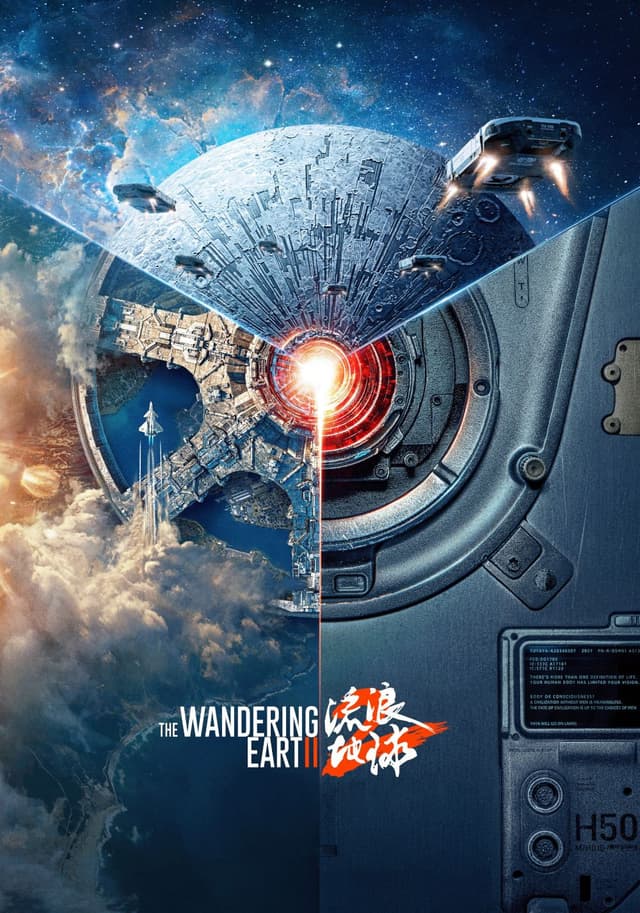
The Wandering Earth II Budget
Updated
Synopsis
Humans built huge engines on the surface of the earth to find a new home. But the road to the universe is perilous. In order to save earth, young people once again have to step forward to start a race against time for life and death.
What Is the Budget of The Wandering Earth II?
The Wandering Earth II had an estimated production budget of approximately $83 million (¥600 million), making it one of the most expensive Chinese films ever produced. This figure nearly doubled the budget of the original 2019 film, reflecting the sequel's far greater ambition in scope, visual effects, and world-building. Financing came primarily through China Film Group Corporation, with additional backing from several Chinese production companies and investment funds.
The significant budget increase was driven by the film's expanded narrative structure, which spans multiple decades and takes place across several global locations including underwater sequences, lunar surface operations, and massive space elevator set pieces. Director Frant Gwo pushed for a level of visual spectacle that would rival Hollywood blockbusters, requiring substantial investment in proprietary VFX pipelines and practical set construction at Qingdao Oriental Movie Metropolis.
Key Budget Allocation Categories
- Visual Effects accounted for the largest single line item, with over 4,000 VFX shots completed by multiple Chinese studios including MOREVFX and Dexter Studios. The film required fully digital environments for space elevator collapses, lunar surface battles, and deep-ocean sequences.
- Production Design and Set Construction consumed a major portion of the budget. The production built enormous practical sets at Qingdao, including a full-scale space elevator base, mission control interiors, and underwater research facilities, all designed to provide physical reference points for the VFX teams.
- Cast Compensation reflected the star power assembled for the project. Wu Jing returned as the franchise lead, while Andy Lau joined the cast in his first major mainland Chinese production in years, commanding significant salary. Supporting cast including Li Xuejian and Sha Yi added further payroll weight.
- Location and Stage Rental covered extensive shooting at Qingdao Oriental Movie Metropolis, one of the largest film studio complexes in the world. The production occupied multiple soundstages simultaneously for months, with additional location work for exterior sequences.
- Post-Production and Sound Design required an extended timeline to complete the complex VFX integration, color grading across varied environments (deep space, ocean floor, urban landscapes), and Dolby Atmos sound mixing for worldwide IMAX distribution.
How Does The Wandering Earth II's Budget Compare to Similar Films?
Compared to other large-scale Chinese science fiction productions and international blockbusters in the genre, The Wandering Earth II sits in a distinctive position as one of the highest-budgeted non-Hollywood sci-fi films ever made.
- The Wandering Earth (2019) had an estimated budget of $48 million and grossed $700 million worldwide. The sequel nearly doubled the production investment while attempting to match the original's commercial performance.
- Moonfall (2022) cost approximately $138 million and grossed only $67 million worldwide. Roland Emmerich's space disaster film demonstrates how similar-scale Hollywood productions can struggle commercially, while The Wandering Earth II achieved far stronger returns at a lower cost.
- Gravity (2013) was produced for roughly $100 million and earned $723 million globally. Alfonso Cuaron's space thriller set a benchmark for VFX-driven sci-fi filmmaking that The Wandering Earth II aimed to match in visual ambition.
- The Martian (2015) cost about $108 million and grossed $630 million worldwide. Ridley Scott's hard sci-fi hit shows that grounded space narratives can achieve strong returns, though The Wandering Earth II pursued a more spectacle-driven approach.
- Interstellar (2014) had a budget of $165 million and earned $677 million globally. Christopher Nolan's epic remains the gold standard for big-budget hard sci-fi, and The Wandering Earth II achieved comparable visual ambition at roughly half the cost.
The Wandering Earth II Box Office Performance
The Wandering Earth II opened during the highly competitive Chinese New Year 2023 holiday season, going head-to-head with several major domestic releases. The film performed strongly at the Chinese box office, earning approximately $604 million domestically, making it one of the highest-grossing Chinese films of 2023. International markets contributed an additional $28 million, bringing the worldwide total to approximately $632 million.
With a production budget of $83 million, the break-even threshold (factoring in marketing and distribution costs at roughly 2x the production budget) was approximately $166 million. The Wandering Earth II cleared this mark by a wide margin, generating an estimated ROI of roughly 661% using the formula (Worldwide Gross minus Budget) divided by Budget times 100. While the sequel did not match the original's $700 million haul, it still ranked as a significant commercial success and validated the franchise as China's premier science fiction property.
The Chinese New Year window proved both a blessing and a constraint. The film dominated screen allocations in its opening week but faced rapid competition from other holiday tentpoles, leading to a steeper drop-off than the original experienced during its less crowded release corridor.
Box Office Breakdown
The Wandering Earth II

The Wandering Earth II Production History
Development on a sequel began shortly after the original film's massive success in February 2019. Director Frant Gwo, who had spent years developing the first film from Liu Cixin's novella, chose to make the follow-up a prequel rather than a direct continuation. The story would explore the decades leading up to the original, depicting humanity's early efforts to move Earth out of the solar system and the political, technological, and human crises that accompanied those efforts.
China Film Group Corporation greenlit the project with a significantly larger budget than the original, reflecting confidence in the franchise. Screenwriting took over a year, with Gwo and his writing team constructing a multi-timeline narrative spanning from the 2040s through the 2070s. The script required extensive scientific consultation to maintain the hard sci-fi grounding that distinguished the franchise from typical blockbuster fare.
Casting brought back Wu Jing in a younger version of his original character while adding Andy Lau in a central role as a scientist grappling with loss and the ethics of digital consciousness. Lau's involvement was a major coup for the production, as it marked his first leading role in a mainland Chinese film in years and brought significant star power to the marketing campaign.
Principal photography began in late 2021 at Qingdao Oriental Movie Metropolis, where the production occupied multiple massive soundstages. The practical sets were among the largest ever constructed for a Chinese film, including a full-scale space elevator terminal and underwater research station. Shooting extended through much of 2022, with COVID-related disruptions requiring schedule adjustments but never fully halting production.
Post-production was an enormous undertaking, with over 4,000 VFX shots requiring completion in under a year to meet the Chinese New Year 2023 release date. Multiple Chinese VFX houses worked in parallel, pushing the domestic visual effects industry to new technical heights. The film released on January 22, 2023, and was praised as a landmark achievement for Chinese science fiction cinema.
Awards and Recognition
The Wandering Earth II received substantial recognition within the Chinese film industry and at international genre festivals. The film won multiple awards at the 2023 Golden Rooster Awards, China's most prestigious film honors, including Best Visual Effects. It also earned nominations for Best Picture and Best Director for Frant Gwo.
The film was selected as China's submission for consideration at the 96th Academy Awards in the Best International Feature Film category, though it did not advance to the shortlist. At the Beijing International Film Festival and other regional events, The Wandering Earth II was recognized for its technical achievements and its contribution to establishing Chinese science fiction as a viable global genre. The film's VFX work drew particular praise from industry professionals worldwide, with several sequences cited as competitive with the best Hollywood output.
Critical Reception
The Wandering Earth II holds an 82% approval rating on Rotten Tomatoes, reflecting broadly positive reviews from both Chinese and international critics. Reviewers praised the film's visual ambition, the scale of its world-building, and the emotional weight carried by Andy Lau's performance as a grieving father navigating the ethics of artificial intelligence and digital resurrection.
Chinese critics were particularly enthusiastic, noting that the prequel surpassed the original in narrative complexity and emotional depth. The multi-decade structure allowed the film to explore themes of sacrifice, generational responsibility, and technological hubris in ways that the more action-focused first film could not. Wu Jing's role, while prominent, took a supporting position to Lau's storyline, which some critics saw as a maturation of the franchise.
International critics acknowledged the film's technical achievements while noting its 173-minute runtime and occasionally dense plotting as potential barriers for audiences unfamiliar with the franchise. Several Western reviewers compared it favorably to Hollywood disaster epics, praising its willingness to engage with hard science fiction concepts rather than defaulting to pure spectacle. The film's success cemented Frant Gwo's reputation as the leading director of Chinese blockbuster cinema.
Frequently Asked Questions
How much did it cost to make The Wandering Earth II (2023)?
The production budget was $73,800,000, covering principal photography, visual effects, cast and crew salaries, locations, sets, post-production, and music. Marketing and distribution (P&A) costs are estimated at an additional $36,900,000 - $59,040,000, bringing the total studio investment to approximately $110,700,000 - $132,840,000.
How much did The Wandering Earth II (2023) earn at the box office?
The Wandering Earth II grossed $5,023,132 domestic, $659,976,868 international, totaling $665,000,000 worldwide.
Was The Wandering Earth II (2023) profitable?
Yes. Against a production budget of $73,800,000 and estimated total costs of ~$184,500,000, the film earned $665,000,000 theatrically - a 801% ROI on production costs alone.
What were the biggest costs in producing The Wandering Earth II?
The primary cost drivers were above-the-line talent (Wu Jing, Andy Lau, Li Xuejian); visual effects pipelines, virtual production technology, and speculative world-building.
How does The Wandering Earth II's budget compare to similar science fiction films?
At $73,800,000, The Wandering Earth II is classified as a mid-budget production. The median budget for wide-release science fiction films in the 2020s ranges from $30 - 80M for mid-budget to $150M+ for tentpoles. Comparable budgets: Minions (2015, $74,000,000); The Lost City (2022, $74,000,000); The SpongeBob Movie: Sponge Out of Water (2015, $74,000,000).
Did The Wandering Earth II (2023) go over budget?
There are no widely reported accounts of significant budget overruns for this production. However, studios rarely disclose precise budget overrun figures publicly. The reported production budget reflects the final estimated cost.
What was the return on investment (ROI) for The Wandering Earth II?
The theatrical ROI was 801.1%, calculated as ($665,000,000 − $73,800,000) ÷ $73,800,000 × 100. This measures gross revenue against production budget only - it does not account for P&A or exhibitor shares.
What awards did The Wandering Earth II (2023) win?
39 wins & 32 nominations total.
Who directed The Wandering Earth II and who were the key crew members?
Directed by Frant Gwo, written by Frant Gwo, Gong Geer, Ye Ruchang, Yang Zhixue, shot by Liu Yin, with music by Roc Chen, edited by Ye Xiang, Cheung Ka-Fai.
Where was The Wandering Earth II filmed?
The Wandering Earth II was filmed in China.
Filmmakers
The Wandering Earth II

Official Trailer
Build budgets like this one in Saturation
Start from an industry-standard feature film template, import the schedule and rates you already have, and let the cost report keep itself current as you spend. Real-time collaboration, no spreadsheets.