G.I. Joe: Retaliation Budget
 ActionScience FictionAdventureThriller1h 50m
Updated
Synopsis
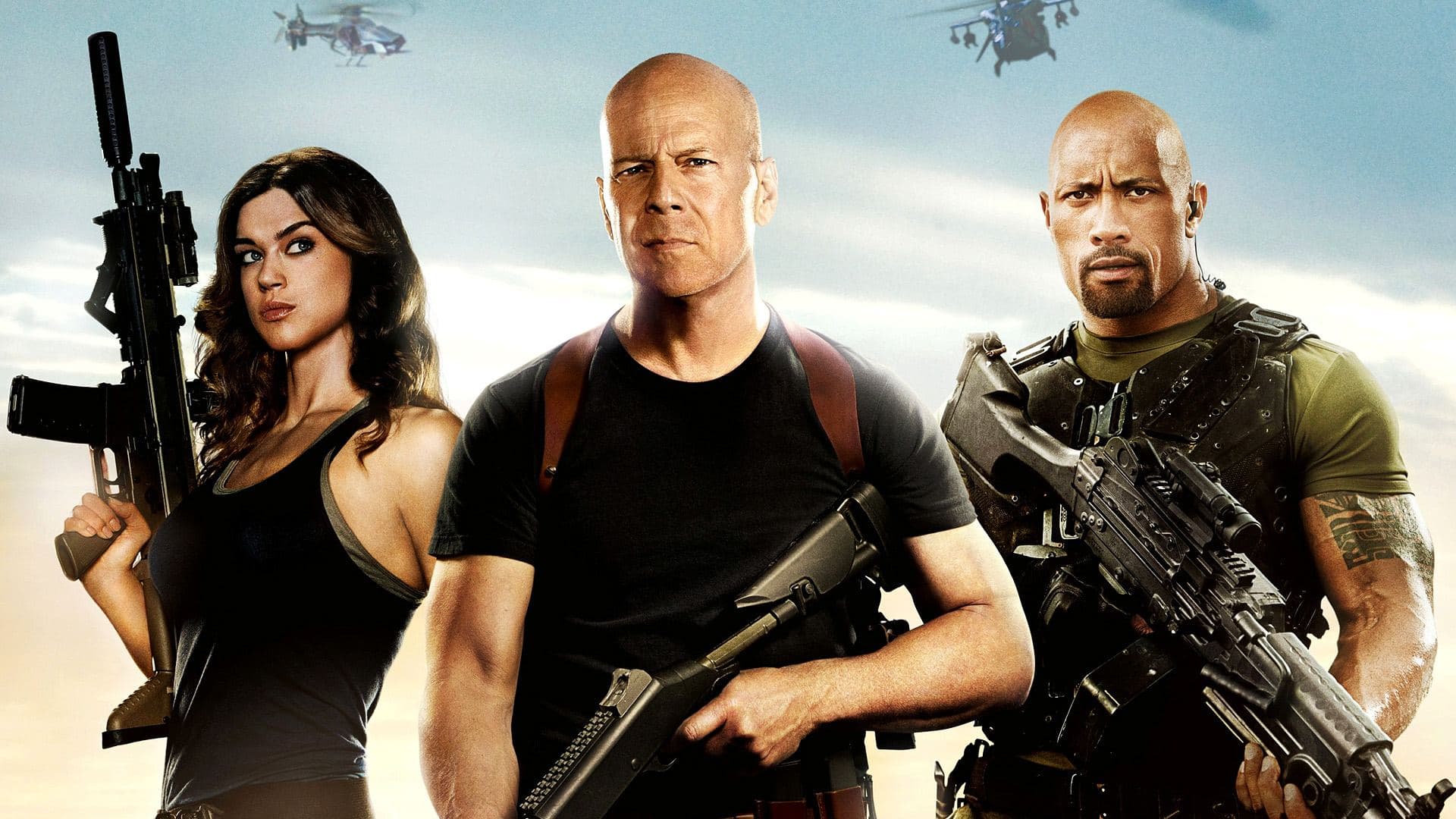
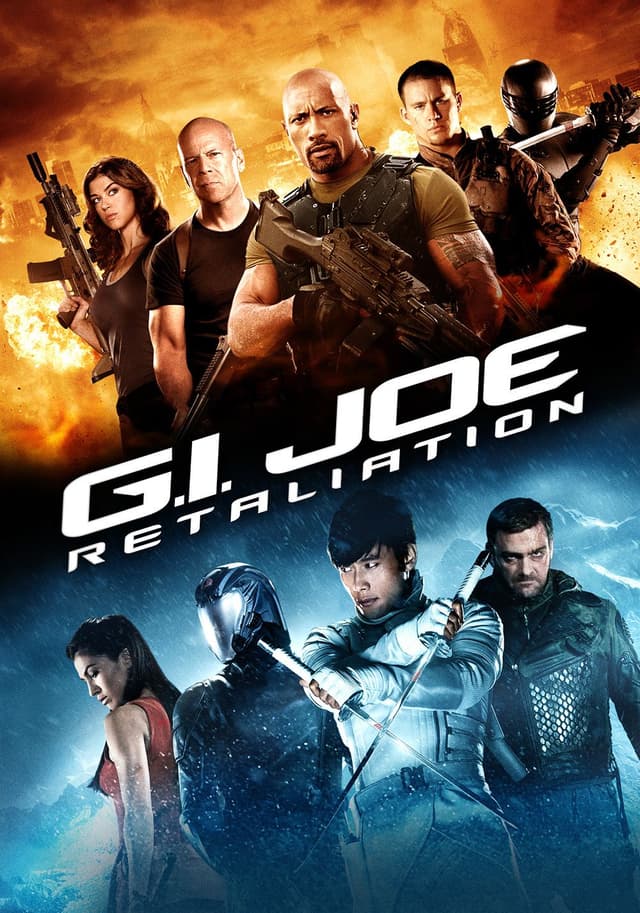
After a covert ambush leaves the Joe team decimated and framed for a chemical-weapons theft, the survivors regroup with original Joe Joe Colton to uncover the impostor wearing the President's face and the global blackmail scheme he is preparing to unleash. From the Himalayan training grounds of Storm Shadow's master to the White House situation room, the Joes must reclaim their name.
What Is the Budget of G.I. Joe: Retaliation (2013)?
The production budget of G.I. Joe: Retaliation was approximately $130,000,000, financed by Paramount Pictures, Metro-Goldwyn-Mayer, Skydance, and Hasbro. The figure represented a meaningful step down from the 2009 original's $175 million spend and reflected the producers' decision to scale back the previous picture's science-fiction set pieces in favor of more grounded military action, alongside Jon M. Chu's lower-cost directing fee compared to Stephen Sommers.
Director Jon M. Chu shot G.I. Joe: Retaliation primarily in Louisiana and Utah, with additional work in Los Angeles. The production used Louisiana's film tax credit program to offset qualifying spend. Paramount delayed the original June 2012 release to March 2013 for 3D post-conversion and additional Channing Tatum sequences, which added approximately $20 million to the final spend.
Key Budget Allocation Categories
- Cast Compensation: Dwayne Johnson's above-the-line salary as Roadblock plus salaries for Channing Tatum, Bruce Willis, Adrianne Palicki, Byung-hun Lee, Ray Park, D.J. Cotrona, and Ray Stevenson.
- Visual Effects: A large roster of effects shots produced by ILM, Rhythm and Hues, and several specialty houses, covering the Himalayan cliff-fight sequence, the orbital weapons platform, and the climactic London sequence.
- Stunts and Practical Effects: Extensive practical stunt work including the ninja sword choreography, the airbase-tower sequence, and the Joe team's combat training facility.
- Production Design: Cobra Commander's mountain prison, the impostor President's White House interiors, the orbital weapons platform, and the Himalayan training compound supervised by Andrew Menzies.
- 3D Post-Conversion: A multi-month stereoscopic conversion completed during the nine-month release delay, adding approximately $10 million to $15 million to the total spend.
- Reshoots and Marketing: Additional Channing Tatum sequences shot during the delay plus the global marketing campaign for the March 2013 release.
How Does G.I. Joe: Retaliation's Budget Compare to Similar Films?
- G.I. Joe: The Rise of Cobra (2009): Budget $175,000,000 | Worldwide $302,469,017. The original franchise entry, made for 35 percent more on a more science-fiction-driven approach.
- Transformers: Dark of the Moon (2011): Budget $195,000,000 | Worldwide $1,123,790,543. A comparable Hasbro-based military-action property at a far higher budget and worldwide reception.
- Battleship (2012): Budget $209,000,000 | Worldwide $303,025,485. Another Hasbro-based major-studio action property at a higher budget with weaker reception.
- Snake Eyes (2021): Budget $88,000,000 | Worldwide $40,178,649. The subsequent franchise reset from Paramount and Skydance at a lower budget with significantly weaker reception.
G.I. Joe: Retaliation Box Office Performance
G.I. Joe: Retaliation opened to $40,501,814 across its domestic debut on March 28, 2013, finishing first at the box office. The opening was the largest in the G.I. Joe franchise to date and well above pre-release tracking.
Box Office Breakdown
G.I. Joe: Retaliation

For every $1 invested, the studios recouped roughly $0.72 after the exhibitor split. The picture was widely reported as having broken even or moved into modest profit after home video, premium cable, and the Hasbro consumer-products tie-in revenue.
International accounted for 67 percent of the worldwide total. The picture's significant overperformance in China, where it grossed $54 million, and across Asia broadly was a meaningful contributor to its overall commercial profile and an early signal of the changing geographic balance of major studio tentpoles.
G.I. Joe: Retaliation Production History
Paramount and Skydance began developing G.I. Joe: Retaliation immediately after the 2009 release of G.I. Joe: The Rise of Cobra. Stephen Sommers, the original director, did not return. Jon M. Chu, then known primarily for the Step Up sequels and Justin Bieber: Never Say Never (2011), came aboard in 2010, an unconventional choice that the producers framed as a refresh of the franchise's tone.
Principal photography ran from August through November 2011, primarily in New Orleans and across Louisiana and at Vasquez Rocks in California. The production used Louisiana's film tax credit program. The Himalayan cliff-fight sequence was shot on practical sets with the picture's most extensive practical wirework.
Paramount postponed the original June 29, 2012 release date to March 28, 2013, nine months later, ostensibly for 3D post-conversion. The studio also commissioned additional Channing Tatum sequences during the delay, expanding his role given his commercial momentum from The Vow (2012) and 21 Jump Street (2012).
Awards and Recognition
G.I. Joe: Retaliation did not receive significant industry award recognition. The picture received a Golden Reel Award nomination from the Motion Picture Sound Editors. The picture was nominated for Razzies for Worst Director and Worst Screen Couple. The picture received Teen Choice Award nominations for Choice Action Movie and Choice Movie Actor (Dwayne Johnson).
Critical Reception
G.I. Joe: Retaliation holds a 28 percent rating on Rotten Tomatoes and a Metacritic score of 41. CinemaScore audiences gave the film an A-. Roger Ebert's review, one of his final published reviews before his death, gave the picture one and a half stars, writing that it "is a continuation by way of substitution." A.O. Scott of The New York Times called it "an utterly synthetic confection." Manohla Dargis at the Los Angeles Times wrote that the picture "is louder, dumber and crucially less interesting" than its predecessor. The Himalayan cliff-fight sequence drew sustained positive attention from action-cinema critics, with several singling it out as among the year's standout set pieces.
Frequently Asked Questions
What was the production budget of G.I. Joe: Retaliation (2013)?
The production budget of G.I. Joe: Retaliation was approximately $130 million, financed by Paramount Pictures, Metro-Goldwyn-Mayer, Skydance, and Hasbro.
How much did G.I. Joe: Retaliation gross worldwide?
G.I. Joe: Retaliation grossed $375,740,705 worldwide, including $122,523,060 domestically and $253,217,645 internationally.
Was G.I. Joe: Retaliation profitable?
G.I. Joe: Retaliation was approximately break-even on theatrical alone against combined production and marketing spend. It moved into modest profit after home video, premium cable, and Hasbro consumer-products tie-in revenue.
Why was G.I. Joe: Retaliation's release delayed?
Paramount postponed the original June 29, 2012 release to March 28, 2013, ostensibly for 3D post-conversion. The studio also commissioned additional Channing Tatum sequences during the nine-month delay to expand his role.
Where was G.I. Joe: Retaliation filmed?
G.I. Joe: Retaliation was shot primarily in New Orleans and across Louisiana, with additional work at Vasquez Rocks in California and on Paramount soundstages in Los Angeles.
Who directed G.I. Joe: Retaliation?
Jon M. Chu directed the picture. He was then known primarily for the Step Up sequels and Justin Bieber: Never Say Never (2011), and the producers framed his choice as a refresh of the franchise's tone.
Is Channing Tatum in G.I. Joe: Retaliation?
Yes, briefly. Tatum's Duke character is killed in the opening Joe team ambush, though Paramount commissioned additional Tatum sequences during the nine-month release delay to expand his on-screen presence.
How long is G.I. Joe: Retaliation?
G.I. Joe: Retaliation runs 110 minutes.
Did G.I. Joe: Retaliation perform well in China?
Yes. The picture grossed approximately $54 million in China, contributing significantly to the worldwide total and signaling the changing geographic balance of major Hollywood studio tentpoles.
Was a sequel produced?
No direct sequel was produced. The franchise was eventually rebooted with Snake Eyes (2021), which performed poorly. Further franchise development has continued at Paramount.
Filmmakers
G.I. Joe: Retaliation

Official Trailer
Build budgets like this one in Saturation
Start from an industry-standard feature film template, import the schedule and rates you already have, and let the cost report keep itself current as you spend. Real-time collaboration, no spreadsheets.