The Visit Budget
 HorrorThriller1h 34m
Updated
Synopsis
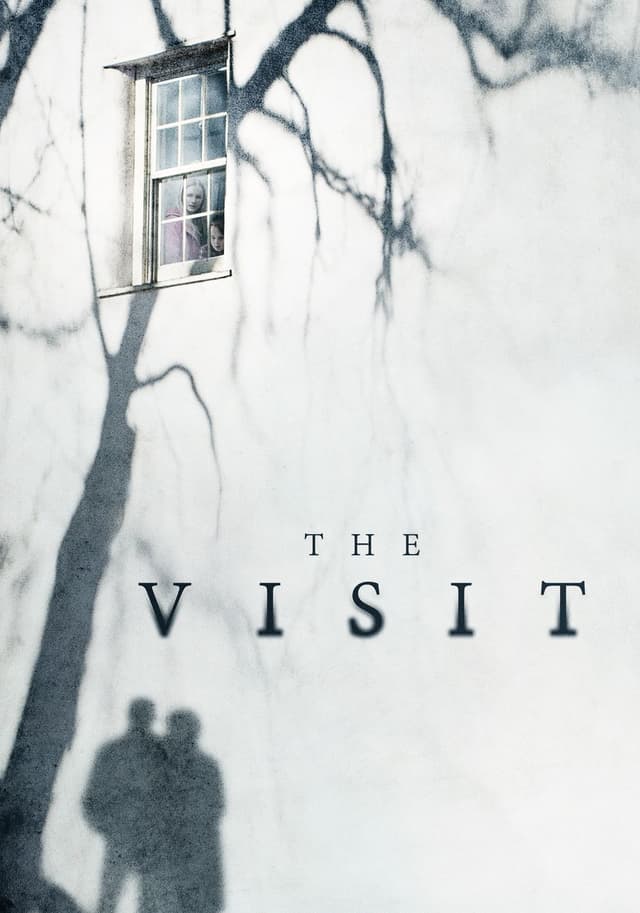
A brother and sister are sent to their grandparents' remote Pennsylvania farm for a week, where they discover that the elderly couple is involved in something deeply disturbing.
What Is the Budget of The Visit?
The Visit was produced for $5 million, entirely self-financed by writer-director M. Night Shyamalan. After a string of costly studio disappointments, including The Last Airbender ($150 million budget) and After Earth ($130 million budget), Shyamalan deliberately chose to work outside the studio system by funding the project himself. This gave him complete creative control while drastically reducing the financial risk for any distributor.
Universal Pictures acquired domestic distribution rights through a deal structured similarly to Blumhouse Productions releases, where the studio takes on minimal upfront cost in exchange for a share of revenue. The model proved spectacularly effective: with only $5 million at stake, The Visit needed a fraction of a typical horror film's gross to turn a profit.
Key Budget Allocation Categories
The $5 million budget reflects the lean economics of found-footage filmmaking, where the format itself drives down production costs across every department.
- Production and Filming accounted for the largest share of the budget, covering a 25-day shoot in and around Philadelphia, Pennsylvania. Shyamalan used a small crew and practical locations, primarily a single farmhouse, to keep costs contained.
- Cast Salaries remained modest by industry standards. The film cast relative newcomers Olivia DeJonge and Ed Oxenbould as the two leads, with veteran character actors Deanna Dunagan and Peter McRobbie as the grandparents. Kathryn Hahn played a supporting role as the children's mother.
- Cinematography and Camera costs were minimal because the found-footage conceit required handheld consumer-grade cameras operated by the characters themselves. This eliminated the need for elaborate lighting setups, dollies, cranes, or Steadicam rigs.
- Post-Production and Editing consumed a proportionally significant share of the budget, as found-footage films rely heavily on editing to build tension and maintain the illusion of authenticity. Shyamalan's editor Luke Ciarrocchi assembled the footage to balance horror and dark comedy.
- Music and Sound Design required careful work to enhance scares without violating the found-footage premise. Paul Cantelon composed a subtle score that supplemented the diegetic audio captured by the in-story cameras.
- Marketing and Distribution costs were handled primarily by Universal, which invested an estimated $18 to $20 million in prints and advertising. Shyamalan's name recognition and the film's high-concept premise (kids discover something terrifying about their grandparents) made the campaign straightforward.
How Does The Visit's Budget Compare to Similar Films?
At $5 million, The Visit sits in the sweet spot of micro-budget horror that has produced some of the genre's most profitable releases.
- Paranormal Activity (2007) had a budget of $15,000 and earned $193 million worldwide, setting the modern template for found-footage profitability that The Visit followed.
- The Blair Witch Project (1999) cost roughly $60,000 to produce and grossed $248 million globally, proving that the found-footage format could generate massive returns with virtually no production investment.
- Insidious (2010) was made for $1.5 million and grossed $99 million worldwide, demonstrating that Blumhouse-style lean budgets could rival studio horror tentpoles at the box office.
- Split (2016) had a budget of $9 million and earned $278 million worldwide. Shyamalan's immediate follow-up to The Visit doubled the investment but delivered even larger returns, confirming that the self-financed model worked.
- The Conjuring (2013) cost $20 million and grossed $319 million worldwide, representing the upper end of mid-budget horror. The Visit achieved comparable profitability ratios on one-quarter of the production spend.
The Visit Box Office Performance
The Visit opened on September 11, 2015 and earned $25.4 million in its domestic opening weekend, immediately signaling that the film would be a major financial success relative to its budget. It debuted at number one at the box office, outperforming studio expectations.
The film's total domestic gross reached $65,206,105, while international markets contributed an additional $33.2 million, bringing the worldwide total to $98,450,062. For a film that cost $5 million to produce, these numbers represent an extraordinary return.
Using the standard break-even formula (roughly 2x the production budget to account for marketing and distribution costs), The Visit needed approximately $10 million to cover its production investment. With Universal handling most P&A spend separately, Shyamalan's personal break-even point was even lower. The ROI calculation is striking: ($98.4M worldwide gross minus $5M budget) divided by $5M budget yields an approximate 1,869% return on investment. Even accounting for Universal's distribution fees and marketing spend, the film was overwhelmingly profitable for all parties involved.
Box Office Breakdown
The Visit

The Visit Production History
The Visit originated from M. Night Shyamalan's desire to reinvent his career after a decade of declining critical and commercial reception. Following The Sixth Sense (1999), Shyamalan had been one of Hollywood's most bankable directors, but a series of underperforming films gradually eroded his standing. The Happening (2008) received poor reviews, The Last Airbender (2010) was critically savaged despite its $319 million gross, and After Earth (2013) became his first outright box office failure.
Rather than continue seeking large studio budgets, Shyamalan decided to return to his roots by writing an original story and financing it himself. He conceived The Visit as a found-footage horror film about two siblings, Becca and Tyler, who travel to rural Pennsylvania to spend a week with their grandparents, whom they have never met. The children document the trip on camera, and what begins as an awkward family reunion gradually reveals something deeply wrong with the elderly couple.
Shyamalan shot the film over approximately 25 days in the Philadelphia metropolitan area, using practical locations rather than studio sets. The found-footage format was a deliberate creative and financial choice: by having the characters operate the cameras, Shyamalan could work with a skeleton crew while achieving an intimate, unsettling visual style that suited the story's confined domestic setting.
The casting of Olivia DeJonge and Ed Oxenbould as the sibling leads proved essential to the film's tone. Both young actors brought naturalistic performances that grounded the comedy and horror in believable family dynamics. Deanna Dunagan and Peter McRobbie, both accomplished stage actors, delivered the grandparent performances that shift from endearing to terrifying as the story progresses.
Universal Pictures acquired distribution rights after seeing the completed film, structuring the deal to minimize their risk while giving Shyamalan a path back to wide theatrical release. The arrangement proved mutually beneficial and directly led to Universal distributing Split the following year.
Awards and Recognition
The Visit received recognition primarily within the genre film community rather than the mainstream awards circuit, which is typical for found-footage horror regardless of commercial success.
The film was nominated for several Fangoria Chainsaw Awards, the horror genre's equivalent of the Oscars, including categories for best wide-release film and best screenplay. Deanna Dunagan's performance as Nana drew particular praise from horror critics, who noted her ability to oscillate between warmth and menace in a single scene.
The Visit's most significant recognition was cultural rather than ceremonial. Critics and industry observers treated it as Shyamalan's comeback film, the project that proved he could still craft effective, audience-pleasing thrillers when freed from bloated budgets and studio interference. This narrative directly influenced how Split was received a year later and ultimately enabled Shyamalan to complete his Unbreakable trilogy with Glass (2019).
Critical Reception
The Visit holds a 67% approval rating on Rotten Tomatoes, representing a meaningful improvement over Shyamalan's prior three films and signaling to audiences that the director had regained his footing. The critical consensus acknowledged that while the film relied on familiar found-footage conventions, Shyamalan's command of suspense and his willingness to inject dark humor elevated the material.
Positive reviews highlighted the film's effective blend of genuine creepiness and uncomfortable comedy. Critics noted that Shyamalan used the grandparent premise to explore real anxieties about aging, family estrangement, and the uncanny feeling of staying in a relative stranger's home. The performances from Dunagan and McRobbie were consistently praised for walking a fine line between sympathetic and sinister.
Negative reviews tended to focus on the found-footage format itself, arguing that the genre had been exhausted by 2015 and that the film's scares were occasionally undermined by the shaky-camera aesthetic. Some critics also felt that the comedic elements, particularly Tyler's freestyle rapping, clashed with the horror tone rather than complementing it.
Audiences were broadly enthusiastic, as reflected in the strong box office performance and a B CinemaScore grade. The Visit succeeded in resetting expectations for Shyamalan, establishing that he could deliver crowd-pleasing genre entertainment on a modest budget. That recalibration proved more valuable than any single review: it rebuilt the audience trust that powered Split to $278 million the following year and set the stage for the Unbreakable trilogy's conclusion.
Frequently Asked Questions
How much did it cost to make The Visit (2015)?
The production budget was $5,000,000, covering principal photography, cast and crew salaries, locations, sets, post-production, and music. Marketing and distribution (P&A) costs are estimated at an additional $2,500,000 - $4,000,000, bringing the total studio investment to approximately $7,500,000 - $9,000,000.
How much did The Visit (2015) earn at the box office?
The Visit grossed $98,450,062 worldwide.
Was The Visit (2015) profitable?
Yes. Against a production budget of $5,000,000 and estimated total costs of ~$12,500,000, the film earned $98,450,062 theatrically - a 1869% ROI on production costs alone.
What were the biggest costs in producing The Visit?
The primary cost drivers were above-the-line talent (Olivia DeJonge, Ed Oxenbould, Deanna Dunagan); practical creature effects, atmospheric cinematography, and psychologically engineered sound design.
How does The Visit's budget compare to similar horror films?
At $5,000,000, The Visit is classified as a micro-budget production. The median budget for wide-release horror films in the 2010s ranges from $30 - 80M for mid-budget to $150M+ for tentpoles. Comparable budgets: Come and See (1985, $5,000,000); Cinema Paradiso (1988, $5,000,000); Mishima: A Life in Four Chapters (1985, $5,000,000).
Did The Visit (2015) go over budget?
There are no widely reported accounts of significant budget overruns for this production. However, studios rarely disclose precise budget overrun figures publicly. The reported production budget reflects the final estimated cost.
What was the return on investment (ROI) for The Visit?
The theatrical ROI was 1869.0%, calculated as ($98,450,062 − $5,000,000) ÷ $5,000,000 × 100. This measures gross revenue against production budget only - it does not account for P&A or exhibitor shares.
Who directed The Visit and who were the key crew members?
Directed by M. Night Shyamalan, written by M. Night Shyamalan, shot by Maryse Alberti, edited by Luke Ciarrocchi.
Where was The Visit filmed?
The Visit was filmed in United States of America. Filming began on February 19, 2014, under the preliminary title Sundowning. Sundowning is the increased restlessness and confusion of some dementia patients during the afternoon and evening.
Filmmakers
The Visit

Official Trailer
Build budgets like this one in Saturation
Start from an industry-standard feature film template, import the schedule and rates you already have, and let the cost report keep itself current as you spend. Real-time collaboration, no spreadsheets.