The Virgin Suicides Budget
 DramaRomance1h 37m
Updated
Synopsis
A group of male friends become obsessed with five mysterious sisters who are sheltered by their strict, religious parents.
What Is the Budget of The Virgin Suicides?
The Virgin Suicides was produced on a budget of $6 million, financed through American Zoetrope, the production company founded by Francis Ford Coppola. The elder Coppola served as a producer alongside his wife, Eleanor, and Danny DeVito, whose Jersey Films contributed to the financing. For a debut feature from an unproven director, the budget reflected a calculated bet on Sofia Coppola's vision and the strength of the source material, Jeffrey Eugenides's acclaimed 1993 novel.
The modest budget proved well suited to the film's intimate scope. Rather than requiring large-scale set pieces, The Virgin Suicides demanded period-accurate production design, a distinctive cinematographic approach from Edward Lachman, and an evocative original score from the French electronic duo Air. Every dollar needed to serve atmosphere and emotional texture rather than spectacle.
Key Budget Allocation Categories
- Cast Salaries Kirsten Dunst, Josh Hartnett, James Woods, and Kathleen Turner anchored the ensemble. Dunst was an emerging star following Interview with the Vampire and Small Soldiers, while Woods and Turner brought veteran credibility at rates appropriate for an independent production.
- Production Design and Art Direction Recreating 1970s suburban Michigan required period-specific set dressing, wardrobe, and props. The Lisbon household interior, from its faded wallpaper to its accumulating decay over the story's timeline, was central to the film's visual storytelling.
- Cinematography Edward Lachman shot on 35mm film, employing a soft, sun-bleached palette that gave the movie its dreamlike quality. Lachman's approach used natural light and diffusion filters to evoke memory and nostalgia, techniques that required careful planning but not necessarily expensive equipment.
- Music and Score Air composed an original soundtrack that became one of the most celebrated film scores of the late 1990s. The French duo blended ambient electronics with acoustic instrumentation, and the production also licensed period-appropriate songs from the 1970s to anchor the setting.
- Location Filming Principal photography took place in Toronto, standing in for the fictional Grosse Pointe, Michigan setting. Shooting in Canada offered tax advantages and access to period-appropriate residential architecture without the higher costs of filming in the actual Detroit suburbs.
- Post-Production Editing, color grading, and sound design shaped the film's distinctive tone. The nonlinear narrative structure, told through the retrospective voice of neighborhood boys, required careful editorial work to maintain coherence while preserving the story's fragmented, memory-like quality.
How Does The Virgin Suicides's Budget Compare to Similar Films?
- Lost in Translation (2003) Budget $4M | Worldwide $44.6M. Sofia Coppola's sophomore feature operated at an even leaner budget and became a massive commercial hit, proving the financial model established by The Virgin Suicides could scale.
- American Beauty (1999) Budget $15M | Worldwide $356.3M. Sam Mendes's suburban drama premiered the same year and shared thematic interest in the dark undercurrents beneath American suburban life, but at more than double the budget and with far greater box office returns.
- Rushmore (1998) Budget $10M | Worldwide $17.1M. Wes Anderson's coming-of-age film operated in a similar independent space with ensemble casting and meticulous period design, providing a useful benchmark for what mid-budget auteur films could earn in the late 1990s.
- Ghost World (2001) Budget $7M | Worldwide $8.8M. Terry Zwigoff's adaptation of a cult graphic novel had a nearly identical budget and faced similar challenges in marketing literary source material to mainstream audiences.
- Election (1999) Budget $8.5M | Worldwide $14.9M. Alexander Payne's dark suburban comedy also premiered in 1999 and targeted a similar audience of adult viewers drawn to sharply written independent films with recognizable casts.
The Virgin Suicides Box Office Performance
The Virgin Suicides earned $4,654,289 domestically and approximately $10.4 million worldwide. Paramount Classics handled distribution, releasing the film on a limited platform before expanding to wider release. The domestic opening was modest, with the film never screening on more than 200 screens simultaneously.
Against its $6 million production budget, the general industry rule of thumb suggests a break-even point around $12 million in total gross (roughly 2x the production budget to account for prints and advertising costs). By that measure, the theatrical run fell short of profitability on its own. Calculating ROI strictly from worldwide theatrical: ($10.4M - $6M) / $6M x 100 = approximately 73% return, though this does not account for marketing and distribution expenses.
However, the film's financial picture improved significantly through home video and DVD sales, which were strong throughout the early 2000s. The film developed a devoted following that kept it commercially relevant well beyond its theatrical window. For American Zoetrope and Paramount Classics, the long-tail revenue and the critical cachet of launching Sofia Coppola's career made the investment worthwhile beyond raw box office numbers.
Box Office Breakdown
The Virgin Suicides

The Virgin Suicides Production History
Sofia Coppola wrote the screenplay adaptation of Jeffrey Eugenides's 1993 debut novel, which had earned widespread literary acclaim for its haunting portrayal of five sisters in 1970s suburban Michigan. Coppola was drawn to the book's atmosphere and its exploration of adolescence, memory, and the impossibility of truly understanding another person. At the time, she was known primarily as a fashion photographer and for her widely criticized acting appearance in The Godfather Part III (1990), a role she took reluctantly as a last-minute replacement.
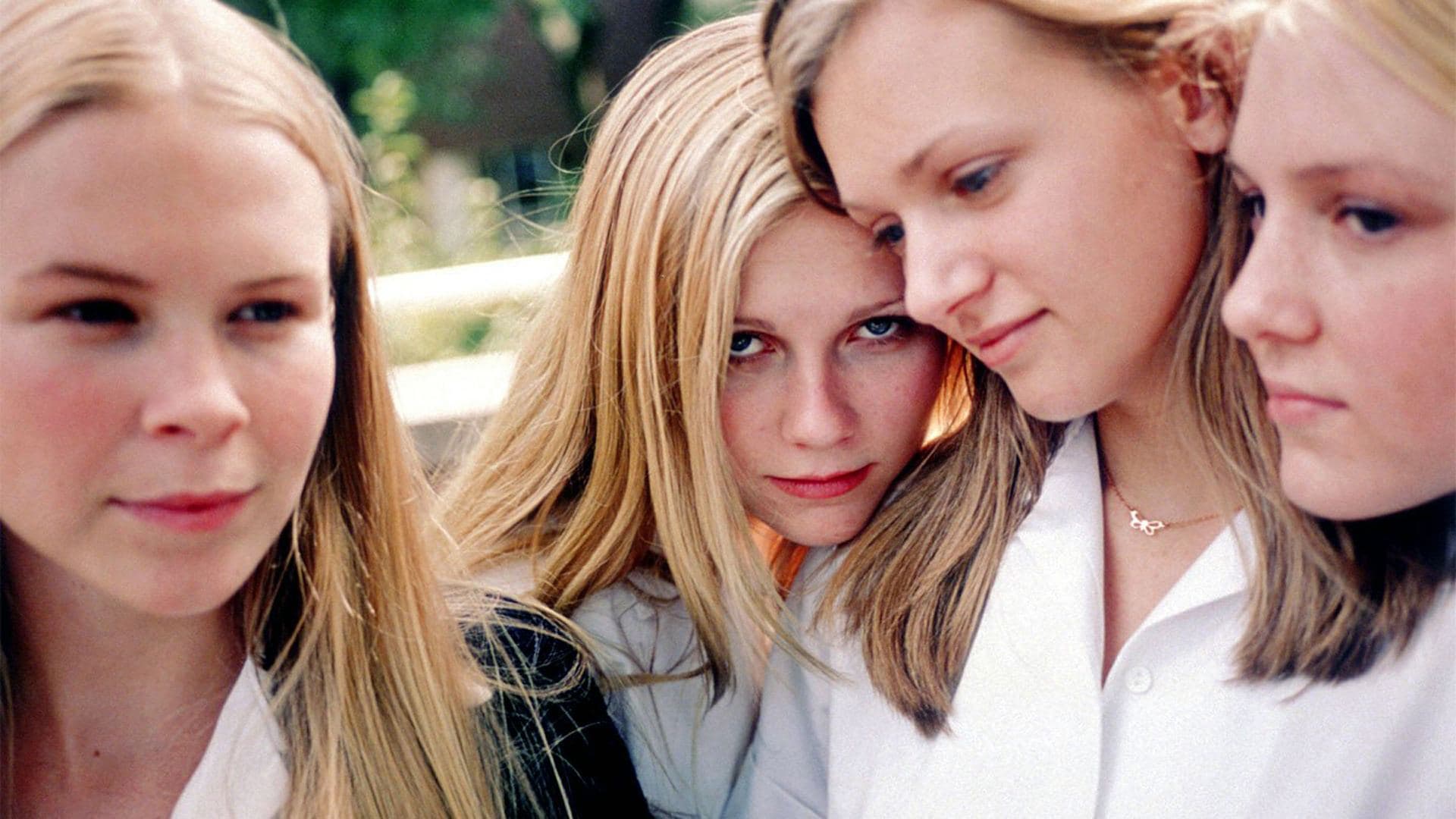
Francis Ford Coppola's American Zoetrope provided the production infrastructure, with the elder Coppola and Danny DeVito's Jersey Films co-producing. Sofia Coppola cast Kirsten Dunst as Lux Lisbon, the most visible of the five sisters, with Josh Hartnett in an early role as Trip Fontaine. James Woods and Kathleen Turner played the parents, Mr. and Mrs. Lisbon, whose overprotective strictness drives the story's central tragedy.
Principal photography took place in Toronto during 1998, with the Canadian city providing the quiet residential streets and period architecture needed to convincingly portray Grosse Pointe, Michigan in the mid-1970s. Edward Lachman's cinematography established the hazy, oversaturated visual identity that would become a hallmark of Sofia Coppola's filmography. The French electronic duo Air was brought on to compose the score, and their ambient, melancholic soundtrack became inseparable from the film's identity.
The Virgin Suicides premiered at the 1999 Cannes Film Festival in the Directors' Fortnight sidebar, where it received strong reviews and positioned Coppola as a serious filmmaking talent. Paramount Classics acquired distribution rights and released the film theatrically in spring 2000. The debut transformed Coppola's public reputation from a figure associated with Hollywood nepotism into one of the most distinctive new voices in American independent cinema.
Awards and Recognition
The Virgin Suicides earned significant recognition on the festival circuit and from critics' organizations, though it was largely overlooked by the major award bodies. At the 1999 Cannes Film Festival, its Directors' Fortnight premiere generated considerable buzz and established Sofia Coppola as a filmmaker to watch. The film received nominations from several independent film organizations and critics' circles.
The film's most lasting recognition came through its influence on visual culture and independent cinema. Edward Lachman's cinematography was widely praised for its dreamlike quality, and Air's score received acclaim as one of the finest film soundtracks of its era. Sofia Coppola won the Best New Narrative Filmmaker award at the Gotham Independent Film Awards, a recognition that presaged her eventual Academy Award win for Best Original Screenplay with Lost in Translation four years later.
Critical Reception
The Virgin Suicides holds a 79% approval rating on Rotten Tomatoes, reflecting broadly positive reviews with some reservations. Critics praised Sofia Coppola's assured visual style and her ability to capture the novel's dreamlike atmosphere, though some found the narrative structure kept viewers at an emotional remove from the characters.
Roger Ebert awarded the film three out of four stars, noting Coppola's skill at evoking mood and mystery while acknowledging that the film, like the novel, deliberately withholds easy answers about the Lisbon sisters' inner lives. The performance of Kirsten Dunst as Lux received particular praise, with critics noting the young actress brought depth and rebellion to a character who could have been reduced to a symbol.
Over time, critical opinion has trended upward. The film is now widely regarded as a landmark of late-1990s American independent cinema and as a fully realized debut that signaled Sofia Coppola's thematic preoccupations with isolation, femininity, and the gap between perception and reality. Its influence extends beyond cinema into photography, fashion, and music, making it one of the most culturally pervasive films of its budget range.
Frequently Asked Questions
How much did it cost to make The Virgin Suicides (2000)?
The production budget was $6,000,000, covering principal photography, cast and crew salaries, locations, sets, post-production, and music. Marketing and distribution (P&A) costs are estimated at an additional $3,000,000 - $4,800,000, bringing the total studio investment to approximately $9,000,000 - $10,800,000.
How much did The Virgin Suicides (2000) earn at the box office?
The Virgin Suicides grossed $4,906,229 domestic, $5,503,148 international, totaling $10,409,377 worldwide.
Was The Virgin Suicides (2000) profitable?
The film did not break even theatrically, earning $10,409,377 against an estimated $15,000,000 needed. Ancillary revenue may have improved the picture.
What were the biggest costs in producing The Virgin Suicides?
The primary cost drivers were above-the-line talent (Kirsten Dunst, Josh Hartnett, James Woods); talent compensation, authentic period production design, and meticulous post-production.
How does The Virgin Suicides's budget compare to similar drama films?
At $6,000,000, The Virgin Suicides is classified as a micro-budget production. The median budget for wide-release drama films in the 2000s ranges from $30 - 80M for mid-budget to $150M+ for tentpoles. Comparable budgets: The Godfather (1972, $6,000,000); Chinatown (1974, $6,000,000); The Father (2020, $6,000,000).
Did The Virgin Suicides (2000) go over budget?
There are no widely reported accounts of significant budget overruns for this production. However, studios rarely disclose precise budget overrun figures publicly. The reported production budget reflects the final estimated cost.
What was the return on investment (ROI) for The Virgin Suicides?
The theatrical ROI was 73.5%, calculated as ($10,409,377 − $6,000,000) ÷ $6,000,000 × 100. This measures gross revenue against production budget only - it does not account for P&A or exhibitor shares.
What awards did The Virgin Suicides (2000) win?
3 wins & 15 nominations total.
Who directed The Virgin Suicides and who were the key crew members?
Directed by Sofia Coppola, written by Sofia Coppola, shot by Edward Lachman, with music by Jean-Benoît Dunckel, Nicolas Godin, edited by Melissa Kent, James Lyons.
Where was The Virgin Suicides filmed?
The Virgin Suicides was filmed in United States of America. The Virgin Suicides was filmed in the summer of 1998 in Toronto, Ontario, standing in for suburban Detroit, Michigan, on a reported budget of $6 million. The shoot lasted roughly one month. Coppola was inspired by photographer Takashi Homma's photos of suburban Japan when choosing the filming locations; "I have always been struck by the beauty of banal details," she said, "and that is what suburban style is all about." The film's occasional use of stills and collages was intended to evoke the "fantasia" of adolescence.
Filmmakers
The Virgin Suicides

Official Trailer
Build budgets like this one in Saturation
Start from an industry-standard feature film template, import the schedule and rates you already have, and let the cost report keep itself current as you spend. Real-time collaboration, no spreadsheets.