The Turning Budget
 HorrorThriller1h 34m
Updated
Synopsis
A young woman quits her teaching job to become a private tutor and governess for two wealthy young kids, but soon starts to suspect there’s more to their house than meets the eye.
What Is the Budget of The Turning?
The Turning was produced on an estimated budget of $19 million. For a supernatural horror film released by Universal Pictures and DreamWorks Pictures through the Amblin Partners banner, this placed it in the mid-range tier of studio horror productions. The budget covered a period-set production relocated from its original American setting to Ireland, where Kilruddery House in County Wicklow served as the primary filming location for the fictional Bly Manor estate.
Steven Spielberg served as executive producer through Amblin Partners, giving the project a level of pedigree uncommon for horror adaptations. Director Floria Sigismondi, best known for her visually striking music videos for artists like Marilyn Manson, David Bowie, and Sigur Ros, brought an art-house sensibility that influenced both casting choices and the production design.
Key Budget Allocation Categories
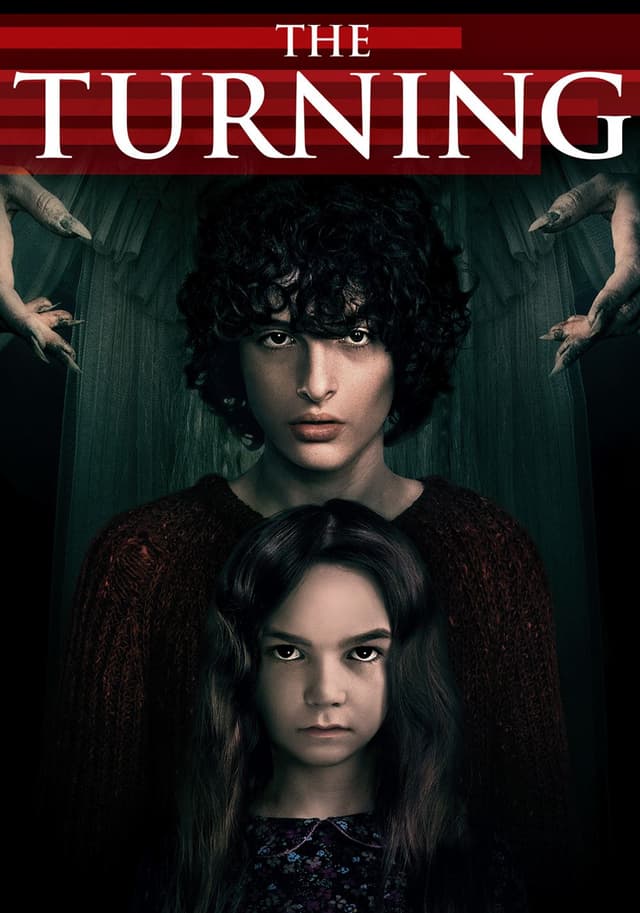
- Cast Salaries accounted for a significant portion of the budget, with Mackenzie Davis (Blade Runner 2049, Terminator: Dark Fate) leading the cast alongside Finn Wolfhard (Stranger Things, IT) and Brooklynn Prince (The Florida Project). All three brought recognizable names at relatively early career stages, balancing star power with cost efficiency.
- Production Design and Location required transforming Ireland's Kilruddery House into a 1990s Maine estate. The film relocated the classic Henry James story from Victorian England to the early 1990s, demanding period-accurate set dressing, wardrobe, and technology while maintaining the gothic atmosphere of the source material.
- Cinematography and Visual Effects combined practical camerawork with subtle digital enhancement. David Ungaro's photography leaned heavily on natural lighting and in-camera effects to create unease, while VFX work handled the more overt supernatural sequences involving ghostly apparitions throughout the estate.
- Score and Sound Design featured an original score by Nathan Barr (True Blood, The House with a Clock in Its Walls). The sonic landscape was critical to the horror atmosphere, blending orchestral composition with unsettling ambient textures designed to keep audiences on edge throughout the 94-minute runtime.
- Post-Production and Editing proved especially consequential for The Turning, as the film's divisive ending and overall tonal shifts suggest significant creative decisions were made in the editing room. The final cut clocked in at a lean 94 minutes, indicating material was likely removed during post.
How Does The Turning's Budget Compare to Similar Films?
- The Haunting of Hill House (1999) had a budget of $80 million, making it over four times more expensive than The Turning despite sharing the same literary DNA of classic gothic ghost stories adapted for modern audiences. That film's box office underperformance at $177 million worldwide against its enormous budget likely informed the more conservative spending on later literary horror adaptations.
- The Others (2001) cost $17 million and earned $209 million worldwide. As another period-set gothic horror film centered on a governess figure in a haunted estate, it represents the ceiling of what The Turning could have achieved both financially and critically with its similar premise and budget range.
- Crimson Peak (2015) was produced for $55 million and grossed $74 million worldwide. Guillermo del Toro's lavish gothic romance demonstrates how quickly costs escalate when a visionary director demands elaborate practical sets, and its modest box office return shows the commercial limits of atmospheric period horror.
- The Boy (2016) cost just $10 million and earned $64 million worldwide. This lower-budget gothic horror set in an English estate proved that audiences will turn out for creepy-house horror even without major stars, though critical reception was similarly mixed.
- The Lodge (2019) was made for approximately $4 million and grossed $7 million. Released in the same window as The Turning, it targeted a similar audience of elevated horror fans with a slow-burn psychological approach, illustrating how much leaner indie horror can operate compared to studio productions.
The Turning Box Office Performance
The Turning opened on January 24, 2020, earning $7.3 million in its domestic opening weekend from 2,758 theaters. The film finished its theatrical run with $11,119,808 domestically and $25,073,027 worldwide. Against its $19 million production budget, these numbers fell well short of profitability.
Using the standard break-even estimate of roughly 2x the production budget (to account for prints and advertising costs), The Turning needed approximately $38 million worldwide to reach profitability. Its $25 million global total left a gap of roughly $13 million, translating to a negative return on investment. The ROI calculation: ($25,073,027 minus $19,000,000) / $19,000,000 x 100 = approximately 32% return on production cost alone, but factoring in marketing and distribution expenses, the film was a clear financial loss for Universal and Amblin Partners.
The film's steep second-weekend drop of over 60% reflected both the disastrous audience reception (an F CinemaScore rating, one of the lowest grades possible) and terrible word of mouth. January horror releases often face low expectations, but The Turning underperformed even by the modest standards of the traditionally slow release window.
Box Office Breakdown
The Turning

The Turning Production History
Development of a new adaptation of Henry James's 1898 novella "The Turn of the Screw" began at DreamWorks Pictures with the involvement of Steven Spielberg's Amblin Partners. The project attracted significant creative talent early, with the screenplay credited to Carey W. Hayes and Chad Hayes (The Conjuring), working from an earlier draft by the Jade Bartlett. The decision to update the setting from Victorian England to 1990s Maine was intended to make the material feel more immediate while preserving the story's themes of isolation and ambiguity.
Floria Sigismondi was hired to direct, marking her second feature film after 2010's The Runaways. Sigismondi had built her reputation as one of the most visually inventive music video directors working, with credits spanning Marilyn Manson, David Bowie, The White Stripes, and Bjork. Her background in creating disturbing, highly stylized imagery made her a natural fit for gothic horror, though the transition from short-form to feature-length storytelling had proven challenging with her debut.
Principal photography took place in Ireland, with Kilruddery House in County Wicklow serving as the primary location. The 17th-century estate provided the imposing gothic architecture the story required while offering practical advantages including Ireland's generous tax incentive program for film production. Shooting wrapped in late 2018, giving the production over a year of post-production time before its January 2020 release.
The film's ending became its most controversial element. The Turning concludes abruptly with an ambiguous sequence that left audiences confused and angry, with many interpreting it as a non-ending that refused to resolve any of the story's central mysteries. Whether this was the original creative intention or the result of post-production changes remains unclear, though the film's unusually lean 94-minute runtime suggests material may have been cut. Reports indicated that test screenings did not go well, and the final product bore signs of a production where the studio and director may not have fully aligned on the story's resolution.
Awards and Recognition
The Turning received no major awards recognition following its January 2020 release. The film was nominated for three Razzie Awards at the 41st Golden Raspberry Awards ceremony: Worst Picture, Worst Director for Floria Sigismondi, and Worst Screenplay for Carey W. Hayes and Chad Hayes. It did not "win" in any of these categories, as the 2020 Razzie cycle was dominated by other critically panned releases.
The film's F CinemaScore, determined by audience polling on opening night, placed it among a very small group of wide-release films to receive the lowest possible grade. Notable films sharing this distinction include Darkness (2004), Wolf Creek (2005), and Bug (2006), all of which featured intentionally provocative or unresolved endings that frustrated mainstream audiences expecting conventional horror resolution.
Critical Reception
The Turning holds a 12% approval rating on Rotten Tomatoes based on 134 reviews, with a critics consensus noting the film's failure to generate genuine scares despite its atmospheric potential. The audience score sits at 16%, reflecting the widespread frustration with the film's ambiguous ending that many viewers felt cheated by rather than intrigued by.
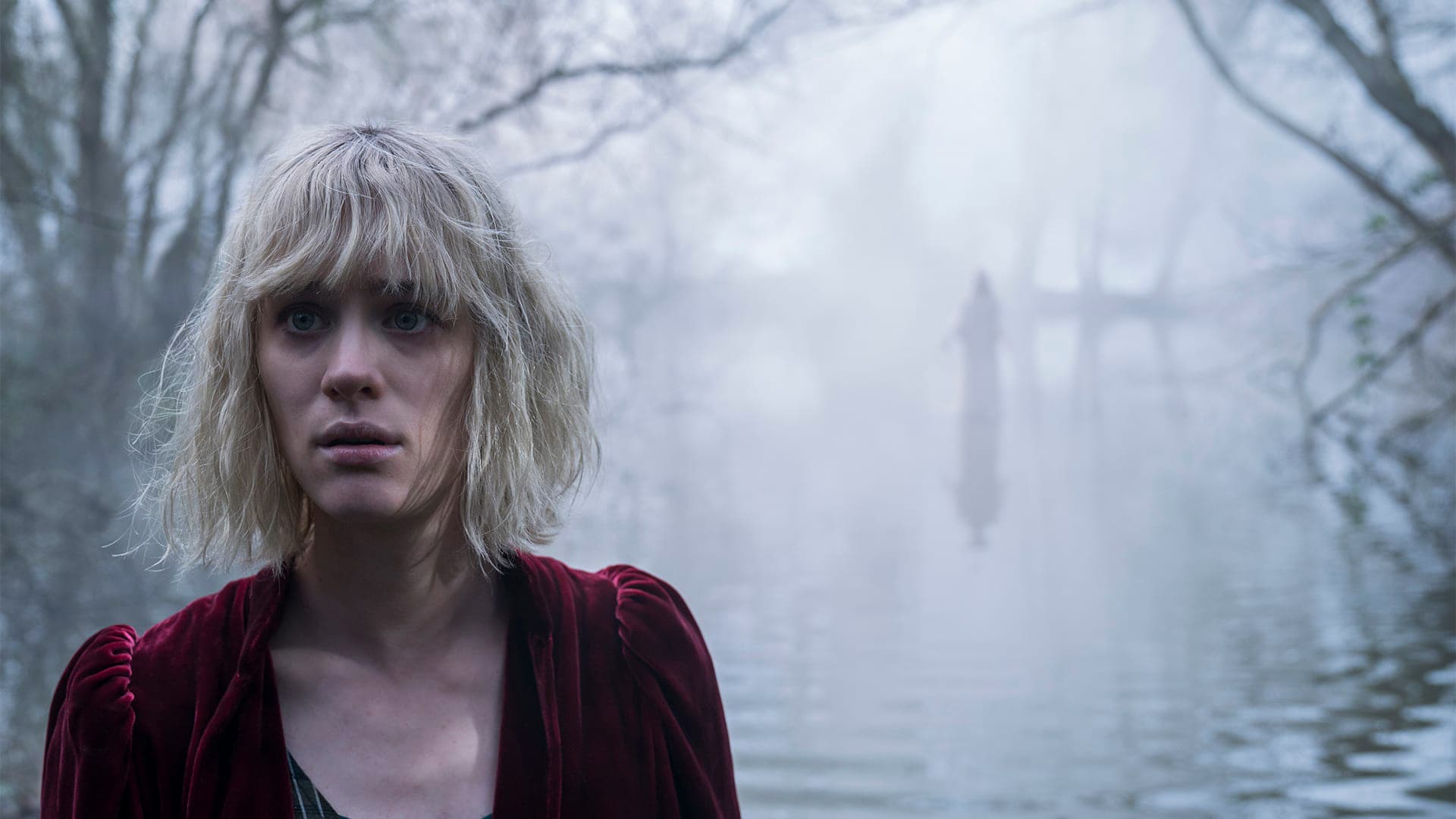
Critics acknowledged Sigismondi's visual flair and the strong production design of the Irish locations but found the storytelling fundamentally lacking. The central performances drew mixed responses: Mackenzie Davis was generally praised for her committed work as governess Kate Mandell, while Finn Wolfhard's turn as the disturbed Miles received attention for its unsettling quality, even as critics debated whether the character was written with enough depth to justify the performance choices.
The ending became the focal point of nearly every negative review. Critics described it variously as nonsensical, insulting, and evidence of a production that lost its way. The film's attempt to preserve the ambiguity of James's original novella was widely seen as misguided in execution, with reviewers arguing that ambiguity works on the page in ways that require different craft to translate to screen. Several critics noted that the 1961 adaptation The Innocents, directed by Jack Clayton, had solved this problem decades earlier by maintaining dread without abandoning narrative coherence.
Despite the overwhelmingly negative reception, some genre critics found merit in individual sequences and Sigismondi's commitment to unsettling imagery. The film's use of the 1990s setting, including a soundtrack featuring The Sundays and Mazzy Star, earned occasional praise for its period atmosphere even as the story surrounding it collapsed.
Frequently Asked Questions
How much did it cost to make The Turning (2020)?
The production budget was $14,000,000, covering principal photography, cast and crew salaries, locations, sets, post-production, and music. Marketing and distribution (P&A) costs are estimated at an additional $7,000,000 - $11,200,000, bringing the total studio investment to approximately $21,000,000 - $25,200,000.
How much did The Turning (2020) earn at the box office?
The Turning grossed $15,472,775 domestic, $3,955,391 international, totaling $19,428,166 worldwide.
Was The Turning (2020) profitable?
The film did not break even theatrically, earning $19,428,166 against an estimated $35,000,000 needed. Ancillary revenue may have improved the picture.
What were the biggest costs in producing The Turning?
The primary cost drivers were above-the-line talent (Mackenzie Davis, Finn Wolfhard, Brooklynn Prince); practical creature effects, atmospheric cinematography, and psychologically engineered sound design; international production across India, United States of America.
How does The Turning's budget compare to similar horror films?
At $14,000,000, The Turning is classified as a low-budget production. The median budget for wide-release horror films in the 2020s ranges from $30 - 80M for mid-budget to $150M+ for tentpoles. Comparable budgets: Beyond Skyline (2017, $14,000,000); Red Lights (2012, $14,000,000); Scream (1996, $14,000,000).
Did The Turning (2020) go over budget?
There are no widely reported accounts of significant budget overruns for this production. However, studios rarely disclose precise budget overrun figures publicly. The reported production budget reflects the final estimated cost.
What was the return on investment (ROI) for The Turning?
The theatrical ROI was 38.8%, calculated as ($19,428,166 − $14,000,000) ÷ $14,000,000 × 100. This measures gross revenue against production budget only - it does not account for P&A or exhibitor shares.
What awards did The Turning (2020) win?
1 nomination total.
Who directed The Turning and who were the key crew members?
Directed by Floria Sigismondi, written by Chad Hayes, Carey Hayes, shot by David Ungaro, with music by Nathan Barr, edited by Jane Moran, Duwayne Dunham.
Where was The Turning filmed?
The Turning was filmed in India, United States of America.
Filmmakers
The Turning

Official Trailer
Build budgets like this one in Saturation
Start from an industry-standard feature film template, import the schedule and rates you already have, and let the cost report keep itself current as you spend. Real-time collaboration, no spreadsheets.