Silent Hill: Revelation 3D Budget
 ThrillerHorrorMystery1h 34m
Updated
Synopsis
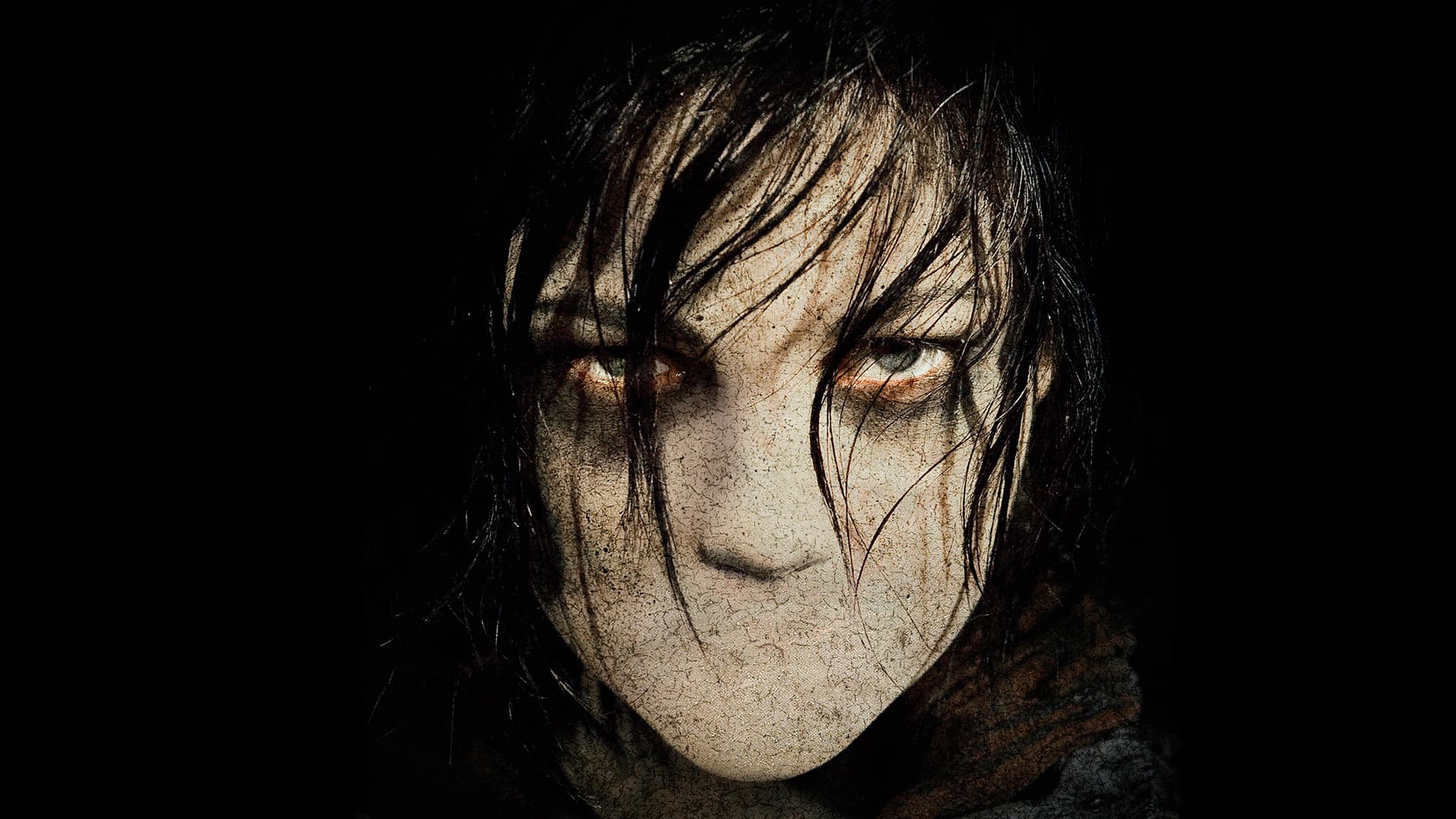
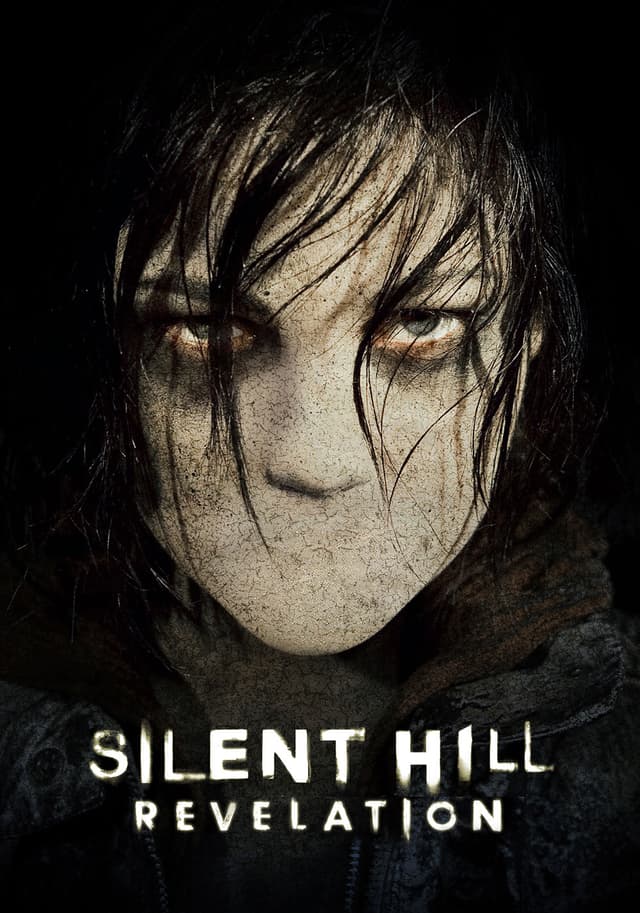
Heather Mason and her father have been on the run, always one step ahead of dangerous forces that she doesn't fully understand. Now on the eve of her 18th birthday, plagued by horrific nightmares and the disappearance of her father, Heather discovers she's not who she thinks she is. The revelation leads her deeper into a demonic world that threatens to trap her forever.
What is the budget of Silent Hill Revelation 3D?
"Silent Hill Revelation 3D," a thriller released in 2012, was directed by MJ Bassett and stars Adelaide Clemens, Sean Bean. The production budget was $20,000,000, placing it in the mid-budget range for thriller productions of its era.
Key Budget Allocation Categories
While specific budget breakdowns are not publicly available, typical cost drivers for a thriller production like this include:
- Talent & Director Compensation: Thrillers depend on compelling lead performances to sustain tension, making cast compensation a primary budget concern. Directors with proven thriller credentials command premium fees.
- Cinematography & Location Photography: Thriller aesthetics demand specific visual languages , surveillance-style photography, claustrophobic framing, or expansive location work across multiple cities or countries.
- Editorial & Sound Post-Production: Precision editing , controlling information flow, building suspense through pacing, and orchestrating reveals , requires extended post-production schedules.
- Casting: Before filming began, Bassett was open to suggestions in casting the woman to play Heather, allowing fans to post the names of actresses on her blog that they believed could play her, provided that the actress could realistically portray an eighteen-year-old and had experience in other films.
What were the major cost factors in Silent Hill Revelation 3D?
Several factors contributed to the overall production costs of "Silent Hill Revelation 3D."
- Talent: Talent & Director Compensation is one of the primary cost drivers in thriller productions of this scale.
- Cinematography: Cinematography & Location Photography is one of the primary cost drivers in thriller productions of this scale.
- Editorial: Editorial & Sound Post-Production is one of the primary cost drivers in thriller productions of this scale.
How Does Silent Hill Revelation 3D's Budget Compare to Similar Films?
At $20,000,000, Silent Hill Revelation 3D sits in the mid-budget range. Here is how it compares to productions with a similar budget:
- 12 Years a Slave (2013): Budget $20,000,000, Worldwide Gross $187,000,000
- 21 Grams (2003): Budget $20,000,000, Worldwide Gross $60,427,839
- 3 Ninjas Kick Back (1994): Budget $20,000,000, Worldwide Gross $11,798,854
- A Guy Thing (2003): Budget $20,000,000, Worldwide Gross $17,400,000
- A Most Violent Year (2014): Budget $20,000,000, Worldwide Gross $12,007,070
The median budget for wide-release thriller films in the 2010s ranges from $30 to 80M for mid-budget to $150M+ for tentpoles.
Silent Hill Revelation 3D Box Office Performance
"Silent Hill Revelation 3D" earned $17,529,157 domestically and $55,975,672 worldwide at the box office. Against a production budget of $20,000,000, the film performed strongly at the box office.
A film typically needs to earn approximately twice its production budget to cover marketing and distribution costs. For "Silent Hill Revelation 3D," that break-even threshold was roughly $40,000,000. With worldwide earnings of $55,975,672, the film cleared that threshold comfortably.
Box Office Breakdown
Silent Hill: Revelation 3D

At 179.9%, "Silent Hill Revelation 3D" earned roughly $2.8 for every $1 invested in production.
Silent Hill Revelation 3D Production History
Before filming began, Bassett was open to suggestions in casting the woman to play Heather, allowing fans to post the names of actresses on her blog that they believed could play her, provided that the actress could realistically portray an eighteen-year-old and had experience in other films. Adelaide Clemens was eventually chosen for the role of Heather, though no one had suggested her. Bassett made another post asking for suggestions for Claudia's actress and some fans suggested Donna Burke, who had provided the voice and motion capture for the character in Silent Hill 3, but Bassett was disappointed by the suggestions, feeling it was not a "very imaginative selection", and removed the post.
In March 2011, the production team began filming in Cambridge, Ontario, Canada. Production was delayed when a freak snowstorm hit the set in Cambridge on March 23, 2011. On May 15, 2011, Bassett announced that filming had ended and was in post-production.
In 2009, video game artist Masahiro Ito, who participated in the development of multiple installments of the Silent Hill series of video games, was asked to design the creatures and the look of the "Otherworld" dimension featured in the film, but declined the offer because of other obligations. Jeff Danna and Akira Yamaoka composed the film's soundtrack, through much of Yamaoka's contribution was made up of cues from the game series which were remixed by Dana. Yamaoka composed three new pieces of music for the film, including the official theme of the film "Silent Scream" which Mary Elizabeth McGlynn sung .
Awards and Recognition
8 nominations total
Critical Reception
Audiences polled by CinemaScore gave the film an average grade "C" on an A+ to F scale.
Frequently Asked Questions
How much did Silent Hill: Revelation 3D cost to make?
The production budget was $20,000,000. Davis Films and Konami co-financed the sequel, with Open Road Films handling North American theatrical distribution. The figure represents a substantial reduction from the $50,000,000 budget of the 2006 original Silent Hill.
How much did Silent Hill: Revelation earn at the box office?
The film grossed $17,521,646 domestically and $34,200,000 internationally, for a worldwide total of approximately $52,300,000. It opened to $7,749,000 on October 26, 2012, finishing third behind Argo and Hotel Transylvania.
Is Silent Hill: Revelation 3D a sequel?
Yes. The film is a direct sequel to Silent Hill (2006), continuing the story of Sharon Da Silva, now renamed Heather Mason, as she searches for her father after he is taken back to the haunted town of Silent Hill. The plot draws from the Silent Hill 3 video game.
Who directed Silent Hill: Revelation 3D?
Michael J. Bassett directed the film, replacing Christophe Gans from the original. Bassett had previously directed Deathwatch (2002), Wilderness (2006), and Solomon Kane (2009). Christophe Gans returned to the franchise to direct Return to Silent Hill (2026).
Who stars in Silent Hill: Revelation 3D?
Adelaide Clemens stars as Heather Mason, with Sean Bean returning from the first film as her father Christopher. Supporting cast includes Kit Harington, Carrie-Anne Moss, Malcolm McDowell, Deborah Kara Unger, Radha Mitchell, and Martin Donovan.
Where was Silent Hill: Revelation 3D filmed?
Principal photography took place in Toronto, Ontario, taking advantage of the Ontario Film and Television Tax Credit. Toronto soundstages housed the intricate Silent Hill set work, including the famous fog-shrouded streets and rusted interiors of the video game series.
What did critics think of Silent Hill: Revelation 3D?
The film was widely panned, with an 8% approval rating on Rotten Tomatoes and a 16 out of 100 score on Metacritic. Critics objected to the screenplay's heavy exposition and the underuse of the franchise's atmospheric horror in favor of jump scares.
Was Silent Hill: Revelation 3D profitable?
Yes, modestly. Against the $20,000,000 production budget and an estimated $15,000,000 to $20,000,000 in marketing spend, the worldwide gross of $52,300,000 produced a small theatrical profit. The 3D ticket premium contributed meaningfully to international grosses.
How does Revelation compare to the original Silent Hill?
Revelation's $52,300,000 worldwide gross fell well below Silent Hill (2006, $50,000,000 budget, $97,600,000 worldwide). The lower critical reception and shrinking franchise reach contributed to the dormancy of the live-action property until Christophe Gans' Return to Silent Hill (2026).
Where can I stream Silent Hill: Revelation 3D?
The film is available for digital rental and purchase on Amazon Prime Video, Apple TV, Google Play, and Vudu. It has periodically rotated through Hulu, Netflix, and Peacock on the subscription tier since its 2013 home video debut.
Official Trailer
Build budgets like this one in Saturation
Start from an industry-standard feature film template, import the schedule and rates you already have, and let the cost report keep itself current as you spend. Real-time collaboration, no spreadsheets.