The Truman Show Budget
 ComedyDrama1h 43m
Updated
Synopsis
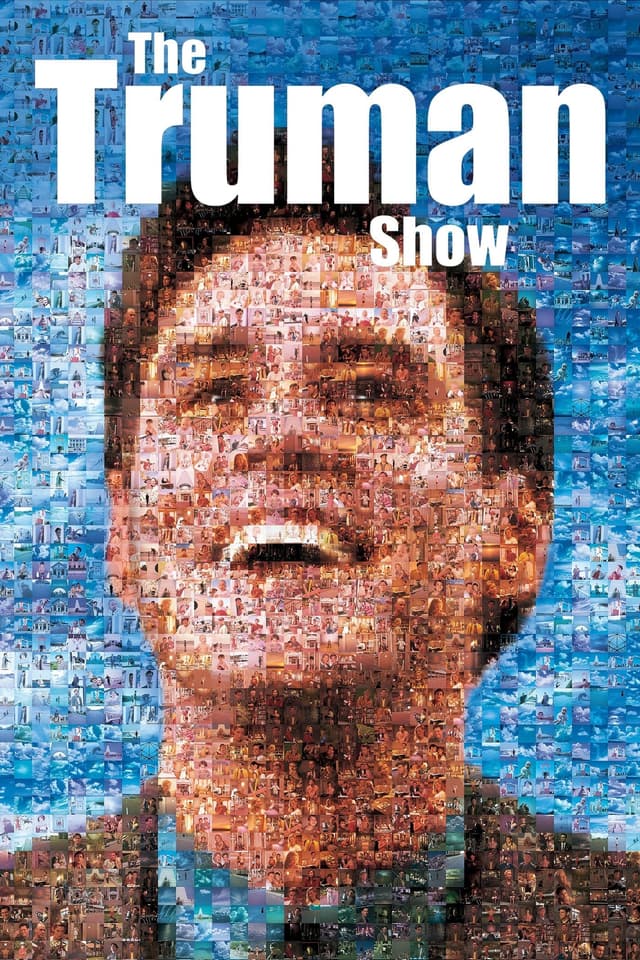
Truman Burbank has lived his entire life on the world's largest constructed television set, the unwitting star of a 24-hour broadcast watched by audiences across the globe. As small inconsistencies in his picture-perfect coastal hometown begin to surface, Truman starts to suspect that everyone he knows is an actor and his reality has been scripted from birth by an unseen creator.
What Is the Budget of The Truman Show (1998)?
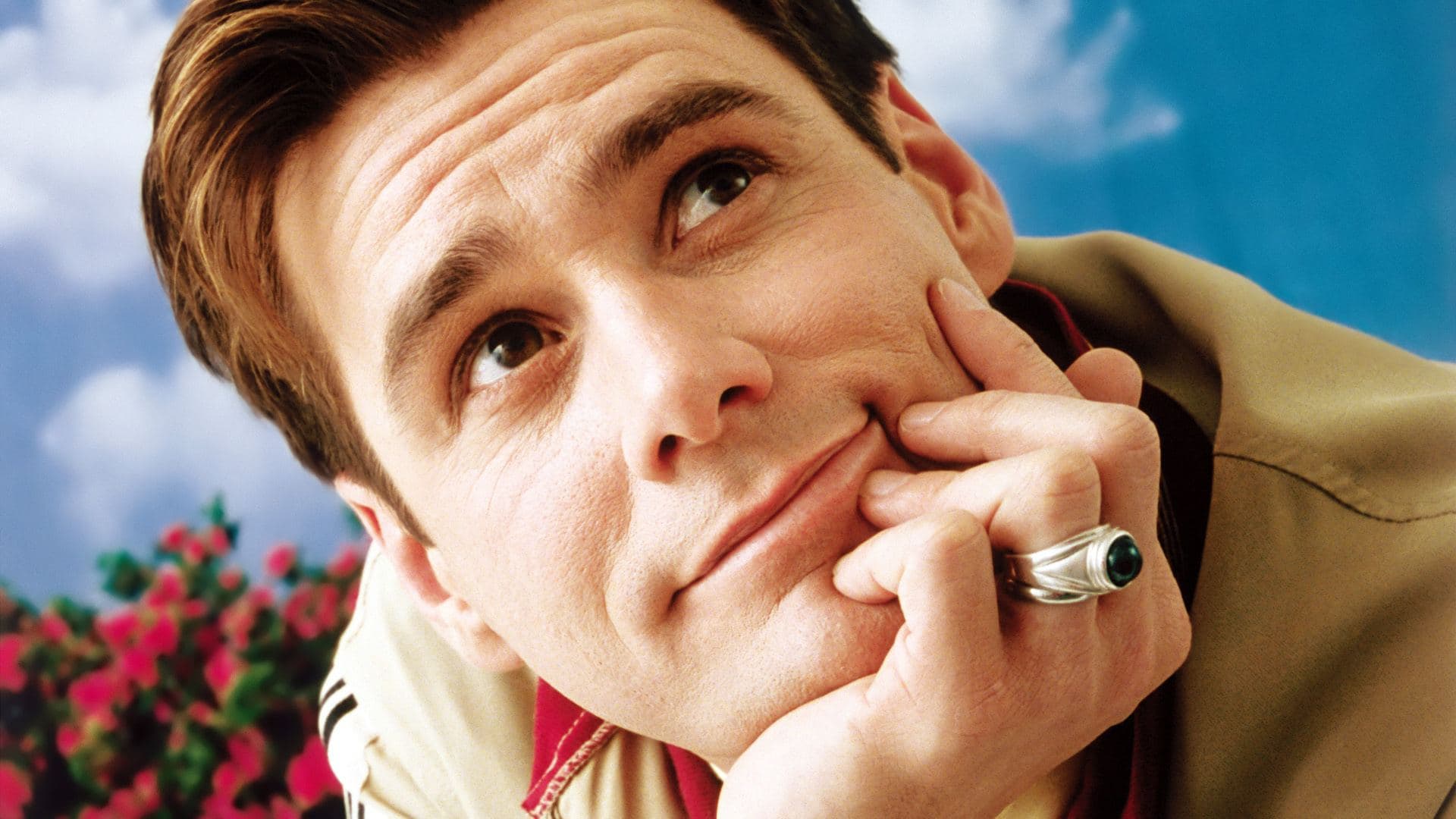
The Truman Show (1998), directed by Peter Weir and distributed by Paramount Pictures, was produced on a reported budget of $60,000,000. Scott Rudin produced through his Paramount-based banner, with Andrew Niccol, Edward S. Feldman, and Adam Schroeder rounding out the producing team. The investment was a meaningful commitment for a high-concept satirical drama that did not slot neatly into any established commercial genre, anchored almost entirely by the star power of Jim Carrey, who took his first dramatic leading role after a string of $100,000,000-plus comedies.
Carrey reportedly accepted a flat fee of $12,000,000 against his usual $20,000,000 comedy quote in exchange for the dramatic stretch, freeing budget for the elaborate practical sets and visual effects required to sustain the in-universe television production. The remaining $48,000,000 was distributed across location work at Seaside, Florida, the construction of the Seahaven dome aesthetic, an unusually large number of supporting roles, and a hybrid orchestral score combining new compositions by Burkhard Dallwitz with existing minimalist works by Philip Glass.
Key Budget Allocation Categories
The Truman Show's reported $60,000,000 budget was distributed across several core production areas:
- Above-the-Line Talent: Jim Carrey took a reduced $12,000,000 salary, a meaningful concession for a star whose comedy quote had reached $20,000,000 after Liar Liar. Peter Weir, a four-time Oscar nominee coming off Fearless, commanded a director's fee appropriate to his prestige standing. Screenwriter Andrew Niccol, whose Gattaca had opened in late 1997, received producer credit and a writing fee reflective of the script's six-figure spec sale price.
- Supporting Cast: An unusually deep ensemble included Ed Harris (replacing Dennis Hopper as Christof a week into shooting), Laura Linney as Truman's television wife Meryl, Noah Emmerich as best friend Marlon, Natascha McElhone as Sylvia/Lauren, and Holland Taylor as Truman's mother. The recasting of Christof added unplanned costs for additional principal photography days and Harris's late-stage deal.
- Production Design and Sets: Production designer Dennis Gassner built the Seahaven sound stages at Paramount and oversaw extensive set dressing of the real-world Florida community used as the primary location. Custom-built broadcast equipment, hidden-camera rigs, and the lunar-base control room set for Christof and his crew represented significant carpentry and electrical investment.
- Seaside, Florida Location Shoot: Principal photography centered on the New Urbanist planned community of Seaside, Florida, whose pastel cottages, picket fences, and tightly controlled architecture supplied a ready-made Seahaven. Location fees, lodging for an extended cast and crew, and the rental of multiple Seaside homes for set dressing and as live shooting locations consumed a substantial location-spend line.
- Visual Effects: Sony Pictures Imageworks delivered approximately 80 visual effects shots, including the falling studio light in the opening sequence, the painted sky and horizon of the Seahaven dome, the boat striking the dome wall, and the climactic staircase reveal. The dome interior required matte painting work and digital extensions to sell its scale.
- Score and Music: Composer Burkhard Dallwitz wrote the original score on commission, with additional pre-existing music from Philip Glass (selections from Anthem, Mishima, and Powaqqatsi) licensed for the film's most emotionally weighted sequences. The dual-source music approach added licensing costs on top of original composition fees.
- Reshoots After Christof Recasting: After Dennis Hopper departed early in the shoot over creative differences, Ed Harris was brought in to play Christof, and existing material was reshot to accommodate Harris's interpretation. This added schedule days, set rebuilds, and crew hold costs that pushed the production past its original line-item allocations.
How Does The Truman Show's Budget Compare to Similar Films?
At $60,000,000, The Truman Show sat in the upper-middle of late-1990s adult dramas and well below the era's effects tentpoles. The comparison set illustrates how unusual its commercial outcome was for a high-concept drama:
- Dead Poets Society (1989): Budget $16,400,000 | Worldwide $235,860,116. Peter Weir's earlier prestige drama cost roughly a quarter of The Truman Show and earned about 89% of its worldwide total, demonstrating Weir's consistent ability to convert character-driven scripts into mass-audience success.
- The Matrix (1999): Budget $63,000,000 | Worldwide $466,364,845. The Wachowskis' simulated-reality thriller cost roughly the same as The Truman Show and earned 76% more worldwide, marking the genre pivot from satirical drama toward action-led reality-questioning narratives that would dominate the following decade.
- eXistenZ (1999): Budget $15,000,000 | Worldwide $5,938,420. David Cronenberg's game-as-reality thriller, released into the same cultural moment as Truman and The Matrix, cost a quarter of Truman's budget but earned just 2% of its worldwide gross, a cautionary measure of how a niche arthouse treatment of the same conceptual territory could collapse commercially.
- Eternal Sunshine of the Spotless Mind (2004): Budget $20,000,000 | Worldwide $74,447,034. The Charlie Kaufman-Michel Gondry collaboration, another Jim Carrey dramatic vehicle, cost a third of The Truman Show but earned just 28% of its worldwide gross, illustrating how Carrey's drama market shrank after the late-90s peak that Truman defined.
- Master and Commander: The Far Side of the World (2003): Budget $150,000,000 | Worldwide $212,011,111. Peter Weir's later prestige epic cost two and a half times more than The Truman Show and earned only 80% of its worldwide gross, showing how Weir's adult-drama returns compressed as production budgets scaled up.
The Truman Show Box Office Performance
The Truman Show opened on June 5, 1998, finishing first at the domestic box office with $31,542,121 over its opening weekend, the third-largest June opening of that year behind Armageddon and The X-Files. The film held strong through the summer, eventually reaching $125,618,201 domestically and $138,243,860 internationally. Worldwide gross totaled $264,118,201.
Against a reported production budget of $60,000,000, the film needed approximately $145,000,000 in worldwide gross to reach profitability when accounting for marketing and distribution costs. Here is the financial breakdown:
Box Office Breakdown
The Truman Show

The Truman Show returned approximately $2.52 in theatrical revenue for every $1 invested when measured against total estimated production and marketing spend, placing it among the most profitable adult dramas of 1998. The domestic and international shares were nearly even, a 48/52 split that signaled rare global travel for a high-concept American satire.
The result reset Jim Carrey's commercial value as a dramatic lead, validated Peter Weir's willingness to attach to high-concept material outside the prestige-period mold, and proved Paramount's bet on an unconventional Andrew Niccol script. The film's profitability also kickstarted reality-television industry conversation just as Survivor (2000) and Big Brother (1999, Netherlands) were moving from pitch decks to broadcast.
The Truman Show Production History
Andrew Niccol wrote the original screenplay for The Truman Show in 1991, drawing on the Twilight Zone episode "Special Service" and his own anxieties about a culture saturated with surveillance and televised intimacy. Niccol's spec script sold to Paramount in 1993 for a reported $1,500,000, then circled multiple directors including Brian De Palma, Tim Burton, Terry Gilliam, and Sam Raimi before Peter Weir signed on in 1995 after the success of Fearless and his earlier collaboration with Paramount on Dead Poets Society.
Weir requested substantial rewrites that softened the original darker tone of Niccol's script, which had been set in a futuristic New York and styled closer to thriller territory. The director moved the setting to a sun-drenched coastal town, reframed Truman Burbank as a fundamentally optimistic protagonist, and recalibrated Christof from outright villain to morally ambiguous showrunner. Niccol stayed on as producer and continued to revise during pre-production.
Principal photography began in December 1996 in Florida, anchored at the New Urbanist planned community of Seaside on the Gulf Coast. The pastel cottages, white picket fences, and master-planned grid of Seaside required minimal alteration to play as the fictional Seahaven, with production designer Dennis Gassner adding signage, dressing storefronts, and building a handful of practical interiors on adjacent sound stages at Paramount. The Florida shoot ran roughly four months and used multiple Seaside homes as live working locations.
Dennis Hopper was originally cast as Christof but departed within a week of starting production over creative differences with Weir. Ed Harris was rushed in as the replacement, and earlier Christof-centered material was reshot to fit Harris's quieter, more theological interpretation of the character. The recasting added schedule days and rebuild costs but produced what most critics later called the film's most riveting performance.
Post-production extended through late 1997 into early 1998. Sony Pictures Imageworks delivered roughly 80 visual effects shots, including the falling studio light, the dome's painted sky, and the climactic boat-strikes-the-wall sequence. Composer Burkhard Dallwitz scored the film in Australia, with Philip Glass's pre-existing minimalist pieces selected by Weir to underscore the film's most emotionally exposed scenes. Paramount initially planned a fall 1997 release and shifted to June 5, 1998 to position the film as a counter-programming summer adult option.
Awards and Recognition
The Truman Show received three Academy Award nominations at the 71st Oscars (1999): Best Supporting Actor for Ed Harris, Best Director for Peter Weir, and Best Original Screenplay for Andrew Niccol. The film won none of the three, with Harris losing to James Coburn (Affliction), Weir losing to Steven Spielberg (Saving Private Ryan), and Niccol losing to Marc Norman and Tom Stoppard (Shakespeare in Love). The omission of Jim Carrey from the Best Actor lineup was widely considered the most controversial snub of the ceremony.
At the Golden Globes, Carrey won Best Actor in a Drama, Burkhard Dallwitz and Philip Glass won Best Original Score, and Niccol won Best Screenplay. The film also won three BAFTAs (Best Direction for Weir, Best Original Screenplay for Niccol, and Best Production Design for Dennis Gassner), with additional nominations across categories. The Saturn Awards named it Best Science Fiction Film of the year. American Film Institute later included The Truman Show on its lists for AFI's 100 Years...100 Cheers (selected) and the AFI's 10 Top 10 nominee list for science fiction.
Critical Reception
The Truman Show received widespread critical acclaim. The film holds a 95% approval rating on Rotten Tomatoes based on 134 critic reviews, with a critical consensus calling it a powerful and intelligent satire that uses its premise to mount a sweeping commentary on the manufactured nature of modern life. On Metacritic, the film scored 90 out of 100, indicating universal acclaim. Audiences surveyed by CinemaScore gave the film a B+, a notable score for a thematically heavy summer release.
Roger Ebert awarded the film four stars and later inducted it into his Great Movies series, writing that Weir had made "a film that asks the most profound questions in the simplest terms." The New York Times' Janet Maslin called it "a movie of immense ambition and considerable charm." Variety's Todd McCarthy praised the film's "audacious central conceit" and the way Carrey "modulates his celebrated mugging into the service of a real character." Many critics singled out Ed Harris's Christof as the breakthrough supporting turn of the year.
Audience response built steadily. The film became a touchstone for media-studies syllabi within a year of release, anticipating the rise of reality television and prefiguring the 2010s conversation about surveillance, performative identity, and algorithmically curated reality. The term "Truman Show delusion" has since entered clinical literature describing a psychiatric condition in which patients believe they are the unwitting subject of a hidden broadcast. The film's reputation has only grown in the decades since release, with multiple critics later placing it on best-of-the-1990s and best-of-the-21st-century lists.
Frequently Asked Questions
How much did it cost to make The Truman Show (1998)?
The reported production budget was $60,000,000. Paramount Pictures financed the film through Scott Rudin Productions, with Andrew Niccol, Edward S. Feldman, and Adam Schroeder producing alongside Rudin. The figure reflected a substantial commitment for a high-concept satirical drama anchored by Jim Carrey in his first dramatic leading role.
How much did The Truman Show earn at the box office?
The film grossed $125,618,201 domestically and $138,243,860 internationally, for a worldwide total of $264,118,201. It opened to $31,542,121 in the United States, finishing first on its June 5, 1998 opening weekend and remaining a strong summer performer for Paramount.
Was The Truman Show profitable?
Yes. Against a $60,000,000 production budget and an estimated $35,000,000 to $45,000,000 in marketing spend, the film returned approximately $2.52 in worldwide gross for every $1 invested. The result placed it among the most profitable adult dramas of 1998.
Who directed The Truman Show?
Peter Weir directed the film, working from an original screenplay by Andrew Niccol. Weir had previously directed Witness, Dead Poets Society, and Fearless, and signed on to the project in 1995 after multiple other filmmakers including Brian De Palma, Tim Burton, and Terry Gilliam had circled the script.
Where was The Truman Show filmed?
Principal photography centered on the New Urbanist planned community of Seaside, Florida, on the Gulf Coast. Seaside's pastel cottages, picket fences, and master-planned street grid required minimal alteration to play as the fictional Seahaven. Additional interiors and the Christof control-room sequences were shot at Paramount sound stages in Los Angeles.
How much was Jim Carrey paid for The Truman Show?
Jim Carrey accepted a flat fee of $12,000,000, well below his then-standard $20,000,000 comedy quote established after Liar Liar. The reduced fee was part of his deliberate move toward dramatic roles and freed budget for production design, visual effects, and supporting cast.
Who replaced Dennis Hopper as Christof?
Ed Harris replaced Dennis Hopper as Christof, the in-universe television creator. Hopper departed within a week of starting production over creative differences with director Peter Weir. Harris was cast as the replacement, earlier material was reshot, and his performance earned him an Academy Award nomination for Best Supporting Actor.
Did The Truman Show win any Oscars?
No. The Truman Show received three Academy Award nominations at the 71st Oscars (1999) for Best Supporting Actor (Ed Harris), Best Director (Peter Weir), and Best Original Screenplay (Andrew Niccol), but won none. Harris lost to James Coburn for Affliction, Weir lost to Steven Spielberg for Saving Private Ryan, and Niccol lost to Marc Norman and Tom Stoppard for Shakespeare in Love. Jim Carrey was not nominated for Best Actor, which was widely considered the most controversial snub of the ceremony.
Who composed the music for The Truman Show?
Burkhard Dallwitz composed the original score in Australia, with selections from Philip Glass's existing minimalist works (drawn from Anthem, Mishima, and Powaqqatsi) used for the film's most emotionally exposed sequences. Dallwitz and Glass shared the Golden Globe for Best Original Score.
What did critics think of The Truman Show?
The film received widespread critical acclaim, with a 95% approval rating on Rotten Tomatoes (based on 134 critics) and a 90 out of 100 score on Metacritic. Audiences gave it a B+ CinemaScore. Roger Ebert awarded the film four stars and later inducted it into his Great Movies series. The term "Truman Show delusion" has since entered clinical psychiatric literature, describing patients who believe they are the unwitting subject of a hidden broadcast.
Filmmakers
The Truman Show

Official Trailer
Build budgets like this one in Saturation
Start from an industry-standard feature film template, import the schedule and rates you already have, and let the cost report keep itself current as you spend. Real-time collaboration, no spreadsheets.