Beetlejuice Budget
 FantasyComedy1h 32m
Updated
Synopsis
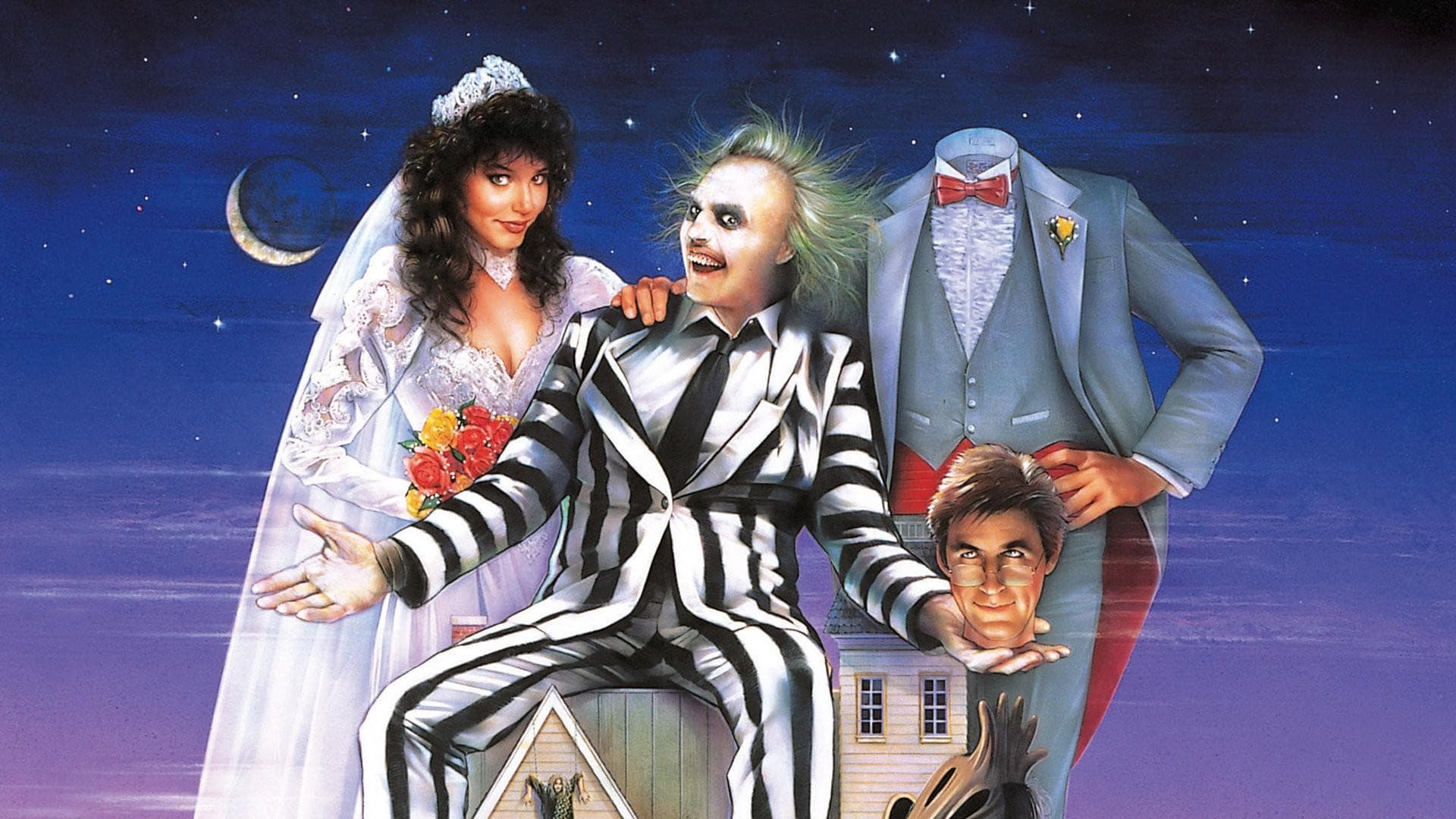
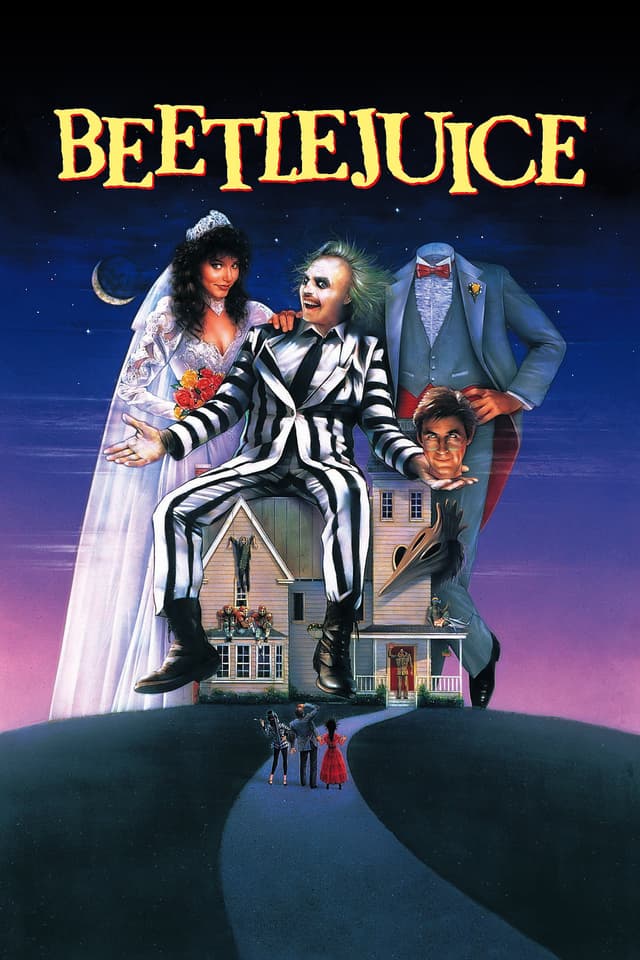
After Adam and Barbara Maitland die in a car accident, they find themselves haunting their idyllic Connecticut farmhouse, which has been bought and renovated beyond recognition by the obnoxious Deetz family from New York. Desperate to scare the intruders out, the Maitlands turn to Betelgeuse, an unhinged freelance bio-exorcist whose methods prove far more dangerous than the Deetzes themselves.
What Is the Budget of Beetlejuice (1988)?
Beetlejuice (1988), directed by Tim Burton and distributed by Warner Bros. Pictures through The Geffen Company, was produced on a reported budget of $15,000,000. The horror-comedy was only Burton's second feature, arriving on the heels of the surprise success of Pee-wee's Big Adventure (1985), and Warner Bros. greenlit the project at a deliberately modest budget that reflected both the unproven commercial appeal of its macabre afterlife premise and the studio's desire to give a young director room to experiment within tight financial guardrails.
The investment proved one of the most efficient mid-1980s studio bets. Compared with the $30,000,000 to $35,000,000 spent on contemporaneous horror-comedy hits like Ghostbusters (1984) and the $48,000,000 committed to Burton's own follow-up Batman (1989), Beetlejuice was made for roughly half to a third of the going rate for an effects-driven studio comedy. The math assumed the film would need to clear approximately $30,000,000 worldwide to break even after marketing, a threshold it cleared in its first three weeks of domestic release alone.
Key Budget Allocation Categories
Beetlejuice's reported $15,000,000 budget was distributed across several core production areas:
- Above-the-Line Talent: Director Tim Burton commanded a sophomore-feature rate after Pee-wee's Big Adventure exceeded expectations. Michael Keaton, cast as the title bio-exorcist after Sammy Davis Jr. was briefly considered, took a reduced fee in exchange for creative latitude to develop the character. Geena Davis and Alec Baldwin were cast as the Maitlands at a pre-A-list rate, with Winona Ryder, then sixteen and coming off Lucas and Square Dance, taking the role of Lydia Deetz, and Catherine O'Hara and Jeffrey Jones rounding out the Deetz family.
- Makeup and Prosthetics: The film's Oscar-winning makeup work, designed by Ve Neill, Steve LaPorte, and Robert Short, consumed a disproportionate share of the budget. Practical prosthetics for the shrunken-head witch doctor, the flattened car-crash man, Keaton's mossy bio-exorcist look, and the dinner-party guests required custom molds, multi-hour application sessions, and dedicated stages. The makeup department alone employed a team of more than a dozen artists across principal photography.
- Stop-Motion and Practical Effects: The sandworm sequences, the model-train Saturn landscape, the shrinking-room sequence, and the visible-skeleton creatures were produced using stop-motion animation, miniatures, forced perspective, and on-set puppetry rather than optical or computer effects. Visual effects supervisors Alan Munro and Peter Kuran coordinated a small army of model makers, animators, and matte painters working out of dedicated effects stages.
- Production Design: Bo Welch designed the Deetz family's post-modern renovation of the rural Maitland farmhouse, the Saturn afterlife landscape, the waiting-room bureaucracy of the dead, and the miniature town model that doubles as a key narrative device. The contrast between rustic Connecticut interior, neon-art-installation renovation, and German-Expressionist afterlife required three distinct design vocabularies built on a tight schedule.
- Music and Score: Danny Elfman composed his second feature score for Burton, building on their Pee-wee's Big Adventure collaboration with a circus-tinged orchestral palette that became one of the most recognizable themes of the decade. The budget also covered the licensing of Harry Belafonte's Day-O (The Banana Boat Song) and Jump in the Line, the calypso needle drops that anchor the film's two most memorable set pieces.
- Connecticut and Los Angeles Shoot: Principal photography divided between exterior location work in East Corinth, Vermont (standing in for fictional Winter River, Connecticut) and stage work at The Culver Studios in Culver City, California. The Vermont location shoot covered the covered-bridge opening sequence, exterior establishing shots of the Maitland house, and the rural town that becomes the model in the Maitlands' attic.
- Post-Production: A compressed post-production schedule of roughly six months handled stop-motion compositing, optical effects integration, sound design, and the integration of Elfman's score. The relatively short post window kept carrying costs down and allowed Warner Bros. to bring the film to theaters less than a year after the wrap of principal photography.
How Does Beetlejuice's Budget Compare to Similar Films?
At a reported $15,000,000, Beetlejuice sits at the low end of the late-1980s horror-comedy and effects-driven studio comedy class. The comparison set illustrates how efficiently Burton and Warner Bros. extracted commercial returns from a modest spend:
- Ghostbusters (1984): Budget $30,000,000 | Worldwide $295,200,000. Ivan Reitman's supernatural-comedy hit cost twice as much as Beetlejuice and earned roughly four times the worldwide gross, establishing the genre template Burton's film would refine on a fraction of the budget.
- Gremlins (1984): Budget $11,000,000 | Worldwide $212,913,275. Joe Dante's puppet-driven horror-comedy was made for slightly less than Beetlejuice and out-grossed it worldwide by nearly three times, suggesting that the practical-creature subgenre had a higher ceiling when given a summer release window.
- Batman (1989): Budget $48,000,000 | Worldwide $411,348,924. Burton's next feature, also at Warner Bros., cost more than three times Beetlejuice and reflected the studio's confidence in his commercial instincts following Beetlejuice's domestic performance.
- Edward Scissorhands (1990): Budget $20,000,000 | Worldwide $86,024,005. Burton's 20th Century Fox follow-up cost a third more than Beetlejuice and earned modestly more worldwide, confirming his ability to translate a personal vision into mid-budget commercial success.
- Beetlejuice Beetlejuice (2024): Budget $99,000,000 | Worldwide $451,049,228. The thirty-six-years-later legacy sequel cost more than six times the original, reflecting franchise inflation and the cost of returning Keaton, Ryder, and O'Hara, and still earned a higher worldwide multiple of its budget than the original ever managed.
Beetlejuice Box Office Performance
Beetlejuice opened on March 30, 1988 in 1,001 North American theaters, grossing $8,030,897 on its opening weekend and finishing second behind Bright Lights, Big City. Strong word of mouth, repeat viewings driven by a teenage and twenty-something audience, and an unusually long theatrical run carried the film to a domestic gross of $73,707,461 by the end of its theatrical run, a figure that placed it in the top ten domestic earners of 1988.
Against a reported production budget of $15,000,000, the film needed approximately $30,000,000 in worldwide gross to reach profitability when accounting for marketing and distribution costs. Here is the financial breakdown:
Box Office Breakdown
Beetlejuice

Beetlejuice returned approximately $2.49 in theatrical revenue for every $1 invested when measured against total estimated production and marketing spend, placing it among the most efficient studio releases of 1988. The film was overwhelmingly a domestic phenomenon, with North America accounting for roughly 99% of the worldwide gross, and the international take limited by the film's American-suburban premise and the comparatively underdeveloped overseas market for horror-comedy in the late 1980s.
Beyond the theatrical window, Beetlejuice generated substantial downstream revenue across home video, the Beetlejuice animated series that ran on ABC and Fox Kids from 1989 to 1991, and a long tail of merchandise, theme-park attractions at Universal Studios, and a Broadway musical adaptation that opened in 2019. The franchise was reactivated thirty-six years later with Beetlejuice Beetlejuice (2024), which grossed more than $451,000,000 worldwide, retroactively confirming the original's status as one of the most durable comedy properties of its era.
Beetlejuice Production History
Development on Beetlejuice began in 1985 when producer Larry Wilson optioned a screenplay by Michael McDowell, the Southern Gothic novelist behind The Elementals and Toplin. McDowell's original draft was substantially darker than the finished film, framing Betelgeuse as a winged demon whose final act involved literal violence against the Deetz family. Warren Skaaren, who had recently worked on Top Gun, was brought in for a rewrite that softened the tone, dialed back the horror imagery, and gave Betelgeuse the seedy-grifter voice that Michael Keaton ultimately ran with on screen.
Tim Burton attached to direct in 1986 on the strength of Pee-wee's Big Adventure, which had become a sleeper hit for Warner Bros. the previous summer. Burton initially pushed for Sammy Davis Jr. as Betelgeuse, but producer David Geffen and the studio steered him toward Michael Keaton, who was coming off Mr. Mom and Gung Ho and looking for material that would push him beyond the everyman-comedy lane. Keaton received the script with most of his dialogue undefined and improvised much of his on-set performance, ultimately appearing in only roughly seventeen minutes of finished footage despite carrying the title.
Casting the Maitlands proved more conventional. Alec Baldwin, then known primarily for the soap-opera Knots Landing and a recurring role on Hill Street Blues, was cast as Adam Maitland, and Geena Davis, fresh off The Fly with David Cronenberg, took the role of Barbara. For Lydia, Burton initially considered Diane Lane and Jennifer Connelly before settling on sixteen-year-old Winona Ryder, who arrived with a small body of work in Lucas and Square Dance and would emerge from the film as the breakout star of her generation. Catherine O'Hara and Jeffrey Jones were cast as Delia and Charles Deetz, with Glenn Shadix as the art-world hanger-on Otho.
Principal photography ran from March to May 1987, divided between an exterior location shoot in East Corinth, Vermont (doubling for the fictional Winter River, Connecticut) and stage work at The Culver Studios in Los Angeles. The Vermont block covered the covered-bridge opening, exterior establishing shots of the Maitland farmhouse, and the rural town that becomes the miniature in the Maitlands' attic. Bo Welch's production design split the visual language of the film into three distinct registers: the rustic New England farmhouse interior, the Deetz family's post-modern art-installation renovation, and the German-Expressionist waiting room of the afterlife.
Visual effects were handled by Alan Munro and Peter Kuran using stop-motion animation, miniatures, forced perspective, and on-set puppetry. The sandworm sequences on the Saturn landscape were created using a combination of armatured puppets and stop-motion work, and the dinner-party levitation scene, set to Harry Belafonte's Day-O, was achieved entirely with practical rigs and on-set choreography rather than optical compositing. Danny Elfman delivered his second feature score for Burton, building on their Pee-wee's Big Adventure collaboration with a circus-tinged orchestral palette that has been frequently sampled and homaged in subsequent horror-comedy soundtracks.
Awards and Recognition
Beetlejuice won the Academy Award for Best Makeup at the 61st Academy Awards in March 1989, recognizing the work of Ve Neill, Steve LaPorte, and Robert Short. The win was a notable upset, beating both Coming to America and Scrooged in a category that had been added to the Oscars only seven years earlier. The makeup Oscar remains the only major Academy Award won by any Tim Burton feature.
The film also took the 1989 Saturn Award for Best Horror Film from the Academy of Science Fiction, Fantasy and Horror Films, with additional Saturn nominations for Geena Davis (Best Actress), Catherine O'Hara (Best Supporting Actress), Sylvia Sidney (Best Supporting Actress for her role as the chain-smoking caseworker Juno), Danny Elfman (Best Music), and Bo Welch (Best Production Design). At the British Academy of Film and Television Arts (BAFTA) ceremony, the film was nominated for Best Special Visual Effects and Best Makeup and Hair.
In 2012, Beetlejuice was selected for preservation in the National Film Registry by the Library of Congress, an honor reserved for films deemed culturally, historically, or aesthetically significant. The film has appeared on numerous critical retrospectives, including American Film Institute lists of the funniest American films and the greatest screen comedies, and is widely cited as the work that defined Burton's mature visual signature and launched Winona Ryder's career.
Critical Reception
Beetlejuice received generally positive reviews on release. The film holds an 84% approval rating on Rotten Tomatoes based on 76 critic reviews, with a critical consensus that calls it "an off-beat, hilarious dark comedy and the perfect showcase for Michael Keaton, Beetlejuice features an inspired performance from a charismatic comic actor and inventive special effects." On Metacritic, the film scored 70 out of 100, indicating generally favorable reviews. Audiences surveyed by CinemaScore at the time did not file an official grade, but the film's strong word of mouth and unusually long theatrical legs spoke directly to audience enthusiasm.
Roger Ebert of the Chicago Sun-Times gave the film three stars, writing that "Beetlejuice contains a wonderful new comic creation, in the person of Betelgeuse, played by Michael Keaton" but objected that the film "doesn't quite know what to do with him." Janet Maslin of The New York Times praised Burton's "fertile and exuberant" imagination and singled out Keaton for "the most carnivorous performance imaginable, all teeth and snarls and grimaces." Pauline Kael of The New Yorker was more measured, calling the film visually inventive but uneven in its narrative through-line.
Genre-press reaction was more enthusiastic. Fangoria celebrated the practical makeup work and Burton's willingness to embrace tactile horror imagery in a mainstream comedy, and the film was quickly absorbed into the canon of late-1980s cult cinema through repeat cable rotation, the Saturday-morning animated series, and a generation of teenage Lydia Deetz cosplay. Subsequent critical reappraisal has elevated Beetlejuice as one of the formative films of the Burton-Elfman-Keaton collaboration that would define the next decade of Warner Bros. genre filmmaking, and the 2012 National Film Registry selection cemented its status as a foundational American horror-comedy.
Frequently Asked Questions
How much did it cost to make Beetlejuice (1988)?
The reported production budget was $15,000,000. The Geffen Company produced and Warner Bros. Pictures distributed, with Tim Burton directing on the strength of his Pee-wee's Big Adventure debut. The budget was modest by late-1980s studio standards, roughly half of what Ghostbusters (1984) had cost four years earlier.
How much did Beetlejuice earn at the box office?
The film grossed $73,707,461 domestically and approximately $1,100,000 internationally, for a worldwide total of approximately $74,800,000. It opened to $8,030,897 over the March 30, 1988 weekend in 1,001 theaters and finished second behind Bright Lights, Big City before strong word of mouth drove an unusually long theatrical run.
Was Beetlejuice a box office hit?
Yes. Against a $15,000,000 production budget and an estimated $12,000,000 to $15,000,000 in marketing spend, the film returned approximately $2.49 in worldwide gross for every $1 invested. It finished in the top ten domestic earners of 1988 and is widely cited as one of the most profitable Warner Bros. releases of the decade on a return-on-investment basis.
Who directed Beetlejuice?
Tim Burton directed Beetlejuice, his second feature after Pee-wee's Big Adventure (1985). The film established the visual and tonal signature, gothic-comedic, German-Expressionist-inflected, scored by Danny Elfman, that would define Burton's next decade of work at Warner Bros., including Batman (1989) and Batman Returns (1992).
Where was Beetlejuice filmed?
Principal photography ran from March to May 1987, divided between exterior location work in East Corinth, Vermont (doubling for the fictional Winter River, Connecticut) and stage work at The Culver Studios in Culver City, California. The Vermont block covered the covered-bridge opening, exterior establishing shots of the Maitland farmhouse, and the rural town that becomes the miniature in the attic.
Did Beetlejuice win an Oscar?
Yes. Beetlejuice won the Academy Award for Best Makeup at the 61st Academy Awards in March 1989, recognizing the work of Ve Neill, Steve LaPorte, and Robert Short. The win beat both Coming to America and Scrooged in the category. The makeup Oscar remains the only major Academy Award won by any Tim Burton feature.
How does Beetlejuice compare to other Tim Burton films?
Beetlejuice cost roughly a third of Burton's subsequent Batman (1989) at $48,000,000 and three-quarters of Edward Scissorhands (1990) at $20,000,000. On a return-on-investment basis it outperformed both, though Batman's $411,000,000 worldwide gross dwarfed Beetlejuice's $74,800,000 in absolute terms. The legacy sequel Beetlejuice Beetlejuice (2024) cost $99,000,000 and grossed $451,049,228 worldwide.
How long is Michael Keaton actually on screen in Beetlejuice?
Michael Keaton appears in only roughly seventeen minutes of finished footage despite carrying the title. He received the script with most of his dialogue undefined and improvised much of his on-set performance. Tim Burton had initially pushed for Sammy Davis Jr. before producer David Geffen steered him toward Keaton, who took a reduced fee in exchange for creative latitude.
What did critics think of Beetlejuice?
The film received generally positive reviews, with an 84% approval rating on Rotten Tomatoes (based on 76 critics) and a 70 out of 100 score on Metacritic. Roger Ebert gave it three stars and called Keaton's Betelgeuse "a wonderful new comic creation." Janet Maslin of The New York Times praised Burton's "fertile and exuberant" imagination and singled out Keaton for "the most carnivorous performance imaginable."
Is there a Beetlejuice sequel?
Yes. Beetlejuice Beetlejuice (2024), directed by Tim Burton and starring Michael Keaton, Winona Ryder, and Catherine O'Hara reprising their original roles, opened in September 2024. The legacy sequel cost $99,000,000 and grossed $451,049,228 worldwide, more than six times the original's worldwide total. The Beetlejuice property also spawned an ABC animated series (1989 to 1991) and a Broadway musical that opened in April 2019.
Filmmakers
Beetlejuice

Official Trailer
Build budgets like this one in Saturation
Start from an industry-standard feature film template, import the schedule and rates you already have, and let the cost report keep itself current as you spend. Real-time collaboration, no spreadsheets.