The Tree of Life Budget
 DramaFantasy2h 19m
Updated
Synopsis
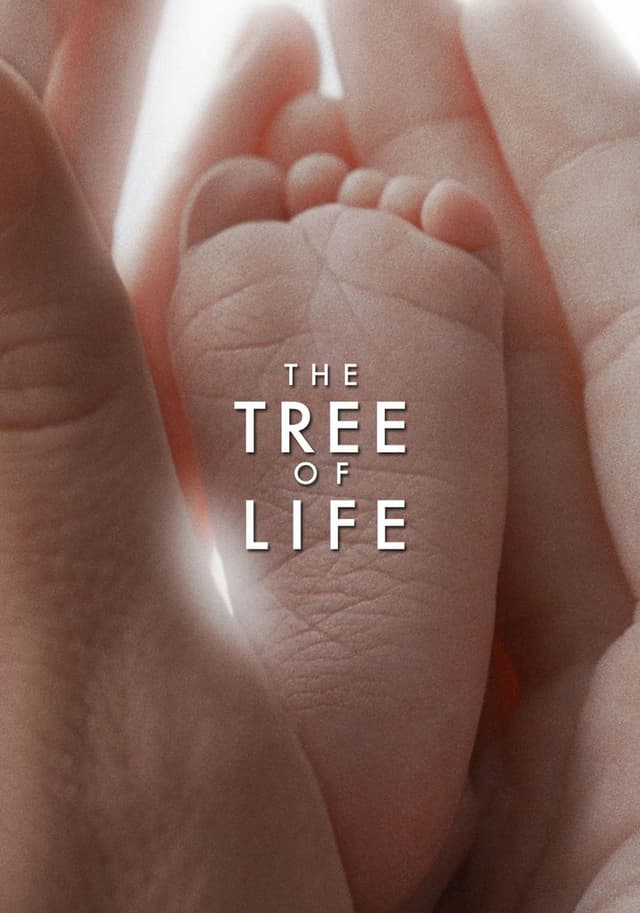
The impressionistic story of a Texas family in the 1950s. The film follows the life journey of the eldest son, Jack, through the innocence of childhood to his disillusioned adult years as he tries to reconcile a complicated relationship with his father. Jack finds himself a lost soul in the modern world, seeking answers to the origins and meaning of life while questioning the existence of faith.
What Is the Budget of The Tree of Life?
The Tree of Life was produced on a budget of $32 million, a substantial investment for a non-franchise art film released in 2011. Director Terrence Malick secured the financing through a combination of River Road Entertainment and Cottonwood Pictures, with Fox Searchlight Pictures handling domestic distribution. The budget reflected Malick's ambition to combine an intimate family drama set in 1950s Waco, Texas, with a sweeping cosmological sequence depicting the birth of the universe.
A significant portion of the budget was allocated to visual effects, particularly the 20-minute creation sequence supervised by Douglas Trumbull, the legendary VFX artist behind 2001: A Space Odyssey. Malick insisted on using practical effects techniques such as high-speed photography of chemicals, fluids, and light rather than relying solely on CGI, which demanded specialized equipment and extensive experimentation over many months.
Key Budget Allocation Categories
- Cast Salaries Brad Pitt and Sean Penn commanded significant fees as the leads, though both reportedly accepted reduced rates to work with Malick. Jessica Chastain, then a relative unknown, earned a fraction of her co-stars' salaries in what became her breakout role.
- Visual Effects and Special Photography The creation-of-the-universe sequence required months of practical experimentation under Douglas Trumbull. Techniques included pouring dyes, milk, and fluorescent liquids into water tanks filmed at extreme frame rates, combined with macro photography and digital compositing for the dinosaur sequences.
- Cinematography Emmanuel Lubezki shot the film primarily with natural light and Steadicam, a process that demanded extended shooting days and meticulous coordination with weather and daylight windows. Lubezki's approach required flexibility in the schedule that added to production costs.
- Music and Score Alexandre Desplat composed an original score, but the film also features extensive licensed classical music from composers including Bach, Brahms, Berlioz, Mahler, and Smetana. Licensing orchestral recordings from multiple rights holders added to music costs.
- Production Design and Locations The 1950s Waco sequences were filmed in Smithville and Bastrop, Texas, requiring period-accurate set dressing, wardrobe, and vehicles. The modern-day sequences featuring Sean Penn were shot in Houston and Dallas.
- Extended Post-Production Malick is known for lengthy editing processes, and The Tree of Life spent approximately two years in post-production. Editor teams cycled through multiple cuts, with five credited editors working on the final version.
How Does The Tree of Life's Budget Compare to Similar Films?
At $32 million, The Tree of Life occupied a rare middle ground between low-budget independent films and studio tentpoles, reflecting its unusual combination of art-house storytelling with blockbuster-scale visual effects.
- 2001: A Space Odyssey (1968) Budget $10.5M (approximately $85M adjusted for inflation) | Worldwide $190M. Kubrick's cosmic epic is the most direct spiritual ancestor, and both films used practical effects photography to depict the origins of existence. Trumbull worked on both productions.
- Terrence Malick's The New World (2005) Budget $30M | Worldwide $30.5M. Malick's previous film carried a similar budget and used a comparable natural-light cinematography approach, though it lacked the VFX ambition of The Tree of Life.
- Melancholia (2011) Budget $7.5M | Worldwide $16.1M. Lars von Trier's apocalyptic drama premiered at the same Cannes festival, offering a contrasting approach to cosmic themes on a fraction of the budget.
- Gravity (2013) Budget $100M | Worldwide $723.2M. Alfonso Cuaron and Lubezki's space thriller demonstrates how a larger budget allowed similar cinematographic ambitions to achieve mainstream commercial success.
- A Hidden Life (2019) Budget $12M | Worldwide $6.4M. Malick's later WWII drama shows his return to a leaner budget model after The Tree of Life's relatively expensive production.
The Tree of Life Box Office Performance
The Tree of Life earned $13,303,319 domestically and $54,303,319 worldwide against its $32 million production budget. For a film to recoup its full investment including prints and advertising, it typically needs to gross roughly twice its production budget at the box office. With an estimated break-even threshold around $64 million, The Tree of Life fell short of full theatrical profitability.
The film opened on just 4 screens in its first weekend, earning $501,293 for a strong per-screen average of $125,323. Fox Searchlight executed a careful platform release, gradually expanding to a peak of 237 screens. This limited release strategy reflected the distributor's understanding that a nearly three-hour, non-linear philosophical meditation would not play as a wide release, but could find its audience through critical word of mouth and festival prestige.
Applying the standard ROI formula: ($54,303,319 - $32,000,000) / $32,000,000 x 100 = 69.7% ROI on production costs alone. When factoring in home video, streaming licensing, and the film's enduring reputation as a canonical work of 21st-century cinema, The Tree of Life likely reached profitability through ancillary revenue channels. The Criterion Collection Blu-ray release became one of the label's top sellers.
Box Office Breakdown
The Tree of Life

The Tree of Life Production History
Terrence Malick first conceived the project in the late 1970s under the working title "Q," envisioning a film that would interweave a contemporary story with the origins of life on Earth. The project remained in development for decades as Malick stepped away from filmmaking entirely between 1978 and 1998, and the concept evolved through multiple iterations before entering active production.
Principal photography began in 2008, six years after Malick's return to directing with The New World. The Texas sequences were shot in Smithville and surrounding areas, where the production built and dressed a full 1950s neighborhood. Malick's directing style relied heavily on improvisation; he would give actors general scenarios rather than scripted dialogue, then shoot extended takes with multiple cameras while encouraging naturalistic behavior. Brad Pitt later described the experience as unlike any other film set, noting that Malick would sometimes redirect scenes mid-take or abandon planned setups to follow unexpected moments.
The visual effects work ran on a parallel track. Douglas Trumbull, who had been semi-retired since the 1980s, came out of retirement specifically for this project. Working from a facility in the Berkshires, Trumbull and VFX supervisor Dan Glass spent months experimenting with practical photography techniques, pouring chemicals, paints, and fluorescent dyes into tanks of water, filming the interactions at high speeds, and compositing the results. Malick wanted the creation sequence to feel organic rather than digital, and this insistence on analog methods was both a creative and budgetary decision that shaped the film's distinctive look.
Post-production extended from 2009 through early 2011, with Malick working through multiple editorial approaches. Five editors are credited on the final film. Entire storylines were reportedly shot and then excised, including expanded sequences with Sean Penn's adult character. The film was initially expected to premiere at Cannes in 2010 but was delayed a full year as Malick continued refining the cut.
Awards and Recognition
The Tree of Life premiered at the 2011 Cannes Film Festival, where it won the Palme d'Or, the festival's highest honor. The Cannes premiere became one of the most talked-about moments in modern festival history; the film received both loud boos and an extended standing ovation at its first screening, a polarized reaction that became part of its cultural identity. Jury president Robert De Niro presided over the panel that awarded the prize.
At the 84th Academy Awards, the film received three nominations: Best Picture, Best Director for Terrence Malick, and Best Cinematography for Emmanuel Lubezki. It did not win in any category, losing Best Picture and Best Director to The Artist and Best Cinematography to Hugo.
Jessica Chastain's performance as the mother earned widespread recognition and is credited with launching her career. She appeared in seven films released in 2011, but The Tree of Life was the role that established her as a leading dramatic actress. The film also received awards and nominations from the American Society of Cinematographers, the Directors Guild of America, the National Society of Film Critics, and numerous international critics' organizations.
Critical Reception
The Tree of Life holds an 84% approval rating on Rotten Tomatoes based on 253 reviews, with a weighted average score of 7.7/10. The critical consensus describes it as "Terrence Malick's singularly transcendent meditation on the meaning of life." On Metacritic, the film scored 85 out of 100 based on 43 critics, indicating "universal acclaim."
Critics were deeply divided along predictable lines. Supporters, including Roger Ebert, called it a masterpiece and one of the greatest films ever made. Ebert wrote that the film "must be taken on its own terms" and compared it to 2001: A Space Odyssey in ambition and achievement. The Associated Press named it the best film of the decade in a 2019 critics' poll. Detractors found it pretentious, formless, and self-indulgent, criticizing its minimal dialogue, non-linear structure, and the jarring tonal shift between intimate family drama and cosmic spectacle.
Audience reception was similarly split. The film's limited theatrical run attracted strong per-screen averages from dedicated art-house audiences, but exit polls showed unusually high rates of walkouts at mainstream screenings. Some theaters posted disclaimers warning audiences about the film's unconventional structure. Over the following decade, critical opinion has trended increasingly positive, with the film regularly appearing on best-of-the-decade and best-of-the-century lists. A 2022 Sight & Sound poll ranked it among the 100 greatest films of all time.
Frequently Asked Questions
How much did it cost to make The Tree of Life (2011)?
The production budget was $32,000,000, covering principal photography, cast and crew salaries, locations, sets, post-production, and music. Marketing and distribution (P&A) costs are estimated at an additional $16,000,000 - $25,600,000, bringing the total studio investment to approximately $48,000,000 - $57,600,000.
How much did The Tree of Life (2011) earn at the box office?
The Tree of Life grossed $54,700,000 worldwide.
Was The Tree of Life (2011) profitable?
The film did not break even theatrically, earning $54,700,000 against an estimated $80,000,000 needed. Ancillary revenue may have improved the picture.
What were the biggest costs in producing The Tree of Life?
The primary cost drivers were above-the-line talent (Brad Pitt, Jessica Chastain, Hunter McCracken); talent compensation, authentic period production design, and meticulous post-production.
How does The Tree of Life's budget compare to similar drama films?
At $32,000,000, The Tree of Life is classified as a low-budget production. The median budget for wide-release drama films in the 2010s ranges from $30 - 80M for mid-budget to $150M+ for tentpoles. Comparable budgets: A History of Violence (2005, $32,000,000); Alive (1993, $32,000,000); Bad Times at the El Royale (2018, $32,000,000).
Did The Tree of Life (2011) go over budget?
There are no widely reported accounts of significant budget overruns for this production. However, studios rarely disclose precise budget overrun figures publicly. The reported production budget reflects the final estimated cost.
What was the return on investment (ROI) for The Tree of Life?
The theatrical ROI was 70.9%, calculated as ($54,700,000 − $32,000,000) ÷ $32,000,000 × 100. This measures gross revenue against production budget only - it does not account for P&A or exhibitor shares.
Who directed The Tree of Life and who were the key crew members?
Directed by Terrence Malick, written by Terrence Malick, shot by Emmanuel Lubezki, with music by Alexandre Desplat, edited by Jay Rabinowitz, Hank Corwin.
Where was The Tree of Life filmed?
The Tree of Life was filmed in United States of America. Principal photography began in Texas in 2008. Cinematographer Emmanuel Lubezki returned to work with Malick after collaborating with him on The New World.
Filmmakers
The Tree of Life

Official Trailer
Build budgets like this one in Saturation
Start from an industry-standard feature film template, import the schedule and rates you already have, and let the cost report keep itself current as you spend. Real-time collaboration, no spreadsheets.