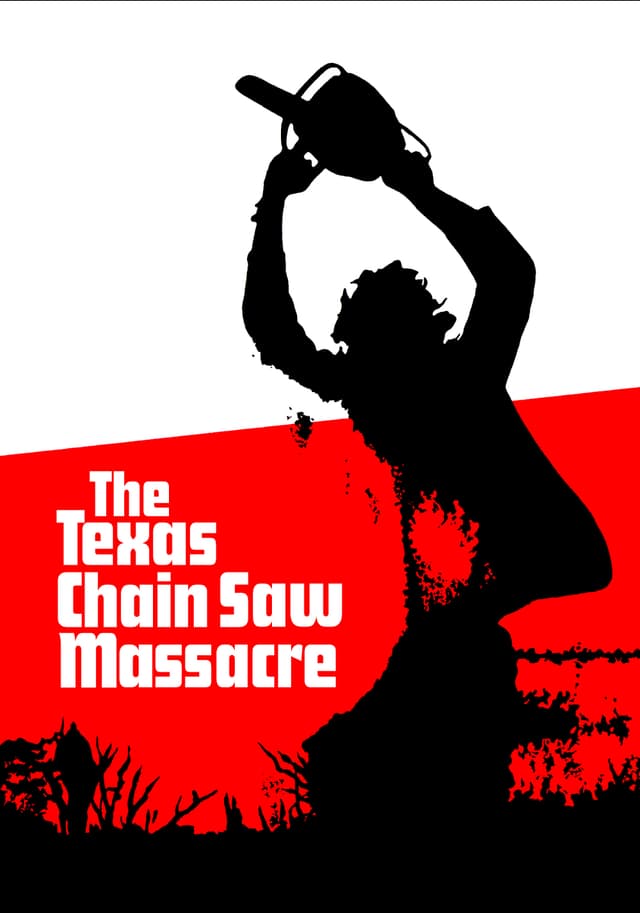
The Texas Chain Saw Massacre Budget
 Horror1h 23m
Updated
Synopsis
Five friends head out to rural Texas to visit the grave of a grandfather. On the way, they stumble across what appears to be a deserted house, only to discover something sinister within. Something armed with a chainsaw.
What Is the Budget of The Texas Chain Saw Massacre?
The Texas Chain Saw Massacre (1974) was produced on an estimated budget of $140,000, though some accounts place the figure as low as $80,000 before post-production overruns. Director Tobe Hooper and co-writer Kim Henkel financed the film through a group of Texas-based investors who each contributed modest sums, pooling resources to cover production and editing costs.
The shoestring budget forced the crew to adopt guerrilla filmmaking techniques, shooting on 16mm film stock and relying on practical effects built from salvaged materials. Every dollar was stretched to its limit, and the resulting raw, documentary-style aesthetic became one of the film's most defining qualities. The financial constraints that seemed like liabilities during production ultimately shaped the visceral, unpolished look that audiences and critics found so unsettling.
Key Budget Allocation Categories
With only $140,000 to work with, the production team allocated funds across a handful of essential categories. Nearly every department operated on the bare minimum.
- Cast and Crew Salaries: The ensemble cast consisted of unknown actors willing to work for deferred pay and minimal upfront compensation. Marilyn Burns, Gunnar Hansen, Edwin Neal, and Jim Siedow all accepted modest fees in exchange for equity participation, though the distribution deal later complicated those arrangements.
- Equipment and Film Stock: The production shot on 16mm Ektachrome reversal film, which was cheaper than 35mm but required careful light management. Camera equipment was rented at minimal rates, and the crew operated with a skeleton technical team.
- Location and Set Design: The primary filming location was a deteriorating farmhouse near Round Rock, Texas, which the production secured at low cost. The house's existing state of decay provided a ready-made horror set, and art director Robert Burns dressed interiors with animal bones, taxidermy, and found objects sourced from local slaughterhouses and flea markets.
- Special Effects and Props: Practical gore effects were achieved using animal blood and offal from a nearby slaughterhouse, along with handmade prosthetics. Leatherface's iconic mask was sculpted from latex on a minimal budget, and the chainsaw was a real, functioning tool modified for on-camera safety.
- Post-Production: Editing and sound design consumed a significant share of the budget. The film's sound mix, layered with industrial noise and dissonant tones, was critical to the final product's atmosphere and required multiple passes to achieve the desired effect.
- Transportation and Logistics: The entire production was contained within a small radius in central Texas, keeping travel costs negligible. Cast and crew commuted daily to the farmhouse location, often carpooling to save on fuel expenses.
How Does The Texas Chain Saw Massacre's Budget Compare to Similar Films?
The Texas Chain Saw Massacre stands as one of the most cost-effective horror productions in cinema history. Comparing it to other landmark genre films reveals just how far below the norm its budget fell.
- Night of the Living Dead (1968): Budget $114,000 | Worldwide $30,000,000. George Romero's zombie milestone was produced under similarly constrained conditions and achieved comparable cultural impact, proving that micro-budget horror could generate massive returns.
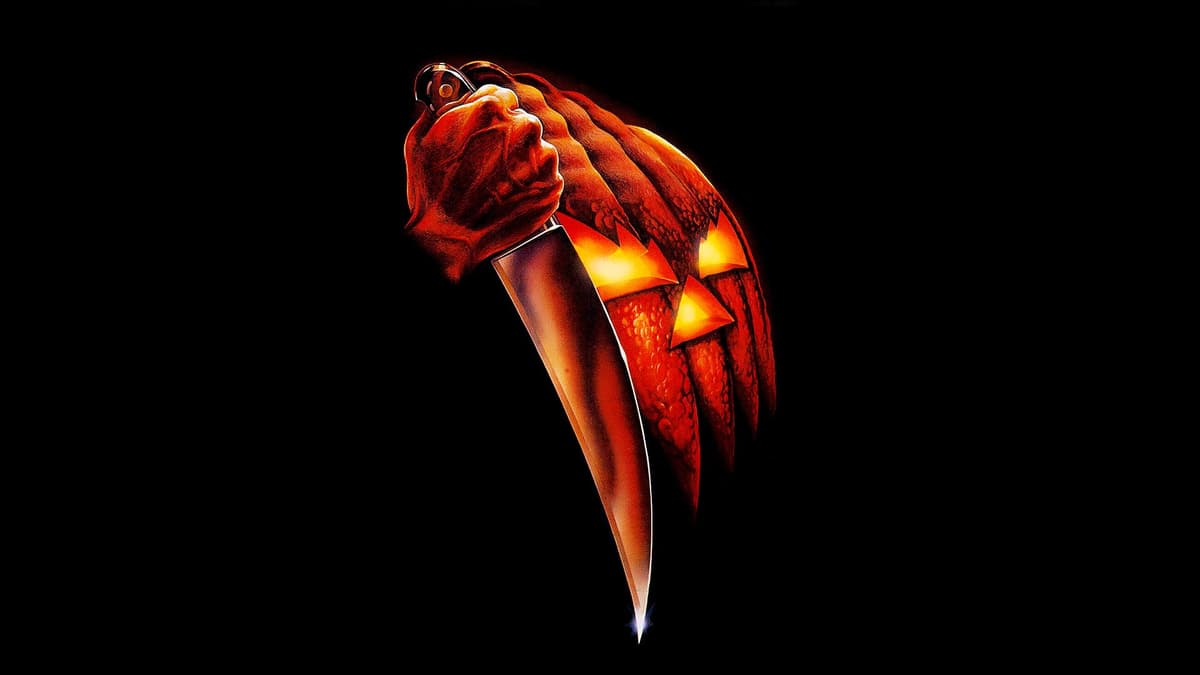
- Halloween (1978): Budget $325,000 | Worldwide $70,000,000. John Carpenter's slasher classic had more than double the budget and benefited from a more polished production pipeline, yet both films launched enduring franchises from modest origins.
- The Evil Dead (1981): Budget $375,000 | Worldwide $29,400,000. Sam Raimi's cabin-in-the-woods debut cost nearly three times as much and similarly relied on guerrilla techniques, but Texas Chain Saw achieved a higher gross-to-budget ratio.
- A Nightmare on Elm Street (1984): Budget $1,100,000 | Worldwide $25,500,000. Wes Craven's supernatural slasher required significantly more funding for its elaborate dream-sequence effects, illustrating how Texas Chain Saw's practical, lo-fi approach kept costs radically low.
- The Blair Witch Project (1999): Budget $60,000 | Worldwide $248,600,000. The only micro-budget horror film to surpass Texas Chain Saw in ROI, Blair Witch benefited from an innovative internet marketing campaign that was not available in 1974.
The Texas Chain Saw Massacre Box Office Performance
The Texas Chain Saw Massacre earned approximately $30.9 million domestically during its theatrical run, a figure that continued to grow through re-releases over the following decades. International grosses were limited at the time of initial release due to widespread bans and censorship, though the film eventually reached audiences worldwide through home video and later theatrical reissues.
Using standard industry math, a film's break-even point accounts for production budget plus prints and advertising, typically estimated at roughly two times the production cost. For Texas Chain Saw, that places the break-even threshold at approximately $280,000. The film surpassed that figure many times over, earning more than 220 times its production budget in domestic theatrical revenue alone.
The return on investment calculation is staggering: ($30,900,000 - $140,000) / $140,000 x 100 = approximately 21,971% ROI. This places The Texas Chain Saw Massacre among the most profitable films ever made on a percentage basis, rivaled only by a handful of micro-budget productions like The Blair Witch Project and Paranormal Activity.
Box Office Breakdown
The Texas Chain Saw Massacre

The Texas Chain Saw Massacre Production History
Tobe Hooper conceived the idea for the film while standing in a crowded hardware store during the holiday season, eyeing a display of chainsaws and imagining how quickly one could clear a path through the crowd. He and co-writer Kim Henkel developed the screenplay drawing loose inspiration from the Ed Gein case, the same Wisconsin murderer whose crimes had earlier influenced Alfred Hitchcock's Psycho. Rather than recreating Gein's story, they used the broad concept of a rural family engaging in violence and constructed an original narrative around a group of young people stumbling into their territory.
Principal photography took place over approximately four weeks during the summer of 1973 in and around Round Rock, Texas. Conditions on set were extreme. The farmhouse interior had no air conditioning, and temperatures inside regularly exceeded 100 degrees Fahrenheit while windows were blacked out to control lighting. The combination of intense heat, real animal remains used as set dressing, and physically demanding scenes created a genuinely harrowing atmosphere for the cast and crew. Several actors suffered minor injuries, and the dinner table sequence near the film's climax took over 26 hours of continuous shooting to complete.
Gunnar Hansen, who played Leatherface, wore his costume and mask for the duration of each shooting day without washing them, adding to the authentic sense of dread on set. Marilyn Burns sustained real cuts during the final act's chase sequences, and the blood used in several scenes came directly from a local slaughterhouse. These conditions were not artistic choices made from a position of comfort; they were the unavoidable consequences of a production operating at the edge of its financial and logistical capacity.
Distribution proved nearly as challenging as production. Bryanston Distributing Company acquired the film and released it theatrically in October 1974. The movie performed exceptionally well at the box office, but Hooper and the original investors saw little of the revenue. Bryanston was later revealed to have connections to organized crime, and the company's accounting practices ensured that profits were siphoned away from the filmmakers. Hooper spent years pursuing legal action to recover what was owed, a battle that became one of the most notorious distribution disputes in independent film history.
Awards and Recognition
The Texas Chain Saw Massacre was not a traditional awards contender upon its release. Its graphic content and low-budget origins placed it outside the consideration of mainstream award bodies in the 1970s. However, the film's cultural significance has been recognized extensively in the decades since.
In 2012, the Library of Congress selected The Texas Chain Saw Massacre for preservation in the United States National Film Registry, citing its cultural, historical, and aesthetic significance. This distinction placed it alongside canonical works of American cinema and formally acknowledged its impact on filmmaking and popular culture.
The film won the Special Jury Prize at the Avoriaz Fantastic Film Festival in 1976 and the Critics' Award at the London Film Festival in 1974. It has been named to virtually every major "greatest horror films" list compiled by publications including Entertainment Weekly, Total Film, Bravo, and the British Film Institute. The Museum of Modern Art in New York added it to its permanent collection, further cementing its status as a work of artistic merit beyond its genre classification.
Critical Reception
Initial critical response to The Texas Chain Saw Massacre was sharply divided. Many mainstream critics dismissed it as exploitative and gratuitous. Rex Reed called it "the most horrifying motion picture I have ever seen," though he did not intend this as praise. Several major publications refused to review it at all. The film was banned outright in multiple countries, and the British Board of Film Classification refused to grant it a certificate in the United Kingdom, a decision that held until 1999.
Over time, critical opinion shifted dramatically. Scholars and genre critics began recognizing the film's sophisticated use of implication over explicit gore, noting that despite its reputation, the movie shows remarkably little on-screen violence. The horror is generated through editing, sound design, camera movement, and the audience's own imagination. This realization prompted a reevaluation that elevated the film from disreputable shocker to acknowledged masterpiece.
The Texas Chain Saw Massacre currently holds an 89% approval rating on Rotten Tomatoes, reflecting the broad critical consensus that has formed around its artistic value. Directors including Steven Spielberg, Ridley Scott, and Wes Craven have cited it as an influence on their work. The film's legacy extends far beyond its initial theatrical run, having spawned multiple sequels, a 2003 remake, and a 2022 direct sequel, collectively generating hundreds of millions in franchise revenue. Its influence on the slasher subgenre, found-footage aesthetics, and independent horror filmmaking remains foundational nearly five decades after its release.
Frequently Asked Questions
How much did it cost to make The Texas Chain Saw Massacre (1974)?
The production budget was $140,000, covering principal photography, cast and crew salaries, locations, sets, post-production, and music. Marketing and distribution (P&A) costs are estimated at an additional $70,000 - $112,000, bringing the total studio investment to approximately $210,000 - $252,000.
How much did The Texas Chain Saw Massacre (1974) earn at the box office?
The Texas Chain Saw Massacre grossed $30,859,000 domestic, $63,680 international, totaling $30,922,680 worldwide.
Was The Texas Chain Saw Massacre (1974) profitable?
Yes. Against a production budget of $140,000 and estimated total costs of ~$350,000, the film earned $30,922,680 theatrically - a 21988% ROI on production costs alone.
What were the biggest costs in producing The Texas Chain Saw Massacre?
The primary cost drivers were above-the-line talent (Marilyn Burns, Allen Danziger, Paul A. Partain); practical creature effects, atmospheric cinematography, and psychologically engineered sound design.
How does The Texas Chain Saw Massacre's budget compare to similar horror films?
At $140,000, The Texas Chain Saw Massacre is classified as a ultra-low-budget production. The median budget for wide-release horror films in the era ranges from $30 - 80M for mid-budget to $150M+ for tentpoles. Comparable budgets: Bicycle Thieves (1948, $133,000); The Seventh Seal (1957, $150,000); Ali: Fear Eats the Soul (1974, $130,000).
Did The Texas Chain Saw Massacre (1974) go over budget?
There are no widely reported accounts of significant budget overruns for this production. However, studios rarely disclose precise budget overrun figures publicly. The reported production budget reflects the final estimated cost.
What was the return on investment (ROI) for The Texas Chain Saw Massacre?
The theatrical ROI was 21987.6%, calculated as ($30,922,680 − $140,000) ÷ $140,000 × 100. This measures gross revenue against production budget only - it does not account for P&A or exhibitor shares.
What awards did The Texas Chain Saw Massacre (1974) win?
4 wins & 2 nominations total.
Who directed The Texas Chain Saw Massacre and who were the key crew members?
Directed by Tobe Hooper, written by Kim Henkel, Tobe Hooper, shot by Daniel Pearl, with music by Wayne Bell, Tobe Hooper, edited by J. Larry Carroll, Sallye Richardson.
Where was The Texas Chain Saw Massacre filmed?
The Texas Chain Saw Massacre was filmed in United States of America.
Filmmakers
The Texas Chain Saw Massacre

Official Trailer
Build budgets like this one in Saturation
Start from an industry-standard feature film template, import the schedule and rates you already have, and let the cost report keep itself current as you spend. Real-time collaboration, no spreadsheets.