The Super Mario Galaxy Movie Budget
 AnimationAdventureComedy1h 38m
Updated
Synopsis
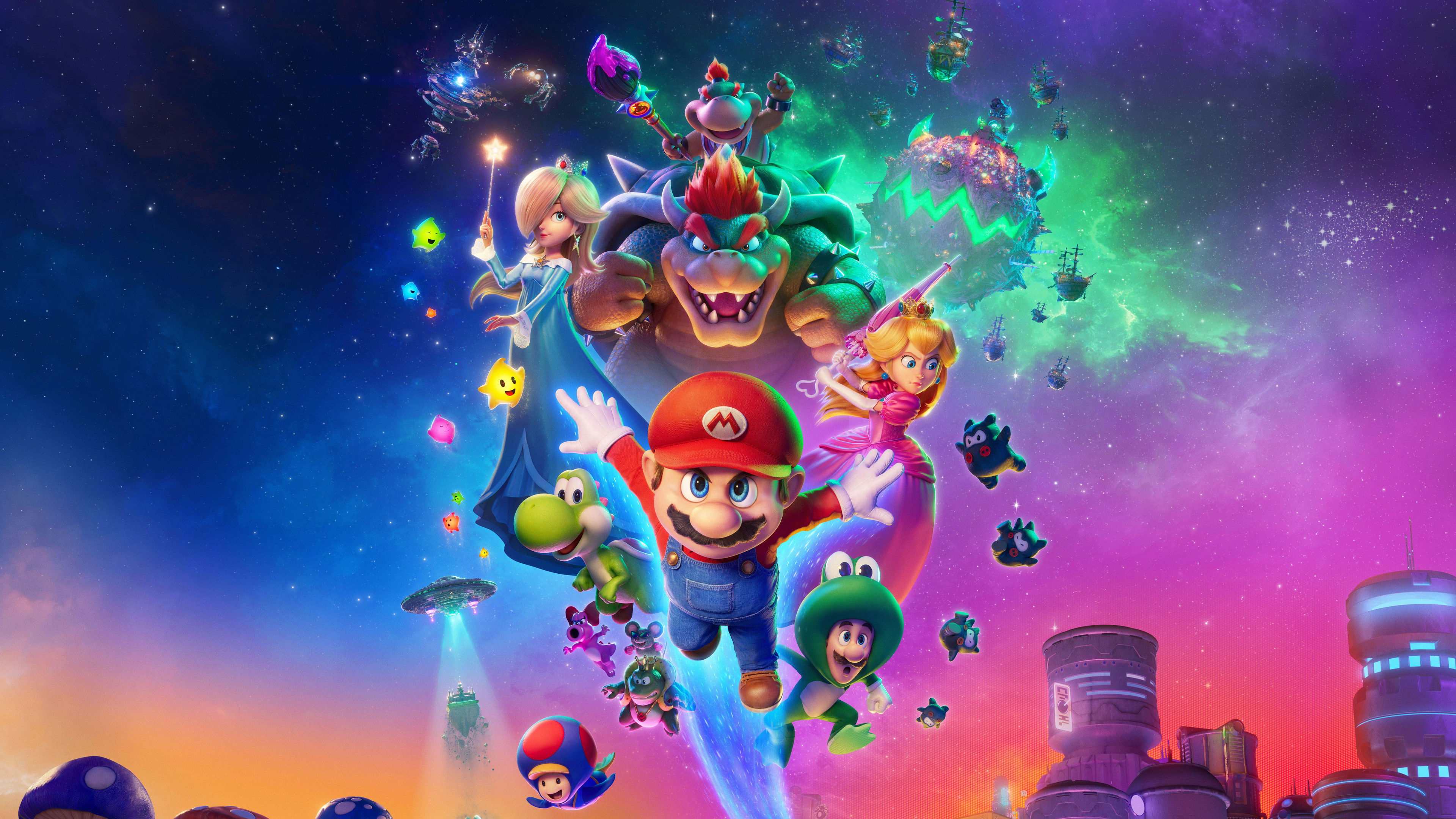
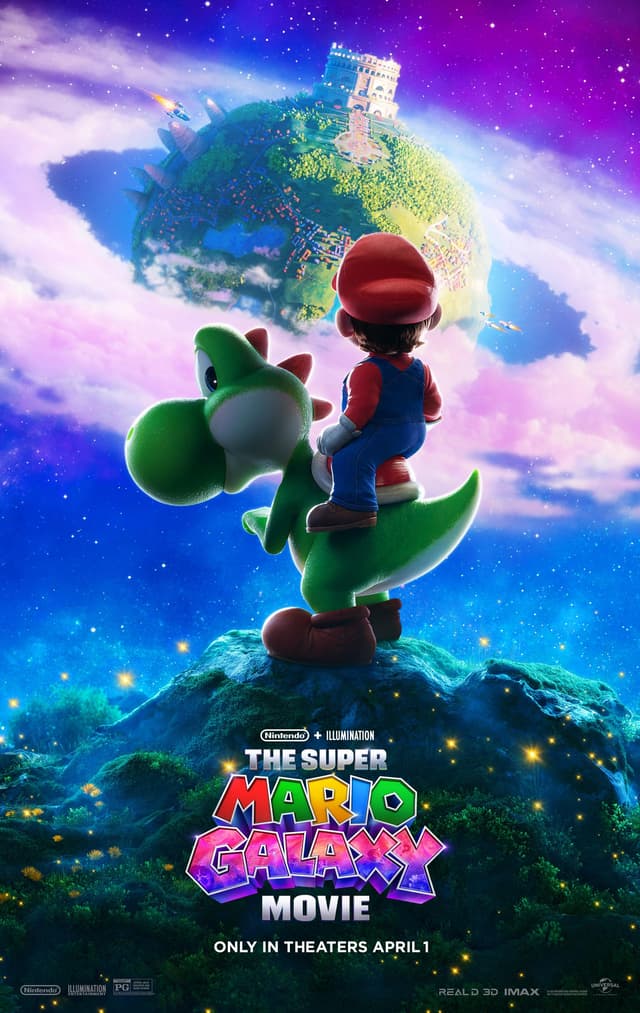
Having thwarted Bowser's previous plot to marry Princess Peach, Mario and Luigi now face a fresh threat in Bowser Jr., who is determined to liberate his father from captivity and restore the family legacy. Alongside companions new and old, the brothers travel across the stars to stop the young heir's crusade.
What Is the Budget of The Super Mario Galaxy Movie?
The Super Mario Galaxy Movie was produced on a budget of $110 million, distributed by Universal Pictures through their partnership with Nintendo and Illumination. The film is the direct sequel to The Super Mario Bros. Movie (2023), which was made on a $100 million budget and went on to earn $1.36 billion worldwide, making it the highest-grossing video game film adaptation of all time. The Galaxy sequel's $110 million budget reflects a modest increase in production investment as Illumination Studios Paris expanded the animation scope to incorporate deep-space settings inspired by the Nintendo Galaxy game franchise.
The Super Mario Galaxy Movie opened in US theaters on April 1, 2026, following a Japanese premiere at the historic Minami-za theater in Kyoto on March 28. The film earned $781 million worldwide: $370 million domestically and $411 million internationally, making it the highest-grossing film of 2026 through its theatrical window.
Key Budget Allocation Categories
- Voice Cast and Above-the-Line: The film retained the core cast from the 2023 original: Chris Pratt as Mario, Anya Taylor-Joy as Princess Peach, Charlie Day as Luigi, Jack Black as Bowser, and Keegan-Michael Key as Toad. Returning the original ensemble required renegotiation following the first film's billion-dollar success. New additions Benny Safdie as Bowser Jr., Donald Glover as Yoshi, Glen Powell as Fox McCloud, Brie Larson as Princess Rosalina, Luis Guzmán as Wart, and Issa Rae as Honey Queen expanded the cast significantly. Above-the-line costs likely reached $25 to $35 million.
- Animation Production at Illumination Paris: Illumination Studios Paris animated the film from March 2024, with animation completing in November 2025 and post-production running through January 2026. The Galaxy setting demanded technically sophisticated space environments, celestial mechanics, and zero-gravity animation work that exceeded the demands of the Mushroom Kingdom settings in the first film.
- Nintendo IP and Licensing: The Super Mario Galaxy franchise introduced specific game mechanics, musical themes, and character designs that required close coordination with Nintendo's creative teams. Koji Kondo's original Galaxy game score provided foundational themes adapted for the film, with additional orchestral production expanding the musical scope of the sequel beyond the first film.
- Marketing and Awards Campaign: Universal's global marketing campaign for the sequel benefited from the first film's brand recognition while needing to build anticipation for the space-set premise and new characters. The Japan premiere at the Minami-za theater in Kyoto reflected Nintendo's cultural priorities for the franchise.
How Does The Super Mario Galaxy Movie's Budget Compare to Similar Films?
At $110 million, The Super Mario Galaxy Movie is modestly budgeted relative to the output of the major animation studios for franchise sequels. Its $781 million worldwide gross produced a return ratio that rivals any animated film of the year.
- The Super Mario Bros. Movie (2023): Budget $100M | Worldwide $1.36B. The original set the benchmark for video game adaptations. The Galaxy sequel's $781M represents strong performance but did not replicate the original's unprecedented billion-dollar result, likely reflecting that the first film's surprise factor drove extraordinary opening-weekend overperformance.
- Despicable Me 4 (2024): Budget $100M | Worldwide $969M. Illumination's Minions-driven franchise continued its global dominance. The Galaxy Movie's $781M on a comparable budget shows the Nintendo IP delivering in the same performance tier as Illumination's biggest original franchise.
- Inside Out 2 (2024): Budget $200M | Worldwide $1.7B. Pixar's sequel spent nearly twice as much and earned more than double. The Galaxy Movie's budget efficiency is notably stronger on a per-dollar basis.
- Kung Fu Panda 4 (2024): Budget $85M | Worldwide $548M. The DreamWorks sequel earned less on a lower budget. The Nintendo IP demonstrated superior global traction, particularly in Asian markets where Mario carries decades of gaming cultural recognition.
The Super Mario Galaxy Movie Box Office Performance
The Super Mario Galaxy Movie opened in US theaters on April 1, 2026, following its Japan theatrical premiere on March 28. Universal distributed the film worldwide. The film earned $370 million domestically and $411 million internationally for a worldwide total of $781 million, making it the highest-grossing film of 2026 through April.
With a $110 million production budget and estimated P&A of $150 million for the global animated release, total investment reached approximately $260 million. At a 50% average studio share from theaters, the $781 million worldwide gross generated approximately $390 million in studio revenue, producing a theatrical profit of approximately $130 million before home video and ancillary revenue.
Box Office Breakdown
The Super Mario Galaxy Movie

The film earned roughly $7.10 for every $1 invested in production, making it one of the most efficient theatrical investments of 2026. Home video, Nintendo merchandise, theme park tie-ins, and streaming rights will add substantially to the total return on the $110 million production investment.
The Super Mario Galaxy Movie Production History
Development of The Super Mario Galaxy Movie was announced in March 2024, following the extraordinary commercial success of The Super Mario Bros. Movie. Directors Aaron Horvath and Michael Jelenic, who helmed the first film, returned to direct the sequel. The two directors had previously collaborated on Teen Titans Go! To the Movies (2018) at Warner Bros. Animation before moving to Illumination for the Mario franchise.
The sequel draws from Nintendo's Super Mario Galaxy (2007) and Super Mario Galaxy 2 (2010) Wii games, which sent Mario into deep space to rescue Princess Rosalina's Comet Observatory from Bowser. The film introduces Brie Larson as Princess Rosalina and Benny Safdie as Bowser Jr., expanding the villain roster while retaining Jack Black as Bowser. Glen Powell joined as Fox McCloud in a crossover nod to Nintendo's Star Fox franchise, and Donald Glover voiced Yoshi for the first time in the film series. Issa Rae was cast as Honey Queen, based on the bee queen character from the Galaxy games.
Animation production took place at Illumination Studios Paris, with development beginning in March 2024. The animation team completed principal work in November 2025, followed by post-production through January 2026. The space-based setting required new technical approaches to lighting, zero-gravity character movement, and celestial environment design that significantly expanded the visual scope from the Mushroom Kingdom of the first film.
The film premiered at the Minami-za theater in Kyoto, Japan on March 28, 2026, reflecting Nintendo's headquarters location and the franchise's cultural significance in Japan. US theatrical release followed on April 1, 2026.
Awards and Recognition
The Super Mario Galaxy Movie opened in April 2026 and is in the early stages of its theatrical run as of this writing. With a $781 million worldwide gross and the family audience profile of an animated Nintendo sequel, the film is positioned for awards consideration in animation categories. The original Super Mario Bros. Movie (2023) did not receive an Academy Award nomination for Best Animated Feature, a notable absence that critics attributed to its critical reception and the Academy's historical preference for prestige animation. The Galaxy sequel's Rotten Tomatoes score of 43% and Metacritic score of 37 suggest similar awards challenges despite its commercial success. Audience reception via CinemaScore of A- indicates strong family audience satisfaction.
Critical Reception
The Super Mario Galaxy Movie received mixed critical reviews despite strong commercial performance. Rotten Tomatoes recorded 43% positive ratings from 207 critics, with the consensus stating the film features "visuals that are often impressive but a threadbare story that ultimately loses its substance." Metacritic scored it 37 out of 100, categorizing it as "generally unfavorable" from critics while audiences awarded it an A- CinemaScore and 79% positive on PostTrak.
The critical consensus identified the same tension present in the first film: visually inventive world-building and Nintendo fan service coexisting with thin plotting and emotional stakes that feel insufficient for the expanded scope. Reviewers praised the design work on the space environments and the performances of Brie Larson as Rosalina and Jack Black as Bowser, while criticizing the screenplay for prioritizing spectacle over story development. Audience response, particularly from Nintendo fans and families, was considerably more positive than the critical assessment, driving the $781 million worldwide total.
Frequently Asked Questions
How much did it cost to make The Super Mario Galaxy Movie (2026)?
The production budget was $110,000,000, covering principal photography, cast and crew salaries, locations, sets, post-production, and music. Marketing and distribution (P&A) costs are estimated at an additional $55,000,000 - $88,000,000, bringing the total studio investment to approximately $165,000,000 - $198,000,000.
How much did The Super Mario Galaxy Movie (2026) earn at the box office?
The Super Mario Galaxy Movie grossed $463,187,699 worldwide.
Was The Super Mario Galaxy Movie (2026) profitable?
Yes. Against a production budget of $110,000,000 and estimated total costs of ~$275,000,000, the film earned $463,187,699 theatrically - a 321% ROI on production costs alone.
What were the biggest costs in producing The Super Mario Galaxy Movie?
The primary cost drivers were above-the-line talent (Chris Pratt, Charlie Day, Anya Taylor-Joy); star comedian salaries, location filming, and aggressive marketing campaigns; international production across Japan, United States of America.
How does The Super Mario Galaxy Movie's budget compare to similar family films?
At $110,000,000, The Super Mario Galaxy Movie is classified as a big-budget production. The median budget for wide-release family films in the 2020s ranges from $30 - 80M for mid-budget to $150M+ for tentpoles. Comparable budgets: 300: Rise of an Empire (2014, $110,000,000); Ocean's Twelve (2004, $110,000,000); Deadpool 2 (2018, $110,000,000).
Did The Super Mario Galaxy Movie (2026) go over budget?
There are no widely reported accounts of significant budget overruns for this production. However, studios rarely disclose precise budget overrun figures publicly. The reported production budget reflects the final estimated cost.
What was the return on investment (ROI) for The Super Mario Galaxy Movie?
The theatrical ROI was 321.1%, calculated as ($463,187,699 − $110,000,000) ÷ $110,000,000 × 100. This measures gross revenue against production budget only - it does not account for P&A or exhibitor shares.
What awards did The Super Mario Galaxy Movie (2026) win?
N/A.
Who directed The Super Mario Galaxy Movie and who were the key crew members?
Directed by Aaron Horvath, Michael Jelenic, written by Matthew Fogel, with music by Brian Tyler, edited by Eric E. Osmond.
Where was The Super Mario Galaxy Movie filmed?
The Super Mario Galaxy Movie was filmed in Japan, United States of America.
Filmmakers
The Super Mario Galaxy Movie

Official Trailer
Build budgets like this one in Saturation
Start from an industry-standard feature film template, import the schedule and rates you already have, and let the cost report keep itself current as you spend. Real-time collaboration, no spreadsheets.