Finding Dory Budget
 AdventureAnimationFamily1h 37m
Updated
Synopsis
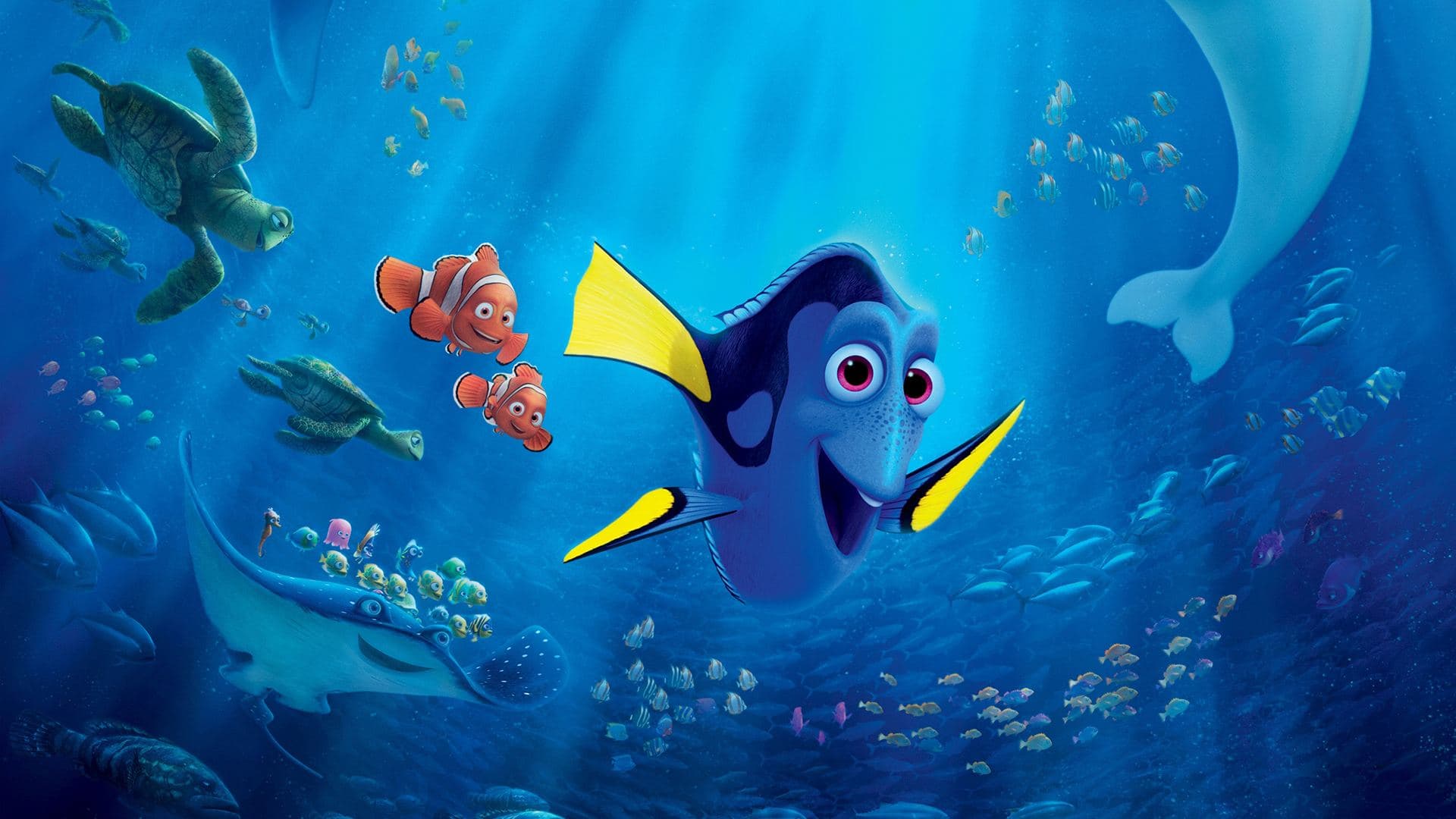
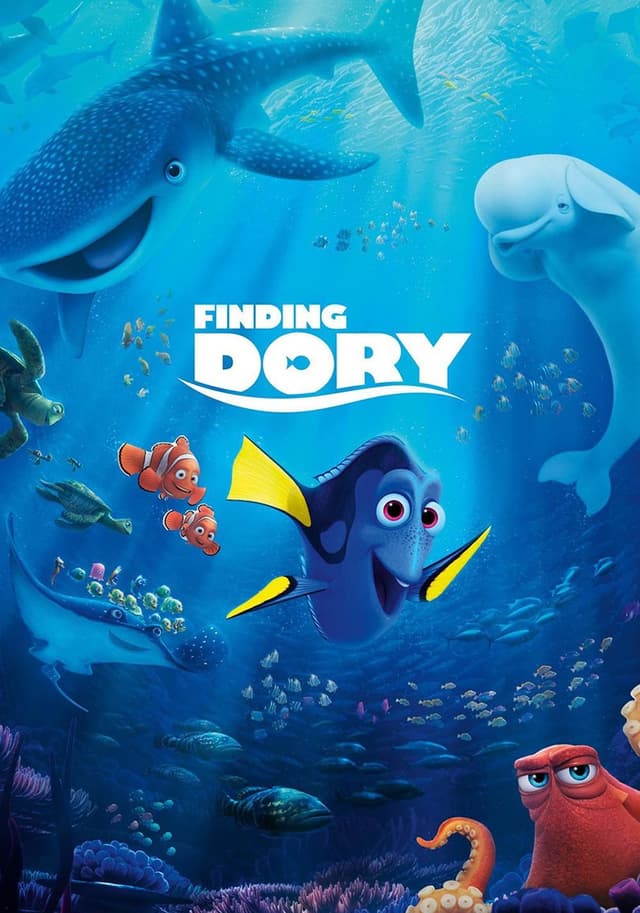
Reunites the friendly-but-forgetful blue tang fish with her loved ones, and everyone learns a few things about the true meaning of family along the way.
What is the budget of Finding Dory?
"Finding Dory," an adventure released in 2016, was directed by Andrew Stanton and stars Albert Brooks, Ellen DeGeneres. The production budget was $200,000,000, placing it in the blockbuster range for adventure productions of its era.
Key Budget Allocation Categories
While specific budget breakdowns are not publicly available, typical cost drivers for an adventure production like this include:
- Stunts, Action Sequences & Visual Effects: Action films allocate a substantial portion of their budget to choreographing and executing practical stunts, pyrotechnics, and CGI-heavy sequences.
- Above-the-Line Talent (Cast & Director): A-list talent commands significant upfront fees plus backend participation.
- Production Design, Sets & Locations: Action films frequently require multiple international shooting locations, large-scale set construction, vehicle acquisitions and modifications, and specialized equipment , all of which drive production costs well above those of dialogue-driven genres.
How Does Finding Dory's Budget Compare to Similar Films?
At $200,000,000, Finding Dory sits in the blockbuster range. Here is how it compares to productions with a similar budget:
- 2012 (2009): Budget $200,000,000, Worldwide Gross $791,217,826
- Alice in Wonderland (2010): Budget $200,000,000, Worldwide Gross $1,025,467,110
- Ant-Man and the Wasp: Quantumania (2023): Budget $200,000,000 , Gross $476,071,180
- Argylle (2024): Budget $200,000,000, Worldwide Gross $96,221,061
- Black Adam (2022): Budget $200,000,000, Worldwide Gross $393,452,111
The median budget for wide-release adventure films in the 2010s ranges from $30 to 80M for mid-budget to $150M+ for tentpoles.
Finding Dory Box Office Performance
"Finding Dory" earned $486,295,561 domestically and $1,029,266,989 worldwide at the box office. Against a production budget of $200,000,000, the film performed strongly at the box office.
Box Office Breakdown
Finding Dory

At approximately +415%, Finding Dory returned roughly $5.15 for every $1 of production budget invested during its theatrical run.
The 47/53 domestic-to-international split saw $486,295,561 from North America and $542,971,428 from overseas markets.
Awards and Recognition
Nominated for 1 BAFTA Award17 wins & 48 nominations total
Finding Dory Production History
Discussions about a Finding Nemo sequel began as early as fall 2003, with Ellen DeGeneres expressing interest in September of that year. Disney initially planned a sequel through its Circle Seven Animation division in 2005, but this effort was abandoned after Disney acquired Pixar in 2006. Director Andrew Stanton has said the story concept came to him around 2010 during the 3D re-release of Finding Nemo, when he started thinking about "how easily Dory could get lost and not find Marlin and Nemo again."
Stanton was officially announced as director in July 2012, with Victoria Strouse as screenwriter. The project was publicly revealed in April 2013 for a November 2015 release, later pushed to June 17, 2016. Angus MacLane joined as co-director, bringing experience in animation, story, and production. Hayden Rolence replaced Alexander Gould as Nemo's voice because Gould's voice had deepened with age. Ed O'Neill, Kaitlin Olson, Ty Burrell, Diane Keaton, and Eugene Levy joined as new cast members.
The film's ending was significantly revised after Pixar executives viewed the 2013 documentary Blackfish. Characters who were originally slated to end up at a SeaWorld-like facility were instead given the option to leave. Pixar's RenderMan software underwent its most significant update in 25 years during production to enhance lighting realism.
Critical Reception
Finding Dory earned a 94% approval rating on Rotten Tomatoes from 340 reviews, with an average rating of 7.7 out of 10. The consensus calls it "funny, poignant, and thought-provoking," delivering "a beautifully animated adventure that adds another entertaining chapter to its predecessor's classic story." On Metacritic, the film scored 77 out of 100, indicating generally favorable reviews.
Audiences gave the film an A CinemaScore, with PostTrak reporting a 91% positive score and 81% saying they would definitely recommend it. Mike Ryan of Uproxx found it "more emotional" than the original. Joe Morgenstern of The Wall Street Journal called it "compulsively, preposterously and steadfastly funny," while Peter Travers of Rolling Stone gave it 3.5 out of 4 stars, praising its "humor, heart and animation miracles."
Not all critics were as enthusiastic. Todd McCarthy of The Hollywood Reporter argued it "falls rather short" of Finding Nemo, and Kenneth Turan of the Los Angeles Times questioned whether "this was a concept that cried out to be made." Despite the mixed critical comparisons to the original, the film became a massive commercial success.
Frequently Asked Questions
How much did Finding Dory (2016) cost to make?
Finding Dory had a production budget of $200,000,000. The film represented a major technological leap for Pixar, with the RenderMan software undergoing its biggest change in 25 years to achieve realistic underwater lighting effects.
How much did Finding Dory (2016) make at the box office?
Finding Dory earned $486,300,000 domestically and $542,300,000 internationally for a worldwide total of $1,029,000,000. It set the record for the highest animated film opening weekend at $135,100,000 domestically.
Was Finding Dory (2016) profitable?
Yes. According to Deadline Hollywood, Finding Dory generated a net profit of $296,600,000 after all expenses. It ranked fourth on Deadline's 2016 Most Valuable Blockbusters list. The film crossed $1,000,000,000 worldwide, joining an elite group of animated films.
What were the biggest costs in the Finding Dory (2016) budget?
The largest expenses included a complete overhaul of Pixar's RenderMan software (described as its biggest change in 25 years) to achieve realistic underwater lighting and transparency effects, the voice cast led by Ellen DeGeneres and Albert Brooks, and extensive creative development over the film's multi-year production cycle.
How does the Finding Dory (2016) budget compare to similar films?
Finding Dory's $200,000,000 budget was significantly higher than Finding Nemo (2003) at $94,000,000. It matched other Pixar films of the era like Toy Story 3 ($200,000,000) and The Good Dinosaur ($175,000,000). Finding Dory outperformed all of them at the box office except Incredibles 2.
Did Finding Dory (2016) go over budget?
There are no public reports indicating Finding Dory exceeded its $200,000,000 production budget. The major technological investment in upgrading RenderMan was planned as part of Pixar's ongoing pipeline development.
What is the ROI of Finding Dory (2016)?
Finding Dory achieved a strong ROI of approximately 415%. The formula: ($1,029,000,000 minus $200,000,000) divided by $200,000,000 equals 414.5%. With a net profit of $296,600,000 after all expenses, it was one of the most financially successful animated sequels ever produced.
Did Finding Dory (2016) win any awards?
Finding Dory received nominations for Best Animated Feature at the Annie Awards, Kids' Choice Awards, and People's Choice Awards. It set multiple box office records including fastest animated film to reach $200,000,000 (7 days), $300,000,000 (12 days), and $400,000,000 (21 days).
Who directed Finding Dory (2016)?
Andrew Stanton directed Finding Dory, returning from the original Finding Nemo (2003). Angus MacLane served as co-director. Stanton also co-wrote the screenplay with Victoria Strouse, and Thomas Newman composed the score.
Where was Finding Dory (2016) made?
Finding Dory was produced at Pixar Animation Studios in Emeryville, California. The creative team conducted research trips to Monterey Bay Aquarium, The Marine Mammal Center, and Vancouver Aquarium to accurately portray the Marine Life Institute setting featured in the film.
Filmmakers
Finding Dory

Official Trailer
Build budgets like this one in Saturation
Start from an industry-standard feature film template, import the schedule and rates you already have, and let the cost report keep itself current as you spend. Real-time collaboration, no spreadsheets.