The Sound of Music Budget
 DramaFamilyMusicRomance2h 54m
Updated
Synopsis
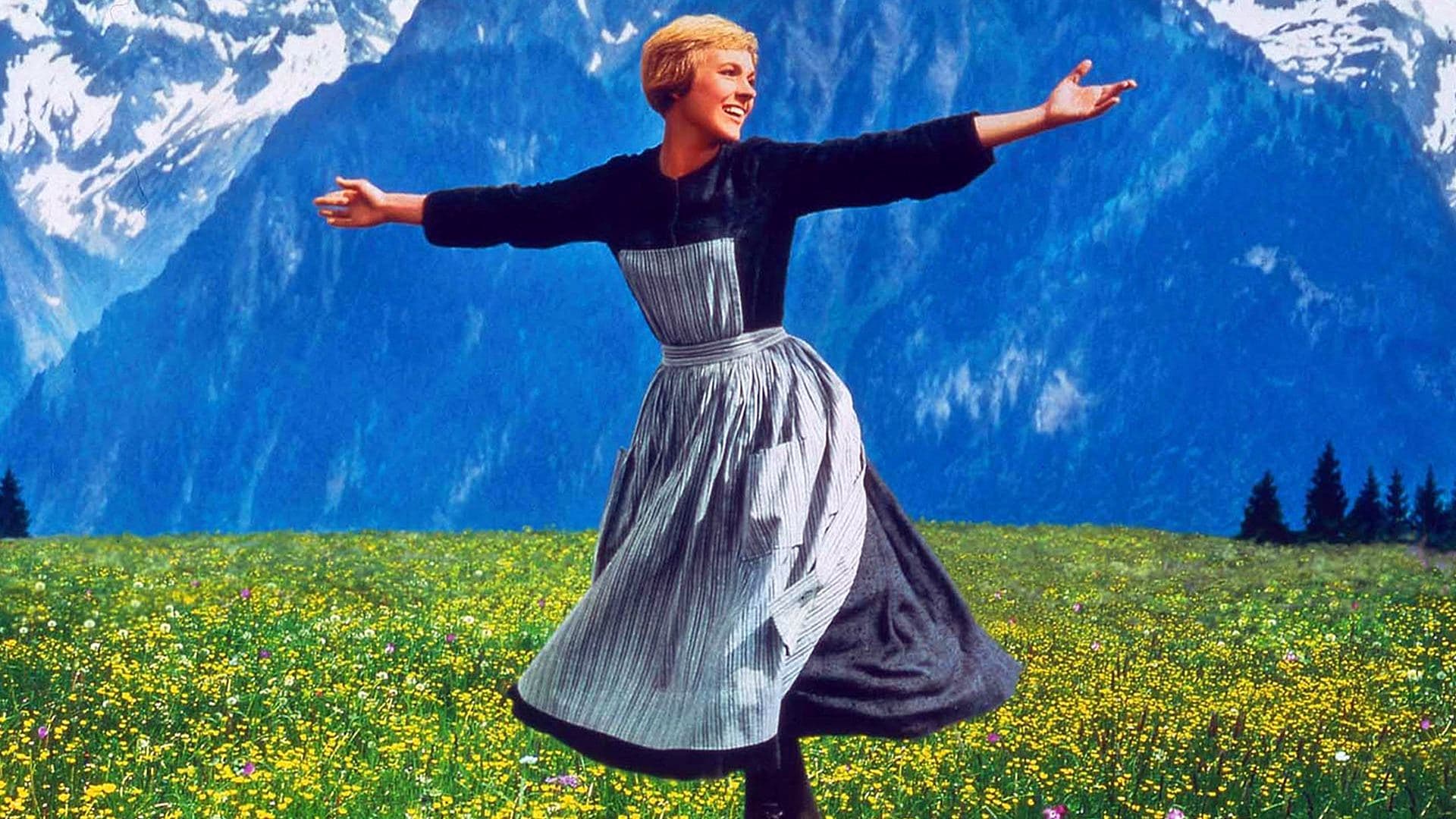
In the years before World War II, a tomboyish postulant at an Austrian abbey is hired as a governess in the home of a widowed naval captain with seven children and brings a new love of life and music into the home.
What is the budget of The Sound of Music?
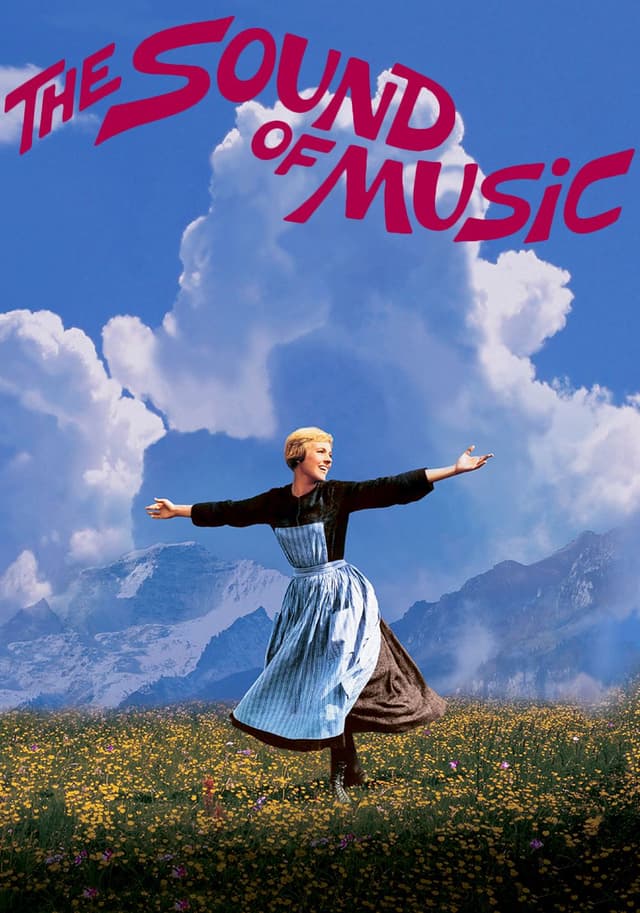
"The Sound of Music," a drama released in 1965, was directed by Robert Wise and stars Julie Andrews, Christopher Plummer. The production budget was $8,200,000, placing it in the low-budget range for drama productions of the 1960s.
Key Budget Allocation Categories
While specific budget breakdowns are not publicly available, typical cost drivers for a drama production like this include:
- Above-the-Line Talent: Drama films live or die on the strength of their performances.
- Location Filming & Period Production Design: Authentic locations , whether contemporary or historical , require scouting, permits, travel, lodging, and often significant dressing to match the story's time period.
- Post-Production, Color Grading & Score: The editorial process for dramas is typically longer than genre films, with careful attention to pacing and tone.
- Casting: Lehman's first and only choice for Maria was Julie Andrews.
What were the major cost factors in The Sound of Music?
Several factors contributed to the overall production costs of "The Sound of Music."
- Above-the-Line Talent: Above-the-Line Talent is one of the primary cost drivers in drama productions of this scale.
- Location Filming: Location Filming & Period Production Design is one of the primary cost drivers in drama productions of this scale.
- Post-Production: Post-Production, Color Grading & Score is one of the primary cost drivers in drama productions of this scale.
How Does The Sound of Music's Budget Compare to Similar Films?
At $8,200,000, The Sound of Music sits in the low-budget range. Here is how it compares to productions with a similar budget:
- Footloose (1984): Budget $8,200,000, Worldwide Gross $80,035,402
- Mary and Max (2009): Budget $8,240,000, Worldwide Gross $1,740,429
- C'mon C'mon (2021): Budget $8,300,000, Worldwide Gross $4,300,000
- Blinded by the Light (2019): Budget $8,300,000, Worldwide Gross $18,144,644
- Mutant Chronicles (2008): Budget $8,000,000, Worldwide Gross $2,131,057
The median budget for wide-release drama films in the era ranges from $30 to 80M for mid-budget to $150M+ for tentpoles.
The Sound of Music Box Office Performance
"The Sound of Music" earned $160,888,776 domestically and $286,214,286 worldwide at the box office. Against a production budget of $8,200,000, the film performed strongly at the box office.
A film typically needs to earn approximately twice its production budget to cover marketing and distribution costs. For "The Sound of Music," that break-even threshold was roughly $16,400,000. With worldwide earnings of $286,214,286, the film cleared that threshold comfortably.
Box Office Breakdown
The Sound of Music

At 3390.4%, "The Sound of Music" earned roughly $34.9 for every $1 invested in production.
The Sound of Music Production History
Lehman's first and only choice for Maria was Julie Andrews. When Wise joined the project, he made a list of his choices for the role, which included Andrews as his first choice, Grace Kelly, and Shirley Jones. Wise and Lehman went to Disney Studios to view footage from Mary Poppins, which was not yet released.
Principal photography began on March 26, 1964, at 20th Century-Fox studios in Los Angeles, where scenes were filmed from Maria's bedroom and the abbey cloister and graveyard. The company then flew to Salzburg, where filming resumed on April 23 at Mondsee Abbey for the wedding scenes. From April 25 through May 22, scenes were filmed at the Felsenreitschule, Nonnberg Abbey, Mirabell Palace Gardens, Residence Fountain, and various street locations throughout the Altstadt (Old Town) area of the city.
Most of the soundtrack to The Sound of Music was written by Richard Rodgers and Oscar Hammerstein II and arranged and conducted by Irwin Kostal, who also adapted the instrumental underscore passages. Both the lyrics and music for two new songs were written by Rodgers, as Hammerstein died in 1960. The soundtrack album was released by RCA Victor in 1965 and is one of the most successful soundtrack albums in history, having sold over 20 million copies worldwide.
Awards and Recognition
Won 5 Oscars. 19 wins & 13 nominations total
- Academy Award for Best Picture: Robert Wise (38th Academy Awards)
- Academy Award for Best Sound: Fred Hynes (38th Academy Awards)
- Academy Award for Best Sound: James Corcoran (38th Academy Awards)
- Academy Award for Best Score, Adaptation or Treatment: Irwin Kostal (38th Academy Awards)
- Academy Award for Best Film Editing: William H. Reynolds (38th Academy Awards)
- National Board of Review: Top Ten Films
- Academy Award for Best Director: Robert Wise (38th Academy Awards)
Critical Reception
The film had its opening premiere on March 2, 1965, at the Rivoli Theater in New York City. Bosley Crowther, in The New York Times, criticized the film's "romantic nonsense and sentiment", the children's "artificial roles", and Robert Wise's "cosy-cum-corny" direction. Metacritic, which uses a weighted average, assigned the film a score of 63 out of 100, based on 11 critics, indicating "generally favorable" reviews.
Frequently Asked Questions
How much did it cost to make The Sound of Music (1965)?
The production budget was $8,200,000, covering principal photography, cast and crew salaries, locations, sets, post-production, and music. Marketing and distribution (P&A) costs are estimated at an additional $4,100,000 - $6,560,000, bringing the total studio investment to approximately $12,300,000 - $14,760,000.
How much did The Sound of Music (1965) earn at the box office?
The Sound of Music grossed $160,888,776 domestic, $125,325,510 international, totaling $286,214,286 worldwide.
Was The Sound of Music (1965) profitable?
Yes. Against a production budget of $8,200,000 and estimated total costs of ~$20,500,000, the film earned $286,214,286 theatrically - a 3390% ROI on production costs alone.
What were the biggest costs in producing The Sound of Music?
The primary cost drivers were above-the-line talent (Julie Andrews, Christopher Plummer, Eleanor Parker); talent compensation, authentic period production design, and meticulous post-production.
How does The Sound of Music's budget compare to similar drama films?
At $8,200,000, The Sound of Music is classified as a micro-budget production. The median budget for wide-release drama films in the era ranges from $30 - 80M for mid-budget to $150M+ for tentpoles. Comparable budgets: Footloose (1984, $8,200,000); Mary and Max (2009, $8,240,000); C'mon C'mon (2021, $8,300,000).
Did The Sound of Music (1965) go over budget?
There are no widely reported accounts of significant budget overruns for this production. However, studios rarely disclose precise budget overrun figures publicly. The reported production budget reflects the final estimated cost.
What was the return on investment (ROI) for The Sound of Music?
The theatrical ROI was 3390.4%, calculated as ($286,214,286 − $8,200,000) ÷ $8,200,000 × 100. This measures gross revenue against production budget only - it does not account for P&A or exhibitor shares.
What awards did The Sound of Music (1965) win?
Won 5 Oscars. 19 wins & 13 nominations total.
Who directed The Sound of Music and who were the key crew members?
Directed by Robert Wise, written by Ernest Lehman, Maria von Trapp, shot by Ted D. McCord, with music by Richard Rodgers, Oscar Hammerstein II, edited by William Reynolds.
Where was The Sound of Music filmed?
The Sound of Music was filmed in United States of America. Principal photography began on March 26, 1964, at 20th Century-Fox studios in Los Angeles, where scenes were filmed from Maria's bedroom and the abbey cloister and graveyard. The company then flew to Salzburg, where filming resumed on April 23 at Mondsee Abbey for the wedding scenes.
Filmmakers
The Sound of Music

Official Trailer
Build budgets like this one in Saturation
Start from an industry-standard feature film template, import the schedule and rates you already have, and let the cost report keep itself current as you spend. Real-time collaboration, no spreadsheets.