Paint Your Wagon Budget
 ComedyWesternMusic2h 44m
Updated
Synopsis
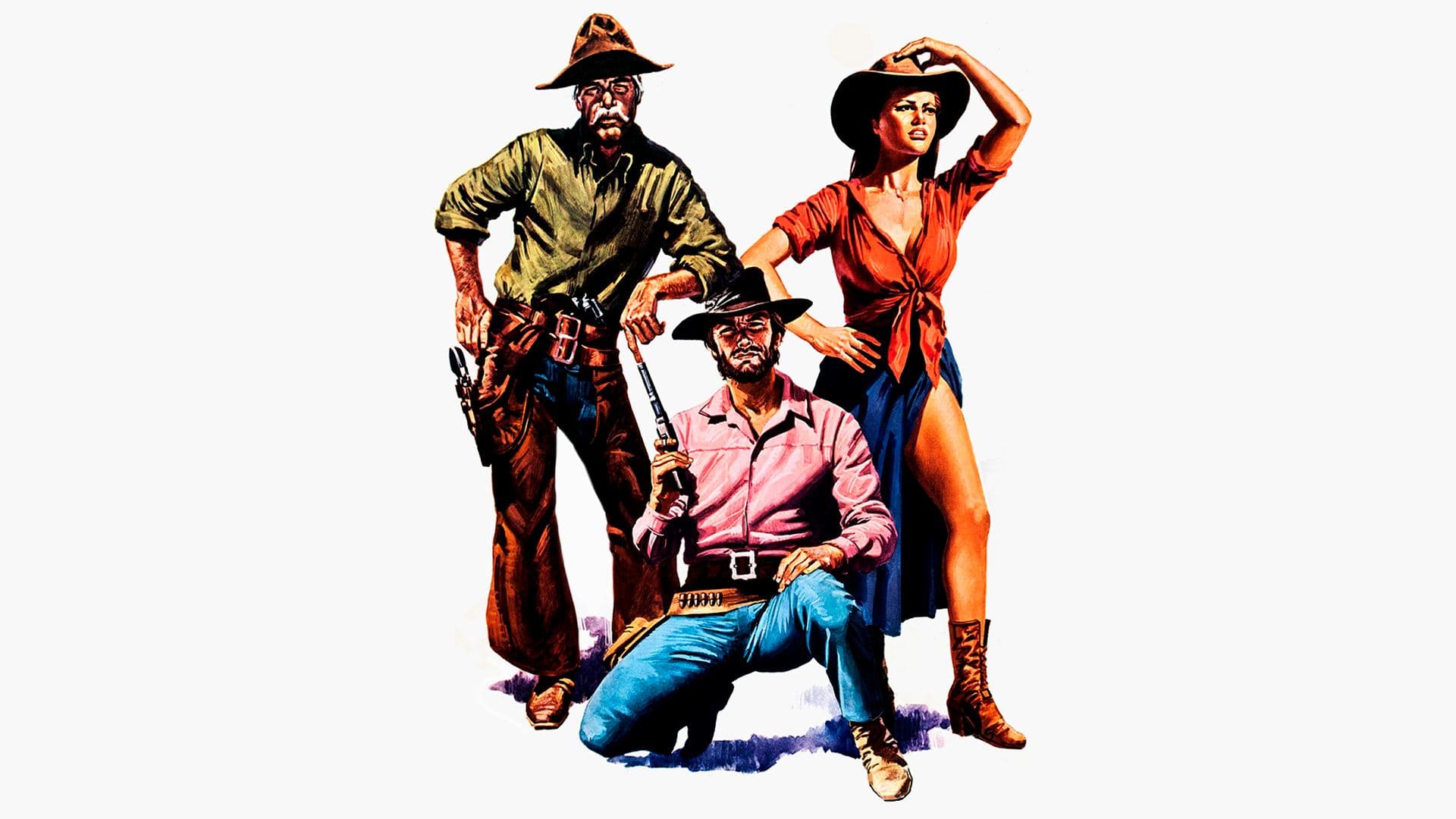
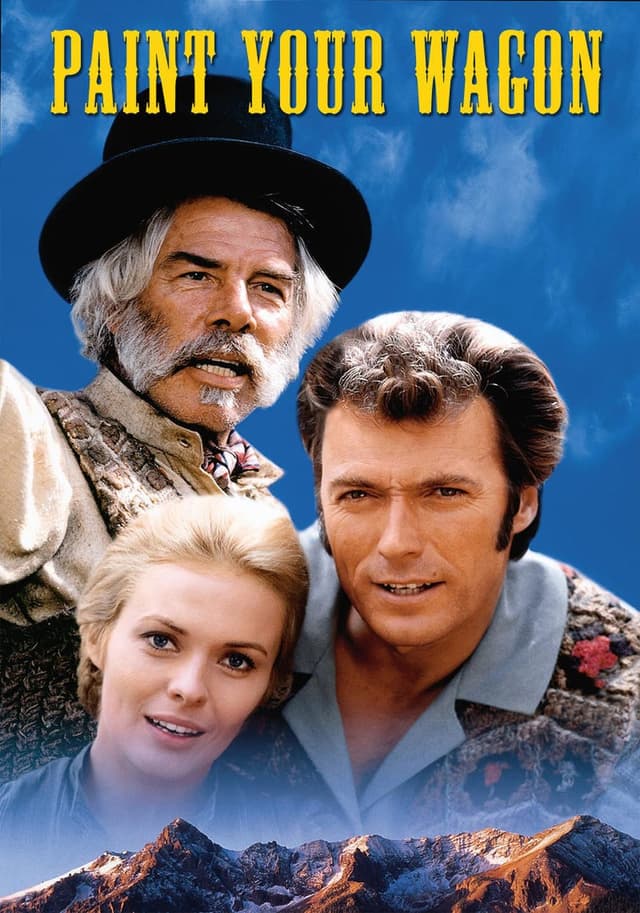
"Paint Your Wagon" is a musical Western film released in 1969, directed by Joshua Logan. Set during the California Gold Rush, the story follows two unlikely partners, Ben Rumson (Lee Marvin) and Pardner (Clint Eastwood), who strike gold and establish a mining camp. Their lives take a turn when they encounter a beautiful woman named Elizabeth (Jean Seberg), leading to a complicated love triangle. As the men navigate their feelings for Elizabeth, the film explores themes of friendship, love, and the pursuit of happiness amidst the rugged backdrop of the American frontier. With memorable musical numbers and a blend of humor and drama, "Paint Your Wagon" captures the spirit of adventure and the complexities of human relationships in a rapidly changing world.
What is the budget of Paint Your Wagon?
"Paint Your Wagon," a comedy released in 1969, was directed by Joshua Logan and stars Lee Marvin, Clint Eastwood. The production budget was $20,000,000, placing it in the mid-budget range for comedy productions of the 1960s.
Key Budget Allocation Categories
While specific budget breakdowns are not publicly available, typical cost drivers for a comedy production like this include:
- Talent Salaries & Producing Deals: Established comedic talent can command $15 to 20 million per film, with top-tier stars earning even more through producing credits and backend deals.
- Production & Location Filming: While comedies generally avoid the VFX costs of action films, location shooting in recognizable cities or exotic locales adds meaningful production expense.
- Marketing & P&A (Prints & Advertising): Comedies rely heavily on marketing to build opening-weekend momentum.
- Production: Multiple attempts were made to adapt Alan Jay Lerner's Paint Your Wagon into a film.
What were the major cost factors in Paint Your Wagon?
Several factors contributed to the overall production costs of "Paint Your Wagon."
- Talent Salaries: Talent Salaries & Producing Deals is one of the primary cost drivers in comedy productions of this scale.
- Production: Production & Location Filming is one of the primary cost drivers in comedy productions of this scale.
- Marketing: Marketing & P&A (Prints & Advertising) is one of the primary cost drivers in comedy productions of this scale.
How Does Paint Your Wagon's Budget Compare to Similar Films?
At $20,000,000, Paint Your Wagon sits in the mid-budget range. Here is how it compares to productions with a similar budget:
- 12 Years a Slave (2013): Budget $20,000,000, Worldwide Gross $187,000,000
- 21 Grams (2003): Budget $20,000,000, Worldwide Gross $60,427,839
- 3 Ninjas Kick Back (1994): Budget $20,000,000, Worldwide Gross $11,798,854
- A Guy Thing (2003): Budget $20,000,000, Worldwide Gross $17,400,000
- A Most Violent Year (2014): Budget $20,000,000, Worldwide Gross $12,007,070
The median budget for wide-release comedy films in the era ranges from $30 to 80M for mid-budget to $150M+ for tentpoles.
Paint Your Wagon Box Office Performance
"Paint Your Wagon" earned $14,500,000 domestically and $31,678,778 worldwide at the box office. Against a production budget of $20,000,000, the film showed modest profitability in theatrical release.
A film typically needs to earn approximately twice its production budget to cover marketing and distribution costs. For "Paint Your Wagon," that break-even threshold was roughly $40,000,000. With worldwide earnings of $31,678,778, the film fell short of that threshold but recouped its production costs in theatrical release.
Box Office Breakdown
Paint Your Wagon

At 58.4%, "Paint Your Wagon" returned its production investment but margin was tight after marketing and distribution costs.
Paint Your Wagon Production History
All songs written by Alan Jay Lerner and Frederick Loewe, unless otherwise noted. # "I'm on My Way" , Chorus # "I Still See Elisa" , Pardner # "The First Thing You Know" (Lerner/André Previn) , Ben # "Hand Me Down That Can o' Beans" , Chorus, including the Nitty Gritty Dirt Band # "They Call the Wind Maria" , Rotten Luck Willie and Chorus # "Whoop-Ti-Ay!" , Chorus # "A Million Miles Away Behind the Door" (Lerner/Previn) , Elizabeth # "I Talk to the Trees" , Pardner # "There's a Coach Comin' In" , Rotten Luck Willie and Chorus # "The Gospel of No Name City" (Lerner/Previn) , Parson # "Best Things" (Lerner/Previn) , Ben, Mad Jack, and Pardner # "Wand'rin' Star" , Ben and Chorus # "Gold Fever" (Lerner/Previn) , Pardner and Chorus # "Finale (I'm on My Way)" , Ben, Mad Jack, and Chorus * Tom Scott Quartet, Paint Your Wagon (Flying Dutchman, 1970) Marvin's rendition of "Wand'rin' Star," accompanied by the film's choir, became a number one hit in the UK. His voice was described by Jean Seberg as "like rain gurgling down a rusty pipe".
Awards and Recognition
Nominated for 1 Oscar. 1 win & 3 nominations total
Frequently Asked Questions
How much did it cost to make Paint Your Wagon (1969)?
The production budget was $20,000,000, covering principal photography, cast and crew salaries, locations, sets, post-production, and music. Marketing and distribution (P&A) costs are estimated at an additional $10,000,000 - $16,000,000, bringing the total studio investment to approximately $30,000,000 - $36,000,000.
How much did Paint Your Wagon (1969) earn at the box office?
Paint Your Wagon grossed $14,500,000 domestic, $17,178,778 international, totaling $31,678,778 worldwide.
Was Paint Your Wagon (1969) profitable?
The film did not break even theatrically, earning $31,678,778 against an estimated $50,000,000 needed. Ancillary revenue may have improved the picture.
What were the biggest costs in producing Paint Your Wagon?
The primary cost drivers were above-the-line talent (Lee Marvin, Clint Eastwood, Jean Seberg); star comedian salaries, location filming, and aggressive marketing campaigns.
How does Paint Your Wagon's budget compare to similar comedy films?
At $20,000,000, Paint Your Wagon is classified as a low-budget production. The median budget for wide-release comedy films in the era ranges from $30 - 80M for mid-budget to $150M+ for tentpoles. Comparable budgets: 12 Years a Slave (2013, $20,000,000); 21 Grams (2003, $20,000,000); 3 Ninjas Kick Back (1994, $20,000,000).
Did Paint Your Wagon (1969) go over budget?
There are no widely reported accounts of significant budget overruns for this production. However, studios rarely disclose precise budget overrun figures publicly. The reported production budget reflects the final estimated cost.
What was the return on investment (ROI) for Paint Your Wagon?
The theatrical ROI was 58.4%, calculated as ($31,678,778 − $20,000,000) ÷ $20,000,000 × 100. This measures gross revenue against production budget only - it does not account for P&A or exhibitor shares.
What awards did Paint Your Wagon (1969) win?
Nominated for 1 Oscar. 1 win & 3 nominations total.
Who directed Paint Your Wagon and who were the key crew members?
Directed by Joshua Logan, written by Alan Jay Lerner, shot by William A. Fraker, with music by Nelson Riddle, Frederick Loewe, edited by Robert C. Jones.
Where was Paint Your Wagon filmed?
Paint Your Wagon was filmed in United States of America.
Filmmakers
Paint Your Wagon

Official Trailer
Build budgets like this one in Saturation
Start from an industry-standard feature film template, import the schedule and rates you already have, and let the cost report keep itself current as you spend. Real-time collaboration, no spreadsheets.