The Quick and the Dead Budget
 Western
Updated
Synopsis
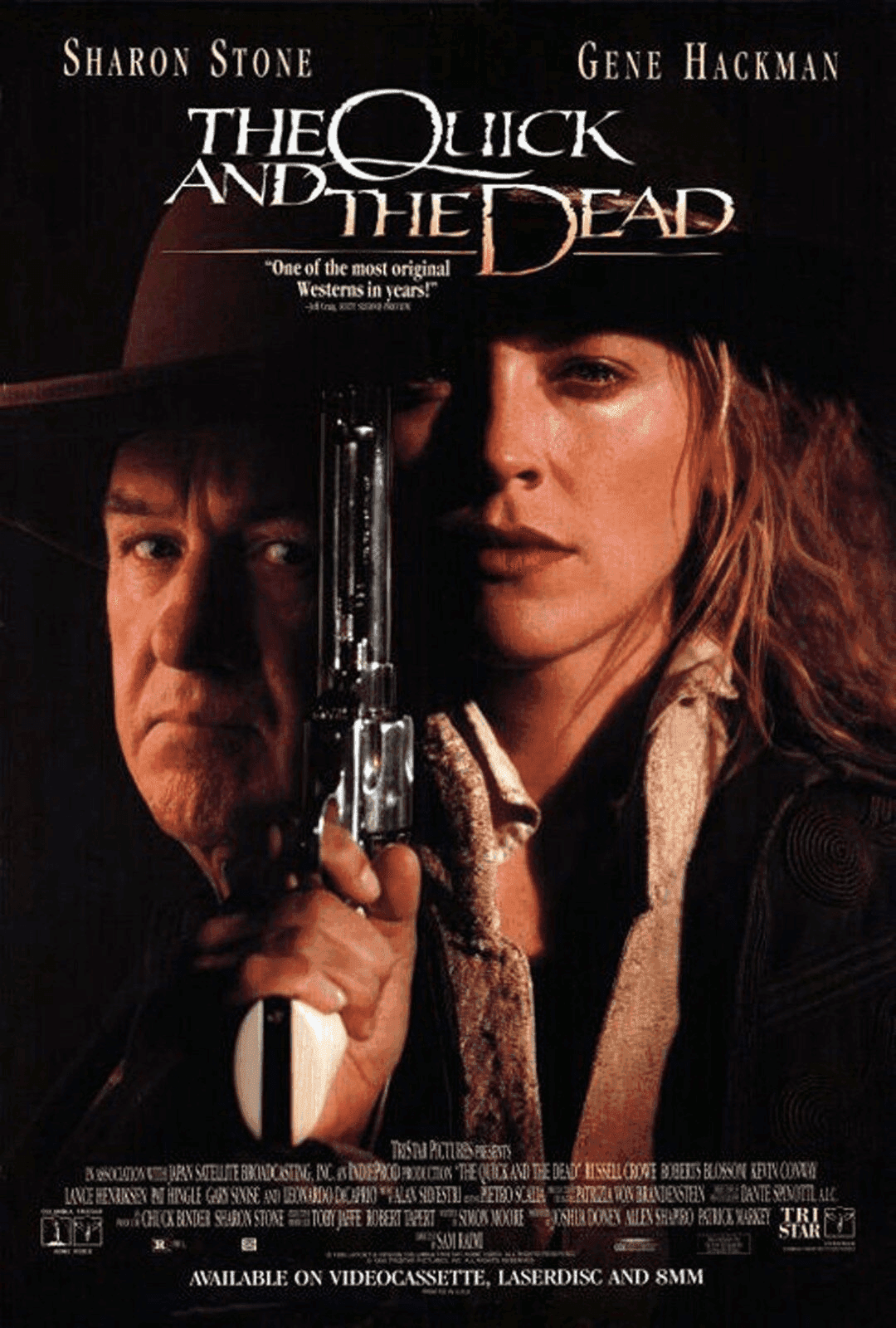
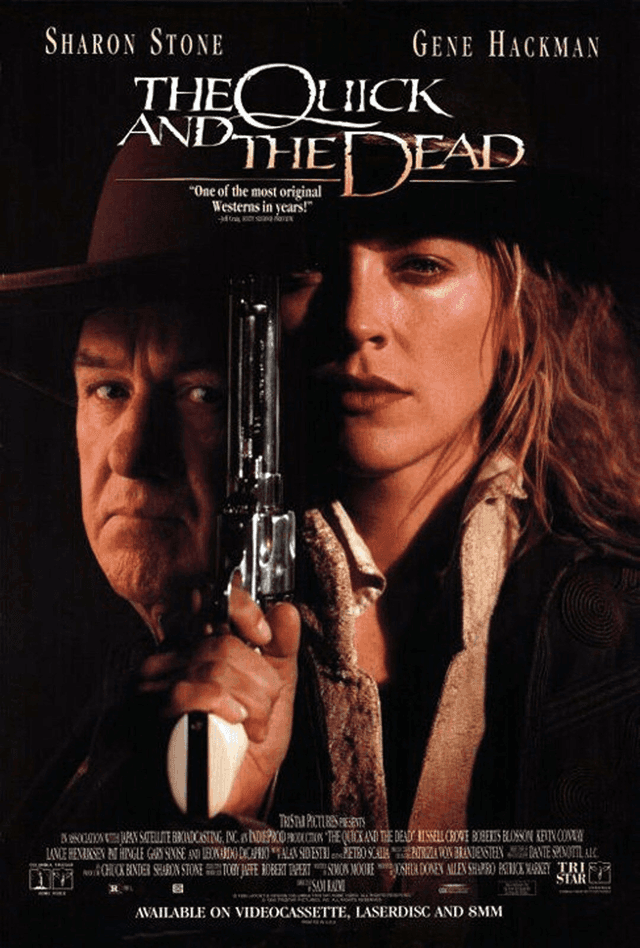
A mysterious gunslinger known only as The Lady rides into the town of Redemption to compete in a single-elimination quick-draw tournament organized by the sadistic mayor John Herod. As the duels narrow the field, The Lady's true motive emerges: she has come to avenge the murder of her father at Herod's hands many years before.
What Is the Budget of The Quick and the Dead (1995)?
The Quick and the Dead (1995), Sam Raimi's revisionist Western, was produced on a reported budget of $35,000,000. TriStar Pictures financed the production with executive co-financing from Japan Satellite Broadcasting and Indieprod Productions, the company headed by Sharon Stone, who also served as a producer in addition to starring as the avenging gunslinger known as The Lady. Stone, coming off the breakthrough success of Basic Instinct (1992) and Casino (1995), used her producer leverage to handpick Raimi as director and Russell Crowe and Leonardo DiCaprio for lead supporting roles, both of whom were relatively unknown to American audiences at the time of their casting.
The $35,000,000 figure reflected the production scale required for a single-location Western tournament setpiece, including the construction of a complete period frontier town set on a Mescal, Arizona location previously used for Tombstone (1993), elaborate stunt work and pyrotechnics across more than a dozen quick-draw duel sequences, and a salary roster topped by Gene Hackman as the antagonist John Herod. The film also represented the first major studio Western to reach screens following the genre revival driven by Dances with Wolves (1990), Unforgiven (1992), and Tombstone (1993).
Key Budget Allocation Categories
The Quick and the Dead's $35,000,000 budget was distributed across several core production areas:
- Above-the-Line Talent: Sharon Stone received a substantial fee plus producer compensation, the latter giving her unusual creative control over casting and director selection. Gene Hackman, who agreed to play Herod despite reservations about returning to the Western genre after Unforgiven, commanded a top-tier veteran rate. Leonardo DiCaprio, then 19 and coming off his Oscar-nominated turn in What's Eating Gilbert Grape, was paid scale-plus, and Russell Crowe was paid at established Australian-import rates following Romper Stomper. Director Sam Raimi commanded his first major studio directing fee, a significant step up from his Evil Dead and Darkman work.
- Mescal, Arizona Town Construction: The production constructed an extensive period frontier town set at the Old Tucson Mescal location, including the central street, the Redemption hotel, the saloon, the church, the gunsmith, and the multi-block exterior facades. The set was built to support the film's single-setting structure and the practical demands of repeated gunfight setpieces, lasting roughly 100 production days across the schedule.
- Stunt Work and Quick-Draw Choreography: More than a dozen quick-draw duel sequences required dedicated stunt coordination by Jery Hewitt, blood-rig pyrotechnics, breakaway prop weapons, and a roster of stunt doubles. Several signature shots, including the famous light-through-bullet-hole effect, required custom rigging and multiple takes to achieve practically.
- Cinematography and Lighting: Cinematographer Dante Spinotti (Heat, L.A. Confidential) lit the Mescal exterior set across day-for-night and golden-hour passes, with the eclipse climax requiring custom lighting rigs to simulate sudden mid-day darkness. Spinotti shot on Eastman 5298, the high-speed stock favored for low-light Western work in the mid-1990s.
- Production Design: Production designer Patrizia von Brandenstein populated the Redemption set with period-accurate signage, hitching posts, water troughs, weapons, and dressed interiors. The art department also built the tournament bracket board, the central plaza coffin display, and dozens of dressed bystander tents for the public-spectacle duels.
- Costume: Costume designer Judianna Makovsky built distinctive period outfits for the principal cast, with Sharon Stone's gunslinger ensemble (long coat, holster, boots) requiring multiple duplicates for the stunt sequence wardrobe. Leonardo DiCaprio's "Kid" outfit and Russell Crowe's preacher attire required precise period research.
- Score and Music: Composer Alan Silvestri (Back to the Future, Forrest Gump) recorded the score with the Hollywood Studio Symphony, blending orchestral Americana with electric guitar accents that signaled the film's revisionist tone. The soundtrack album was released on Varèse Sarabande.
How Does The Quick and the Dead's Budget Compare to Similar Films?
At $35,000,000, The Quick and the Dead sat in the middle of the mid-1990s revisionist Western tier. The comparison set illustrates how its commercial outcome stacked up:
- Unforgiven (1992): Budget $14,400,000 | Worldwide $159,200,000. Clint Eastwood's Best Picture winner cost less than half of Quick and the Dead and earned more than three times the worldwide gross, the genre revival benchmark.
- Tombstone (1993): Budget $25,000,000 | Worldwide $73,200,000. Cinergi's Wyatt Earp Western, shot at the same Mescal location, cost 29% less and earned 55% more worldwide than Quick and the Dead, the closest direct comparison from the year before.
- Wyatt Earp (1994): Budget $63,000,000 | Worldwide $25,052,000. Warner Bros.' Kevin Costner-led Earp biopic cost 80% more than Quick and the Dead and earned roughly half the worldwide gross, a contemporary genre flop.
- Dances with Wolves (1990): Budget $22,000,000 | Worldwide $424,200,000. Kevin Costner's Best Picture winner cost 37% less than Quick and the Dead and earned nine times the worldwide gross, the upper ceiling of the genre.
- Maverick (1994): Budget $75,000,000 | Worldwide $183,000,000. Warner Bros.' Mel Gibson-led comic Western cost more than twice as much and earned nearly four times the worldwide gross, demonstrating how a comic register outperformed Quick and the Dead's stylized approach.
The Quick and the Dead Box Office Performance
The Quick and the Dead opened on February 10, 1995, in 2,158 theaters and earned $6,553,401 over its opening weekend, finishing fourth behind Billy Madison, The Brady Bunch Movie, and Just Cause. The soft opening signaled limited audience appetite for a stylized revisionist Western coming on the heels of the Eastwood, Costner, and Russell-led entries of the early decade.
Against a $35,000,000 production budget, the film needed approximately $90,000,000 in worldwide gross to reach profitability after marketing and distribution costs. Here is the financial breakdown:
Box Office Breakdown
The Quick and the Dead

The Quick and the Dead returned approximately $0.72 in worldwide theatrical revenue for every $1 invested when measured against total estimated production and marketing spend, registering as one of the higher-profile commercial misses of the 1995 spring season. The domestic share of the gross was $18,636,537 against an international share of $28,692,665, an unusual 39/61 split heavily weighted toward overseas markets that suggested Sharon Stone's international visibility outpaced the genre's domestic pull.
TriStar absorbed the theatrical loss, though home video and cable revenue across the late 1990s eventually pushed the title into the black on a fully amortized basis. The film's long-term cultural footprint has grown significantly with the subsequent careers of Russell Crowe and Leonardo DiCaprio, both of whom were emerging talents at the time of casting and went on to Oscar wins, which has driven recurring critical reappraisal of the film as a launching pad for a generation of leading men.
The Quick and the Dead Production History
Development on The Quick and the Dead began with British screenwriter Simon Moore, whose spec script combined a single-setting quick-draw tournament structure with a revenge premise centered on a female gunslinger. Sharon Stone optioned the project through her Indieprod Productions company in 1993 after Basic Instinct made her one of the most bankable actresses in Hollywood. Stone took a producer credit and used her clout to hire Sam Raimi, then known primarily for the Evil Dead horror series and Darkman, on the strength of his kinetic visual sensibility.
Casting decisions reflected Stone's instincts for emerging talent. Leonardo DiCaprio, then 19, was cast as Fee Herod (The Kid) on the strength of his Oscar-nominated supporting work in What's Eating Gilbert Grape; TriStar reportedly opposed his casting on bankability grounds, and Stone agreed to take a pay cut to cover his salary. Russell Crowe, then known in the US primarily through Romper Stomper, was cast as Cort, the conflicted preacher-gunslinger, after Stone watched his Australian work. Gene Hackman was hesitant to return to the Western genre after Unforgiven but accepted the John Herod role after meeting with Raimi.
Principal photography ran from November 1993 through February 1994 in Mescal, Arizona, at the Old Tucson Mescal location previously used for Tombstone (1993). The production constructed an extensive Redemption town set, with key interiors shot on stages in Tucson. The Mescal exteriors required winter weather contingencies, and several night shoots ran past 4 a.m. to capture Raimi's preferred low-angle compositions and silhouetted gunslinger reveals.
Post-production stretched across 1994, with editor Pietro Scalia (JFK, Black Hawk Down) cutting the film's tournament bracket structure into a propulsive narrative engine. Composer Alan Silvestri recorded the score in Los Angeles with the Hollywood Studio Symphony. The film opened on February 10, 1995, in a soft February slot, a release date that Raimi and Stone subsequently flagged as a contributing factor to the disappointing commercial performance.
Awards and Recognition
The Quick and the Dead received modest industry recognition. The film was nominated for the Saturn Award for Best Action/Adventure/Thriller Film and Best Music (Alan Silvestri) from the Academy of Science Fiction, Fantasy and Horror Films, with no wins. Costume designer Judianna Makovsky received a Costume Designers Guild Award nomination for the period gunslinger wardrobe work.
Sharon Stone received a Razzie Award nomination for Worst Actress, reflecting the polarized critical reception. The film also received a Razzie nomination for Worst Picture. At the MTV Movie Awards, Leonardo DiCaprio was nominated for Best Breakthrough Performance, recognizing his emerging-talent visibility in a role that preceded his Titanic-era stardom by two years.
Critical Reception
The Quick and the Dead received mixed-to-negative reviews on initial release. The film holds a 61% approval rating on Rotten Tomatoes based on 47 critic reviews, with a critical consensus that praised its visual style while criticizing the formulaic story. On Metacritic, the film scored 49 out of 100, indicating mixed reviews. The film did not record a CinemaScore at release, as the polling at the time excluded many genre titles from formal audience surveys.
Critics praised Dante Spinotti's cinematography, Sam Raimi's kinetic gunfight staging, and the supporting performances by Gene Hackman, Russell Crowe, and Leonardo DiCaprio. Roger Ebert gave the film three out of four stars and called Raimi "a director who knows what he's doing and shows it in every shot," while Janet Maslin of The New York Times wrote that the film was "a Western fully aware of its own conventions, played with attentive style."
Detractors objected to the formulaic single-elimination tournament structure, Sharon Stone's comparatively muted performance against the broader supporting cast, and a screenplay that critics felt favored stylized iconography over character. The film's critical reputation has strengthened significantly in the years since release, with multiple retrospective lists citing it as an unfairly dismissed entry in the 1990s revisionist Western cycle. Quentin Tarantino has publicly cited the film as an influence on Kill Bill and The Hateful Eight, and Russell Crowe's and Leonardo DiCaprio's careers have driven recurring reappraisal of their pre-stardom work.
Frequently Asked Questions
How much did it cost to make The Quick and the Dead (1995)?
The reported production budget was $35,000,000. TriStar Pictures financed the production with executive co-financing from Japan Satellite Broadcasting and Indieprod Productions, the company headed by Sharon Stone, who also served as a producer in addition to starring as The Lady.
How much did The Quick and the Dead earn at the box office?
The film grossed $18,636,537 domestically and $28,692,665 internationally, for a worldwide total of $47,329,202. It opened to $6,553,401 over its February 10, 1995 weekend, finishing fourth behind Billy Madison, The Brady Bunch Movie, and Just Cause.
Was The Quick and the Dead a box office flop?
Yes. Against an estimated $60,000,000 to $70,000,000 total investment (production plus marketing), the film returned approximately $0.72 in worldwide gross for every $1 invested, registering as one of the higher-profile commercial misses of the 1995 spring season. TriStar absorbed the theatrical loss, though home video and cable revenue eventually pushed the title into the black on a fully amortized basis.
Who directed The Quick and the Dead?
Sam Raimi directed the film, hired by producer Sharon Stone on the strength of his kinetic visual sensibility from the Evil Dead horror series and Darkman. It was Raimi's first major studio film and his only Western, marking a substantial step up in budget and scale from his earlier work.
Who stars in The Quick and the Dead?
Sharon Stone stars as the avenging gunslinger known as The Lady, with Gene Hackman as the antagonist John Herod. Russell Crowe plays the conflicted preacher Cort, and Leonardo DiCaprio plays Fee Herod, also known as The Kid. Both Crowe and DiCaprio were emerging talents at the time of casting, with DiCaprio just 19 and Crowe known in the US primarily through Romper Stomper.
Where was The Quick and the Dead filmed?
Principal photography ran from November 1993 through February 1994 in Mescal, Arizona, at the Old Tucson Mescal location previously used for Tombstone (1993). The production constructed an extensive Redemption town set with the central street, the hotel, the saloon, and the church, with key interiors shot on stages in Tucson.
Did Sharon Stone produce The Quick and the Dead?
Yes. Sharon Stone took a producer credit through her Indieprod Productions company and used her producer leverage to hire Sam Raimi as director and to cast Russell Crowe and Leonardo DiCaprio for lead supporting roles. She reportedly took a pay cut to help cover DiCaprio's salary after TriStar opposed his casting on bankability grounds.
How does The Quick and the Dead compare to other 1990s Westerns?
The Quick and the Dead cost $35M and earned $47M worldwide, well behind Unforgiven (1992, $14.4M budget / $159M worldwide), Tombstone (1993, $25M / $73M), and Dances with Wolves (1990, $22M / $424M). It earned more than Wyatt Earp (1994, $63M / $25M), the contemporaneous genre flop.
What did critics think of The Quick and the Dead?
The film received mixed-to-negative reviews on initial release, with a 61% approval rating on Rotten Tomatoes (based on 47 critics) and a 49 out of 100 Metacritic score. Its critical reputation has strengthened significantly in the years since, with multiple retrospective lists citing it as an unfairly dismissed entry in the 1990s revisionist Western cycle. Quentin Tarantino has cited it as an influence on Kill Bill and The Hateful Eight.
Did The Quick and the Dead win any awards?
No. The film received no major awards wins. It was nominated for two Saturn Awards (Best Action/Adventure/Thriller Film and Best Music for Alan Silvestri), a Costume Designers Guild Award for costume designer Judianna Makovsky, and two Razzie nominations (Worst Picture and Worst Actress for Sharon Stone). Leonardo DiCaprio received an MTV Movie Award nomination for Best Breakthrough Performance.
Filmmakers
The Quick and the Dead

Build budgets like this one in Saturation
Start from an industry-standard feature film template, import the schedule and rates you already have, and let the cost report keep itself current as you spend. Real-time collaboration, no spreadsheets.