The Munsters Budget
Updated
Synopsis
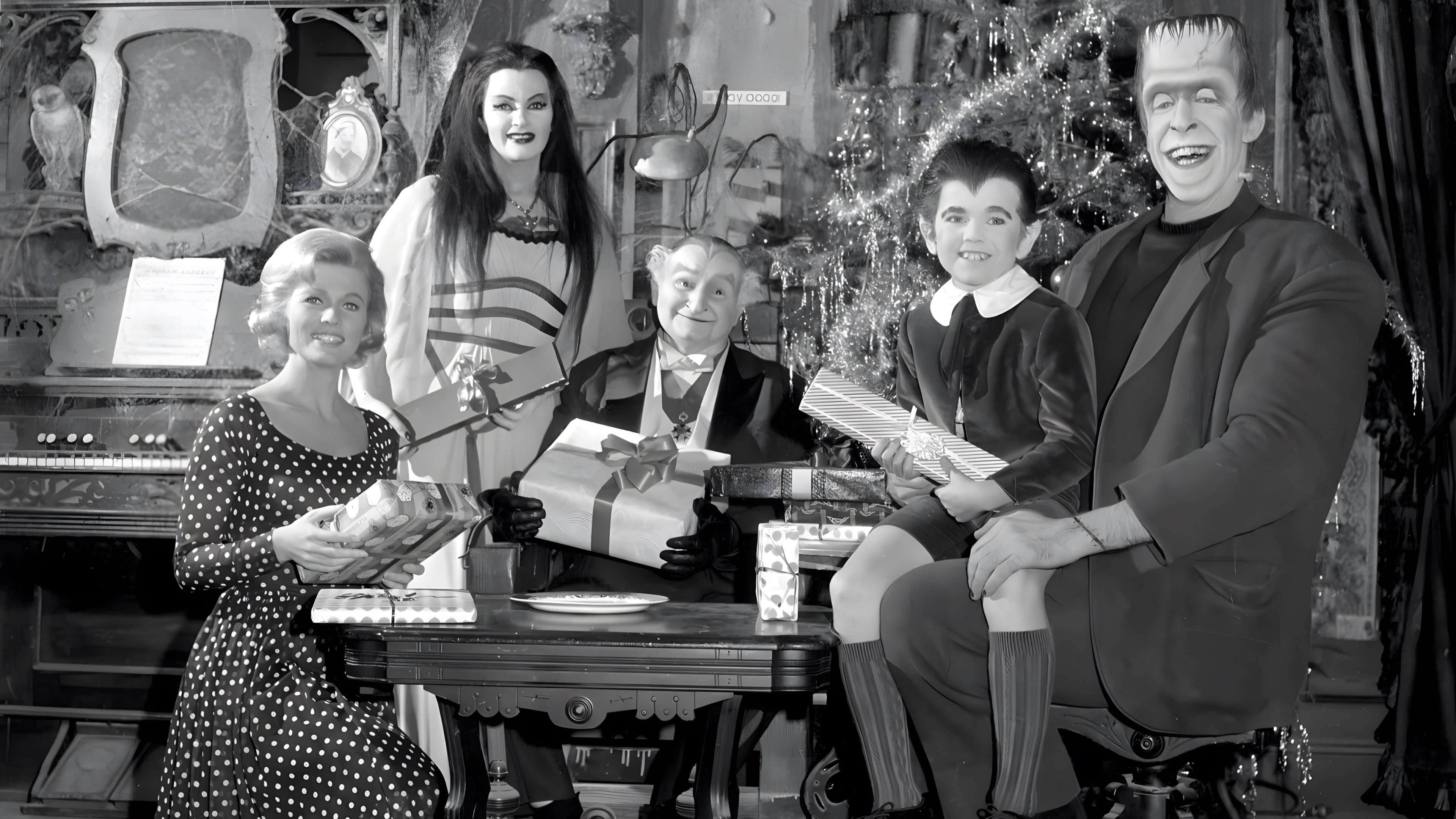
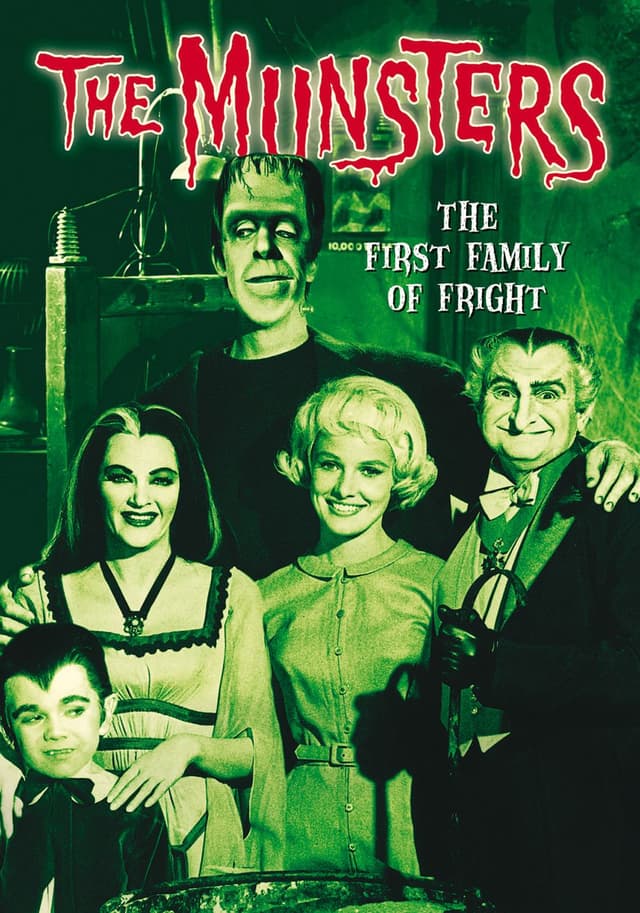
The Munsters (1964) is a CBS half-hour family sitcom from creators Allan Burns and Chris Hayward, in which a working-class American household at 1313 Mockingbird Lane happens to consist of Frankenstein-style husband Herman (Fred Gwynne), his vampire wife Lily (Yvonne De Carlo), her father Grandpa (Al Lewis), werewolf son Eddie (Butch Patrick), and entirely normal niece Marilyn. Produced at Universal and shot in black and white across 70 episodes between September 1964 and May 1966, the show found its largest audience in decades of post-cancellation syndication.
What Is the Budget of The Munsters (1964)?
The Munsters (1964), the CBS half-hour family sitcom created by Allan Burns and Chris Hayward and produced by Kayro-Vue Productions and Universal Television, was made on a per-episode budget of approximately $135,000 to $175,000 in 1964 to 1966 dollars (roughly $1,375,000 to $1,790,000 in 2024 inflation-adjusted terms). Specific Universal Television budgets from the mid-1960s are not consistently publicly disclosed, but the figures align with the standard CBS prime-time half-hour comedy tariff during the period, with The Munsters carrying a premium above straight live-action sitcom rates because of the show's heavy practical-makeup and stage-build production load.
Across 70 broadcast episodes between September 24, 1964 and May 12, 1966, cumulative production spend is estimated at approximately $9,500,000 to $12,250,000 in period dollars, equivalent to roughly $97,000,000 to $125,000,000 in 2024 inflation-adjusted terms. Universal Television, then Universal Pictures' television subsidiary and a primary CBS supplier, retained the underlying library rights and has monetised the catalogue continuously since the show's 1966 cancellation through US syndication, network reruns on Nick at Nite and TV Land, home-video release, and contemporary streaming licences.
Key Budget Allocation Categories
The Munsters' per-episode spend broke down across the cost centres typical of a mid-1960s Universal Television single-camera sitcom, with several show-specific items reflecting the practical-makeup and gothic-set production load:
- Practical Makeup and Prosthetics: The show's defining production cost. Fred Gwynne's Herman Munster makeup required approximately three to four hours of daily application by makeup designer Bud Westmore and his Universal Makeup Department team, including the flat-top forehead prosthetic, neck bolts, green-grey skin treatment, and platform boots that added height. Al Lewis's Grandpa vampire makeup, Yvonne De Carlo's Lily makeup, and Butch Patrick's Eddie werewolf appliances added per-episode makeup spend that materially exceeded the standard sitcom benchmark.
- Above-the-Line Cast: Fred Gwynne, recently off Car 54, Where Are You? (1961), commanded a lead-actor rate consistent with established CBS half-hour talent. Yvonne De Carlo, a major film star from her Universal contract days, brought a feature-grade salary to the half-hour format. Al Lewis, Butch Patrick, Beverley Owen (replaced by Pat Priest after thirteen episodes as Marilyn), and recurring guest cast anchored the supporting line.
- Universal Studios Set Build: The recurring 1313 Mockingbird Lane interior, including the cobwebbed staircase, dungeon-style basement, Marilyn's clean bedroom contrast, and the Munster Koach garage, occupied a Universal Studios Stage 14 footprint throughout production. The gothic-mansion construction with movable wall sections, hidden compartments, and the recurring secret passages required carpentry and standing-set overhead above the standard sitcom build.
- Practical Vehicle Effects: The Munster Koach (the family's long, hot-rod hearse) and DRAG-U-LA (Grandpa's coffin dragster, introduced in season two) were custom-built practical vehicles designed by Tom Daniel and constructed by George Barris. These show-specific builds, plus their maintenance and on-set transport, represented an unusual line item for a half-hour sitcom.
- Black-and-White Cinematography: Filmed entirely in black and white despite the 1965-1966 industry transition to colour, a deliberate creative and budget decision. CBS's scheduling slot did not justify the color tariff premium, and black and white suited the show's Universal-monsters visual references. Cinematographer Walter Strenge anchored the early seasons before being replaced by Benjamin H. Kline.
- Jack Marshall Music: Composer Jack Marshall delivered the show's iconic mariachi-and-organ title theme along with episode-specific score. The music budget covered original composition, recording session musicians, and licensing of needle drops for the recurring "Mockingbird Lane" cues.
- Recurring Guest Cast: A rotating roster of Universal contract players and guest stars including Don Rickles, Frank Gorshin, Marlyn Mason, and Pat Buttram populated the weekly visit-from-outside-the-family episodes. Universal's in-house casting access kept the guest budget below comparable mid-1960s sitcom peers.
- Universal Television Delivery: Picture editing, sound, music recording, and CBS delivery ran through Universal's in-house television post pipeline. The show was budgeted at standard Universal Television mid-1960s technical specifications and delivered on the standard six-day per-episode production block.
How Does The Munsters' Budget Compare to Similar Series?
At approximately $135,000 to $175,000 per episode, The Munsters sat in the upper tier of CBS prime-time half-hour sitcom economics in the 1964 to 1966 window, with the practical-makeup load driving the premium above standard live-action sitcom rates. The comparison set illustrates how its production scale stacked up:
- The Addams Family (1964): Estimated per-episode budget approximately $75,000 to $90,000 ($770,000 to $920,000 in 2024 dollars). ABC's direct competitor monster-family sitcom, produced by Filmways for ABC and premiering one week ahead of The Munsters, cost approximately half as much per episode. The makeup load was lighter (John Astin's Gomez was a clean shave, Carolyn Jones's Morticia required only standard glamour makeup, and Lurch and Cousin Itt were the only heavy-prosthetic recurring characters).
- Bewitched (1964): Estimated per-episode budget approximately $100,000 to $125,000 ($1,020,000 to $1,275,000 in 2024 dollars). ABC and Screen Gems's witch-housewife sitcom hit a standard half-hour tariff with no heavy practical-makeup overhead and ran for eight seasons, illustrating the budget gap that the Universal practical-monster makeup created for The Munsters.
- I Dream of Jeannie (1965): Estimated per-episode budget approximately $90,000 to $115,000 ($920,000 to $1,175,000 in 2024 dollars). NBC and Screen Gems's magical-family sitcom hit a similar tariff to Bewitched and ran for five seasons, providing another data point on the standard mid-1960s half-hour spec without practical-makeup overhead.
- Gilligan's Island (1964): Estimated per-episode budget approximately $130,000 to $160,000 ($1,330,000 to $1,635,000 in 2024 dollars). CBS's competing sitcom, produced by United Artists Television, hit a roughly comparable per-episode tariff to The Munsters because of the show's ongoing tropical-island standing-set build and weather-driven outdoor production.
- Get Smart (1965): Estimated per-episode budget approximately $130,000 to $155,000 ($1,325,000 to $1,580,000 in 2024 dollars). NBC's Mel Brooks and Buck Henry-created spy comedy hit a comparable per-episode budget to The Munsters because of its set-piece and gadget production demands, providing the closest in-class economic peer for the period.
- The Beverly Hillbillies (1962): Estimated per-episode budget approximately $90,000 to $110,000 ($920,000 to $1,125,000 in 2024 dollars). CBS and Filmways's ratings-dominant rural-family sitcom hit standard half-hour rates with no premium overhead, providing the floor benchmark against which The Munsters' makeup premium was measured.
The Munsters Season Performance and Ratings
The Munsters premiered on CBS on September 24, 1964, opposite The Addams Family on ABC, to strong opening figures. The economic framework breaks down as follows:
- Per-Episode Budget: approximately $135,000 to $175,000 in 1964 to 1966 dollars (roughly $1,375,000 to $1,790,000 in 2024 dollars)
- Total Series Investment: approximately $9,500,000 to $12,250,000 across 70 episodes in period dollars
- Network: CBS in the United States; international Universal Television distribution to over 100 territories since 1966
- Audience/Ratings: season 1 averaged 24.7 rating (#18 in the 1964 to 1965 season, tied with Gilligan's Island); season 2 dropped to a 13.0 rating (#61 in the 1965 to 1966 season)
- Syndication: Universal Television placed the show in domestic syndication immediately after its 1966 cancellation; later runs on Nick at Nite, TV Land, Cozi TV, MeTV, and Antenna TV
- Library Value: continuously in distribution since 1966; current streaming availability on Peacock (Universal's streamer) and previously on Hulu and Tubi
The collapse of the season-two ratings, from #18 to #61 in a single year, was driven principally by the premiere of ABC's Batman (January 1966), which targeted the same family audience with comic-book camp at a comparable spending tier. CBS cancelled both The Munsters and The Addams Family at the end of the 1965 to 1966 season as part of a wider mid-1960s programming reset that also retired The Beverly Hillbillies' rural-comedy dominance and pushed CBS toward the colour-aware lineup that defined the late-decade.
Universal Television and CBS's decision to syndicate The Munsters immediately after cancellation proved one of the most lucrative reruns deals of the post-1966 television library era. The show found a substantially larger audience in 1970s and 1980s syndication than it had during original broadcast, and was a cornerstone of Nick at Nite's classic-television programming through the 1980s and 1990s.
The Munsters Production History
Allan Burns and Chris Hayward developed The Munsters for Kayro-Vue Productions and Universal Television in 1963, with Norm Liebmann and Ed Haas writing the original pilot script. The pitch was for a working-class American family sitcom in which the family happened to be Universal-monsters archetypes, the inverse of The Addams Family's aristocratic gothic-family premise that ABC was developing in parallel at Filmways.
Casting Fred Gwynne as Herman Munster brought the Car 54, Where Are You? (1961 to 1963) lead into a tentpole half-hour role. Yvonne De Carlo, a major film star from her Universal contract days including Salome, Where She Danced (1945) and The Ten Commandments (1956), brought feature-grade Hollywood star power to the format. Al Lewis, who had played alongside Gwynne in Car 54, joined as Grandpa, and Butch Patrick was cast as werewolf-son Eddie. Beverley Owen played niece Marilyn for the first thirteen episodes before being replaced by Pat Priest for the remaining 57 episodes.
Production took place at Universal Studios in Universal City, California, with the Stage 14 standing-set build representing the principal physical production investment. Bud Westmore's Universal Makeup Department handled the practical prosthetics, with Karen Dor (later Karen Westmore) and Abe Haberman among the makeup artists who anchored the daily three-to-four-hour application process for Fred Gwynne. The makeup load was a major reason the show stayed comparatively short at two seasons, with Gwynne's daily makeup chair time visibly wearing him by season two.
The custom-built Munster Koach (designed by Tom Daniel, built by George Barris) and DRAG-U-LA (built by Barris for season two) became signature visual elements and have remained on the convention and museum circuit ever since. Color-feature spin-off Munster, Go Home! (1966) was produced concurrently with season two as a theatrical pilot for an envisioned colour third-season pickup that CBS ultimately did not order.
After cancellation in May 1966, Universal Television placed the show in domestic syndication immediately, where it found a substantially larger audience than it had during original CBS broadcast. The library has remained in continuous distribution since 1966, with subsequent productions including The Munsters Today (1988 to 1991), The Munsters' Scary Little Christmas (1996), Mockingbird Lane (2012), and Rob Zombie's 2022 theatrical feature The Munsters keeping the property alive across six decades.
Awards and Recognition
The Munsters received no Emmy Awards during its original 1964 to 1966 broadcast run. The show was nominated for one Primetime Emmy: Outstanding Achievement in Cinematography for Television (1965), reflecting industry recognition of the black-and-white photography work but no broader category recognition.
Bud Westmore's makeup work has been widely cited in subsequent decades by makeup-industry historians and at the Academy of Television Arts and Sciences' archive programmes. The show's legacy recognition has been primarily through its retrospective cultural influence rather than contemporaneous awards, with the Television Critics Association and TV Land's Classic Television Hall of Fame both citing the show in retrospective programming.
At the convention and fandom level, the Munster Koach and DRAG-U-LA vehicles remain regular attractions at the Petersen Automotive Museum (Los Angeles) and at horror and monster-fan conventions, and Fred Gwynne, Al Lewis, and Butch Patrick all received lifetime-achievement-style honours at multiple horror conventions through the 1990s and 2000s. The show's critical reappraisal as a sustained American sitcom landmark has been retrospective rather than awards-driven.
Critical Reception
The Munsters received mixed reviews on its 1964 CBS launch and was treated by most newspaper television critics as a clever gimmick that might or might not sustain itself across a season. The New York Times described the premiere as "a one-joke premise stretched thin," while Variety praised the production design and Bud Westmore's makeup work without strong recommendation. Industry trade reviews were similarly cautious.
Audience and critical reception strengthened across the first season as the cast chemistry between Fred Gwynne and Yvonne De Carlo and the dynamic with Al Lewis became established. The show's working-class American suburb framing, with the Munster family treating themselves as entirely normal and the rest of the world as strange, became the structural joke that critics increasingly cited as the show's sustained appeal.
Retrospective reappraisal has been substantially more positive. The Television Critics Association, the Paley Center for Media (formerly the Museum of Television and Radio), and the Smithsonian Institution have all included The Munsters in their American sitcom canon, and TV Guide ranked the show on multiple "best sitcoms of all time" lists in the 1990s and 2000s. The show's steady syndication and streaming presence across six decades, combined with its influence on subsequent family sitcoms from The Brady Bunch through Modern Family, has cemented its status as a foundational American comedy property well above the level its contemporaneous 1964 to 1966 reviews suggested.
Frequently Asked Questions
How much did each episode of The Munsters (1964) cost to produce?
The estimated per-episode budget was approximately $135,000 to $175,000 in 1964 to 1966 dollars (roughly $1,375,000 to $1,790,000 in 2024 inflation-adjusted terms). Specific Universal Television budgets from the period are not consistently publicly disclosed, but the figures align with the upper tier of CBS prime-time half-hour sitcom economics, with the practical-monster makeup driving the premium above standard live-action rates.
How many episodes of The Munsters were made?
The Munsters ran for 70 episodes across two seasons on CBS, broadcasting from September 24, 1964 to May 12, 1966. Season 1 contained 38 episodes and season 2 contained 32 episodes.
Why was The Munsters cancelled after two seasons?
CBS cancelled the show at the end of the 1965 to 1966 season after ABC's premiere of Batman (January 1966) cut into the family audience with comic-book camp at a comparable spending tier. The Munsters' season-two ratings dropped from a #18 finish to #61 in a single year, and CBS cancelled both The Munsters and ABC's competitor The Addams Family in the same 1966 programming reset.
Who created The Munsters?
Allan Burns and Chris Hayward developed the show for Kayro-Vue Productions and Universal Television, with Norm Liebmann and Ed Haas writing the original pilot script. Joe Connelly and Bob Mosher served as showrunners across both seasons. The premise was for a working-class American family sitcom in which the family happened to be Universal-monsters archetypes.
Where was The Munsters filmed?
Production took place at Universal Studios in Universal City, California. The recurring 1313 Mockingbird Lane interior occupied a Stage 14 standing-set build, with the gothic-mansion construction with movable wall sections and the Munster Koach garage forming the principal physical production investment.
Was The Munsters filmed in color?
No. The Munsters was filmed entirely in black and white across both seasons, despite the 1965 to 1966 industry transition to colour. The decision was a creative one (black and white suited the show's Universal-monsters visual references) and a budget one (CBS's scheduling slot did not justify the colour tariff premium). The 1966 theatrical spin-off Munster, Go Home! was filmed in colour as a pilot for an envisioned colour third season that CBS did not order.
How long did Fred Gwynne spend in makeup as Herman Munster?
Approximately three to four hours of daily application by makeup designer Bud Westmore and his Universal Makeup Department team, including the flat-top forehead prosthetic, neck bolts, green-grey skin treatment, and platform boots. The makeup load was a major reason the show stayed comparatively short at two seasons, with Gwynne visibly worn by daily makeup chair time by season two.
How does The Munsters compare to The Addams Family?
ABC's The Addams Family premiered one week ahead of The Munsters in September 1964 and cost approximately half as much per episode (roughly $75,000 to $90,000 against The Munsters' $135,000 to $175,000). The makeup load on The Addams Family was lighter, with only Lurch and Cousin Itt requiring heavy prosthetics. Both shows were cancelled in the same 1966 CBS-ABC programming reset.
What is the Munster Koach?
The Munster Koach is the family's long hot-rod hearse, a custom-built practical vehicle designed by Tom Daniel and constructed by George Barris. DRAG-U-LA, Grandpa's coffin dragster, was added in season two and also built by Barris. Both vehicles remain on the convention and museum circuit and are regularly displayed at the Petersen Automotive Museum in Los Angeles.
Did The Munsters win any Emmys?
No. The Munsters received one Primetime Emmy nomination during its original 1964 to 1966 broadcast run, in the Outstanding Achievement in Cinematography for Television category (1965), reflecting industry recognition of the black-and-white photography work but no broader category recognition. The show's critical reappraisal has been retrospective rather than awards-driven, with the Television Critics Association and the Paley Center for Media including it in their American sitcom canon.
Filmmakers
The Munsters

Official Trailer
Build budgets like this one in Saturation
Start from an industry-standard feature film template, import the schedule and rates you already have, and let the cost report keep itself current as you spend. Real-time collaboration, no spreadsheets.