The Man Budget
 Comedy
Updated
Synopsis
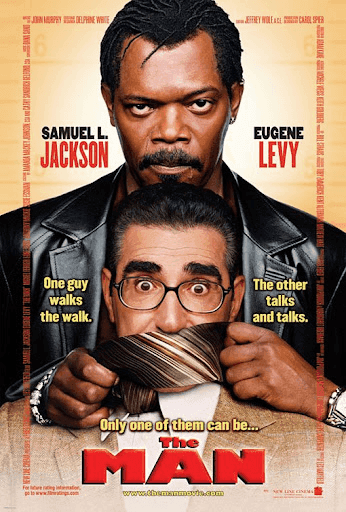
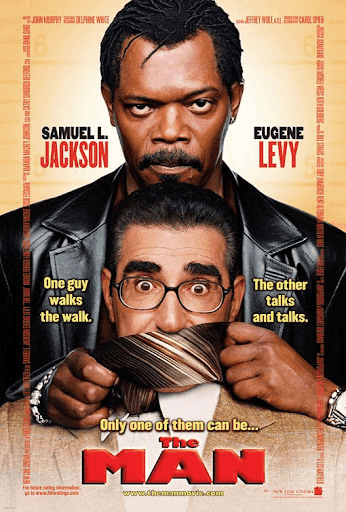
Andy Fiddler, a mild-mannered Wisconsin dental supplies salesman, is in Detroit for a convention when he is mistaken by hard-edged ATF agent Derrick Vann for the criminal contact in a stolen-firearms case. Vann reluctantly enlists Andy as his unwilling partner, and the two have to negotiate Detroit's underworld while not killing each other.
What Is the Budget of The Man (2005)?
The Man, directed by Les Mayfield and distributed by New Line Cinema, was produced on a reported budget of $20,000,000. The buddy-action comedy paired Samuel L. Jackson, fresh off Coach Carter and S.W.A.T., with Eugene Levy, in the middle of his American Pie and Cheaper by the Dozen run. New Line greenlit the project under then-presidents Robert Shaye and Michael Lynne as a low-cost late-summer counterprogramming play against the higher-budget releases dominating August 2005.
The investment was modest by mid-2000s studio comedy standards and reflected New Line's typical mid-budget framework. The studio had built much of its theatrical slate around films in the $20,000,000 to $30,000,000 range that combined recognizable stars with contained urban-setting production, a model that had produced Rush Hour, Friday, and Final Destination. The Man was built on the same template, with Detroit standing in for itself rather than the Los Angeles or Toronto stand-ins more common to comedies of the period.
Key Budget Allocation Categories
The Man's reported $20,000,000 budget was distributed across several core production areas:
- Above-the-Line Talent: Samuel L. Jackson commanded a fee appropriate to his $5,000,000-plus mid-2000s quote, and Eugene Levy received a substantial fee plus producer credit through his Brookpark Productions. Supporting cast included Luke Goss, Miguel Ferrer, Susie Essman, and Anthony Mackie, whose pre-Hurt Locker rate kept his fee modest.
- Detroit Location Photography: Principal photography took place across Detroit, with the city's Greektown, downtown, and warehouse districts serving as the primary urban setting. Production used the Detroit Renaissance Center, the Michigan Central Station district, and the riverfront as the action backdrop, with permits and police-cooperation costs typical for a US-set urban shoot.
- Action Set Pieces: The film's action sequences (the parking garage car chase, the warehouse standoff, the freeway shootout) required full stunt teams, dedicated vehicle wranglers, and pyrotechnic supervisors. The chase sequences accounted for the largest single below-the-line line item.
- Score and Soundtrack: Composer Christophe Beck scored the film with a deliberately throwback funk-soul orchestral mix, and the soundtrack featured needle drops from Curtis Mayfield, Aretha Franklin, Marvin Gaye, and James Brown, all clearance-heavy choices that consumed a meaningful share of music budget.
- Practical Effects and Stunts: Stunt coordinator Steve M. Davison designed the vehicle stunts, including the Greektown drift sequence and the parking garage rollover. Multiple replica vehicles and a dedicated insurance bond for the urban shooting added incremental cost.
- Post-Production and Reshoots: Test screenings in spring 2005 led to limited reshoots and a tightening of the second act, with the running time eventually cut to 83 minutes (the shortest released studio comedy of the year), reflecting persistent narrative problems in post that consumed editing schedule.
How Does The Man's Budget Compare to Similar Films?
At $20,000,000, The Man sits at the low end of mid-2000s studio buddy comedies and action-comedy hybrids:
- Rush Hour 3 (2007): Budget $140,000,000 | Worldwide $258,082,825. New Line's flagship buddy comedy from two years later spent seven times The Man's budget and earned more than twenty-five times its worldwide gross, the franchise template The Man failed to launch.
- National Security (2003): Budget $30,000,000 | Worldwide $51,330,000. The Martin Lawrence and Steve Zahn buddy-cop comedy is the closest tonal comparison and earned more than five times The Man's worldwide total on 50% more budget.
- Be Cool (2005): Budget $53,000,000 | Worldwide $95,164,684. The same-year Get Shorty sequel with John Travolta and Uma Thurman illustrates how the contemporary studio comedy market rewarded star pairings well above The Man's level.
- Hollywood Homicide (2003): Budget $75,000,000 | Worldwide $51,082,290. The Harrison Ford and Josh Hartnett buddy-action film from two years earlier shows the genre's downside, an outcome The Man followed at a much lower production cost.
The Man Box Office Performance
The Man opened on September 9, 2005, on 2,805 screens to a $4,201,000 opening weekend, finishing seventh behind The Exorcism of Emily Rose, Transporter 2, Underclassman, The 40-Year-Old Virgin, Red Eye, and Wedding Crashers. The film never recovered from its soft opening and finished its US theatrical run with $8,257,000, one of the weakest results of New Line's 2005 slate. International release added approximately $1,000,000.
Against a reported $20,000,000 production budget, the film failed to recoup its production cost worldwide. Here is the financial breakdown:
- Production Budget: $20,000,000
- Estimated Prints & Advertising (P&A): approximately $20,000,000 to $25,000,000
- Total Estimated Investment: approximately $40,000,000 to $45,000,000
- Worldwide Gross: $9,257,000
- Net Return: approximately $30,743,000 to $35,743,000 loss (against total estimated investment)
- ROI: approximately negative 77% to negative 79% (against total estimated investment)
The Man returned approximately $0.21 in theatrical revenue for every $1 invested in production and marketing combined, placing it among New Line's most clear-cut studio comedy losses of the mid-2000s. The 91/9 domestic-international split underscored a fundamental travel problem for what was an explicitly Detroit-set buddy-cop comedy with limited international recognition. New Line absorbed the write-down and the result contributed to the studio's broader 2005-2008 financial difficulties that culminated in its absorption into Warner Bros. Pictures.
The Man Production History
The Man originated as a 2002 spec script by Jim Piddock, then circulated through several writers including Margaret Oberman and Stephen Carpenter before Les Mayfield (Encino Man, Flubber, Code Name: The Cleaner) was hired to direct in 2004. Producer Bob Cooper of Landscape Entertainment shepherded the project at New Line, and Eugene Levy attached as both star and producer through his Brookpark Productions in late 2004 after the script was reworked to emphasize Andy Fiddler's dental-supplies-salesman comic premise.
Principal photography began on December 6, 2004, across Detroit, Michigan, and Toronto, Ontario, the latter providing soundstage and supplemental urban photography under Ontario's production tax credit framework. The eight-week shoot completed in February 2005. New Line positioned the film for an early-summer 2005 release but pushed it to September after test screenings led to reshoots and recut sequences in late spring 2005.
Samuel L. Jackson and Eugene Levy reportedly had limited on-set chemistry, with both actors' contractual schedules requiring frequent stop-and-start production days. Director Les Mayfield later acknowledged in trade press that the film's tonal balance between Jackson's grounded action sensibility and Levy's broad comic persona was never fully reconciled in post-production, an assessment widely echoed by critics on release.
The September 9, 2005 release date placed the film against the late-summer comedy lull when New Line had hoped to find an open weekend. The unexpectedly strong second-week hold of The 40-Year-Old Virgin and the audience traction of Wedding Crashers consumed the comedy market share New Line had projected.
Awards and Recognition
The Man received no significant awards recognition. The film was not in contention at the Academy Awards, Golden Globes, Saturn Awards, or any major guild ceremony. It avoided Razzie nominations despite its commercial and critical failure, reflecting the limited cultural footprint that left it outside even the most pointed year-end takedowns.
No member of the cast or crew received notable industry recognition for their work on the project, and the film has largely disappeared from contemporary discussion of either Samuel L. Jackson's or Eugene Levy's respective filmographies.
Critical Reception
The Man received overwhelmingly negative reviews. The film holds an 8% approval rating on Rotten Tomatoes based on 110 critic reviews, with a critical consensus that called it "a lifeless buddy comedy that wastes its two leads." On Metacritic, the film scored 25 out of 100, indicating generally unfavorable reviews.
Critics broadly objected to the film's flat direction, the predictable narrative beats, and the failure to generate genuine chemistry between Jackson and Levy. Roger Ebert awarded one and a half stars and wrote that "the film fails its actors at every turn," noting specifically the under-developed Detroit settings and the rote chase sequences. A. O. Scott of The New York Times called the result "a buddy comedy that forgot to be funny," and Manohla Dargis added that "Jackson and Levy deserve a much better script."
A minority of critics defended Jackson's performance as the kind of disciplined work he had brought to higher-profile mid-2000s projects, but no critic of significant standing endorsed the film as a whole. The reception, combined with the box office collapse, has cemented The Man as a rarely-revisited footnote in both lead actors' filmographies and as a representative example of the mid-2000s studio buddy-comedy decline.
Frequently Asked Questions
How much did it cost to make The Man (2005)?
The reported production budget was $20,000,000, financed by New Line Cinema with Landscape Entertainment and Brookpark Productions producing. The figure was modest by mid-2000s studio comedy standards and reflected New Line's typical mid-budget urban-setting comedy framework.
How much did The Man earn at the box office?
The film grossed $8,257,000 domestically and approximately $1,000,000 internationally, for a worldwide total of $9,257,000. It opened to $4,201,000 in the United States, finishing seventh on its September 9, 2005 opening weekend.
Was The Man a box office bomb?
Yes. Against a $20,000,000 production budget and an estimated $20,000,000 to $25,000,000 in marketing spend, the film returned approximately $0.21 in worldwide gross for every $1 invested. It is among New Line's most clear-cut studio comedy losses of the mid-2000s and contributed to the studio's broader financial difficulties that culminated in its 2008 absorption into Warner Bros. Pictures.
Who directed The Man?
Les Mayfield directed the film, working from a screenplay by Jim Piddock, Margaret Oberman, and Stephen Carpenter. Mayfield had previously directed Encino Man (1992), Miracle on 34th Street (1994), Flubber (1997), and Blue Streak (1999).
Where was The Man filmed?
Principal photography took place across Detroit, Michigan and Toronto, Ontario from December 2004 to February 2005. Detroit served as the on-camera urban setting, with soundstage and supplemental urban photography in Toronto under Ontario's production tax credit framework.
Who stars in The Man?
Samuel L. Jackson plays ATF agent Derrick Vann with Eugene Levy as Wisconsin dental supplies salesman Andy Fiddler, alongside Luke Goss as Joey, Miguel Ferrer as Special Agent Peters, Anthony Mackie as Booty, and Susie Essman as Andy's wife Diane.
How does The Man compare to other mid-2000s buddy comedies?
The Man cost $20,000,000 and earned $9,257,000 worldwide, a clear loss. The comparable National Security (2003) cost $30,000,000 and earned $51,330,000 worldwide. Rush Hour 3 (2007), New Line's flagship buddy comedy, cost $140,000,000 and earned $258,082,825 worldwide. The Man failed to launch as the franchise template New Line had hoped for.
Why did The Man underperform?
The film opened against late-summer 2005 competition that included strong holds for The 40-Year-Old Virgin and Wedding Crashers, both of which consumed the comedy market share New Line had projected. Critics widely objected to the limited chemistry between Samuel L. Jackson and Eugene Levy and to the formulaic buddy-cop structure. Test-screening reshoots and a final 83-minute running time also signaled persistent post-production difficulties.
What did critics think of The Man?
The film received overwhelmingly negative reviews, with an 8% approval rating on Rotten Tomatoes (based on 110 critics) and a Metacritic score of 25 out of 100. Roger Ebert awarded one and a half stars. Critics objected to the flat direction, predictable narrative beats, and failure to generate chemistry between the two leads.
Did The Man win any awards?
No. The film received no awards recognition and was not in contention at the Academy Awards, Golden Globes, Saturn Awards, or any major guild ceremony. It also avoided Razzie nominations despite its commercial and critical failure, reflecting its limited cultural footprint.
Filmmakers
The Man (2005)

Build your own production budget
Create professional budgets with industry-standard feature film templates. Real-time collaboration, no spreadsheets.