The Lost City of Z Budget
 AdventureDramaHistory2h 21m
Updated
Synopsis
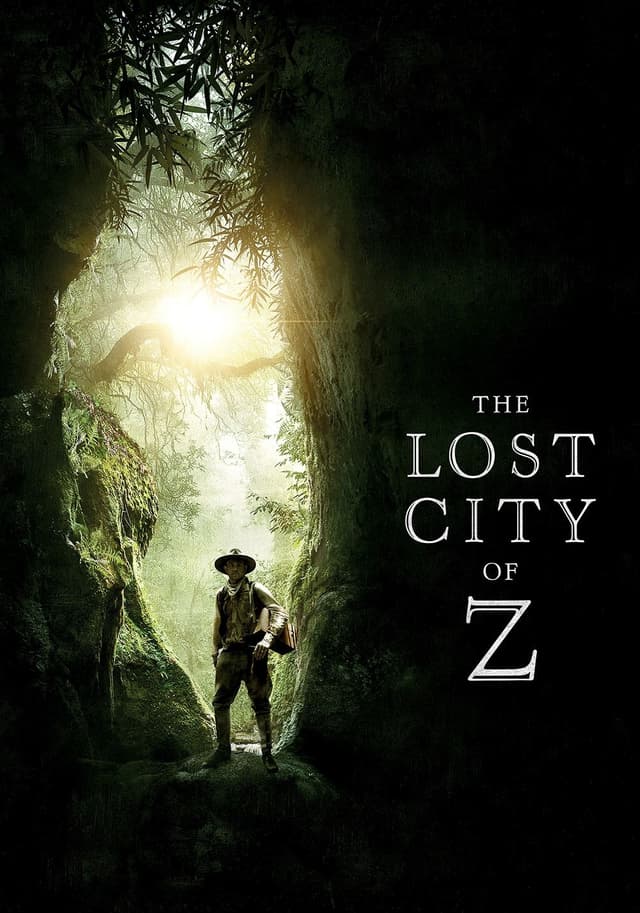
A true-life drama in the 1920s, centering on British explorer Col. Percy Fawcett, who discovered evidence of a previously unknown, advanced civilization in the Amazon and disappeared whilst searching for it.
What Is the Budget of The Lost City of Z?
The Lost City of Z was produced on a budget of $30 million, a relatively modest sum for a period adventure film requiring extensive location shooting across multiple continents. Director James Gray secured financing through a combination of MICA Entertainment, Plan B Entertainment (Brad Pitt's production company), and Keep Your Head Productions. The film's budget reflects a disciplined approach to large-scale storytelling, with Gray prioritizing practical locations and natural light over costly digital effects.
For a film spanning decades of early 20th-century exploration across England, the Amazon basin, and the trenches of World War I, $30 million required careful allocation. Gray and producer Dede Gardner structured the production to maximize every dollar, choosing Colombia as a cost-effective stand-in for Bolivia's jungle regions and Northern Ireland for English period sequences.
Key Budget Allocation Categories
- Location and Travel: Filming took place across Colombia (standing in for the Bolivian Amazon) and Northern Ireland (doubling for early 20th-century England), with each location requiring specialized crew mobilization, equipment transport, and local permitting for remote jungle sites.
- Period Production Design: Production designer Jean-Vincent Puzos recreated environments spanning from Edwardian drawing rooms to World War I trenches and remote Amazonian villages, requiring detailed period-accurate sets, props, and wardrobe across multiple eras from 1905 through the 1920s.
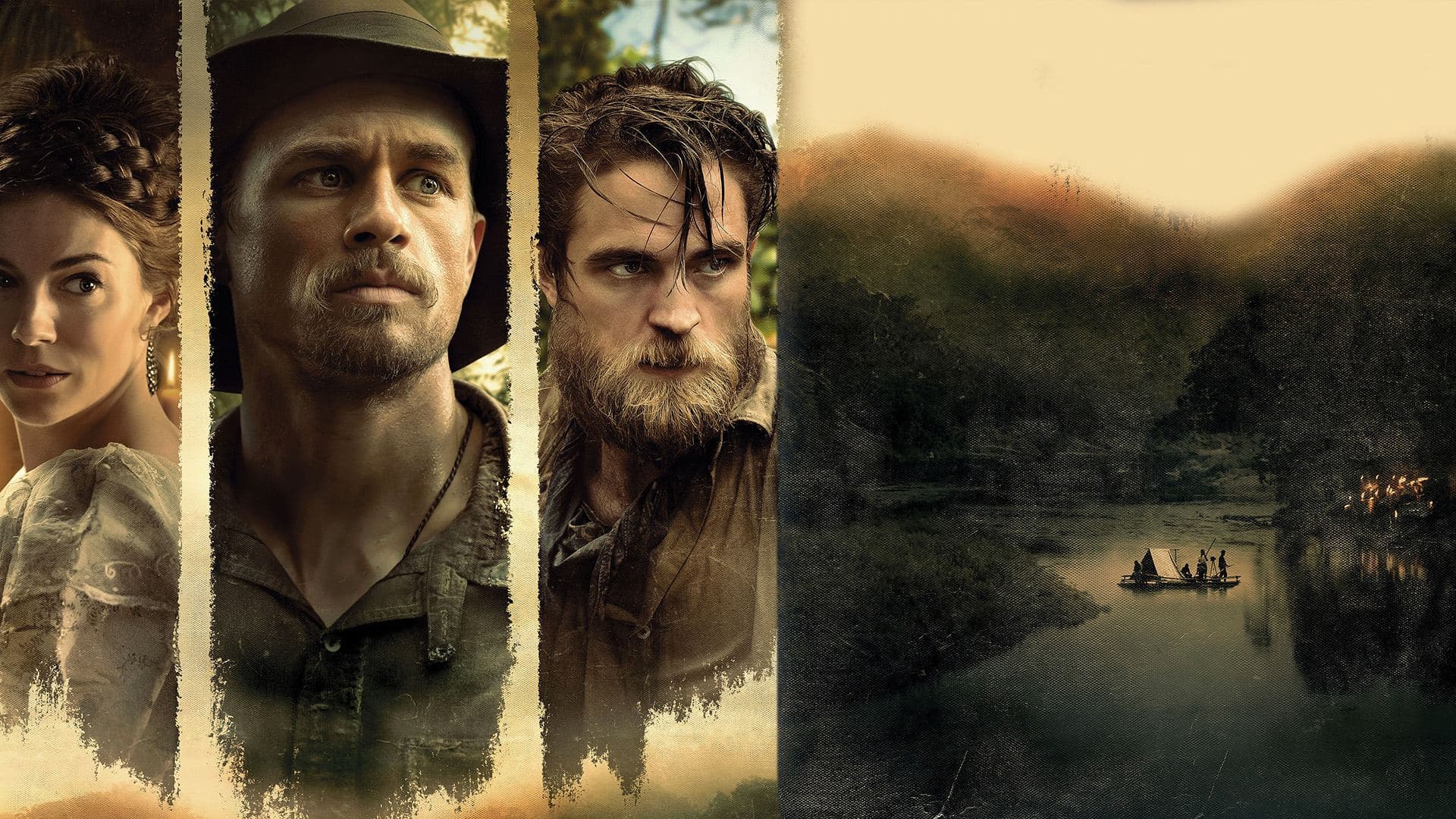
- Cast Salaries: The ensemble included Charlie Hunnam, Robert Pattinson, Sienna Miller, and Tom Holland, with Pattinson and Holland bringing significant star power. Supporting players like Angus Macfadyen and Ian McDiarmid added veteran presence.
- Cinematography and Lighting: Darius Khondji, one of the most sought-after cinematographers working today, shot the film primarily using natural and firelight, a choice that reduced lighting equipment costs but demanded meticulous scheduling around available daylight in dense jungle canopy.
- Jungle Unit Operations: Filming in remote Colombian jungle locations required specialized medical teams, safety crews, water transport for equipment, and provisions for cast and crew working far from urban infrastructure for extended periods.
- Visual Effects: While Gray favored practical filmmaking, select sequences required digital augmentation, including the World War I battle scenes and establishing shots of the Amazon basin that extended practical sets into broader period landscapes.
How Does The Lost City of Z's Budget Compare to Similar Films?
- The Revenant (2015): Budget $135M | Worldwide $533M. Another grueling location-based period film shot in remote wilderness with natural light, but at more than four times the cost. The comparison highlights how Gray achieved a similarly immersive visual result for a fraction of the price.
- Silence (2016): Budget $46M | Worldwide $23.7M. Martin Scorsese's period epic about Jesuit missionaries in Japan shared a similar challenge of filming difficult historical material on location. Both films struggled commercially despite critical acclaim.
- The Immigrant (2013): Budget $16.5M | Worldwide $6.4M. Gray's previous film was made for roughly half the cost and also underperformed at the box office, establishing a pattern of critical respect paired with commercial difficulty for the director.
- Embrace of the Serpent (2015): Budget $1M | Worldwide $3.3M. Ciro Guerra's Amazon-set exploration film achieved similar thematic territory for a tiny fraction of the cost, demonstrating how independent filmmaking approaches the same subject matter with radically different resource constraints.
- Apocalypto (2006): Budget $40M | Worldwide $120.7M. Mel Gibson's jungle adventure proved that audiences would turn out for intense, historically rooted adventure filmmaking, though its marketing campaign and star director gave it advantages The Lost City of Z lacked.
The Lost City of Z Box Office Performance
The Lost City of Z opened in limited release on April 14, 2017, through Amazon Studios and Bleecker Street, expanding gradually over subsequent weeks. The film never reached wide release scale, peaking at 649 screens domestically. Its theatrical run reflected the challenges of marketing a thoughtful, slow-burn adventure film in a marketplace dominated by franchise blockbusters.
Box Office Breakdown
The Lost City of Z

Using the standard break-even formula (roughly 2x production budget to account for prints and advertising), The Lost City of Z needed approximately $60 million worldwide to recoup its costs. With $19.3 million in total global receipts, the film fell well short of profitability in theaters. However, its acquisition by Amazon Studios meant the film found a significant second life on the Amazon Prime Video platform, where streaming viewership numbers (not publicly disclosed) likely contributed to its long-term financial picture.
The Lost City of Z Production History
Development of The Lost City of Z began shortly after David Grann published his bestselling 2009 nonfiction book about the disappearance of British explorer Percy Fawcett in the Amazon. Paramount Pictures initially acquired the film rights, with Brad Pitt attached to star and produce through Plan B Entertainment. Pitt was the original choice to play Fawcett, a role that would have significantly altered the film's commercial profile.
James Gray came aboard as writer and director, spending years developing the screenplay while the project moved through various stages of financing. As Pitt aged out of the role (Fawcett's story spans decades, beginning when the explorer is relatively young), Charlie Hunnam was cast as the lead. Pitt remained as a producer through Plan B, keeping his creative imprint on the project.
Principal photography took place from August to October 2015, with the production splitting between locations in Colombia and Northern Ireland. The Colombian shoot was physically demanding, with cast and crew working in dense jungle heat and navigating river systems by boat to reach remote filming sites. Gray insisted on shooting in actual jungle environments rather than on sets or with green screens, a decision that gave the film its visceral authenticity but pushed the production to its logistical limits.
Cinematographer Darius Khondji shot the film largely with natural light and firelight, using Arri Alexa cameras to capture the low-light jungle interiors. This approach gave the film a painterly, almost tactile quality that critics would later praise extensively. The World War I trench sequences were filmed in Northern Ireland, with production designer Jean-Vincent Puzos constructing elaborate practical trenches.
The Lost City of Z premiered at the New York Film Festival in October 2016 to strong reviews. Amazon Studios acquired domestic distribution rights, partnering with Bleecker Street for the theatrical release in April 2017. The distribution strategy favored a slow platform release rather than a wide opening, which limited the film's commercial ceiling but positioned it as prestige fare.
Awards and Recognition
The Lost City of Z received widespread critical praise but was largely bypassed during the major awards season, arriving in theaters too early in the calendar year for sustained Oscar campaign momentum. The film earned nominations from several critics' organizations and genre-specific bodies.
- National Board of Review: Named one of the Top Ten Films of 2017
- Gotham Independent Film Awards: Nominated for Best Feature
- Independent Spirit Awards: Nominated for Best Cinematography (Darius Khondji)
- Satellite Awards: Nominated for Best Cinematography and Best Adapted Screenplay
- Critics' Choice Awards: Several critics' circles recognized the film, with particular attention to Khondji's cinematography and Gray's direction
Many prominent critics placed The Lost City of Z on their year-end top ten lists, including critics from The New Yorker, Sight & Sound, and Cahiers du Cinema. The film's reputation has grown considerably since its initial release, with retrospective assessments frequently citing it as one of the finest adventure films of the decade.
Critical Reception
The Lost City of Z holds an 87% approval rating on Rotten Tomatoes from 258 reviews, with an average score of 7.5/10. The critical consensus praised the film as "an engrossing exploration of obsession" anchored by strong performances and stunning cinematography. On Metacritic, the film scored 78 out of 100 based on 47 reviews, indicating "generally favorable reviews."
Critics consistently highlighted Darius Khondji's cinematography as the film's most striking technical achievement. The New Yorker's Richard Brody called the film "an instant classic of adventure filmmaking," praising Gray's ability to evoke both the grandeur and the terror of uncharted wilderness. Manohla Dargis of The New York Times described the film as "gorgeous and engrossing," singling out Hunnam's committed physical performance across the decades-spanning narrative.
Charlie Hunnam's lead performance divided critics slightly, with some finding him perfectly suited to the stoic, driven Fawcett and others suggesting the role needed a performer with more interior range. Robert Pattinson drew near-universal praise for his supporting turn as Henry Costin, Fawcett's loyal aide-de-camp, with many critics noting the performance as further evidence of Pattinson's range beyond his early career roles. Sienna Miller received attention for bringing depth to the relatively underwritten role of Nina Fawcett, Percy's wife, who supports and challenges his obsession in equal measure.
The film's measured pacing drew both praise and criticism. Supporters argued that Gray's deliberate rhythm mirrored Fawcett's own patient, years-long pursuit, creating a hypnotic viewing experience. Detractors found the 141-minute runtime occasionally taxing, particularly during the film's middle expedition sequences. Nearly all critics agreed that the final act, depicting Fawcett's last journey into the jungle with his son Jack (Tom Holland), achieved a haunting, transcendent quality that elevated the entire film.
Frequently Asked Questions
How much did it cost to make The Lost City of Z (2017)?
The production budget was $30,000,000, covering principal photography, cast and crew salaries, locations, sets, post-production, and music. Marketing and distribution (P&A) costs are estimated at an additional $15,000,000 - $24,000,000, bringing the total studio investment to approximately $45,000,000 - $54,000,000.
How much did The Lost City of Z (2017) earn at the box office?
The Lost City of Z grossed $8,574,339 worldwide.
Was The Lost City of Z (2017) profitable?
The film did not break even theatrically, earning $8,574,339 against an estimated $75,000,000 needed. Ancillary revenue may have improved the picture.
What were the biggest costs in producing The Lost City of Z?
The primary cost drivers were above-the-line talent (Charlie Hunnam, Robert Pattinson, Sienna Miller); visual effects, practical stunts, and A-list talent compensation; international production across United Kingdom, United States of America.
How does The Lost City of Z's budget compare to similar adventure films?
At $30,000,000, The Lost City of Z is classified as a low-budget production. The median budget for wide-release adventure films in the 2010s ranges from $30 - 80M for mid-budget to $150M+ for tentpoles. Comparable budgets: A Hologram for the King (2016, $30,000,000); A Lot Like Love (2005, $30,000,000); Big Momma's House (2000, $30,000,000).
Did The Lost City of Z (2017) go over budget?
There are no widely reported accounts of significant budget overruns for this production. However, studios rarely disclose precise budget overrun figures publicly. The reported production budget reflects the final estimated cost.
What was the return on investment (ROI) for The Lost City of Z?
The theatrical ROI was -71.4%, calculated as ($8,574,339 − $30,000,000) ÷ $30,000,000 × 100. This measures gross revenue against production budget only - it does not account for P&A or exhibitor shares.
Who directed The Lost City of Z and who were the key crew members?
Directed by James Gray, written by James Gray, shot by Darius Khondji, with music by Christopher Spelman, edited by John Axelrad, Lee Haugen.
Where was The Lost City of Z filmed?
The Lost City of Z was filmed in United Kingdom, United States of America. Principal photography began on August 19, 2015, in Belfast, Northern Ireland, and continued for five weeks until late September. On August 28, the production shot at Greyabbey Village and Strangford Lough in Northern Ireland.
Filmmakers
The Lost City of Z

Official Trailer
Build budgets like this one in Saturation
Start from an industry-standard feature film template, import the schedule and rates you already have, and let the cost report keep itself current as you spend. Real-time collaboration, no spreadsheets.