The Little Mermaid Budget
 Musical2h 15m
Updated
Synopsis
Ariel, the youngest daughter of King Triton, is a mermaid princess who dreams of life on the surface world. After saving the human Prince Eric from drowning, Ariel becomes infatuated with the surface world and makes a dangerous bargain with the sea witch Ursula: her voice in exchange for human legs and three days to earn Eric's kiss of true love. As Ariel navigates the human world without her voice, Ursula manipulates events to ensure the deal fails, planning to use Ariel as leverage to seize King Triton's trident and rule the ocean. Ariel must find a way to connect with Eric, confront Ursula's growing power, and bridge the divide between the underwater and surface worlds.
What Is the Budget of The Little Mermaid?
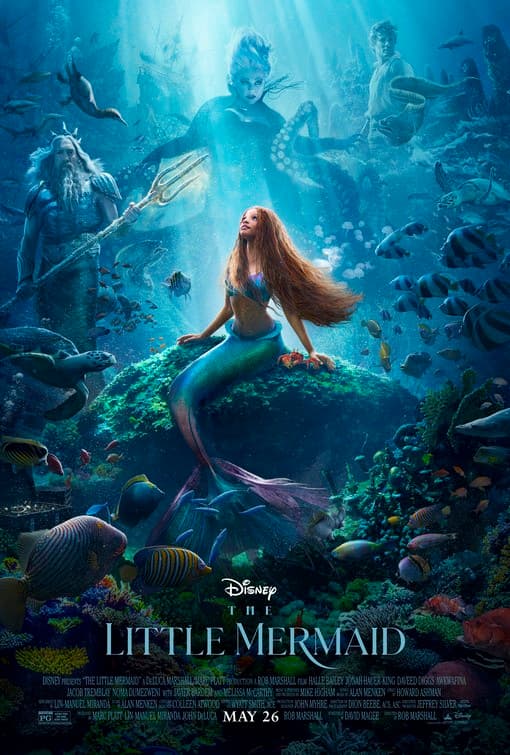
The Little Mermaid (2023), directed by Rob Marshall and distributed by Walt Disney Studios Motion Pictures, was produced on a budget of $250,000,000. The live-action adaptation of Disney's beloved 1937 animated film reimagined the underwater fairy tale with Halle Bailey as Ariel, Melissa McCarthy as Ursula, and Javier Bardem as King Triton. The film retained Alan Menken's original songs while adding new numbers co-written by Menken and Lin-Manuel Miranda, expanding the musical narrative beyond the 1989 animated version.
The $250 million budget placed The Little Mermaid among the most expensive Disney live-action remakes ever produced. The majority of costs were driven by the VFX-intensive creation of an entirely digital underwater world, the technical challenges of filming actors in dry-for-wet conditions while simulating submerged movement and hair physics, and the musical production requirements of recording, choreographing, and integrating new and classic songs into a CG-heavy environment. The production shot primarily at Pinewood Studios in England with additional location work on the Italian island of Sardinia.
Key Budget Allocation Categories
The Little Mermaid distributed its $250 million budget across the following production areas:
- Visual Effects and Underwater World Creation: The film's defining technical challenge was creating an entirely CG underwater environment that could sustain a two-hour-plus runtime without feeling artificial. Unlike practical underwater filming, which limits camera movement and actor expression, the production used dry-for-wet shooting on soundstages at Pinewood Studios, with actors suspended on wire rigs while surrounded by blue screens. All underwater environments, including Atlantica, the coral reef kingdom, Ursula's lair, and the seafloor landscapes, were built digitally. The photorealistic CG characters of Flounder, Sebastian, and Scuttle required advanced animation and rendering pipelines to match the vocal performances of Jacob Tremblay, Daveed Diggs, and Awkwafina.
- Musical Production and Song Integration: Alan Menken and Lin-Manuel Miranda co-wrote four new songs for the film, expanding Ariel's musical voice and Eric's emotional arc. The integration of musical numbers into CG-heavy environments required specialized production workflows: Bailey's vocals were recorded in studio, then her on-set performances were captured with reference audio, and the final VFX shots were composited to match lip sync and emotional timing. "Under the Sea" and "Kiss the Girl" demanded elaborate CG choreography with dozens of animated sea creatures, each requiring its own animation rig and performance.
- Cast and Above-the-Line Talent: Halle Bailey's casting as Ariel generated significant public attention. Melissa McCarthy joined as Ursula, undergoing extensive prosthetic transformation. Javier Bardem played King Triton, Jonah Hauer-King was cast as Prince Eric, and the voice cast included Daveed Diggs, Awkwafina, and Jacob Tremblay. Rob Marshall's directing fee, Lin-Manuel Miranda's songwriting involvement, and producers Marc Platt and John DeLuca completed the above-the-line costs.
- Production Design and Sardinia Location Work: Production designer John Myhre created the above-water environments, including Prince Eric's coastal kingdom, the village, and the castle. Location filming on the Italian island of Sardinia provided the Mediterranean coastal landscapes for Eric's realm, lending the surface-world scenes a warmth that contrasted with the CG underwater environments. Sardinia's production infrastructure and Italy's tax incentive programs helped offset some location costs.
- Prosthetics and Costume Design: Costume designer Colleen Atwood designed both the underwater character aesthetics and the surface-world period costumes. Melissa McCarthy's Ursula transformation required extensive prosthetic work, including facial prosthetics, body padding, and the character's iconic tentacles, which combined practical costume elements with CG extension. Halle Bailey's mermaid tail was rendered entirely in CG to allow natural-looking underwater movement, while her surface-world costumes blended period accuracy with Disney's visual storytelling.
- Hair Simulation and Performance Capture: One of the production's most technically demanding elements was simulating natural-looking hair movement underwater for Ariel and other characters. Hair simulation required dedicated VFX teams working on every shot where characters appeared submerged, creating flowing, weightless hair dynamics that responded to each character's movement. The challenge extended to Ariel's red hair, which needed to maintain its iconic appearance while behaving physically in the digital ocean environment.
How Does The Little Mermaid's Budget Compare to Similar Films?
At $250,000,000, The Little Mermaid ranks among the most expensive Disney live-action remakes. Comparing it with other remakes and musical films:
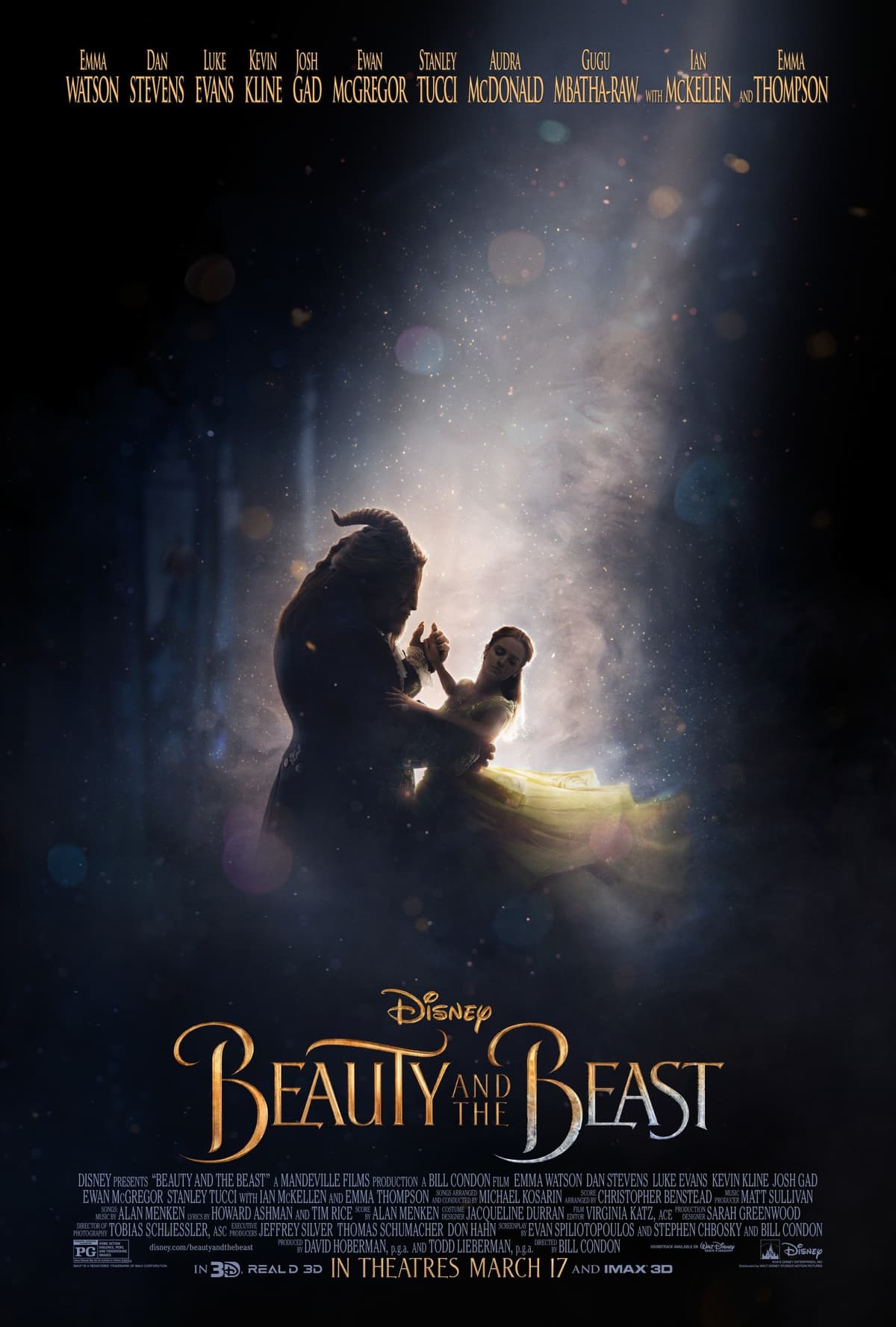
- Beauty and the Beast (2017): Budget $160,000,000 | Worldwide $1,263,500,000. Disney's most successful live-action musical remake cost 36% less and earned 122% more worldwide, benefiting from overwhelming nostalgia appeal and Emma Watson's star power. The Little Mermaid's significantly higher budget for a lower return highlighted the rising cost and diminishing audience appetite for Disney remakes.
- The Lion King (2019): Budget $260,000,000 | Worldwide $1,656,900,000. Disney's photorealistic CG remake cost 4% more but earned 191% more, driven by The Lion King's deeper global cultural footprint and the novelty of Jon Favreau's virtual cinematography approach.
- Aladdin (2019): Budget $183,000,000 | Worldwide $1,054,300,000. Guy Ritchie's live-action Aladdin cost 27% less and earned 85% more, demonstrating that Disney remakes could achieve blockbuster returns on more moderate budgets, a lesson The Little Mermaid's financial performance reinforced.
- Aquaman (2018): Budget $160,000,000 | Worldwide $1,148,500,000. The DC underwater spectacle cost 36% less and earned 102% more, illustrating that underwater-set films could achieve stronger commercial results with a lower budget when the tone leaned into spectacle over faithful adaptation.
- In the Heights (2021): Budget $55,000,000 | Worldwide $44,600,000. Lin-Manuel Miranda's other major film project cost a fraction of The Little Mermaid but also underperformed commercially, suggesting that large-scale movie musicals faced structural box office challenges in the post-pandemic theatrical market.
The Little Mermaid Box Office Performance
The Little Mermaid opened in the United States on May 26, 2023, debuting to $95.5 million domestically over the Memorial Day weekend. The opening was solid but below Disney's internal projections and significantly lower than the openings of Beauty and the Beast ($174.8 million) and The Lion King ($191.8 million), the two most successful live-action remakes.
Box Office Breakdown
The Little Mermaid (2023)

At approximately +128%, The Little Mermaid returned roughly $2.28 for every $1 of production budget invested during its theatrical run.
Disney's live-action remake earned $298.2 million domestically (52% of worldwide) but just $271.4 million internationally (48%), an unusually domestic-heavy split for a film of this scale. The weak international performance, particularly in Asian markets, raised questions about the global viability of Disney's live-action remake strategy at $250 million budgets. With an estimated break-even around $500 million including marketing, the film's profitability from theatrical revenue alone was marginal.
The Little Mermaid Production History
Development on a live-action Little Mermaid adaptation began in 2016, with Lin-Manuel Miranda announced as a collaborator who would write new songs with original composer Alan Menken. Rob Marshall was announced as director in December 2017, reuniting with Disney after directing Into the Woods (2014) and Mary Poppins Returns (2018). The casting of Halle Bailey as Ariel was announced in July 2019, generating significant public conversation about representation in Disney's live-action remakes.
Principal photography was originally scheduled to begin in early 2020 but was delayed by the COVID-19 pandemic. Filming ultimately ran from January to July 2021 at Pinewood Studios in England, with location work on the island of Sardinia in Italy for the surface-world coastal scenes. The dry-for-wet shooting approach, with actors performing on wire rigs surrounded by blue screens, required extensive rehearsal and physical endurance from the cast, particularly Bailey, who spent months suspended in harnesses while performing emotionally demanding musical numbers.
The decision to create photo-realistic CG versions of Sebastian, Flounder, and Scuttle, rather than stylized or cartoon-like renditions, proved controversial among fans who felt the realistic animal designs lacked the expressiveness of the animated originals. Rob Marshall and the VFX teams worked extensively to find a middle ground between photorealism and character expressiveness, revising character designs through multiple iterations in response to early audience testing.
Post-production continued through late 2022, with VFX work extending into early 2023 to complete the underwater environments and character animation. The film's final runtime of 135 minutes made it significantly longer than the 83-minute animated original, with the additional songs and expanded character development for Prince Eric accounting for much of the added length.
Awards and Recognition
The Little Mermaid received a nomination for Best Original Song at the 96th Academy Awards for "Scavenger Hunt," written by Alan Menken and Lin-Manuel Miranda. The song was one of four new numbers added to the film, and its nomination continued the franchise's legacy of Academy Award recognition for its music (the original animated film won Oscars for Best Score and Best Original Song "Under the Sea").
Halle Bailey's vocal performance as Ariel was widely praised, with her rendition of "Part of Your World" receiving particular acclaim from music critics and audiences. The film received additional nominations from the NAACP Image Awards, the Kids' Choice Awards, and the Satellite Awards. Bailey was recognized for her work as a breakthrough performer by several industry organizations.
Critical Reception
The Little Mermaid earned a 66% approval rating on Rotten Tomatoes based on 303 reviews, with a critics consensus praising Halle Bailey's luminous performance while noting the film's overreliance on CG environments and bloated runtime. On Metacritic, the film scored 59 out of 100, indicating "mixed or average reviews." Audiences gave it an A on CinemaScore, suggesting strong satisfaction among those who chose to see the film theatrically.
Critics who championed the film focused on Bailey's performance as a revelation, praising her vocal power, emotional sincerity, and screen presence as worthy successors to the animated Ariel's legacy. Melissa McCarthy's campy, theatrical Ursula was appreciated by some as an appropriately outsized villain performance. The new songs by Menken and Miranda, particularly "Scavenger Hunt" and "For the First Time," were generally praised for expanding the story's emotional palette.
Detractors focused on the CG underwater environments, which many reviewers found murky, visually flat, and lacking the vibrant color palette of the animated original. The photorealistic animal companions, particularly Flounder and Sebastian, were criticized for sacrificing the animated characters' expressiveness in pursuit of realism. The 135-minute runtime was seen as unnecessarily padded, with the expanded Prince Eric storyline and new musical numbers failing to justify the additional length. Several critics argued that The Little Mermaid exemplified a broader problem with Disney's remake strategy: applying massive budgets to recreate beloved properties without a clear artistic vision for what the live-action format could add to stories that were already told definitively in animation.
Frequently Asked Questions
How much did it cost to make The Little Mermaid (2023)?
The production budget was $250,000,000. Costs were driven by the VFX-intensive creation of an entirely digital underwater world, dry-for-wet filming on soundstages at Pinewood Studios in England, musical production for both classic and new songs, and location work on Sardinia, Italy.
How much did The Little Mermaid (2023) earn at the box office?
The film grossed $298,200,000 domestically and $271,400,000 internationally, totaling $569,600,000 worldwide. It opened with $95.5 million over Memorial Day weekend, below Disney's internal projections and far below Beauty and the Beast's $174.8 million opening.
Was The Little Mermaid (2023) profitable?
Marginally. With a $250 million production budget and estimated $150 million in marketing, the film's $569.6 million worldwide gross placed it near the break-even threshold. Disney reportedly broke roughly even on the theatrical run when accounting for all costs, with downstream revenue from Disney+ and home video providing additional returns.
Where was The Little Mermaid (2023) filmed?
Principal photography ran from January to July 2021 at Pinewood Studios in England, where the underwater scenes were filmed using dry-for-wet techniques with actors on wire rigs surrounded by blue screens. Location filming took place on the Italian island of Sardinia for the surface-world coastal scenes.
Who plays Ariel in the live-action Little Mermaid?
Halle Bailey stars as Ariel. Her casting was announced in July 2019 and generated significant public conversation about representation. Bailey's vocal performance, particularly her rendition of "Part of Your World," was widely praised as a highlight of the film, with critics describing her screen presence as a worthy successor to the animated character.
What new songs were added to The Little Mermaid (2023)?
Alan Menken and Lin-Manuel Miranda co-wrote four new songs: "Scavenger Hunt" (nominated for Best Original Song at the Academy Awards), "For the First Time," "Wild Uncharted Waters," and "The Scuttlebutt." The new numbers expanded Prince Eric's character and provided additional emotional depth to the story.
Why did The Little Mermaid underperform internationally?
The film earned only 48% of its gross from international markets, far below the typical 60-65% for Disney tentpoles. Industry analysts attributed the international weakness to cultural resistance to the film's casting in some markets, competition from local releases, and general audience fatigue with Disney's live-action remake strategy outside North America.
How were the underwater scenes filmed?
The production used dry-for-wet shooting at Pinewood Studios, with actors suspended on wire rigs surrounded by blue screens. All underwater environments were created digitally. Hair simulation was a particular technical challenge, requiring dedicated VFX teams to create natural-looking, weightless hair movement for every submerged shot.
What awards did The Little Mermaid (2023) receive?
The film received an Academy Award nomination for Best Original Song ("Scavenger Hunt" by Alan Menken and Lin-Manuel Miranda). Halle Bailey received recognition from the NAACP Image Awards and was praised as a breakthrough performer by several industry organizations.
What is the Rotten Tomatoes score for The Little Mermaid (2023)?
The film holds a 66% approval rating on Rotten Tomatoes and scored 59 out of 100 on Metacritic. Audiences gave it an A on CinemaScore. Critics praised Halle Bailey's performance but criticized the murky CG underwater environments, the photorealistic animal companions' lack of expressiveness, and the bloated 135-minute runtime.
Filmmakers
The Little Mermaid (2023)

Build budgets like this one in Saturation
Start from an industry-standard feature film template, import the schedule and rates you already have, and let the cost report keep itself current as you spend. Real-time collaboration, no spreadsheets.