
The Life and Death of Colonel Blimp Budget
Updated
Synopsis
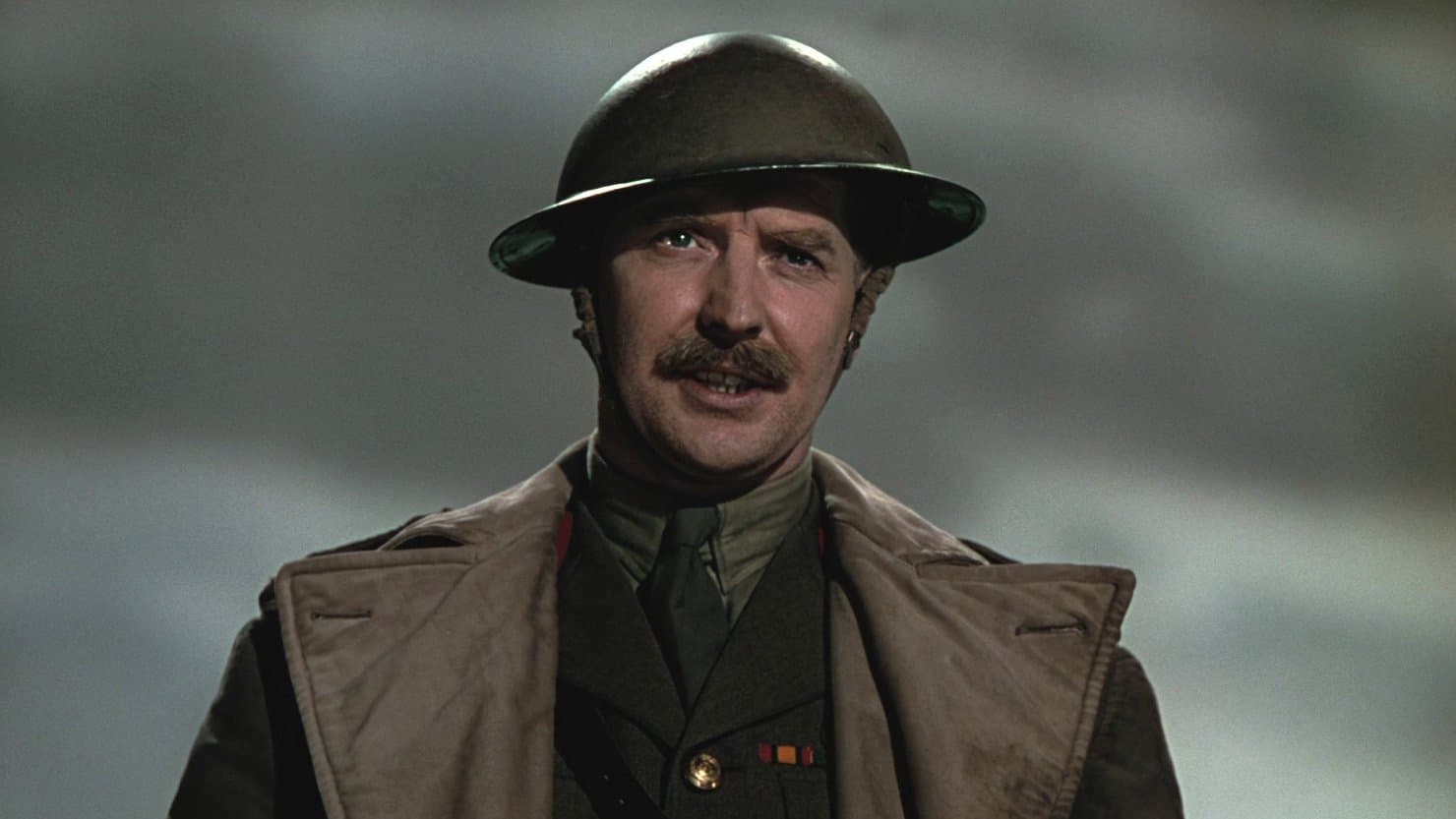
General Candy, who's overseeing an English squad in 1943, is a veteran leader who doesn't have the respect of the men he's training and is considered out-of-touch with what's needed to win the war. But it wasn't always this way. Flashing back to his early career in the Boer War and World War I, we see a dashing young officer whose life has been shaped by three different women, and by a lasting friendship with a German soldier.
What Is the Budget of The Life and Death of Colonel Blimp?
The Life and Death of Colonel Blimp (1943) was produced for approximately £200,000 (roughly $2 million adjusted for wartime exchange rates), making it one of the most expensive British productions of its era. For context, the average British feature in the early 1940s cost between £30,000 and £60,000, so The Archers were operating at three to four times the industry standard. The film's ambitious scope, spanning 40 years of British military history through the Boer War, World War I, and World War II, demanded Technicolor photography, elaborate period sets, and a shooting schedule that stretched well beyond the norm for wartime production.
Financing came through the Rank Organisation, with J. Arthur Rank backing Michael Powell and Emeric Pressburger's production company, The Archers. The investment was considered a significant gamble during wartime austerity, particularly given Winston Churchill's vocal opposition to the project. Rank's willingness to fund such an expensive and politically controversial film reflected his confidence in Powell and Pressburger following the commercial success of The 49th Parallel (1941) and One of Our Aircraft Is Missing (1942).
Key Budget Allocation Categories
- Technicolor Photography accounted for a substantial portion of the budget. The Life and Death of Colonel Blimp was among the earliest British features shot entirely in three-strip Technicolor, which required specialized cameras rented from the Technicolor corporation, mandatory Technicolor consultants on set, and significantly more lighting equipment than black-and-white production.
- Period Costumes and Set Design covered four decades of British life, from Victorian-era military uniforms and Edwardian drawing rooms to 1940s Home Guard equipment. Production designer Alfred Junge constructed elaborate sets at Denham Studios, including a full Turkish bath sequence and multiple incarnations of the same London townhouse across different eras.
- Cast Salaries reflected the caliber of the principal performers. Roger Livesey commanded a leading man's fee for the demanding title role, which required extensive aging makeup across the film's timeline. Deborah Kerr, then an emerging star, played three separate characters. Anton Walbrook, an Austrian emigre already acclaimed for Gaslight (1940), brought prestige and cost as the German officer Theo Kretschmar-Schuldorff.
- Makeup and Prosthetics were essential for the aging transformations, particularly for Livesey, who ages from a lean young officer to the rotund, mustachioed "Colonel Blimp" of the title. The makeup department created multiple stages of aging that needed to be convincing in the unforgiving detail of Technicolor close-ups.
- Extended Production Schedule pushed costs higher than initially projected. Shooting ran from June to October 1942 at Denham Studios, with additional location work. The film's 163-minute runtime, exceptional for the period, meant more raw Technicolor stock, more processing, and more studio rental days than a standard production.
- Military Coordination and Extras required organizing large groups of uniformed extras for the Boer War and World War I sequences, along with period-accurate military equipment. Despite Churchill's attempts to block the production, the filmmakers secured enough cooperation to stage convincing battle and training sequences.
How Does Colonel Blimp's Budget Compare to Similar Films?
Wartime British cinema operated under severe constraints, from rationed film stock to studio bombing raids. Colonel Blimp's budget placed it firmly in the top tier of British production, alongside only a handful of Technicolor prestige pictures.
- Henry V (1944) had a budget of approximately £475,000, making it the most expensive British film produced during the war. Laurence Olivier's Shakespeare adaptation pushed the boundaries of Technicolor spectacle even further, with its Agincourt battle sequence alone exceeding what most British films spent in total.
- Black Narcissus (1947) cost roughly £280,000 for Powell and Pressburger's next major Technicolor production. The slight increase reflected postwar inflation and the elaborate Pinewood Studios sets designed to replicate a Himalayan convent, demonstrating how The Archers consistently invested in visual ambition.
- In Which We Serve (1942) was produced for around £240,000, a comparable wartime budget for Noel Coward and David Lean's naval drama. Shot in black and white, it allocated its funds toward detailed ship set construction rather than color photography, highlighting how Technicolor alone consumed a significant share of Colonel Blimp's resources.
- The Red Shoes (1948) cost approximately £500,000, representing The Archers' most lavish postwar production. The escalation from Colonel Blimp's £200,000 to The Red Shoes' £500,000 over five years shows how Powell and Pressburger's budgets grew in step with their creative ambitions and Rank's expanding investment.
- Casablanca (1942) was produced for roughly $1 million at Warner Bros. in Hollywood. As a same-era comparison from the American studio system, Casablanca's budget was lower in absolute terms, though the Hollywood infrastructure provided efficiencies in standing sets, contract players, and studio facilities that British productions could not match.
The Life and Death of Colonel Blimp Box Office Performance
Detailed box office figures for The Life and Death of Colonel Blimp are incomplete by modern standards, as wartime British distribution did not track grosses with the precision of contemporary reporting. However, the available evidence paints a picture of strong commercial performance in the United Kingdom tempered by a compromised American release.
- UK Theatrical Gross: The film was a significant commercial success in Britain, performing well during its initial run through General Film Distributors. Exact figures are not publicly documented, but trade reports from 1943 placed it among the year's top-grossing British releases.
- US Theatrical Release: Universal Pictures distributed a heavily cut version in the United States, trimmed from 163 minutes to approximately 150 minutes. The cuts removed political nuance and character development, weakening both critical reception and audience response in the American market.
- Production Budget: £200,000 (approximately $2 million at wartime exchange rates).
- Estimated Break-Even Threshold: Roughly £400,000 in theatrical revenue, accounting for prints, advertising, and distribution fees at the standard 2x multiplier for the era.
- Profitability: The film is generally considered to have recouped its investment through UK distribution alone, making it a profitable venture for the Rank Organisation despite the political controversy surrounding its release.
- Revival and Restoration Revenue: The film has generated additional revenue through decades of repertory screenings, home video releases, and the Criterion Collection's restoration. Martin Scorsese's Film Foundation sponsored the definitive 4K restoration, which played theatrically in the 2010s and introduced the uncut version to new audiences worldwide.
The Life and Death of Colonel Blimp Production History
The film originated in David Low's popular Evening Standard cartoon character Colonel Blimp, a blustering, out-of-touch military figure who represented everything reactionary about the British establishment. Powell and Pressburger saw an opportunity to subvert the caricature, transforming Blimp from a satirical target into a sympathetic portrait of a man whose values, however outdated, came from genuine conviction and personal sacrifice.
Writing began in 1942, with Pressburger crafting an original screenplay that used the Blimp character as a departure point rather than adapting any specific Low cartoon. The script told the story of Clive Wynne-Candy, a British officer whose life unfolds across 40 years through his friendship with a German officer, Theo Kretschmar-Schuldorff. The narrative structure, beginning in 1943 and flashing back to 1902, was unusually sophisticated for mainstream wartime cinema.
Winston Churchill attempted to suppress the production before filming even began. The Prime Minister believed the film's sympathetic portrayal of a German character would undermine British morale and the war effort. The War Office was instructed to withhold cooperation, and Churchill personally lobbied J. Arthur Rank to cancel the project. Rank refused, and Powell and Pressburger proceeded without official military support, a remarkable act of creative independence during wartime.
Principal photography ran from June through October 1942 at Denham Studios in Buckinghamshire. The Technicolor process demanded enormous quantities of light, and cinematographer Georges Perinal, with uncredited contributions from the young Jack Cardiff, achieved a painterly visual quality that influenced British color cinematography for years to come. Cardiff would later reunite with Powell and Pressburger as the credited cinematographer on A Matter of Life and Death (1946) and Black Narcissus (1947).
Casting Deborah Kerr in three roles across three time periods was Powell's idea, creating a thematic thread suggesting that Candy's romantic life was defined by a single ideal of womanhood. Kerr, then 21, played characters ranging from a young Edwardian woman to a 1940s Army driver, establishing the versatility that would define her career. Anton Walbrook's casting as the German officer was itself a political statement: an Austrian Jewish actor playing a sympathetic German soldier while real Germans occupied his homeland.
The finished film ran 163 minutes, far longer than the standard 90-minute British feature. For the American release through Universal Pictures, roughly 13 minutes were cut without Powell and Pressburger's approval, a source of lasting frustration for both filmmakers. The full-length version remained the standard in British distribution and was eventually restored for worldwide circulation.
Awards and Recognition
The Life and Death of Colonel Blimp received no major award nominations upon its original release, partly because the British film industry lacked a comprehensive awards infrastructure in 1943, and partly because Churchill's opposition had created a politically charged atmosphere around the film. The BAFTA Awards were not established until 1949, and Academy Award consideration for British films during the war was minimal.
The film's recognition has grown enormously in the decades since its release. It has been named one of the greatest British films ever made in multiple polls conducted by the British Film Institute, Sight & Sound magazine, and Time Out London. In the BFI's 1999 poll of the 100 greatest British films, Colonel Blimp ranked near the top, and it has maintained its position in subsequent surveys. The film regularly appears on international critics' lists of the finest achievements in world cinema.
Martin Scorsese has been one of the film's most vocal champions, calling it one of his all-time favorites and sponsoring its restoration through the Film Foundation. The restored version premiered to widespread acclaim and introduced the film to audiences who had only known it through inferior prints or the truncated American cut. The Criterion Collection's release further cemented its canonical status, placing it alongside the other Powell and Pressburger masterworks in their catalog.
Critical Reception
The Life and Death of Colonel Blimp holds a 98% approval rating on Rotten Tomatoes, reflecting near-universal critical admiration from both contemporary reviewers and modern reassessments. Initial British reviews in 1943 were largely positive, praising the film's ambition, its Technicolor photography, and the performances of Livesey, Kerr, and Walbrook. American critics were more mixed, partly due to the cuts made for the US release and partly due to unfamiliarity with the cultural context of the "Colonel Blimp" archetype.
Roger Livesey's performance as Clive Wynne-Candy has been consistently singled out as one of the great achievements of British screen acting. His transformation from dashing young officer to portly, mustachioed veteran is both physically convincing and emotionally devastating, particularly in the scenes where Candy realizes that the world has moved beyond his understanding of honor and fair play. Anton Walbrook's monologue about fleeing Nazi Germany is widely regarded as one of the most powerful scenes in any Powell and Pressburger film.
Modern critics have emphasized the film's remarkable complexity for a wartime production. Rather than delivering simple propaganda, Powell and Pressburger created a nuanced meditation on friendship, patriotism, and the passage of time that questioned whether traditional British values were adequate for the fight against fascism. This willingness to complicate the national narrative while the nation was at war is precisely what made Churchill furious and what makes the film endure. It stands as one of the defining achievements of The Archers partnership and of British cinema itself.
Frequently Asked Questions
How much did it cost to make The Life and Death of Colonel Blimp (1943)?
The production budget was $2,000,000, covering principal photography, cast and crew salaries, locations, sets, post-production, and music. Marketing and distribution (P&A) costs are estimated at an additional $1,000,000 - $1,600,000, bringing the total studio investment to approximately $3,000,000 - $3,600,000.
How much did The Life and Death of Colonel Blimp (1943) earn at the box office?
The Life and Death of Colonel Blimp grossed $275,472 worldwide.
Was The Life and Death of Colonel Blimp (1943) profitable?
The film did not break even theatrically, earning $275,472 against an estimated $5,000,000 needed. Ancillary revenue may have improved the picture.
What were the biggest costs in producing The Life and Death of Colonel Blimp?
The primary cost drivers were above-the-line talent (Roger Livesey, Deborah Kerr, Anton Walbrook); talent compensation, authentic period production design, and meticulous post-production.
How does The Life and Death of Colonel Blimp's budget compare to similar war films?
At $2,000,000, The Life and Death of Colonel Blimp is classified as a micro-budget production. The median budget for wide-release war films in the era ranges from $30 - 80M for mid-budget to $150M+ for tentpoles. Comparable budgets: Seven Samurai (1954, $2,000,000); The Great Dictator (1940, $2,000,000); Sing Sing (2024, $2,000,000).
Did The Life and Death of Colonel Blimp (1943) go over budget?
There are no widely reported accounts of significant budget overruns for this production. However, studios rarely disclose precise budget overrun figures publicly. The reported production budget reflects the final estimated cost.
What was the return on investment (ROI) for The Life and Death of Colonel Blimp?
The theatrical ROI was -86.2%, calculated as ($275,472 − $2,000,000) ÷ $2,000,000 × 100. This measures gross revenue against production budget only - it does not account for P&A or exhibitor shares.
What awards did The Life and Death of Colonel Blimp (1943) win?
1 win & 2 nominations.
Who directed The Life and Death of Colonel Blimp and who were the key crew members?
Directed by Michael Powell, Emeric Pressburger, written by Emeric Pressburger, Michael Powell, shot by Georges Périnal, with music by Allan Gray, edited by John Seabourne Sr..
Where was The Life and Death of Colonel Blimp filmed?
The Life and Death of Colonel Blimp was filmed in United Kingdom. The film was shot in four months at Denham Film Studios and on location in and around London, and at Denton Hall in Yorkshire. Filming was made difficult by the wartime shortages and by Churchill's objections leading to a ban on the production crew having access to any military personnel or equipment.
Filmmakers
The Life and Death of Colonel Blimp

Official Trailer
Build budgets like this one in Saturation
Start from an industry-standard feature film template, import the schedule and rates you already have, and let the cost report keep itself current as you spend. Real-time collaboration, no spreadsheets.